
Verwandte Artikel zu Notice to Quit: The Great Famine Evictions (Famine...
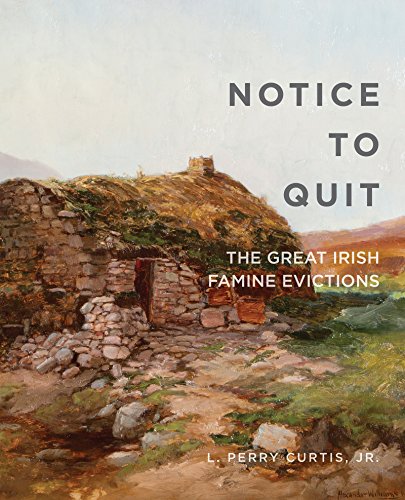
Inhaltsangabe
Ireland's Great Hunger Museum at Quinnipiac University publishes the Famine Folios, a unique resource for students, scholars and researchers, as well as general readers, covering many aspects of the Famine in Ireland from 1845-1852—the worst demographic catastrophe of nineteenth-century Europe. The essays are interdisciplinary in nature, and make available new research in Famine studies by internationally established scholars in history, art history, cultural theory, philosophy, media history, political economy, literature and music.
During the peak years of the great famine at least 750,000 men, women, and children died from either starvation or disease. At the same time roughly 350,000 individuals were driven out of their dwellings. Overall the population of Ireland fell from some 8.5 million people in 1845 to around 6.5 million in 1851. This ominous drain of humanity continued at a slower rate well into the twentieth century. Whereas nature could be blamed for the lethal effects of acute hunger or malnutrition, human agency caused much of this devastating loss owing to mass evictions of the poorest tenants and squatters after the agent or bailiff had served them with the dreaded Notice To Quit.
This richly illustrated pamphlet contextualizes the mass evictions by focusing on the ideological and economic factors as well as the role of religious and racial prejudice in prompting owners to rid their estates of what was known as a "surplus population." Determined to avoid paying for the maintenance of unprofitable tenants and squatters, landlords sought to avoid insolvency by expelling these pauperized peasants. After destroying their cabins, they consolidated all these small holdings into larger farms or cattle ranches that were rented to solvent tenants. Relying on the laws governing land tenure, letting contracts, and rent, these landlords used the mechanism of eviction to ensure that their estates would become profitable enough to pay for their own privileged way of life.
Whether or not the victims of eviction received private or public assistance to emigrate overseas, the results of these clearances were much the same. Thousands of acres were converted to pasturage in parts of Munster and Connaught and small villages or clachans were abandoned. Only the skeletal remains of stone cottages remained--some of which can still be seen today. No wonder that many Irish contemporaries called the evictors "exterminators."
Die Inhaltsangabe kann sich auf eine andere Ausgabe dieses Titels beziehen.
Über die Autorin bzw. den Autor
L. Perry Curtis is Emeritus Professor of History at Brown University
„Über diesen Titel“ kann sich auf eine andere Ausgabe dieses Titels beziehen.
Suchergebnisse für Notice to Quit: The Great Famine Evictions (Famine...

Foto des Verkäufers
Notice to Quit: The Great Famine Evictions (Famine Folio)
Anbieter: Zoom Books East, Glendale Heights, IL, USA
Verkäuferbewertung 5 von 5 Sternen

Zustand: very_good. Book is in very good condition and may include minimal underlining highlighting. The book can also include "From the library of" labels. May not contain miscellaneous items toys, dvds, etc. . We offer 100% money back guarantee and 24 7 customer service. Bestandsnummer des Verkäufers ZEV.0990468666.VG
Gebraucht kaufen
EUR 5,87
Versand gratis
Versand innerhalb von USA
Versand innerhalb von USA
Anzahl: 1 verfügbar
Foto des Verkäufers
Notice to Quit: The Great Famine Evictions (Famine Folio)
Anbieter: -OnTimeBooks-, Phoenix, AZ, USA
Verkäuferbewertung 5 von 5 Sternen
Zustand: very_good. Gently read. May have name of previous ownership, or ex-library edition. Binding tight; spine straight and smooth, with no creasing; covers clean and crisp. Minimal signs of handling or shelving. 100% GUARANTEE! Shipped with delivery confirmation, if you're not satisfied with purchase please return item! Ships USPS Media Mail. Bestandsnummer des Verkäufers OTV.0990468666.VG
Gebraucht kaufen
EUR 6,41
Versand gratis
Versand innerhalb von USA
Versand innerhalb von USA
Anzahl: 1 verfügbar
Beispielbild für diese ISBN
Notice to Quit: The Great Famine Evictions (Famine Folio)
Anbieter: Midtown Scholar Bookstore, Harrisburg, PA, USA
Verkäuferbewertung 5 von 5 Sternen
paperback. Zustand: Very Good. Very Good - Crisp, clean, unread book with some shelfwear/edgewear, may have a remainder mark - NICE Oversized. PAPERBACK. Bestandsnummer des Verkäufers M0990468666Z2
Gebraucht kaufen
EUR 3,12
EUR 5,34 Versand
Versand innerhalb von USA
Versand innerhalb von USA
Anzahl: 1 verfügbar
Beispielbild für diese ISBN
Notice to Quit: The Great Famine Evictions (Famine Folio)
Anbieter: Lakeside Books, Benton Harbor, MI, USA
Verkäuferbewertung 5 von 5 Sternen
Zustand: New. Brand New! Not Overstocks or Low Quality Book Club Editions! Direct From the Publisher! We're not a giant, faceless warehouse organization! We're a small town bookstore that loves books and loves it's customers! Buy from Lakeside Books! Bestandsnummer des Verkäufers OTF-S-9780990468660
Neu kaufen
EUR 9,33
EUR 3,55 Versand
Versand innerhalb von USA
Versand innerhalb von USA
Anzahl: 11 verfügbar
Beispielbild für diese ISBN
NoticetoQuit Format: Paperback
Anbieter: INDOO, Avenel, NJ, USA
Verkäuferbewertung 5 von 5 Sternen
Zustand: New. Brand New. Bestandsnummer des Verkäufers 9780990468660
Neu kaufen
EUR 14,57
Versand gratis
Versand innerhalb von USA
Versand innerhalb von USA
Anzahl: Mehr als 20 verfügbar
Beispielbild für diese ISBN
Notice to Quit (Paperback)
Verlag:
Quinnipiac University Press, Hamden, 2015
ISBN 10: 0990468666
ISBN 13: 9780990468660
Neu
Paperback
Anbieter: Grand Eagle Retail, Bensenville, IL, USA
Verkäuferbewertung 5 von 5 Sternen
Paperback. Zustand: new. Paperback. Ireland's Great Hunger Museum at Quinnipiac University publishes Famine Folios, a unique resource for students, scholars and researchers, as well as general readers, covering many aspects of the Famine in Ireland from 1845-1852 - the worst demographic catastrophe of nineteenth-century Europe. The essays are interdisciplinary in nature, and make available new research in Famine studies by internationally established scholars in history, art history, cultural theory, philosophy, media history, political economy, literature and music.During the peak years of the great famine at least 750,000 men, women, and children died from either starvation or disease. At the same time roughly 350,000 individuals were driven out of their dwellings. Overall the population of Ireland fell from some 8.5 million people in 1845 to around 6.5 million in 1851. This ominous drain of humanity continued at a slower rate well into the twentieth century.Whereas nature could be blamed for the lethal effects of acute hunger or malnutrition, human agency caused much of this devastating loss owing to mass evictions of the poorest tenants and squatters after the agent or bailiff had served them with the dreaded Notice To Quit.This richly illustrated pamphlet seeks to contextualize the mass evictions by focussing on the ideological and economic factors as well as the role of religious and racial prejudice in prompting owners to rid their estates of what was known as a "surplus population." Determined to avoid paying for the maintenance of unprofitable tenants and squatters, landlords sought to avoid insolvency by expelling these pauperized peasants. After destroying their cabins, they consolidated all these small holdings into larger farms or cattle ranches that were rented to solvent tenants. Relying on the laws governing land tenure, letting contracts, and rent, these landlords used the mechanism of eviction to ensure that their estates would become profitable enough to pay for their own privileged way of life.Whether or not the victims of eviction received private or public assistance to emigrate overseas, the results of these clearances were much the same. Thousands of acres were converted to pasturage in parts of Munster and Connaught and small villages or clachans were abandoned. Only the skeletal remains of stone cottages remained - some of which can still be seen today.No wonder that many Irish contemporaries called the evictors "exterminators." This richly illustrated pamphlet seeks to contextualize the mass evictions by focussing on the ideological and economic factors as well as the role of religious and racial prejudice in prompting owners to rid their estates of what was known as a "surplus population." Shipping may be from multiple locations in the US or from the UK, depending on stock availability. Bestandsnummer des Verkäufers 9780990468660
Beispielbild für diese ISBN
Notice to Quit : The Great Famine Evictions
Anbieter: Better World Books Ltd, Dunfermline, Vereinigtes Königreich
Verkäuferbewertung 5 von 5 Sternen
Zustand: Good. Pages intact with minimal writing/highlighting. The binding may be loose and creased. Dust jackets/supplements are not included. Stock photo provided. Product includes identifying sticker. Better World Books: Buy Books. Do Good. Bestandsnummer des Verkäufers 68546065-20
Gebraucht kaufen
EUR 13,71
EUR 5,93 Versand
Versand von Vereinigtes Königreich nach USA
Versand von Vereinigtes Königreich nach USA
Anzahl: 1 verfügbar
Beispielbild für diese ISBN
Notice to Quit: The Great Famine Evictions
Anbieter: Kennys Bookshop and Art Galleries Ltd., Galway, GY, Irland
Verkäuferbewertung 5 von 5 Sternen
Zustand: New. This richly illustrated pamphlet seeks to contextualize the mass evictions by focussing on the ideological and economic factors as well as the role of religious and racial prejudice in prompting owners to rid their estates of what was known as a "surplus population." Num Pages: 44 pages. BIC Classification: 1DBR; 3JH; HBJD1; HBLL; HBTB; JFFC1. Category: (G) General (US: Trade). Dimension: 283 x 231 x 5. Weight in Grams: 250. . 2015. Paperback. . . . . Bestandsnummer des Verkäufers V9780990468660
Neu kaufen
EUR 14,43
EUR 9,50 Versand
Versand von Irland nach USA
Versand von Irland nach USA
Anzahl: 10 verfügbar
Beispielbild für diese ISBN
Notice to Quit: The Great Famine Evictions
Anbieter: Kennys Bookstore, Olney, MD, USA
Verkäuferbewertung 5 von 5 Sternen
Zustand: New. This richly illustrated pamphlet seeks to contextualize the mass evictions by focussing on the ideological and economic factors as well as the role of religious and racial prejudice in prompting owners to rid their estates of what was known as a "surplus population." Num Pages: 44 pages. BIC Classification: 1DBR; 3JH; HBJD1; HBLL; HBTB; JFFC1. Category: (G) General (US: Trade). Dimension: 283 x 231 x 5. Weight in Grams: 250. . 2015. Paperback. . . . . Books ship from the US and Ireland. Bestandsnummer des Verkäufers V9780990468660
Neu kaufen
EUR 15,18
EUR 9,34 Versand
Versand innerhalb von USA
Versand innerhalb von USA
Anzahl: 10 verfügbar
Beispielbild für diese ISBN
Notice to Quit: The Great Irish Famine Evictions
Anbieter: Revaluation Books, Exeter, Vereinigtes Königreich
Verkäuferbewertung 5 von 5 Sternen
Paperback. Zustand: Brand New. 43 pages. 11.25x9.25x0.25 inches. In Stock. Bestandsnummer des Verkäufers x-0990468666
Neu kaufen
EUR 16,65
EUR 11,86 Versand
Versand von Vereinigtes Königreich nach USA
Versand von Vereinigtes Königreich nach USA
Anzahl: 2 verfügbar