
Verwandte Artikel zu Plague and the Poor in Renaissance Florence (Cambridge...
Plague and the Poor in Renaissance Florence (Cambridge Studies in the History of Medicine) - Softcover
Inhaltsangabe
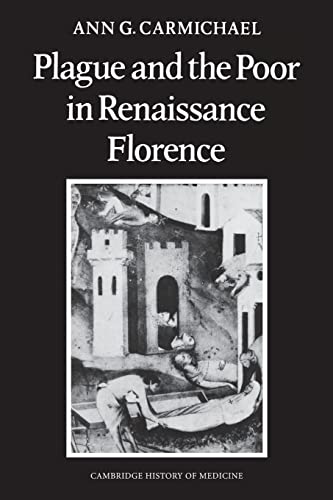
Originally published in 1986, this book uses Florentine death registers to show the changing character of plague from 1348 to the mid-fifteenth century.
Die Inhaltsangabe kann sich auf eine andere Ausgabe dieses Titels beziehen.
Über die Autorin bzw. den Autor
fm.author_biographical_note1
„Über diesen Titel“ kann sich auf eine andere Ausgabe dieses Titels beziehen.
Suchergebnisse für Plague and the Poor in Renaissance Florence (Cambridge...

Foto des Verkäufers
Plague and the Poor in Renaissance Florence (Cambridge Studies in the History of Medicine)
Verlag:
Cambridge University Press, 2014
ISBN 10: 1107634369
ISBN 13: 9781107634367
Gebraucht
paperback
Anbieter: Epilonian Books, Manhattan Beach, CA, USA
Verkäuferbewertung 5 von 5 Sternen

paperback. Zustand: Very Good. Cambridge University Press [Published Date: 1914]. Softcover, xv, 180 pages. First paperback edition. In very good condition. Glossy black and white illustrated paper covers have light bumping to edges and light overall scuffing. Binding tight. Pages clean and unmarked. Some black and white illustrations. [From back cover] This book uses Florentine death registers to trace the changing character of plague from the first outbreak of the Black Death in 1348 to the mid-fifteenth century. Through an innovative study of this evidence, Professor Carmichael develops two related strands of analysis. First, she examines the extent to which true plague epidemics occurred by exploring the role of other infectious diseases that may have significantly contributed to outbreaks of epidemiological "pestilence," identifying key differences between the epidemics of the fourteenth and fifteenth centuries. She then demonstrates how these differences influenced the perceptions of Italian city dwellers in the fifteenth century. While survivors of the fourteenth-century outbreaks, which claimed many prominent citizens, could not reasonably view plague as a disease of the poor, wealthy Florentines of the 1430s increasingly believed that fleeing the city could protect them. This shift in understanding paved the way for public health responses such as quarantine, pest houses, and health boards - measures that, ironically, increased the mortality of the poor and reinforced the belief that they constituted a dangerous element of Renaissance society. Bestandsnummer des Verkäufers 20250513011
Gebraucht kaufen
EUR 17,04
EUR 4,57 Versand
Versand innerhalb von USA
Versand innerhalb von USA
Anzahl: 1 verfügbar
Foto des Verkäufers
Plague and the Poor in Renaissance Florence (Cambridge Studies in the History of Medicine)
Verlag:
Cambridge University Press, 2014
ISBN 10: 1107634369
ISBN 13: 9781107634367
Gebraucht
Softcover
Anbieter: Goodwill Books, Hillsboro, OR, USA
Verkäuferbewertung 5 von 5 Sternen
Zustand: acceptable. Fairly worn, but readable and intact. If applicable: Dust jacket, disc or access code may not be included. Bestandsnummer des Verkäufers GICWV.1107634369.A
Gebraucht kaufen
EUR 18,40
EUR 3,47 Versand
Versand innerhalb von USA
Versand innerhalb von USA
Anzahl: 2 verfügbar
Foto des Verkäufers
Plague and the Poor in Renaissance Florence
Anbieter: GreatBookPrices, Columbia, MD, USA
Verkäuferbewertung 5 von 5 Sternen
Zustand: New. Bestandsnummer des Verkäufers 20865060-n
Neu kaufen
EUR 29,91
EUR 2,30 Versand
Versand innerhalb von USA
Versand innerhalb von USA
Anzahl: Mehr als 20 verfügbar
Beispielbild für diese ISBN
Plague and the Poor in Renaissance Florence (Cambridge Studies in the History of Medicine)
Anbieter: California Books, Miami, FL, USA
Verkäuferbewertung 4 von 5 Sternen

Zustand: New. Bestandsnummer des Verkäufers I-9781107634367
Neu kaufen
EUR 32,28
Versand gratis
Versand innerhalb von USA
Versand innerhalb von USA
Anzahl: Mehr als 20 verfügbar
Foto des Verkäufers
Plague and the Poor in Renaissance Florence
Verlag:
Cambridge University Press, 2014
ISBN 10: 1107634369
ISBN 13: 9781107634367
Gebraucht
Softcover
Anbieter: GreatBookPrices, Columbia, MD, USA
Verkäuferbewertung 5 von 5 Sternen
Zustand: As New. Unread book in perfect condition. Bestandsnummer des Verkäufers 20865060
Gebraucht kaufen
EUR 31,38
EUR 2,30 Versand
Versand innerhalb von USA
Versand innerhalb von USA
Anzahl: Mehr als 20 verfügbar
Foto des Verkäufers
Plague and the Poor in Renaissance Florence
Verlag:
Cambridge University Press, GB, 2014
ISBN 10: 1107634369
ISBN 13: 9781107634367
Neu
Paperback
Anbieter: Rarewaves.com USA, London, LONDO, Vereinigtes Königreich
Verkäuferbewertung 5 von 5 Sternen
Paperback. Zustand: New. Originally published in 1986, this book uses Florentine death registers to show the changing character of plague from the first outbreak of the Black Death in 1348 to the mid-fifteenth century. Through an innovative study of this evidence, Professor Carmichael develops two related strands of analysis. First, she discusses the extent to which true plague epidemics may have occurred, by considering what other infectious diseases contributed significantly to outbreaks of 'pestilence'. She finds that there were many differences between the fourteenth- and fifteenth-century epidemics. She then shows how the differences in the plague reshaped the attitudes of Italian city-dwellers toward plague in the fifteenth century. This book will be of value to anyone with an interest in the history of the plague, Renaissance Italy and the history of medicine. Bestandsnummer des Verkäufers LU-9781107634367
Neu kaufen
EUR 34,16
Versand gratis
Versand von Vereinigtes Königreich nach USA
Versand von Vereinigtes Königreich nach USA
Anzahl: Mehr als 20 verfügbar
Beispielbild für diese ISBN
Plague and the Poor in Renaissance Florence (Cambridge Studies in the History of Medicine)
Anbieter: Ria Christie Collections, Uxbridge, Vereinigtes Königreich
Verkäuferbewertung 5 von 5 Sternen
Zustand: New. In English. Bestandsnummer des Verkäufers ria9781107634367_new
Neu kaufen
EUR 32,75
EUR 10,93 Versand
Versand von Vereinigtes Königreich nach USA
Versand von Vereinigtes Königreich nach USA
Anzahl: Mehr als 20 verfügbar
Beispielbild für diese ISBN
Plague and the Poor in Renaissance Florence (Cambridge Studies in the History of Medicine)
Verlag:
Cambridge University Press 2014-05-08, 2014
ISBN 10: 1107634369
ISBN 13: 9781107634367
Neu
Paperback
Anbieter: Chiron Media, Wallingford, Vereinigtes Königreich
Verkäuferbewertung 5 von 5 Sternen
Paperback. Zustand: New. Bestandsnummer des Verkäufers 6666-IUK-9781107634367
Neu kaufen
EUR 28,34
EUR 18,06 Versand
Versand von Vereinigtes Königreich nach USA
Versand von Vereinigtes Königreich nach USA
Anzahl: Mehr als 20 verfügbar
Foto des Verkäufers
Plague and the Poor in Renaissance Florence
Anbieter: GreatBookPricesUK, Woodford Green, Vereinigtes Königreich
Verkäuferbewertung 5 von 5 Sternen
Zustand: New. Bestandsnummer des Verkäufers 20865060-n
Neu kaufen
EUR 31,31
EUR 17,49 Versand
Versand von Vereinigtes Königreich nach USA
Versand von Vereinigtes Königreich nach USA
Anzahl: Mehr als 20 verfügbar
Foto des Verkäufers
Plague and the Poor in Renaissance Florence
Verlag:
Cambridge University Press, 2014
ISBN 10: 1107634369
ISBN 13: 9781107634367
Gebraucht
Softcover
Anbieter: GreatBookPricesUK, Woodford Green, Vereinigtes Königreich
Verkäuferbewertung 5 von 5 Sternen
Zustand: As New. Unread book in perfect condition. Bestandsnummer des Verkäufers 20865060
Gebraucht kaufen
EUR 35,23
EUR 17,49 Versand
Versand von Vereinigtes Königreich nach USA
Versand von Vereinigtes Königreich nach USA
Anzahl: Mehr als 20 verfügbar