
Verwandte Artikel zu Immortal Diamond: The Search for Our True Self
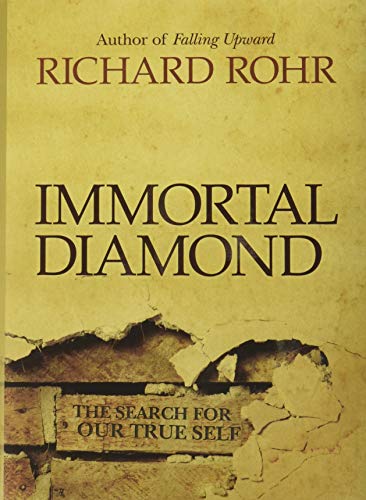
Inhaltsangabe
Dissolve the distractions of ego to find our authentic selves in God
In his bestselling book Falling Upward, Richard Rohr talked about ego (or the False Self) and how it gets in the way of spiritual maturity. But if there's a False Self, is there also a True Self? What is it? How is it found? Why does it matter? And what does it have to do with the spiritual journey? This book likens True Self to a diamond, buried deep within us, formed under the intense pressure of our lives, that must be searched for, uncovered, separated from all the debris of ego that surrounds it. In a sense True Self must, like Jesus, be resurrected, and that process is not resuscitation but transformation.
- Shows how to navigate spiritually difficult terrain with clear vision and tools to uncover our True Selves
- Written by Father Richard Rohr, the bestselling author of Falling Upward
- Examines the fundamental issues of who we are and helps us on our path of spiritual maturity
Immortal Diamond (whose title is taken from a line in a Gerard Manley Hopkins poem) explores the deepest questions of identity, spirituality, and meaning in Richard Rohr's inimitable style.
Die Inhaltsangabe kann sich auf eine andere Ausgabe dieses Titels beziehen.
Über die Autorin bzw. den Autor
Fr. Richard Rohr is a Franciscan priest of the New Mexico Province. He founded the Center for Action and Contemplation in Albuquerque, New Mexico, in 1986, where he presently serves as founding director. Richard is the author of more than twenty books, an internationally known speaker, and a regular contributing writer for Sojourners and Tikkun magazines and the CAC's quarterly journal, Radical Grace. He is the author of Falling Upward and Falling Upward: A Companion Journal.
Von der hinteren Coverseite
Praise for Immortal Diamond
"For a growing number of us, reading Richard Rohr is like sitting around the tribal fire, listening to the village elder give words to that which we've always known to be true; we just didn't know how to say it. Profound, intelligent, wise, and passionate, this book continues Richard's great work in showing us what vibrant, Jesus-centered faith looks like ..."
Rob Bell, pastor; author of Love Wins and Velvet Elvis
"This book is the ripe fruit of a life courageously and honestly lived. Such profound wisdom conveyed with such elegant simplicity!"
Cynthia Bourgeault, author, The Wisdom Way of Knowing, The Meaning of Mary Magdalene, and The Wisdom Jesus
"The power of Immortal Diamond is impossible to exaggerate. With the cutting skills of a surgeon and the heart of a Franciscan, Richard exposes the misperceptions and counterfeits that have shaped our faith. He then promises and delivers a 'staggering change of perspective' along with a taste of the intimacy of all love, both human and divine. Every word is a rare gift from a true elder and a worthy guide."
Paula D'Arcy, author, Gift of the Red Bird and Waking Up to This Day
Aus dem Klappentext
"I promise you that the discovery of your True Self will feel like a thousand pounds of weight have fallen from your back. You will no longer have to build, protect, or promote any idealized self image. Living in the True Self is quite simply a much happier existence ..."
From Chapter One
In his bestselling book Falling Upward (and in many of his other teachings), Franciscan priest Father Richard Rohr talked at length about ego (part of the False Self) and how it gets in the way of spiritual maturity, especially if its preoccupations continue into the second half of life.
But if there's a False Self, is there also a True Self? What is it? How is it found? Why does it matter? And what does it have to do with the spiritual journey?
In Immortal Diamond, Father Rohr likens True Self to a diamond, buried deep within us, formed under the intense pressure of our lives, that must be searched for, uncovered, and separated from all the debris of ego that surrounds it. In a sense True Self must, like Jesus, be resurrected, and that process is not resuscitation but transformation.
Immortal Diamond (whose title is taken from a line in a Gerard Manley Hopkins poem) explores the deepest questions of identity, spirituality, and meaning. In Richard Rohr's inimitable style, the book brings to light the mysteries of grace, death, and resurrection.
Auszug. © Genehmigter Nachdruck. Alle Rechte vorbehalten.
Immortal Diamond
The Search for Our True Self
By Richard RohrJohn Wiley & Sons
Copyright © 2013 John Wiley & Sons, Ltd
All rights reserved.
ISBN: 978-1-118-30359-7All rights reserved.
CHAPTER 1
What Is "The TrueSelf"?
In this high placeit is as simple as this,Leave everything you know behind.
Step toward the cold surface,say the old prayer of rough loveand open both arms.
Those who come with empty handswill stare into the lake astonished,there, in the cold lightreflecting pure snow,
the true shape of your own face.
DAVID WHYTE, "TILICHO LAKE"
Conservatives look for absolute truth; liberalslook for something "real" and authentic.Spouses look for a marriage that will last "'til death dous part." Believers look for a God who never fails them;scientists look for a universal theory. They are all onthe same quest. We are all looking for an immortal diamond:something utterly reliable, something loyal andtrue, something we can always depend on, somethingunforgettable and shining. There is an invitation andan offer for all of these groups from John's very shortSecond Letter, when he writes: "There is a truth thatlives within us that will be with us forever" (2 John2). But most of us know little about this, so we endup as St. Augustine admits in his Confessions: "Latehave I loved you, Beauty so very ancient and so evernew. Late have I loved you! You were within, but I waswithout."
We give up eventually—or do not even try—toseek this truth and instead retreat into ourselves, asif to say, "I alone will be my reference point." Itis the most common problem of individualism andegocentricity. I think they go together. We split andretreat into ourselves, but we invariably go to ourego (small self, the False Self) because that is all weknow about. It is the common default position, evenif it is largely unconscious. Yet it often takes over,and, depending on the severity of our "splitness," itmakes all common forms of life, including marriage,lasting friendships, and most commitments, largelyimpossible. But this retreat into the personal ego selfis both absolutely right and terribly wrong at the sametime. In this book I hope to demonstrate what makesboth of these assertions true.
We are right about going inside; otherwise webecome lost in an outer and revolving hall of mirrors,as Augustine confesses above. But the question is,"Which inside?" I am using the language of the TrueSelf and the False Self, which many have found quitehelpful in talking about these very points. It is goodand necessary to pull back into your True Self, but it isquite a disaster if you pull back into what is your FalseSelf for too long (or, worse, never leave it). Both TrueSelf and False Self will feel like your "self," so you seethe confusion. One might be called true "centering,"and the other is the more common "ego centering,"which shows itself to be the core of the problem.
So Jesus, and most other great spiritual teachers,make it very clear that there is a self that has tobe found and one that has to be let go of or even"renounced" (Mark 8:35; Matthew 10:39, 16:25; Luke9:24; John 12:26). Buddhism allows no compromiseor softening of this essential message, which is whymany are attracted to its utter honesty.
That there are two selves is rather constant in thePerennial Tradition, although the language might bevery different from group to group. The importantissue is how we tell the difference. Those who denya sacred source to the universe ("God") have noway of naming something "true" and must resortto psychology, philosophy, and cultural norms aloneto find something authoritative. And they are verygood—as far as they go. Those of us who claim tobelieve in God more often than not deny that "we arealready his children" (1 John 3:1) and create arbitraryhoops to jump through—at which few fully succeed ifthey are honest. So my moral self, which is always influx, becomes the measure, and we have again lost anyAbsolute Measure. It seems the False Self would ratherhave very few "wins" than let God win with everybody.This is my sad conclusion after a lifetime of working inmany churches on many continents, and it is summedup in an often murdered text by most preachers andtranslators: "I am calling all of you, but so few of youallow yourselves to be chosen" (Matthew 22:14).
We are going to talk about the two selves in manyways. Like Socrates's peripatetic method, we will justkeep "walking around" it in this book. The searchfor soul has gained a bit of clarity in our time byfinding words that make sense to the modern, morepsychological mind. We might now call the False Selfour small self or ego, and we might call the True Selfour soul. When the True Self becomes clearer to you,and it will for most of you, you will have grounded yourspirituality in its first and fundamental task, and youwill have hired the best counseling service possible.I love to tell people, "You have just saved yourselften thousand dollars in unnecessary therapy!" Why?Because in finding your True Self, you will have foundan absolute reference point that is both utterly withinyou and utterly beyond you at the very same time. Thisgrounds the soul in big and reliable truth. "My deepestme is God!" St. Catherine of Genoa shouted as sheran through the streets of town, just as Colossians hadalready shouted to both Jews and pagans, "The mysteryis Christ within you—your hope of Glory!" (1:27).
The healthy inner authority of the True Self cannow be balanced by a more objective outer authorityof Scripture and mature Tradition. Your experienceis not just your experience, in other words. That'swhat tells you that you are not crazy. That God isboth utterly beyond me and yet totally within meat the same time is the exquisite balance that mostreligion seldom achieves, in my opinion. Now thelaw is written on both tablets of stone (Exodus 31:18)and within your heart (Deuteronomy 29:12–14), andthe old covenant has rightly morphed into the new(Jeremiah 31:31–34), just as it was already understoodand lived by holy Jews. Jesus fully represents thisideal Jewish balance. Remember, Jesus was not a"Christian"!
People who find this wholeness are balanced ingeneral and tend to flourish, as opposed to either mereconformists or mere rebels who just take sides oneverything—with no wisdom required. Think of poorGalileo Galilei who, under pressure from the churchto deny that the earth moves around the sun, saysquietly before he dies, "And yet it moves!" He wiselyknew how to survive in a totalitarian system, and yetnow he survives and thrives as the Father of ModernScience and the modern popes have exonerated him.You are both the Body of Christ and only a part ofthe Body of Christ at the same time. You are boththe center of the world and on the edge of that sameworld, or as St. Bonaventure put it, "the center is noweverywhere and the circumference is nowhere."
Your personal experience of chosenness is preciselywhat allows you to pass on that same experienceto others, say both Isaiah and Paul (Isaiah 2:1–5,56:1–7; Romans 11:16ff.). Outer spiritual believingtends to say, "Only here" or "only there," whileauthentic inner knowing tends to say, "Always andeverywhere." We start elitist and we end egalitarian.And Ken Wilber rightly adds "Always!" What wereceive freely, we give away freely (Matthew 10:8).Outer authority told us we were indeed special (that'sthe only way to get started), but maturing innerauthority allows us to see that everyone is special andunique, although it usually takes the maturity of...
„Über diesen Titel“ kann sich auf eine andere Ausgabe dieses Titels beziehen.
Suchergebnisse für Immortal Diamond: The Search for Our True Self

Beispielbild für diese ISBN
Immortal Diamond: The Search for Our True Self
Anbieter: World of Books (was SecondSale), Montgomery, IL, USA
Verkäuferbewertung 5 von 5 Sternen

Hardback. Zustand: Good. Dissolve the distractions of ego to find our authentic selves in God In his bestselling book Falling Upward, Richard Rohr talked about ego (or the False Self) and how it gets in the way of spiritual maturity. Bestandsnummer des Verkäufers 00101169320
Gebraucht kaufen
EUR 4,04
Versand gratis
Versand innerhalb von USA
Versand innerhalb von USA
Anzahl: Mehr als 20 verfügbar
Beispielbild für diese ISBN
Immortal Diamond: The Search for Our True Self
Anbieter: World of Books (was SecondSale), Montgomery, IL, USA
Verkäuferbewertung 5 von 5 Sternen
Hardback. Zustand: Fair. Dissolve the distractions of ego to find our authentic selves in God In his bestselling book Falling Upward, Richard Rohr talked about ego (or the False Self) and how it gets in the way of spiritual maturity. Bestandsnummer des Verkäufers 00106581994
Gebraucht kaufen
EUR 4,04
Versand gratis
Versand innerhalb von USA
Versand innerhalb von USA
Anzahl: 4 verfügbar
Foto des Verkäufers
Immortal Diamond: The Search for Our True Self
Anbieter: Zoom Books East, Glendale Heights, IL, USA
Verkäuferbewertung 5 von 5 Sternen
Zustand: good. Book is in good condition and may include underlining highlighting and minimal wear. The book can also include "From the library of" labels. May not contain miscellaneous items toys, dvds, etc. . We offer 100% money back guarantee and 24 7 customer service. Bestandsnummer des Verkäufers ZEV.1118303598.G
Gebraucht kaufen
EUR 4,05
Versand gratis
Versand innerhalb von USA
Versand innerhalb von USA
Anzahl: 1 verfügbar
Foto des Verkäufers
Immortal Diamond: The Search for Our True Self
Anbieter: Zoom Books Company, Lynden, WA, USA
Verkäuferbewertung 5 von 5 Sternen
Zustand: very_good. Book is in very good condition and may include minimal underlining highlighting. The book can also include "From the library of" labels. May not contain miscellaneous items toys, dvds, etc. . We offer 100% money back guarantee and 24 7 customer service. Bestandsnummer des Verkäufers ZBV.1118303598.VG
Gebraucht kaufen
EUR 4,48
Versand gratis
Versand innerhalb von USA
Versand innerhalb von USA
Anzahl: 1 verfügbar
Foto des Verkäufers
Immortal Diamond: The Search for Our True Self
Anbieter: Reliant Bookstore, El Dorado, KS, USA
Verkäuferbewertung 5 von 5 Sternen
Zustand: very_good. This book is in excellent condition. There may be minimal writing on the inside cover or cover page. Cover image on the book may vary from photo. Ships out quickly in a secure plastic mailer. Bestandsnummer des Verkäufers RDV.1118303598.VG
Gebraucht kaufen
EUR 4,49
Versand gratis
Versand innerhalb von USA
Versand innerhalb von USA
Anzahl: 1 verfügbar
Foto des Verkäufers
Immortal Diamond: The Search for Our True Self
Anbieter: Greenworld Books, Arlington, TX, USA
Verkäuferbewertung 5 von 5 Sternen
Zustand: very_good. Fast Free Shipping â" Very Good condition book with a firm cover and clean pages. Shows normal use and some light wear or limited notes markings. A solid, nice copy to enjoy. Bestandsnummer des Verkäufers GWV.1118303598.VG
Gebraucht kaufen
EUR 5,26
Versand gratis
Versand innerhalb von USA
Versand innerhalb von USA
Anzahl: 4 verfügbar
Beispielbild für diese ISBN
Immortal Diamond: The Search for Our True Self
Anbieter: More Than Words, Waltham, MA, USA
Verkäuferbewertung 5 von 5 Sternen
Zustand: Good. . goodFormer Library book. All orders guaranteed and ship within 24 hours. Before placing your order for please contact us for confirmation on the book's binding. Check out our other listings to add to your order for discounted shipping. Bestandsnummer des Verkäufers WAL-F-2e-002519
Gebraucht kaufen
EUR 2,07
EUR 3,55 Versand
Versand innerhalb von USA
Versand innerhalb von USA
Anzahl: 1 verfügbar
Foto des Verkäufers
Immortal Diamond: The Search for Our True Self
Anbieter: Dream Books Co., Denver, CO, USA
Verkäuferbewertung 5 von 5 Sternen
Zustand: acceptable. This copy has clearly been enjoyedâ"expect noticeable shelf wear and some minor creases to the cover. Binding is strong, and all pages are legible. May contain previous library markings or stamps. Bestandsnummer des Verkäufers DBV.1118303598.A
Gebraucht kaufen
EUR 5,62
Versand gratis
Versand innerhalb von USA
Versand innerhalb von USA
Anzahl: 3 verfügbar
Foto des Verkäufers
Immortal Diamond: The Search for Our True Self
Anbieter: Dream Books Co., Denver, CO, USA
Verkäuferbewertung 5 von 5 Sternen
Zustand: good. Gently used with minimal wear on the corners and cover. A few pages may contain light highlighting or writing, but the text remains fully legible. Dust jacket may be missing, and supplemental materials like CDs or codes may not be included. May be ex-library with library markings. Ships promptly! Bestandsnummer des Verkäufers 4EKGU9007BDF_ns
Gebraucht kaufen
EUR 5,62
Versand gratis
Versand innerhalb von USA
Versand innerhalb von USA
Anzahl: 4 verfügbar
Foto des Verkäufers
Immortal Diamond: The Search for Our True Self
Anbieter: 2nd Life Books, Burlington, NJ, USA
Verkäuferbewertung 5 von 5 Sternen
Zustand: like_new. Bestandsnummer des Verkäufers BXM.F6XW
Gebraucht kaufen
EUR 2,20
EUR 3,56 Versand
Versand innerhalb von USA
Versand innerhalb von USA
Anzahl: 1 verfügbar