
Verwandte Artikel zu A Wrinkle in Time: 50th Anniversary Commemorative Edition...
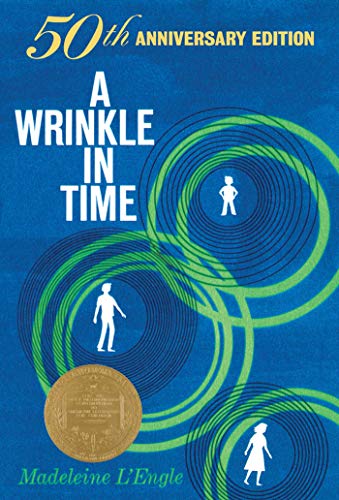
Inhaltsangabe
As seen on Stranger Things, read the ground-breaking, bestselling science fiction and fantasy classic that has delighted readers for over 60 years!
NEWBERY MEDAL WINNER ¿ TIME MAGAZINE'S 100 BEST FANTASY BOOKS OF ALL TIME ¿ NOW A MAJOR MOTION PICTURE FROM DISNEY
"A Wrinkle in Time is one of my favorite books of all time. I've read it so often, I know it by heart." -Meg Cabot
Over six decades ago, Madeleine L'Engle introduced the world to A Wrinkle in Time and the wonderful and unforgettable characters Meg and Charles Wallace Murry, and their friend Calvin O'Keefe. When the children learn that Mr. Murry has been captured by the Dark Thing, they time travel to Camazotz, where they must face the leader IT in the ultimate battle between good and evil-a journey that threatens their lives and our universe.
This special edition has been redesigned and includes an introduction by Katherine Paterson, an afterword by Madeleine L'Engle's granddaughter Charlotte Jones Voiklis that includes photographs and memorabilia, the author's Newbery Medal acceptance speech, and other bonus materials.
A Wrinkle in Time is the first book in Madeleine L'Engle's Time Quintet, followed by A Wind in the Door, A Swiftly Tilting Planet, Many Waters, and An Acceptable Time.
Die Inhaltsangabe kann sich auf eine andere Ausgabe dieses Titels beziehen.
Über die Autorin bzw. den Autor
Madeleine L'Engle (1918-2007) was the Newbery Medal-winning author of more than 60 books, including the much-loved A Wrinkle in Time. Born in 1918, L'Engle grew up in New York City, Switzerland, South Carolina and Massachusetts. Her father was a reporter and her mother had studied to be a pianist, and their house was always full of musicians and theater people. L'Engle graduated cum laude from Smith College, then returned to New York to work in the theater. While touring with a play, she wrote her first book, The Small Rain, originally published in 1945. She met her future husband, Hugh Franklin, when they both appeared in The Cherry Orchard. Upon becoming Mrs. Franklin, L'Engle gave up the stage in favor of the typewriter. In the years her three children were growing up, she wrote four more novels. Hugh Franklin temporarily retired from the theater, and the family moved to western Connecticut and for ten years ran a general store. Her book Meet the Austins, an American Library Association Notable Children's Book of 1960, was based on this experience. Her science fantasy classic A Wrinkle in Time was awarded the 1963 Newbery Medal. Two companion novels, A Wind in the Door and A Swiftly Tilting Planet (a Newbery Honor book), complete what has come to be known as The Time Trilogy, a series that continues to grow in popularity with a new generation of readers. Her 1980 book A Ring of Endless Light won the Newbery Honor. L'Engle passed away in 2007 in Litchfield, Connecticut.
Auszug. © Genehmigter Nachdruck. Alle Rechte vorbehalten.
A Wrinkle in Time: 50th Anniversary Commemorative Edition
By Madeleine L'EngleSquare Fish
Copyright © 2012 Madeleine L'EngleAll right reserved.
ISBN: 9781250004673
A Wrinkle in Time: 50th Anniversary Edition
1
MRS WHATSIT
IT WAS A DARK AND STORMY NIGHT.
In her attic bedroom Margaret Murry, wrapped in an old patchwork quilt, sat on the foot of her bed and watched the trees tossing in the frenzied lashing of the wind. Behind the trees clouds scudded frantically across the sky. Every few moments the moon ripped through them, creating wraithlike shadows that raced along the ground.
The house shook.
Wrapped in her quilt, Meg shook.
She wasn't usually afraid of weather.--It's not just the weather, she thought.--It's the weather on top of everything else. On top of me. On top of Meg Murry doing everything wrong.
School. School was all wrong. She'd been dropped down to the lowest section in her grade. That morning one of her teachers had said crossly, "Really, Meg, I don't understand how a childwith parents as brilliant as yours are supposed to be can be such a poor student. If you don't manage to do a little better you'll have to stay back next year."
During lunch she'd roughhoused a little to try to make herself feel better, and one of the girls said scornfully, "After all, Meg, we aren't grade-school kids anymore. Why do you always act like such a baby?"
And on the way home from school, as she walked up the road with her arms full of books, one of the boys had said something about her "dumb baby brother." At this she'd thrown the books on the side of the road and tackled him with every ounce of strength she had, and arrived home with her blouse torn and a big bruise under one eye.
Sandy and Dennys, her ten-year-old twin brothers, who got home from school an hour earlier than she did, were disgusted. "Let us do the fighting when it's necessary," they told her.
--A delinquent, that's what I am, she thought grimly. --That's what they'll be saying next. Not Mother. But Them. Everybody Else. I wish Father--
But it was still not possible to think about her father without the danger of tears. Only her mother could talk about him in a natural way, saying, "When your father gets back--"
Gets back from where? And when? Surely her mother must know what people were saying, must be aware of the smugly vicious gossip. Surely it must hurt her as it did Meg. But if it did she gave no outward sign. Nothing ruffled the serenity of her expression.
--Why can't I hide it, too? Meg thought. Why do I always have to show everything?
The window rattled madly in the wind, and she pulled the quilt close about her. Curled up on one of her pillows, a gray fluff of kitten yawned, showing its pink tongue, tucked its head under again, and went back to sleep.
Everybody was asleep. Everybody except Meg. Even Charles Wallace, the "dumb baby brother," who had an uncanny way of knowing when she was awake and unhappy, and who would come, so many nights, tiptoeing up the attic stairs to her--even Charles Wallace was asleep.
How could they sleep? All day on the radio there had been hurricane warnings. How could they leave her up in the attic in the rickety brass bed, knowing that the roof might be blown right off the house and she tossed out into the wild night sky to land who knows where?
Her shivering grew uncontrollable.
--You asked to have the attic bedroom, she told herself savagely.--Mother let you have it because you're the oldest. It's a privilege, not a punishment.
"Not during a hurricane, it isn't a privilege," she said aloud. She tossed the quilt down on the foot of the bed, and stood up. The kitten stretched luxuriously, and looked up at her with huge, innocent eyes.
"Go back to sleep," Meg said. "Just be glad you're a kitten and not a monster like me." She looked at herself in the wardrobe mirror and made a horrible face, baring a mouthful of teethcovered with braces. Automatically she pushed her glasses into position, ran her fingers through her mouse-brown hair, so that it stood wildly on end, and let out a sigh almost as noisy as the wind.
The wide wooden floorboards were cold against her feet. Wind blew in the crevices about the window frame, in spite of the protection the storm sash was supposed to offer. She could hear wind howling in the chimneys. From all the way downstairs she could hear Fortinbras, the big black dog, starting to bark. He must be frightened, too. What was he barking at? Fortinbras never barked without reason.
Suddenly she remembered that when she had gone to the post office to pick up the mail she'd heard about a tramp who was supposed to have stolen twelve sheets from Mrs. Buncombe, the constable's wife. They hadn't caught him, and maybe he was heading for the Murrys' house right now, isolated on a back road as it was; and this time maybe he'd be after more than sheets. Meg hadn't paid much attention to the talk about the tramp at the time, because the postmistress, with a sugary smile, had asked if she'd heard from her father lately.
She left her little room and made her way through the shadows of the main attic, bumping against the ping-pong table. --Now I'll have a bruise on my hip on top of everything else, she thought.
Next she walked into her old dolls' house, Charles Wallace's rocking horse, the twins' electric trains. "Why must everything happen to me?" she demanded of a large teddy bear.
At the foot of the attic stairs she stood still and listened. Nota sound from Charles Wallace's room on the right. On the left, in her parents' room, not a rustle from her mother sleeping alone in the great double bed. She tiptoed down the hall and into the twins' room, pushing again at her glasses as though they could help her to see better in the dark. Dennys was snoring. Sandy murmured something about baseball and subsided. The twins didn't have any problems. They weren't great students, but they weren't bad ones, either. They were perfectly content with a succession of B's and an occasional A or C. They were strong and fast runners and good at games, and when cracks were made about anybody in the Murry family, they weren't made about Sandy and Dennys.
She left the twins' room and went on downstairs, avoiding the creaking seventh step. Fortinbras had stopped barking. It wasn't the tramp this time, then. Fort would go on barking if anybody was around.
--But suppose the tramp does come? Suppose he has a knife? Nobody lives near enough to hear if we screamed and screamed and screamed. Nobody'd care, anyhow.
--I'll make myself some cocoa, she decided.--That'll cheer me up, and if the roof blows off, at least I won't go off with it.
In the kitchen a light was already on, and Charles Wallace was sitting at the table drinking milk and eating bread and jam. He looked very small and vulnerable sitting there alone in the big old-fashioned kitchen, a blond little boy in faded blue Dr. Dentons, his feet swinging a good six inches above the floor.
"Hi," he said cheerfully. "I've been waiting for you."
From under the table where he was lying at Charles Wallace'sfeet, hoping for a crumb or two, Fortinbras raised his slender dark head in greeting to Meg, and his tail thumped against the floor. Fortinbras had arrived on their doorstep, a half-grown puppy, scrawny and abandoned, one winter night. He was, Meg's father had decided, part...
„Über diesen Titel“ kann sich auf eine andere Ausgabe dieses Titels beziehen.
Suchergebnisse für A Wrinkle in Time: 50th Anniversary Commemorative Edition...

Beispielbild für diese ISBN
A Wrinkle in Time: 50th Anniversary Commemorative Edition: (Newbery Medal Winner)
Anbieter: World of Books (was SecondSale), Montgomery, IL, USA
Verkäuferbewertung 5 von 5 Sternen

Paperback. Zustand: Good. A Wrinkle in Time' is the winner of the 1963 Newbery Medal. It is now a major motion picture from Disney, directed by Ava DuVernay. It was a dark and stormy night-Meg Murry, her small brother Charles Wallace, and her mother had come down to the kitchen for a midnight snack when they were upset by the arrival of a most disturbing stranger. Bestandsnummer des Verkäufers 00106714606
Gebraucht kaufen
EUR 4,74
Versand gratis
Versand innerhalb von USA
Versand innerhalb von USA
Anzahl: 13 verfügbar
Beispielbild für diese ISBN
A Wrinkle in Time: 50th Anniversary Commemorative Edition: (Newbery Medal Winner)
Anbieter: World of Books (was SecondSale), Montgomery, IL, USA
Verkäuferbewertung 5 von 5 Sternen
Paperback. Zustand: Fair. A Wrinkle in Time' is the winner of the 1963 Newbery Medal. It is now a major motion picture from Disney, directed by Ava DuVernay. It was a dark and stormy night-Meg Murry, her small brother Charles Wallace, and her mother had come down to the kitchen for a midnight snack when they were upset by the arrival of a most disturbing stranger. Bestandsnummer des Verkäufers 00102588329
Gebraucht kaufen
EUR 4,74
Versand gratis
Versand innerhalb von USA
Versand innerhalb von USA
Anzahl: 8 verfügbar
Beispielbild für diese ISBN
A Wrinkle in Time: 50th Anniversary Commemorative Edition (A Wrinkle in Time Quintet, 1)
ISBN 10: 1250004675
ISBN 13: 9781250004673
Gebraucht
Paperback
Anbieter: BooksRun, Philadelphia, PA, USA
Verkäuferbewertung 5 von 5 Sternen
Paperback. Zustand: Fair. The item might be beaten up but readable. May contain markings or highlighting, as well as stains, bent corners, or any other major defect, but the text is not obscured in any way. Special edition, 50th Anniversary Commemorative. Bestandsnummer des Verkäufers 1250004675-7-1
Gebraucht kaufen
EUR 4,76
Versand gratis
Versand innerhalb von USA
Versand innerhalb von USA
Anzahl: 1 verfügbar
Foto des Verkäufers
A Wrinkle in Time: 50th Anniversary Commemorative Edition (A Wrinkle in Time Quintet, 1)
Anbieter: Greenworld Books, Arlington, TX, USA
Verkäuferbewertung 5 von 5 Sternen
Zustand: good. Fast Free Shipping â" Good condition. It may show normal signs of use, such as light writing, highlighting, or library markings, but all pages are intact and the book is fully readable. A solid, complete copy that's ready to enjoy. Bestandsnummer des Verkäufers GWV.1250004675.G
Gebraucht kaufen
EUR 5,28
Versand gratis
Versand innerhalb von USA
Versand innerhalb von USA
Anzahl: 1 verfügbar
Beispielbild für diese ISBN
A Wrinkle in Time: 50th Anniversary Commemorative Edition (A Wrinkle in Time Quintet)
Anbieter: HPB-Emerald, Dallas, TX, USA
Verkäuferbewertung 5 von 5 Sternen
Paperback. Zustand: Very Good. Connecting readers with great books since 1972! Used books may not include companion materials, and may have some shelf wear or limited writing. We ship orders daily and Customer Service is our top priority! Bestandsnummer des Verkäufers S_473325527
Gebraucht kaufen
EUR 2,30
EUR 3,35 Versand
Versand innerhalb von USA
Versand innerhalb von USA
Anzahl: 1 verfügbar
Beispielbild für diese ISBN
A Wrinkle in Time: 50th Anniversary Commemorative Edition (A Wrinkle in Time Quintet)
Anbieter: HPB-Diamond, Dallas, TX, USA
Verkäuferbewertung 5 von 5 Sternen
Paperback. Zustand: Very Good. Connecting readers with great books since 1972! Used books may not include companion materials, and may have some shelf wear or limited writing. We ship orders daily and Customer Service is our top priority! Bestandsnummer des Verkäufers S_475840895
Gebraucht kaufen
EUR 2,30
EUR 3,35 Versand
Versand innerhalb von USA
Versand innerhalb von USA
Anzahl: 1 verfügbar
Beispielbild für diese ISBN
A Wrinkle in Time: 50th Anniversary Commemorative Edition (A Wrinkle in Time Quintet)
Anbieter: HPB-Ruby, Dallas, TX, USA
Verkäuferbewertung 5 von 5 Sternen
Paperback. Zustand: Very Good. Connecting readers with great books since 1972! Used books may not include companion materials, and may have some shelf wear or limited writing. We ship orders daily and Customer Service is our top priority! Bestandsnummer des Verkäufers S_449727413
Gebraucht kaufen
EUR 2,30
EUR 3,35 Versand
Versand innerhalb von USA
Versand innerhalb von USA
Anzahl: 1 verfügbar
Beispielbild für diese ISBN
A Wrinkle in Time: 50th Anniversary Commemorative Edition (A Wrinkle in Time Quintet)
Anbieter: HPB Inc., Dallas, TX, USA
Verkäuferbewertung 5 von 5 Sternen
Paperback. Zustand: Very Good. Connecting readers with great books since 1972! Used books may not include companion materials, and may have some shelf wear or limited writing. We ship orders daily and Customer Service is our top priority! Bestandsnummer des Verkäufers S_471972493
Gebraucht kaufen
EUR 2,30
EUR 3,35 Versand
Versand innerhalb von USA
Versand innerhalb von USA
Anzahl: 1 verfügbar
Beispielbild für diese ISBN
A Wrinkle in Time: 50th Anniversary Commemorative Edition (A Wrinkle in Time Quintet, 1)
Anbieter: Evergreen Goodwill, Seattle, WA, USA
Verkäuferbewertung 5 von 5 Sternen
paperback. Zustand: Good. Bestandsnummer des Verkäufers mon0000165274
Gebraucht kaufen
EUR 2,18
EUR 3,56 Versand
Versand innerhalb von USA
Versand innerhalb von USA
Anzahl: 1 verfügbar
Foto des Verkäufers
A Wrinkle in Time: 50th Anniversary Commemorative Edition (A Wrinkle in Time Quintet, 1)
Anbieter: Austin Goodwill 1101, Austin, TX, USA
Verkäuferbewertung 5 von 5 Sternen
Zustand: good. Book shows general signs of use and handling. May have light wear on the cover or edges and minimal writing or highlighting. Binding remains tight, and pages are clean and readable. Bestandsnummer des Verkäufers CTXV.1250004675.G
Gebraucht kaufen
EUR 2,87
EUR 2,95 Versand
Versand innerhalb von USA
Versand innerhalb von USA
Anzahl: 2 verfügbar