
Verwandte Artikel zu FUTURE OF TERRORISM: ISIS, Al-Qaeda, and the Alt-Right
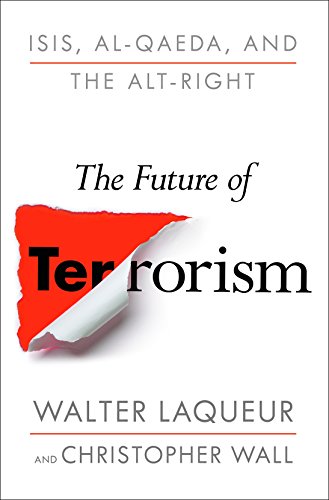
Inhaltsangabe
An expert on terrorism and an expert on counterterrorism answer the two questions everyone is asking about the rise of terrorism today: why is this happening, and when will it end?
Since the death of bin Laden in 2011, ISIS has risen, al-Qaeda has expanded its reach, and right-wing extremists have surged in the United States for the same simple reason: terrorism works. It’s not caused by psychosis or irrationality, as the media often suggests. Instead, it’s terrifyingly logical. Violent acts produce political results.
To show why, Walter Laqueur and Christopher Wall explore the history, rationales and precepts of terrorism, from the assassination of Tsar Alexander II, through the terror campaigns by Irish and Indian nationalists, and to the Nazis and Italian Fascists.
To explain why terror is on the rise again, they show how the American invasion of Iraq created the conditions for the emergence of al-Qaeda in Iraq, part of which metastasized into ISIS, while Russia’s increasing intervention in Syria allowed both of the organizations to evolve.
The Future of Terrorism brings reason to a topic usually ruled by fear. Laqueur and Wall show the structural features behind contemporary terrorism: how bad governance abets terror; the link between poverty and terrorism; why religious terrorism is more dangerous than secular; and the nature of supposed “lone wolf” terrorists. Fear alone provides no tools to combat the future of terrorism. This book does.
Die Inhaltsangabe kann sich auf eine andere Ausgabe dieses Titels beziehen.
Über die Autorin bzw. den Autor
WALTER LAQUEUR served as the director of the Institute of Contemporary History in London and concurrently the chairman of the International Research Council of CSIS in Washington for 30 years. He was also a professor at Georgetown University and the author of more than twenty-five books on Europe, Russia, and the Middle East. He has had articles published in The New York Times, The Washington Post, and countless other newspapers worldwide. His books include The Last Days of Europe , Putinism, and After the Fall.
CHRISTOPHER WALL is a cyber-security analyst focusing on emerging technologies, artificial intelligence, and data analytics to improve intelligence collection. He is an instructor for the Navy, teaching courses on counterterrorism and counterinsurgency.
Auszug. © Genehmigter Nachdruck. Alle Rechte vorbehalten.
The Future of Terrorism
ISIS, Al-Qaeda, and the Alt-Right
By Walter Laqueur, Christopher WallSt. Martin's Press
Copyright © 2018 Walter Laqueur and Christopher Wall
All rights reserved.
ISBN: 978-1-250-14251-1All rights reserved.
Contents
Title Page,
Copyright Notice,
Introduction: Terrorism and Its Future,
The Changes Wrought by the Fourth Wave,
PART 1 HISTORY AND THE INVENTION OF TERRORISM,
1. The History and Emergence of Modern Terrorism,
2. Writings on Tyranny and the Origins of the Philosophy of the Bomb,
3. Turkey, India, and the Russian Example,
4. Propaganda by the Deed,
5. The Philosophy of the Bomb and the Far Right,
6. Final Remarks on the History of Terrorism,
PART 2 CONTEMPORARY TERRORISM,
7. The New Face of Terrorism,
8. A Truncated History of IS,
9. Beyond Islamic State,
10. The Battlefields of the Future,
11. Terrorism in Europe and in the United States,
PART 3 REFLECTIONS ON TERRORISM,
12. The Culture of Modern Terrorism,
13. Terrorism Misinterpreted,
14. Economic Explanations of Terrorism,
15. Religious Violence and Terrorism,
16. Terrorism: The Future,
Epilogue: Terrorism Under President Trump,
Notes,
Acknowledgments,
Index,
Also by Walter Laqueur,
About the Authors,
Copyright,
CHAPTER 1
THE HISTORY AND EMERGENCE OF MODERN TERRORISM
According to an old Latin saying, "Historia magistra vitae," history is the teacher of life. Historians know that each historical situation is unique. Just because something happens in one instance it does not mean that it will happen again — circumstances are never quite the same. Historians do not believe in historic laws. They are no more qualified to predict the future than other mortals. History remains important in understanding and assessing current affairs but only with the awareness of its limits as an instrument of understanding these events. This applies as much to understanding terrorism as any other political or cultural developments.
The origins of terrorism go further back than organized warfare, but attacks by small bands of individuals on other groups, large or small, go back to times immemorial. Terrorism has arrested the attention of generations. Yet it remains a challenge to explain and elusive to define. Both the captivation it exerts and the challenge it imposes on interpretation come from the same source: a sudden, shocking, and ostentatious character. While even the outcome of war is shaped by agreed-upon rules and institutions, terrorism uniquely exploits and actively violates established norms, often by evading attribution through anonymity.
Terrorism has also catalyzed violent emotions throughout history. It conjures strikingly opposed figures: the age-old caricature of the mustachioed menace with a snide smile, a fanatic without logic or reason; but also, on the flip side of the same coin, the freedom fighter compelled to play the reluctant hero. To many, the latter image is a wanton distortion. Yet, short of the unequivocal embrace of peaceful means, all political violence bares some hypocrisy.
Killing No Murder, observed Titus, Sexby, and Allen in 1657. Or put more simply, killing and murder are not the same. Similarly, the nature of combat does not predispose armed resistance to align with some gentleman's code. As Friedrich Schiller's Wilhelm Tell declared, "Nein, eine Grenze hat Tyrannenmacht": no, tyranny does have a limit. Wilhelm Tell's refrain continues: "if the oppressed cannot anywhere find reprieve, as a last remedy, if nothing else, the sword." His chilling declaration has been employed by many a freedom fighter, a justification to their resistant cause. Yet, many self-appointed Wilhelm Tells have impetuously invoked the sword, rhetorically clamoring for freedom from tyranny, but inwardly fanatical — they adorn their cause with the façade of self-defense while eagerly using the sword as though it were the answer to all problems of power.
For generations, many criminals have, as a last resort, attempted to advance their illicit activities by associating them with the ideal of patriotism — an attempt not unlike that of modern terrorists who route funds through charitable organizations to launder (or cleanse) money of its illicit origins. Thus, the struggle for freedom has found itself obfuscated by those who, like horse thieves, avoid the hangman's noose by fabricating a backstory to blur the line between what is illegal and what is political. The study of terrorism and political violence has been further obstructed by the fact that the actors who use political violence to advance their interests are rarely ever either simple patriots in the vein of Wilhelm Tell or opportunistic horse-thief criminals, but both at once.
Edmund Burke's over-two-hundred-year-old Letters on a Regicide Peace (1796) was, by many accounts, responsible for introducing the word terrorist to the English language. Burke wrote, "Scratch any ideology and beneath it you will find a terrorist." Yet the relationship does not follow in the inverse — that is, simply scratching a terrorist will not always reveal an ideologue underneath.
Understanding terrorism remains a challenge for a variety of reasons. In the past hundred years alone, the character and purpose of terrorism itself has changed drastically. The actors who have elected to pursue terrorism, the means they have employed, the ends they have sought to achieve, have all in one way or another changed significantly over this period of time. Sofia Perovskaya and Emma Goldman are not as far removed from the likes of Ulrike Meinhof or Patty Hearst in years, but they could not be further apart when it comes to their moral and intellectual foundations. The difference in time serves us but little in anticipating and understanding the gulf in thinking. Another great challenge to understanding terrorism is structural. Terrorism is not an ideology like Marxism. Terrorism is a means. It is the instrument of the insurrectionist and the politician alike. Its employment is found across the political spectrum. Yet the employment of terrorism is not merely a tactic. Those who wield it have something in common. Whether they emerge from the extremes of the right or the left, whether they are nationalists or populists or even internationalists, they nonetheless have, as evidenced by their actions, reached the conclusion that, for them, an act of terror is the best idea they can think of to achieve their goals. Moreover, even if they have nothing else in common, terrorists are frequently more connected to other terrorists than they are willing or able to confess to themselves. Further, since terrorism and the decision to employ it can be conducted by anyone, its attraction supersedes the capacity of sovereign states to regulate thought, and thus transverses the borders of physical and political doctrines. It is, like Raymond Aron's "banal formula — the difference in quantity creates a difference in quality," a terrible ratio, an asymmetry of cost to consequence.
Still, terrorism is not a subcategory of revolutionary warfare as some might suppose. The terrorist, despite what may appear to be similarities of circumstance, is not a guerrilla. While the "urban guerrilla" may reside in the heart of the modern metropolis, it is certainly not a "guerrilla." The distinction lies in character more than semantics.
Many, for example, subscribe to the notion that terrorism is...
„Über diesen Titel“ kann sich auf eine andere Ausgabe dieses Titels beziehen.
Suchergebnisse für FUTURE OF TERRORISM: ISIS, Al-Qaeda, and the Alt-Right

Beispielbild für diese ISBN
The Future of Terrorism: ISIS, Al-Qaeda, and the Alt-Right
Verlag:
Thomas Dunne Books (edition ), 2018
ISBN 10: 1250142512
ISBN 13: 9781250142511
Gebraucht
Hardcover
Anbieter: BooksRun, Philadelphia, PA, USA
Verkäuferbewertung 5 von 5 Sternen

Hardcover. Zustand: Good. With dust jacket. It's a preowned item in good condition and includes all the pages. It may have some general signs of wear and tear, such as markings, highlighting, slight damage to the cover, minimal wear to the binding, etc., but they will not affect the overall reading experience. Ex-Library. Bestandsnummer des Verkäufers 1250142512-11-1-12_29
Gebraucht kaufen
EUR 5,26
Versand gratis
Versand innerhalb von USA
Versand innerhalb von USA
Anzahl: 1 verfügbar
Beispielbild für diese ISBN
The Future of Terrorism: Isis, Al-Qaeda, and the Alt-Right
Anbieter: World of Books (was SecondSale), Montgomery, IL, USA
Verkäuferbewertung 5 von 5 Sternen
Hardback. Zustand: Good. An expert on terrorism and an expert on counterterrorism answer the two questions everyone is asking about the rise of terrorism today: why is this happening, and when will it end? Since the death of bin Laden in 2011, ISIS has risen, al-Qaeda has expanded its reach, and right-wing extremists have surged in the United States for the same simple reason: terrorism works. It's not caused by psychosis or irrationality, as the media often suggests. Instead, it's terrifyingly logical. Violent acts produce political results. To show why, Walter Laqueur and Christopher Wall explore the history, rationales and precepts of terrorism, from the assassination of Tsar Alexander II, through the terror campaigns by Irish and Indian nationalists, and to the Nazis and Italian Fascists. To explain why terror is on the rise again, they show how the American invasion of Iraq created the conditions for the emergence of al-Qaeda in Iraq, part of which metastasized into ISIS, while Russia's increasing intervention in Syria allowed both of the organizations to evolve. The Future of Terrorism brings reason to a topic usually ruled by fear. Laqueur and Wall show the structural features behind contemporary terrorism: how bad governance abets terror; the link between poverty and terrorism; why religious terrorism is more dangerous than secular; and the nature of supposed "lone wolf" terrorists. Fear alone provides no tools to combat the future of terrorism. This book does. Bestandsnummer des Verkäufers 00095273483
Gebraucht kaufen
EUR 5,96
Versand gratis
Versand innerhalb von USA
Versand innerhalb von USA
Anzahl: 2 verfügbar
Foto des Verkäufers
The Future of Terrorism: ISIS, Al-Qaeda, and the Alt-Right
Anbieter: Goodwill Books, Hillsboro, OR, USA
Verkäuferbewertung 5 von 5 Sternen
Zustand: good. Signs of wear and consistent use. Bestandsnummer des Verkäufers GICWV.1250142512.G
Gebraucht kaufen
EUR 3,32
EUR 3,63 Versand
Versand innerhalb von USA
Versand innerhalb von USA
Anzahl: 1 verfügbar
Beispielbild für diese ISBN
The Future of Terrorism: Isis, Al-Qaeda, and the Alt-Right
Anbieter: ThriftBooks-Atlanta, AUSTELL, GA, USA
Verkäuferbewertung 5 von 5 Sternen
Hardcover. Zustand: Very Good. No Jacket. May have limited writing in cover pages. Pages are unmarked. ~ ThriftBooks: Read More, Spend Less. Bestandsnummer des Verkäufers G1250142512I4N00
Gebraucht kaufen
EUR 6,99
Versand gratis
Versand innerhalb von USA
Versand innerhalb von USA
Anzahl: 1 verfügbar
Beispielbild für diese ISBN
The Future of Terrorism: ISIS, Al-Qaeda, and the Alt-Right
Anbieter: St Vincent de Paul of Lane County, Eugene, OR, USA
Verkäuferbewertung 5 von 5 Sternen
Zustand: Good. ATTN: EX-LIBRARY COPY>>> Former Library book. hardcover 100% of proceeds go to charity! Good condition with all pages in tact. Item shows signs of use and may have cosmetic defects. Bestandsnummer des Verkäufers 2DD-006-2282
Gebraucht kaufen
EUR 4,20
EUR 3,63 Versand
Versand innerhalb von USA
Versand innerhalb von USA
Anzahl: 1 verfügbar
Beispielbild für diese ISBN
The Future of Terrorism: Isis, Al-Qaeda, and the Alt-Right
Anbieter: World of Books Inc, Montgomery, IL, USA
Verkäuferbewertung 4 von 5 Sternen

Hardback. Zustand: Good. An expert on terrorism and an expert on counterterrorism answer the two questions everyone is asking about the rise of terrorism today: why is this happening, and when will it end? Since the death of bin Laden in 2011, ISIS has risen, al-Qaeda has expanded its reach, and right-wing extremists have surged in the United States for the same simple reason: terrorism works. It's not caused by psychosis or irrationality, as the media often suggests. Instead, it's terrifyingly logical. Violent acts produce political results. To show why, Walter Laqueur and Christopher Wall explore the history, rationales and precepts of terrorism, from the assassination of Tsar Alexander II, through the terror campaigns by Irish and Indian nationalists, and to the Nazis and Italian Fascists. To explain why terror is on the rise again, they show how the American invasion of Iraq created the conditions for the emergence of al-Qaeda in Iraq, part of which metastasized into ISIS, while Russia's increasing intervention in Syria allowed both of the organizations to evolve. The Future of Terrorism brings reason to a topic usually ruled by fear. Laqueur and Wall show the structural features behind contemporary terrorism: how bad governance abets terror; the link between poverty and terrorism; why religious terrorism is more dangerous than secular; and the nature of supposed "lone wolf" terrorists. Fear alone provides no tools to combat the future of terrorism. This book does. Bestandsnummer des Verkäufers CIN1250142512G
Gebraucht kaufen
EUR 7,84
Versand gratis
Versand innerhalb von USA
Versand innerhalb von USA
Anzahl: 2 verfügbar
Beispielbild für diese ISBN
The Future of Terrorism : ISIS, Al-Qaeda, and the Alt-Right
Anbieter: Better World Books, Mishawaka, IN, USA
Verkäuferbewertung 5 von 5 Sternen
Zustand: Good. Former library copy. Pages intact with minimal writing/highlighting. The binding may be loose and creased. Dust jackets/supplements are not included. Includes library markings. Stock photo provided. Product includes identifying sticker. Better World Books: Buy Books. Do Good. Bestandsnummer des Verkäufers 19125158-75
Gebraucht kaufen
EUR 8,50
Versand gratis
Versand innerhalb von USA
Versand innerhalb von USA
Anzahl: 2 verfügbar
Beispielbild für diese ISBN
The Future of Terrorism: ISIS, Al-Qaeda, and the Alt-Right
Anbieter: HPB Inc., Dallas, TX, USA
Verkäuferbewertung 5 von 5 Sternen
Hardcover. Zustand: Very Good. Connecting readers with great books since 1972! Used books may not include companion materials, and may have some shelf wear or limited writing. We ship orders daily and Customer Service is our top priority! Bestandsnummer des Verkäufers S_467813948
Gebraucht kaufen
EUR 6,32
EUR 3,41 Versand
Versand innerhalb von USA
Versand innerhalb von USA
Anzahl: 1 verfügbar
Beispielbild für diese ISBN
The Future of Terrorism: ISIS, Al-Qaeda, and the Alt-Right
Anbieter: Half Price Books Inc., Dallas, TX, USA
Verkäuferbewertung 5 von 5 Sternen
Hardcover. Zustand: Very Good. Connecting readers with great books since 1972! Used books may not include companion materials, and may have some shelf wear or limited writing. We ship orders daily and Customer Service is our top priority! Bestandsnummer des Verkäufers S_471549498
Gebraucht kaufen
EUR 10,10
EUR 3,41 Versand
Versand innerhalb von USA
Versand innerhalb von USA
Anzahl: 1 verfügbar
Beispielbild für diese ISBN
The Future of Terrorism: ISIS, Al-Qaeda, and the Alt-Right
Anbieter: Textbook Bookie, Little Rock, AR, USA
Verkäuferbewertung 4 von 5 Sternen
Hardcover. Zustand: Very Good. Book in Very Good condition. Bestandsnummer des Verkäufers 9781250142511-very_good
Gebraucht kaufen
EUR 9,36
EUR 4,54 Versand
Versand innerhalb von USA
Versand innerhalb von USA
Anzahl: 1 verfügbar