
Linking Competence to Opportunities to Learn: Models of Competence and Data Mining (Innovations in Science Education and Technology, 17, Band 17) - Hardcover
Inhaltsangabe
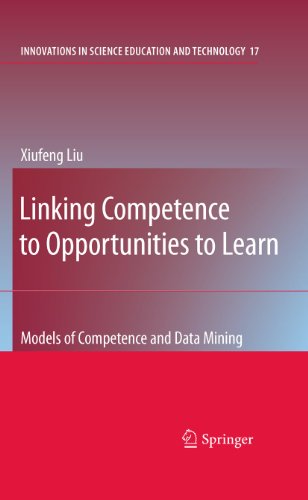
For many people, a high standard for student learning is desirable. This is what underlies current standard-based science education reforms around the world. As someone who was born and brought up in a less-privileged home and educated in a resource-limited school environment in a developing country, I always had to study hard to meet various standards from elementary to high school to univ- sity. My first book in English published over 10 years ago (Liu, X. [1996]. Mathematics and Science Curriculum Change in the People’s Republic of China. Lewiston, NY: The Edwin Mellen Press) provided me an opportunity to examine standards (i. e. , Chinese national science teaching syllabi) from a historical and political point of view. I argued that standards are developed for particular poli- cal agendas in order to maintain the privileged position of certain groups (i. e. , urban residents) in a society at expenses of others (i. e. , rural residents). Thus, underneath standards is systematic discrimination and injustice. Since then, I have had opportunities to study the issue of standards in much more breadth and depth. This book, Linking Competence to Opportunities to Learn: Models of Competence and data mining, provides me an opportunity to examine standards from a different perspective: opportunity to learn.
Die Inhaltsangabe kann sich auf eine andere Ausgabe dieses Titels beziehen.
Von der hinteren Coverseite
The current world-wide movement toward standards-based science education is based on a belief that every student, no matter how different he/she is, can and should reach a prescribed level of competence. Yet there are differences in circumstances between students that lie beyond their control, such as classroom, school and family resources and practices. Thus it is more important than ever to identify the particular resources and practices that significantly predict students’ levels of achievement so that strategies can be developed to help students reach competence.
This book applies data mining methodology to the issue of standardizing achievement in science education and develops frameworks of competence in the ‘Opportunity-to-learn’ (OTL) model of science education. It is aimed primarily at science education researchers, but can also be used as a reference by national and state education agencies who are required to make decisions about science curriculum standards and resource allocation. School district personnel will also find it useful in teacher professional development.
Opportunity-to-learn (OTL) refers to the entitlement of every student to receive the necessary classroom, school and family resources and practices to reach the expected competence. This book quantifies and stystematizes OTL by developing models showing how the circumstances of classroom, school and family relate to students’ achievement. Liu has also applied data mining techniques to these models. In addition, the text analyzes policy as well as pedagogical implications for standards-based science education reform.
„Über diesen Titel“ kann sich auf eine andere Ausgabe dieses Titels beziehen.
Weitere beliebte Ausgaben desselben Titels

Suchergebnisse für Linking Competence to Opportunities to Learn: Models...

Beispielbild für diese ISBN
Linking Competence to Opportunities to Learn: Models of Competence and Data Mining (Innovations in Science Education and Technology)
Anbieter: Sunny Day Books, Mayer, AZ, USA
Verkäuferbewertung 5 von 5 Sternen

Hardcover. Zustand: As New. A beautiful copy. Text in mint/unmarked condition. Owners name on flyleaf. Cover has minor shelf rubbings. Binding is tight. Bestandsnummer des Verkäufers D3K200413037
Gebraucht kaufen
EUR 66,80
EUR 4,29 Versand
Versand innerhalb von USA
Versand innerhalb von USA
Anzahl: 1 verfügbar
Beispielbild für diese ISBN
Linking Competence to Opportunities to Learn: Models of Competence and Data Mining (eng)
Print-on-DemandAnbieter: Brook Bookstore On Demand, Napoli, NA, Italien
Verkäuferbewertung 4 von 5 Sternen

Zustand: new. Questo è un articolo print on demand. Bestandsnummer des Verkäufers bd2b8b84c53a33b8eb5e77747e5bd45f
Neu kaufen
EUR 86,24
EUR 5,50 Versand
Versand von Italien nach USA
Versand von Italien nach USA
Anzahl: Mehr als 20 verfügbar
Foto des Verkäufers
Linking Competence to Opportunities to Learn : Models of Competence and Data Mining
Anbieter: GreatBookPrices, Columbia, MD, USA
Verkäuferbewertung 5 von 5 Sternen
Zustand: As New. Unread book in perfect condition. Bestandsnummer des Verkäufers 6233609
Gebraucht kaufen
EUR 123,17
EUR 2,27 Versand
Versand innerhalb von USA
Versand innerhalb von USA
Anzahl: 15 verfügbar
Beispielbild für diese ISBN
Linking Competence to Opportunities to Learn: Models of Competence and Data Mining (Innovations in Science Education and Technology, 17)
Anbieter: Ria Christie Collections, Uxbridge, Vereinigtes Königreich
Verkäuferbewertung 5 von 5 Sternen
Zustand: New. In. Bestandsnummer des Verkäufers ria9781402099106_new
Neu kaufen
EUR 114,68
EUR 13,87 Versand
Versand von Vereinigtes Königreich nach USA
Versand von Vereinigtes Königreich nach USA
Anzahl: Mehr als 20 verfügbar
Foto des Verkäufers
Linking Competence to Opportunities to Learn: Models of Competence and Data Mining
Print-on-DemandAnbieter: BuchWeltWeit Ludwig Meier e.K., Bergisch Gladbach, Deutschland
Verkäuferbewertung 5 von 5 Sternen
Buch. Zustand: Neu. This item is printed on demand - it takes 3-4 days longer - Neuware -For many people, a high standard for student learning is desirable. This is what underlies current standard-based science education reforms around the world. As someone who was born and brought up in a less-privileged home and educated in a resource-limited school environment in a developing country, I always had to study hard to meet various standards from elementary to high school to univ- sity. My first book in English published over 10 years ago (Liu, X. [1996]. Mathematics and Science Curriculum Change in the People's Republic of China. Lewiston, NY: The Edwin Mellen Press) provided me an opportunity to examine standards (i. e. , Chinese national science teaching syllabi) from a historical and political point of view. I argued that standards are developed for particular poli- cal agendas in order to maintain the privileged position of certain groups (i. e. , urban residents) in a society at expenses of others (i. e. , rural residents). Thus, underneath standards is systematic discrimination and injustice. Since then, I have had opportunities to study the issue of standards in much more breadth and depth. This book, Linking Competence to Opportunities to Learn: Models of Competence and data mining, provides me an opportunity to examine standards from a different perspective: opportunity to learn. 140 pp. Englisch. Bestandsnummer des Verkäufers 9781402099106
Neu kaufen
EUR 106,99
EUR 23,00 Versand
Versand von Deutschland nach USA
Versand von Deutschland nach USA
Anzahl: 2 verfügbar
Foto des Verkäufers
Linking Competence to Opportunities to Learn : Models of Competence and Data Mining
Anbieter: GreatBookPrices, Columbia, MD, USA
Verkäuferbewertung 5 von 5 Sternen
Zustand: New. Bestandsnummer des Verkäufers 6233609-n
Neu kaufen
EUR 129,59
EUR 2,27 Versand
Versand innerhalb von USA
Versand innerhalb von USA
Anzahl: 15 verfügbar
Foto des Verkäufers
Linking Competence to Opportunities to Learn : Models of Competence and Data Mining
Anbieter: GreatBookPricesUK, Woodford Green, Vereinigtes Königreich
Verkäuferbewertung 5 von 5 Sternen
Zustand: New. Bestandsnummer des Verkäufers 6233609-n
Neu kaufen
EUR 114,66
EUR 17,37 Versand
Versand von Vereinigtes Königreich nach USA
Versand von Vereinigtes Königreich nach USA
Anzahl: Mehr als 20 verfügbar
Foto des Verkäufers
Linking Competence to Opportunities to Learn : Models of Competence and Data Mining
Anbieter: GreatBookPricesUK, Woodford Green, Vereinigtes Königreich
Verkäuferbewertung 5 von 5 Sternen
Zustand: As New. Unread book in perfect condition. Bestandsnummer des Verkäufers 6233609
Gebraucht kaufen
EUR 116,71
EUR 17,37 Versand
Versand von Vereinigtes Königreich nach USA
Versand von Vereinigtes Königreich nach USA
Anzahl: Mehr als 20 verfügbar
Beispielbild für diese ISBN
Linking Competence to Opportunities to Learn
Anbieter: Books Puddle, New York, NY, USA
Verkäuferbewertung 4 von 5 Sternen
Zustand: New. pp. 152. Bestandsnummer des Verkäufers 261065552
Neu kaufen
EUR 133,05
EUR 3,43 Versand
Versand innerhalb von USA
Versand innerhalb von USA
Anzahl: 4 verfügbar
Foto des Verkäufers
Linking Competence to Opportunities to Learn
Anbieter: moluna, Greven, Deutschland
Verkäuferbewertung 5 von 5 Sternen
Zustand: New. Bestandsnummer des Verkäufers 4096037
Neu kaufen
EUR 93,00
EUR 48,99 Versand
Versand von Deutschland nach USA
Versand von Deutschland nach USA
Anzahl: Mehr als 20 verfügbar