
Verwandte Artikel zu Desert RATS: Rock Art Topographical Survey in Egypt's...
Desert RATS: Rock Art Topographical Survey in Egypt's Eastern Desert. Site Catalogue (Bar S, Band 2166) - Softcover
Inhaltsangabe
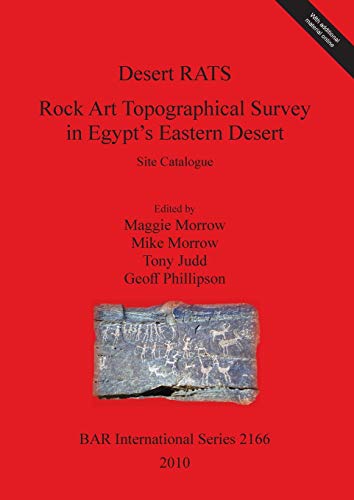
Edited by Maggie Morrow, Mike Morrow, Tony Judd and Geoff Phillipson Consultant Editor Pete Cherry Foreword by Toby Wilkinson We are used to thinking of Egypt, ancient and modern, in terms of the Nile valley: well-watered, green and fertile, a narrow strip of life-sustaining land between vast tracts of hostile desert. But this accustomed view is an illusion: even today, the deserts of Egypt - which seem so inhospitable - support flora, fauna and people. In prehistoric times, the climate was wetter and life was much more abundant. The deserts' early inhabitants left behind images of their environment, lifestyle and deepest beliefs in the form of rock art, etched into the landscape. One of the biggest concentrations of this ancient, ancestral art is found to the east of the Nile, in the wadis (dry valleys) that dissect the hills and plains between the Wadi Hammamat to the north and the Wadi Barramiya to the south. In the space of just five months, between October 2000 and February 2001, three teams of dedicated volunteers carried out a systematic survey of this remarkable region. They succeeded in locating and recording over 100 new sites of rock art, previously unknown to archaeology. The results, comprising many thousands of individual scenes, are presented here for the first time. They open up a fascinating and largely unexpected window on Egypt's past, and on the beginnings of civilisation in north-eastern Africa. Hence, the present volume is, without doubt, an important contribution to an exciting new area of Egyptology. As always, new discoveries raise as many questions as they answer. The study of ancient Egyptian origins has been pursued for more than a century, yet many puzzles remain. For example, how and why did a great civilisation emerge in Egypt? Did the prehistoric inhabitants already share essentially the same culture, or did rival groups play a part in fashioning the distinctive Pharaonic tradition that we all recognise? The rock art of Egypt's Eastern Desert promises important new clues to these and other unsolved mysteries - clues that scholars will now have the chance to decipher and debate. Future generations of archaeologists and ancient historians will be thankful that the study of Egypt has enthusiasts as committed as the editors of this excellent survey report.
Die Inhaltsangabe kann sich auf eine andere Ausgabe dieses Titels beziehen.
Über die Autorin bzw. den Autor
Maggie Morrow, Mike Morrow, Tony Judd and Geoff Phillipson
„Über diesen Titel“ kann sich auf eine andere Ausgabe dieses Titels beziehen.
Suchergebnisse für Desert RATS: Rock Art Topographical Survey in Egypt's...

Beispielbild für diese ISBN
Desert RATS: Rock Art Topographical Survey in Egypt's Eastern Desert: Site Catalogue
Verlag:
Archaeopress, Oxford, UK, 2010
ISBN 10: 140730710X
ISBN 13: 9781407307107
Gebraucht
Softcover
Anbieter: AardBooks, Fitzwilliam, NH, USA
Verkäuferbewertung 5 von 5 Sternen

Zustand: New (still shrink-wrapped). trade pbk. 4to. 254pp. NO INTERNATIONAL OR PRIORITY. BAR International Series 2166. Bestandsnummer des Verkäufers MAIN025231I
Gebraucht kaufen
EUR 69,14
EUR 5,59 Versand
Versand innerhalb von USA
Versand innerhalb von USA
Anzahl: 1 verfügbar
Beispielbild für diese ISBN
Desert RATS Rock Art Topographical Survey in Egypt's Eastern Desert Site Catalogue 2166 British Archaeological Reports International Series
Print-on-DemandAnbieter: PBShop.store UK, Fairford, GLOS, Vereinigtes Königreich
Verkäuferbewertung 5 von 5 Sternen
UNK. Zustand: New. New Book. Delivered from our UK warehouse in 4 to 14 business days. THIS BOOK IS PRINTED ON DEMAND. Established seller since 2000. Bestandsnummer des Verkäufers L0-9781407307107
Neu kaufen
EUR 86,37
EUR 7,01 Versand
Versand von Vereinigtes Königreich nach USA
Versand von Vereinigtes Königreich nach USA
Anzahl: Mehr als 20 verfügbar
Foto des Verkäufers
Desert Rats : Rock Art Topographical Survey in Egypt's Eastern Desert: Site Catalogue
Verlag:
British Archaeological Reports, 2010
ISBN 10: 140730710X
ISBN 13: 9781407307107
Neu
Softcover
Anbieter: GreatBookPrices, Columbia, MD, USA
Verkäuferbewertung 5 von 5 Sternen
Zustand: New. Bestandsnummer des Verkäufers 15495113-n
Neu kaufen
EUR 94,01
EUR 2,36 Versand
Versand innerhalb von USA
Versand innerhalb von USA
Anzahl: Mehr als 20 verfügbar
Foto des Verkäufers
Desert Rats : Rock Art Topographical Survey in Egypt's Eastern Desert: Site Catalogue
Verlag:
British Archaeological Reports, 2010
ISBN 10: 140730710X
ISBN 13: 9781407307107
Neu
Softcover
Anbieter: GreatBookPricesUK, Woodford Green, Vereinigtes Königreich
Verkäuferbewertung 5 von 5 Sternen
Zustand: New. Bestandsnummer des Verkäufers 15495113-n
Neu kaufen
EUR 86,36
EUR 17,91 Versand
Versand von Vereinigtes Königreich nach USA
Versand von Vereinigtes Königreich nach USA
Anzahl: Mehr als 20 verfügbar
Beispielbild für diese ISBN
Desert RATS: Rock Art Topographical Survey in Egypt's Eastern Desert (BAR International)
Verlag:
British Archaeological Reports, 2010
ISBN 10: 140730710X
ISBN 13: 9781407307107
Neu
Softcover
Anbieter: Ria Christie Collections, Uxbridge, Vereinigtes Königreich
Verkäuferbewertung 5 von 5 Sternen
Zustand: New. In English. Bestandsnummer des Verkäufers ria9781407307107_new
Neu kaufen
EUR 93,81
EUR 13,48 Versand
Versand von Vereinigtes Königreich nach USA
Versand von Vereinigtes Königreich nach USA
Anzahl: Mehr als 20 verfügbar
Foto des Verkäufers
Desert Rats : Rock Art Topographical Survey in Egypt's Eastern Desert: Site Catalogue
Verlag:
British Archaeological Reports, 2010
ISBN 10: 140730710X
ISBN 13: 9781407307107
Gebraucht
Softcover
Anbieter: GreatBookPricesUK, Woodford Green, Vereinigtes Königreich
Verkäuferbewertung 5 von 5 Sternen
Zustand: As New. Unread book in perfect condition. Bestandsnummer des Verkäufers 15495113
Gebraucht kaufen
EUR 93,38
EUR 17,91 Versand
Versand von Vereinigtes Königreich nach USA
Versand von Vereinigtes Königreich nach USA
Anzahl: Mehr als 20 verfügbar
Foto des Verkäufers
Desert RATS: Rock Art Topographical Survey in Egypt's Eastern Desert
Anbieter: Rarewaves.com USA, London, LONDO, Vereinigtes Königreich
Verkäuferbewertung 5 von 5 Sternen
Mixed Media Product. Zustand: New. Bestandsnummer des Verkäufers LU-9781407307107
Neu kaufen
EUR 113,10
Versand gratis
Versand von Vereinigtes Königreich nach USA
Versand von Vereinigtes Königreich nach USA
Anzahl: Mehr als 20 verfügbar
Beispielbild für diese ISBN
Desert RATS: Rock Art Topographical Survey in Egypt's Eastern Desert: Site Catalogue
Print-on-DemandAnbieter: THE SAINT BOOKSTORE, Southport, Vereinigtes Königreich
Verkäuferbewertung 5 von 5 Sternen
Mixed media product. Zustand: New. This item is printed on demand. New copy - Usually dispatched within 5-9 working days. Bestandsnummer des Verkäufers C9781407307107
Neu kaufen
EUR 99,60
EUR 24,03 Versand
Versand von Vereinigtes Königreich nach USA
Versand von Vereinigtes Königreich nach USA
Anzahl: Mehr als 20 verfügbar
Beispielbild für diese ISBN
Desert RATS: Rock Art Topographical Survey in Egypt's Eastern Desert (British Archaeological Reports International Series, 2166)
Verlag:
Oxford : British Archaeological Reports, BAR Publishing, 2010
ISBN 10: 140730710X
ISBN 13: 9781407307107
Neu
Soft cover
Anbieter: Joseph Burridge Books, Dagenham, Vereinigtes Königreich
Verkäuferbewertung 5 von 5 Sternen
Soft cover. Zustand: New. 254 pages : illustrations, maps ; 30 cm + 1 DVD-ROM (4 3/4 in.). We are used to thinking of Egypt, ancient and modern, in terms of the Nile valley: well-watered, green and fertile, a narrow strA of life-sustaining land between vast tracts of hostile desert. But this accustomed view is an illusion: eventoday, the deserts of Egypt – which seem so inhospitable – support flora, fauna and people. In prehistoric times, the climate was wetter and life was much more abundant. The deserts’ early inhabitants left behind images of their environment, lifestyle and deepest beliefs in the form of rock art, etched into the landscape. One of the biggest concentrations of this ancient, ancestral art is found to the east of the Nile, in the wadis (dry valleys) that dissect the hills and plains between the Wadi Hammamat to the north and the Wadi Barramiya to the south. In the space of just five months, between October 2000 and February 2001, three teams of dedicated volunteers carried out a systematic survey of this remarkable region. They succeeded in locating and recording over 100 new sites of rock art, previously unknown to archaeology. The results, comprising many thousands of individual scenes, are presented here for the first time. They open up a fascinating and largely unexpected window on Egypt’s past, and on the beginnings ofcivilisation in north-eastern Africa. Hence, the present volume is, without doubt, an important contribution to an exciting new area of Egyptology. As always, new discoveries raise as many questions as they answer. The study of ancient Egyptian origins has been pursued for more than a century, yet many puzzles remain. For example, how and why did a great civilisation emerge in Egypt? Did the prehistoric inhabitants already share essentially the same culture, or did rival groups play a part in fashioning the distinctive Pharaonic tradition that we all recognise? The rock art of Egypt’s Eastern Desert promises important new clues to these and other unsolved mysteries – clues that scholars will now have the chance to decAher and debate. Future generations of archaeologists and ancient historians will be thankful that the study of Egypt has enthusiasts as committed as the editors of this excellent survey report. Bestandsnummer des Verkäufers BAR2166
Neu kaufen
EUR 110,71
EUR 27,47 Versand
Versand von Vereinigtes Königreich nach USA
Versand von Vereinigtes Königreich nach USA
Anzahl: 1 verfügbar
Beispielbild für diese ISBN
Desert RATS: Rock Art Topographical Survey in Egypt*s Eastern Desert (BAR International Series)
Verlag:
British Archaeological Reports, 2010
ISBN 10: 140730710X
ISBN 13: 9781407307107
Gebraucht
Paperback
Anbieter: Mispah books, Redhill, SURRE, Vereinigtes Königreich
Verkäuferbewertung 4 von 5 Sternen

Paperback. Zustand: Like New. LIKE NEW. SHIPS FROM MULTIPLE LOCATIONS. book. Bestandsnummer des Verkäufers ERICA775140730710X6
Gebraucht kaufen
EUR 119,32
EUR 29,86 Versand
Versand von Vereinigtes Königreich nach USA
Versand von Vereinigtes Königreich nach USA
Anzahl: 1 verfügbar