
Verwandte Artikel zu Epicenter: Why the Current Rumblings in the Middle...
Inhaltsangabe
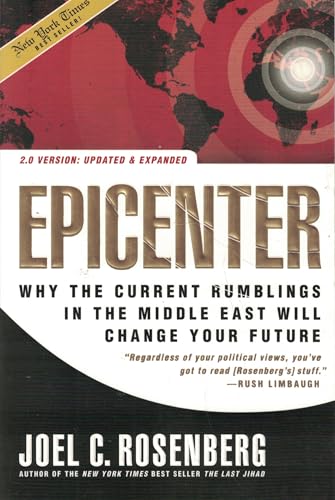
In his first groundbreaking nonfiction book, now with updated content, <i>New York Times</i> best-selling author Joel C. Rosenberg takes readers on an unforgettable journey through prophecy and current events into the future of Iraq after Saddam, Russia after Communism, Israel after Arafat, and Christianity after radical Islam. You won't want to miss Joel's exclusive interviews with Israeli, Palestinian, and Russian leaders, along with previously classified CIA and White House documents. New content includes the most up-to-date information since the hardcover release in 2006, a new poll about American attitudes toward the Middle East and prophecy, and transcripts of interviews conducted during the interview process for the <i>Epicenter</i> DVD-video.
Die Inhaltsangabe kann sich auf eine andere Ausgabe dieses Titels beziehen.
Auszug. © Genehmigter Nachdruck. Alle Rechte vorbehalten.
Epicenter
Why the Current Rumblings in the Middle East Will Change Your FutureBy Joel C. RosenbergTyndale House Publishers
Copyright © 2006 Joel C. RosenbergAll right reserved.
ISBN: 9781414311364
Chapter One
PREDICTING THE FUTURE
Few Americans will ever forget what they were doing on September 11, 2001, when they first heard the news that the United States was under attack by radical Islamic jihadists using jet planes on kamikaze missions. I certainly never will.
On that beautiful, sunny, crystal clear Tuesday morning, I was putting the finishing touches on my first novel, a political thriller called The Last Jihad, which opens with radical Islamic terrorists hijacking a jet plane and flying an attack mission into an American city. What's more, I was doing so in a town house barely fifteen minutes away from Washington Dulles International Airport, where American Airlines Flight 77 had just taken off. At that very moment, the plane was being seized and flown right over our home toward the Pentagon.
At the time, I had no idea anything unusual was under way. A literary agent in Manhattan had read the first three chapters of Jihad six months earlier. He was convinced that he could get it published and urged me to finish it as quickly as possible. Given that he worked for the agent who had discovered Tom Clancy back in the early 1980s, I took the advice seriously, working feverishly to get the book done before my savings account ran dry.
As had become my morning ritual, I had breakfast with my wife, Lynn, and our kids, threw on jeans and a T-shirt, and settled down to work on the novel's second-to-last chapter. I didn't have radio or television on. I was simply typing away on my laptop when, about an hour later, Lynn burst into the house and turned on the news. She quickly explained that after dropping off two of our kids at school, she had turned on the radio and heard that the World Trade Center had been hit by two planes. We turned on FOX News and saw the horror begin to unfold for ourselves.
We saw the smoke pouring out of the North Tower. We saw the constant replays of United Airlines Flight 175 plowing into the South Tower and erupting into a massive ball of fire. And then, before we could fully process it all, we saw the World Trade Center towers collapse.
People ask me what my first reaction was, but I don't recall thinking that my novel was coming true. I simply remember the feeling of shock. I had been to the top of the World Trade Center as a kid with my father, an architect who had grown up in Brooklyn and loved to show me the architectural landmarks of the city he loved. I had been at the top of the North Tower just a few weeks earlier for lunch at the Windows on the World restaurant. Now, before my eyes, these two testaments to man's engineering genius were gone, as were the lives of those trapped inside.
Then came the news that the Pentagon had been hit and word that the White House and the Capitol were being evacuated and rumors that Air Force One might be a target. Washington, the city that had become home for Lynn and me since our marriage in June of 1990, was suddenly under siege. Not a single commercial jet was in the air. Instead, fighter jets flew combat air patrols over the city. Troops were being deployed on the streets, along with armored personnel carriers, Avenger antiaircraft missiles, and all kinds of military assets.
I remember calling friends at the White House and on Capitol Hill and my agent in New York, hoping for word that they were safe but unable to get through with so many phone lines jammed. I remember calling Steve Forbes at his office in Greenwich Village to see if he was okay. Steve and I had worked together from 1996 through the 2000 Republican primaries and had traveled together to nearly forty states on almost every kind of plane imaginable, from a twin-engine prop over rural Georgia to a gleaming Gulfstream IV en route from Dallas to Newark to a series of jam-packed Southwest flights to who knows where. Was he on a commercial flight that morning? After repeated attempts to get through, I finally got his executive assistant on the line. Steve was safe, she said. He had been coming over one of the bridges into Manhattan when he actually saw the second plane hit. At that moment, his driver slammed on the brakes, spun the car around, and headed back to Steve's home.
Lynn and I got our boys back from school. Several friends came over to spend the day. We tracked events on television, e-mailed friends around the country and around the world with updates from Washington, and prayed for those directly affected by the crisis. We prayed for our president to have the wisdom to know what to do next. Were more attacks coming? Would there be a 9/12, a 9/13, a 9/14? Would there be a series of terrorist attacks, one after another, as Israel experienced for so many years?
It was not until sometime in late November or early December, I believe, that events began to settle enough for my thoughts to turn back to The Last Jihad. What was I supposed to do with it? My agent, Scott Miller at Trident Media Group in Manhattan, agreed that we could not very well send it to a New York-based publisher. We couldn't send it to any publisher. No one wanted a novel that opened with a kamikaze attack against an American city. It was no longer entertainment. It was too raw, too real. I stuck it in a drawer and tried to forget about it while I sought out new clients and tried to rebuild the communications-strategy company I had largely neglected for most of 2001.
And then something curious happened. My wife and I were watching the State of the Union address in January of 2002 when President Bush delivered his now-famous "axis of evil" line and warned Americans that the next war we might have to face could be with Saddam Hussein over terrorism and weapons of mass destruction:
Our second goal [after shutting down terrorist camps and bringing terrorists to justice] is to prevent regimes that sponsor terror from threatening America or our friends and allies with weapons of mass destruction. Some of these regimes have been pretty quiet since September the eleventh. But we know their true nature.... Iraq continues to flaunt its hostility toward America and to support terror. The Iraqi regime has plotted to develop anthrax, and nerve gas, and nuclear weapons for over a decade. This is a regime that has already used poison gas to murder thousands of its own citizens-leaving the bodies of mothers huddled over their dead children.... States like these [including Iran and North Korea], and their terrorist allies, constitute an axis of evil, arming to threaten the peace of the world. By seeking weapons of mass destruction, these regimes pose a grave and growing danger. They could provide these arms to terrorists, giving them the means to match their hatred. They could attack our allies or attempt to blackmail the United States. In any of these cases, the price of indifference would be catastrophic.... We'll be deliberate, yet time is not on our side. I will not wait on events, while dangers gather.
Lynn and I looked at each other as if we were living in an episode of The Twilight Zone. It was one thing to write a novel that opened with a kamikaze attack against America that essentially comes to pass. But until that moment, few people had been talking publicly about the possible necessity of going to war with Iraq. Except me. You see, as the plot of The Last Jihad...
„Über diesen Titel“ kann sich auf eine andere Ausgabe dieses Titels beziehen.
Suchergebnisse für Epicenter: Why the Current Rumblings in the Middle...

Beispielbild für diese ISBN
Epicenter 2.0
Verlag:
Tyndale House Publishers, 2008
ISBN 10: 1414311362
ISBN 13: 9781414311364
Gebraucht
Paperback
Anbieter: World of Books (was SecondSale), Montgomery, IL, USA
Verkäuferbewertung 5 von 5 Sternen

Paperback. Zustand: Very Good. In his first groundbreaking nonfiction book, now with updated content, New York Times best-selling author Joel C. Rosenberg takes readers on an unforgettable journey through prophecy and current events into the future of Iraq after Saddam, Russia after Communism, Israel after Arafat, and Christianity after radical Islam. You won't want to miss Joel's exclusive interviews with Israeli, Palestinian, and Russian leaders, along with previously classified CIA and White House documents. New content includes the most up-to-date information since the hardcover release in 2006, a new poll about American attitudes toward the Middle East and prophecy, and transcripts of interviews conducted during the interview process for the Epicenter DVD-video. Bestandsnummer des Verkäufers 00108689699
Gebraucht kaufen
EUR 3,67
Versand gratis
Versand innerhalb von USA
Versand innerhalb von USA
Anzahl: 1 verfügbar
Beispielbild für diese ISBN
Epicenter 20 Why the Current R
Verlag:
Tyndale House Publishers, 2008
ISBN 10: 1414311362
ISBN 13: 9781414311364
Gebraucht
Softcover
Anbieter: World of Books (was SecondSale), Montgomery, IL, USA
Verkäuferbewertung 5 von 5 Sternen
Zustand: Good. Item in good condition. Textbooks may not include supplemental items i.e. CDs, access codes etc. Bestandsnummer des Verkäufers 00063463995
Gebraucht kaufen
EUR 3,67
Versand gratis
Versand innerhalb von USA
Versand innerhalb von USA
Anzahl: Mehr als 20 verfügbar
Beispielbild für diese ISBN
Epicenter 20 Why the Current R
Verlag:
Tyndale House Publishers, 2008
ISBN 10: 1414311362
ISBN 13: 9781414311364
Gebraucht
Softcover
Anbieter: World of Books (was SecondSale), Montgomery, IL, USA
Verkäuferbewertung 5 von 5 Sternen
Zustand: Acceptable. Item in good condition. Textbooks may not include supplemental items i.e. CDs, access codes etc. Bestandsnummer des Verkäufers 00063216522
Gebraucht kaufen
EUR 3,67
Versand gratis
Versand innerhalb von USA
Versand innerhalb von USA
Anzahl: 2 verfügbar
Beispielbild für diese ISBN
Epicenter 2.0: Why the Current Rumblings in the Middle East Will Change Your Future
Verlag:
Tyndale House Publishers, Inc., 2008
ISBN 10: 1414311362
ISBN 13: 9781414311364
Gebraucht
Paperback
Anbieter: Your Online Bookstore, Houston, TX, USA
Verkäuferbewertung 5 von 5 Sternen
Paperback. Zustand: Good. Bestandsnummer des Verkäufers 1414311362-3-18397527
Gebraucht kaufen
EUR 3,68
Versand gratis
Versand innerhalb von USA
Versand innerhalb von USA
Anzahl: 5 verfügbar
Beispielbild für diese ISBN
Epicenter 2.0: Why the Current Rumblings in the Middle East Will Change Your Future
Verlag:
Tyndale House Publishers, Inc., 2008
ISBN 10: 1414311362
ISBN 13: 9781414311364
Gebraucht
Paperback
Anbieter: Gulf Coast Books, Cypress, TX, USA
Verkäuferbewertung 5 von 5 Sternen
Paperback. Zustand: Good. Bestandsnummer des Verkäufers 1414311362-3-20106689
Gebraucht kaufen
EUR 3,68
Versand gratis
Versand innerhalb von USA
Versand innerhalb von USA
Anzahl: 5 verfügbar
Beispielbild für diese ISBN
Epicenter 2.0: Why the Current Rumblings in the Middle East Will Change Your Future
Anbieter: Orion Tech, Kingwood, TX, USA
Verkäuferbewertung 5 von 5 Sternen
Paperback. Zustand: Good. Bestandsnummer des Verkäufers 1414311362-3-22386300
Gebraucht kaufen
EUR 3,68
Versand gratis
Versand innerhalb von USA
Versand innerhalb von USA
Anzahl: 3 verfügbar
Foto des Verkäufers
Epicenter 2.0: Why the Current Rumblings in the Middle East Will Change Your Future
Verlag:
Tyndale House Publishers, 2008
ISBN 10: 1414311362
ISBN 13: 9781414311364
Gebraucht
Softcover
Anbieter: Used Book Company, Egg Harbor Township, NJ, USA
Verkäuferbewertung 5 von 5 Sternen
Zustand: Good. Shows moderate signs of wear and previous use. Can include notes/highlighting. A portion of your purchase benefits nonprofits! - Note: Edition & format may differ from what is shown in stock photo & item details. May not include supplementary material (toys, access code, dvds, etc). Bestandsnummer des Verkäufers 584ZST000739_ns
Gebraucht kaufen
EUR 3,86
Versand gratis
Versand innerhalb von USA
Versand innerhalb von USA
Anzahl: 1 verfügbar
Foto des Verkäufers
Epicenter 2.0: Why the Current Rumblings in the Middle East Will Change Your Future
Verlag:
Tyndale House Publishers, 2008
ISBN 10: 1414311362
ISBN 13: 9781414311364
Gebraucht
Softcover
Anbieter: Zoom Books Company, Lynden, WA, USA
Verkäuferbewertung 5 von 5 Sternen
Zustand: very_good. Book is in very good condition and may include minimal underlining highlighting. The book can also include "From the library of" labels. May not contain miscellaneous items toys, dvds, etc. . We offer 100% money back guarantee and 24 7 customer service. Bestandsnummer des Verkäufers ZBV.1414311362.VG
Gebraucht kaufen
EUR 4,00
Versand gratis
Versand innerhalb von USA
Versand innerhalb von USA
Anzahl: 4 verfügbar
Foto des Verkäufers
Epicenter 2.0: Why the Current Rumblings in the Middle East Will Change Your Future
Verlag:
Tyndale House Publishers, 2008
ISBN 10: 1414311362
ISBN 13: 9781414311364
Gebraucht
Softcover
Anbieter: Reliant Bookstore, El Dorado, KS, USA
Verkäuferbewertung 5 von 5 Sternen
Zustand: good. This book is in good condition with very minimal damage. Pages may have minimal notes or highlighting. Cover image on the book may vary from photo. Ships out quickly in a secure plastic mailer. Bestandsnummer des Verkäufers RDV.1414311362.G
Gebraucht kaufen
EUR 4,44
Versand gratis
Versand innerhalb von USA
Versand innerhalb von USA
Anzahl: 1 verfügbar
Beispielbild für diese ISBN
Epicenter 2.0: Why the Current Rumblings in the Middle East Will Change Your Future
Anbieter: Giant Giant, Reston, VA, USA
Verkäuferbewertung 5 von 5 Sternen
paperback. Zustand: Good. Good condition.May contain light marking/highlighting.Cover and pages may show some wear.Not Satisfied? Contact us to get a refund. Bestandsnummer des Verkäufers BRG-44_4_080
Gebraucht kaufen
EUR 4,53
Versand gratis
Versand innerhalb von USA
Versand innerhalb von USA
Anzahl: 1 verfügbar