
Verwandte Artikel zu The Apocrypha (Core Biblical Studies)
Inhaltsangabe
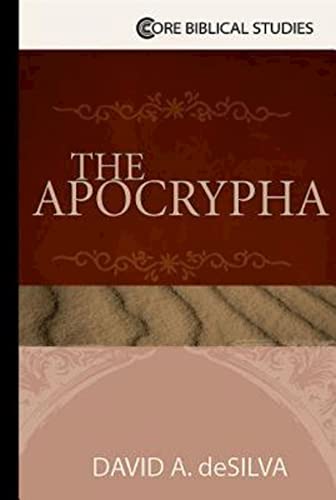
Using a thematic approach, David A. deSilva gives a brief introduction and summary of the largely unknown and unappreciated books of the Apocrypha. He also gives an overview to the social and cultural context of the world of the Apocrypha and early Christianity. From there, the book highlights the Apocrypha’s relevance and impact on Christian practices, spiritual formation, and on Early Church doctrine and theology.
Die Inhaltsangabe kann sich auf eine andere Ausgabe dieses Titels beziehen.
Über die Autorin bzw. den Autor
Dr. David A. deSilva, an elder in the Florida Annual Conference, attended Princeton University, Princeton Theological Seminary and earned his Ph.D. in Religion at Emory University. He currently serves as Trustees' Distinguished Professor of New Testament and Greek at Ashland Theological Seminary. He has written over twenty books, including Unholy Allegiances: Heeding Revelation's Warning, The Jewish Teachers of Jesus, James, and Jude, An Introduction to the New Testament, and Introducing the Apocrypha. He also served as Apocrypha Editor for the Common English Bible and has published extensively in journals, reference works, and adult Bible curriculum.
Auszug. © Genehmigter Nachdruck. Alle Rechte vorbehalten.
The Apocrypha
Core Biblical Studies
By David A. deSilvaAbingdon Press
Copyright © 2012 Abingdon Press
All rights reserved.
ISBN: 978-1-4267-4235-4All rights reserved.
Contents
Introduction: Why Read the Apocrypha?,
Chapter 1: What's in the Apocrypha?,
Chapter 2: The World of the Apocrypha,
Chapter 3: God, the Law, and the Covenant,
Chapter 4: The Apocrypha and Jewish Ethics,
Chapter 5: The Apocrypha and Jewish Spirituality,
Chapter 6: The Jewish People and the Nations,
Chapter 7: The Apocrypha and the Christian Church,
Chapter 8: The Apocrypha and the Christian Canon,
Notes,
References,
CHAPTER 1
What's in the Apocrypha?
A person who is familiar with the writings of the Hebrew Bible (the Protestant "Old Testament") and who embarks upon reading the Apocrypha for the first time will not find the world of these texts all that strange. There will be fresh content, to be sure, but there will also be much that is familiar. First, the deuterocanonical books are written in genres and styles that, for the most part, imitate the literature of the Hebrew Bible—the Scriptures treasured by the writers of the apocryphal books. The books that relate the history of the period are either reworked versions of canonical history books (1 Esdras) or are written in a style that closely resembles the historical books of Samuel and Kings (1 and 2 Maccabees). The Apocrypha contain collections of wisdom teachings (Sirach; the Wisdom of Solomon) that resemble the older book of Proverbs and grow organically from the broader wisdom tradition of the Hebrew Bible. The canonical book of Psalms, together with the prayers and psalms scattered throughout the Hebrew Bible, provides the model for the prayers and psalms found among the Apocrypha, whether these are independent texts (Prayer of Manasseh; Psalm 151) or embedded in longer books (Prayer of Azariah and Hymn of the Three Young Men in the Greek version of Daniel; Judith's hymn [Jdt 16]; Tobit's hymn [Tob 13]).
Second, and perhaps more important, the authors of the apocryphal books are more closely indebted to the Hebrew Bible for the content of what they write than any other source. The teachings and language of the Hebrew Bible are echoed and developed throughout this collection. The law of Moses and the covenant formed between God and the people of Israel on the basis of the Law are the constant reference points throughout these texts. The explanation of the national fortunes of Israel as the history of the consequences of Israel's collective loyalty to or disloyalty against the covenant, begun in the Deuteronomistic History of 1 Samuel through 2 Kings, is accepted and adapted to the continuing history of Israel throughout the apocryphal books. The specific promises of the Old Testament prophets remain the basis for the hopes articulated by a Tobit or a Baruch; the advice of Proverbs informs the advice of Ben Sira, to the extent that later rabbis might forget what maxim comes from which source; the poetic expressions about Wisdom in the wisdom psalms and Proverbs inspire the reflections on Wisdom in Baruch, Wisdom of Solomon, and Sirach. When we read the Apocrypha, we are reading the literature of pious Jews trying to make sense of their changing circumstances in light of the unchanging revelation of their sacred texts.
In what follows, I will provide a brief text-by-text overview of the books included in the standard, expanded collection of Apocrypha as found in the New Revised Standard Version, English Standard Version, and Common English Bible translations. Unlike the books of Genesis through Nehemiah, the books of the Apocrypha are not arranged in anything like chronological order. They are also not grouped according to genre, like the books of both the Old and the New Testaments. In the survey that follows, therefore, be prepared to jump rather nimbly between Judea and the Diaspora; between the Persian, Greek, and Roman periods; and between history and fiction. The chronological, geographical, and cultural frameworks within which these books must be set will be the topic of chapter 2.
Tobit
The story of Tobit has made a significant impact on culture in the West. One can hardly find an art museum with a collection of any decent size without finding depictions of scenes from this charming story that has captivated readers for millennia. The tale was originally written in Aramaic at some point before 100 BCE, and quite probably before 200 BCE. It may have been written either in Palestine or in the eastern Diaspora (e.g., Babylon), though errors in regard to Assyrian and Babylonian geography favor Palestine, where its earliest manuscripts have also been discovered.
Tobit tells of the lives of two interrelated families living in Nineveh and Ecbatana after the exile of the northern tribes in 721 BCE. Its historical errors announce it as a work of fiction rather than an attempt at history. Tobit is a pious, charitable Jew taken into exile from Naphtali. After burying the body of a murdered fellow Jew, he takes a nap in his courtyard by the wall. The droppings of sparrows fall into his eyes and blind him, bringing him and his family into poverty. At the same time, a cousin of Tobit's is also in distress. Sarah has been married to seven men, but a jealous demon kills her husbands in the marriage chamber before they can consummate the union. God resolves to answer the prayers of both Tobit and Sarah, sending his angel Raphael to see to them.
Tobit tells his only son, Tobias, to recover a large sum of silver Tobit had deposited with a relative in faraway Media, and elicits the aid of another Jew, Azariah, to accompany him. On the way, a fish attacks Tobias while he is washing his feet, and Azariah tells him to grab it, since its inner organs can be used for healing the blind and driving away demons. Azariah leads Tobias to the home of Sarah and her parents, and arranges for their marriage, since Tobias is her relative. Tobias burns the fish's liver and heart to drive away the demon, and Sarah's family is overjoyed. Azariah proceeds to Media to collect the silver while the couple celebrates the wedding feast, then returns with Tobias and Sarah to Nineveh, where Tobias smears the fish's gall on Tobit's eyes and heals them. Azariah reveals to Tobit and Tobias that he is an archangel of God, sent to heal them on account of Tobit's many acts of charity. Tobit concludes with a hymn and, finally, his deathbed instructions to his son.
This book is a vital witness to the ethics of Diaspora Jews, especially emphasizing almsgiving and other works of charity, the importance of marrying within the Jewish family, and the value of kinship relations. It also bears witness to the theological developments of the period, including angelology and demonology, the affirmation of Deuteronomy's interpretation of national prosperity and misfortune (extending this to individuals), the explanation of individual suffering as a test of faithfulness (as in Job), and the eschatological restoration and exaltation of Jerusalem.
Judith
Judith is another work of historical fiction without pretensions to representing a "true" history. For example, Judith 5:18-19 relates the destruction of Jerusalem and its Temple as past history even though, in the world of the story, Nebuchadnezzar was only now threatening to do this very thing. The story reflects some of the dynamics of the Maccabean Revolution, and may well have been written in Judea at some point during the Hasmonean dynasty, the brief window of independence enjoyed...
„Über diesen Titel“ kann sich auf eine andere Ausgabe dieses Titels beziehen.
Suchergebnisse für The Apocrypha (Core Biblical Studies)

Foto des Verkäufers
The Apocrypha (Core Biblical Studies)
Anbieter: Goodwill of Colorado, COLORADO SPRINGS, CO, USA
Verkäuferbewertung 5 von 5 Sternen

Zustand: good. All pages and cover are intact. Dust jacket included if applicable, though it may be missing on hardcover editions. Spine and cover may show minor signs of wear including scuff marks, curls or bends to corners as well as cosmetic blemishes including stickers. Pages may contain limited notes or highlighting. "From the library of" labels may be present. Shrink wrap, dust covers, or boxed set packaging may be missing. Bundled media e.g., CDs, DVDs, access codes may not be included. Bestandsnummer des Verkäufers COLV.1426742355.G
Gebraucht kaufen
EUR 10,72
Versand gratis
Versand innerhalb von USA
Versand innerhalb von USA
Anzahl: 1 verfügbar
Beispielbild für diese ISBN
The Apocrypha (Core Biblical Studies)
Anbieter: Lakeside Books, Benton Harbor, MI, USA
Verkäuferbewertung 5 von 5 Sternen
Zustand: New. Brand New! Not Overstocks or Low Quality Book Club Editions! Direct From the Publisher! We're not a giant, faceless warehouse organization! We're a small town bookstore that loves books and loves it's customers! Buy from Lakeside Books! Bestandsnummer des Verkäufers OTF-Y-9781426742354
Neu kaufen
EUR 11,98
EUR 3,44 Versand
Versand innerhalb von USA
Versand innerhalb von USA
Anzahl: Mehr als 20 verfügbar
Foto des Verkäufers
Apocrypha
Anbieter: GreatBookPrices, Columbia, MD, USA
Verkäuferbewertung 5 von 5 Sternen
Zustand: New. Bestandsnummer des Verkäufers 18924575-n
Neu kaufen
EUR 13,17
EUR 2,28 Versand
Versand innerhalb von USA
Versand innerhalb von USA
Anzahl: Mehr als 20 verfügbar
Foto des Verkäufers
The Apocrypha (Paperback or Softback)
Verlag:
Abingdon Press 11/1/2012, 2012
ISBN 10: 1426742355
ISBN 13: 9781426742354
Neu
Paperback or Softback
Anbieter: BargainBookStores, Grand Rapids, MI, USA
Verkäuferbewertung 5 von 5 Sternen
Paperback or Softback. Zustand: New. The Apocrypha. Book. Bestandsnummer des Verkäufers BBS-9781426742354
Foto des Verkäufers
Apocrypha
Anbieter: GreatBookPrices, Columbia, MD, USA
Verkäuferbewertung 5 von 5 Sternen
Zustand: As New. Unread book in perfect condition. Bestandsnummer des Verkäufers 18924575
Gebraucht kaufen
EUR 15,45
EUR 2,28 Versand
Versand innerhalb von USA
Versand innerhalb von USA
Anzahl: Mehr als 20 verfügbar
Beispielbild für diese ISBN
The Apocrypha (Core Biblical Studies)
Anbieter: California Books, Miami, FL, USA
Verkäuferbewertung 4 von 5 Sternen

Zustand: New. Bestandsnummer des Verkäufers I-9781426742354
Neu kaufen
EUR 18,66
Versand gratis
Versand innerhalb von USA
Versand innerhalb von USA
Anzahl: Mehr als 20 verfügbar
Foto des Verkäufers
Apocrypha, The
Anbieter: Rarewaves.com USA, London, LONDO, Vereinigtes Königreich
Verkäuferbewertung 5 von 5 Sternen
Paperback. Zustand: New. Bestandsnummer des Verkäufers LU-9781426742354
Neu kaufen
EUR 19,37
Versand gratis
Versand von Vereinigtes Königreich nach USA
Versand von Vereinigtes Königreich nach USA
Anzahl: Mehr als 20 verfügbar
Beispielbild für diese ISBN
The Apocrypha
Print-on-DemandAnbieter: PBShop.store US, Wood Dale, IL, USA
Verkäuferbewertung 5 von 5 Sternen
PAP. Zustand: New. New Book. Shipped from UK. THIS BOOK IS PRINTED ON DEMAND. Established seller since 2000. Bestandsnummer des Verkäufers L0-9781426742354
Neu kaufen
EUR 20,05
Versand gratis
Versand innerhalb von USA
Versand innerhalb von USA
Anzahl: Mehr als 20 verfügbar
Beispielbild für diese ISBN
The Apocrypha
Print-on-DemandAnbieter: PBShop.store UK, Fairford, GLOS, Vereinigtes Königreich
Verkäuferbewertung 5 von 5 Sternen
PAP. Zustand: New. New Book. Delivered from our UK warehouse in 4 to 14 business days. THIS BOOK IS PRINTED ON DEMAND. Established seller since 2000. Bestandsnummer des Verkäufers L0-9781426742354
Neu kaufen
EUR 18,66
EUR 4,85 Versand
Versand von Vereinigtes Königreich nach USA
Versand von Vereinigtes Königreich nach USA
Anzahl: Mehr als 20 verfügbar
Beispielbild für diese ISBN
The Apocrypha
Print-on-DemandAnbieter: Majestic Books, Hounslow, Vereinigtes Königreich
Verkäuferbewertung 4 von 5 Sternen
Zustand: New. Print on Demand pp. 170. Bestandsnummer des Verkäufers 50972299
Neu kaufen
EUR 19,49
EUR 7,58 Versand
Versand von Vereinigtes Königreich nach USA
Versand von Vereinigtes Königreich nach USA
Anzahl: 4 verfügbar