
Verwandte Artikel zu Cryptomnesia: How a Forgotten Memory Could Save the...
Inhaltsangabe
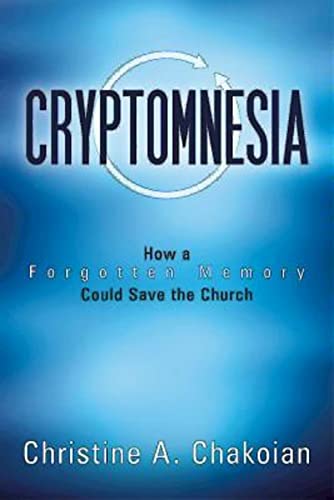
How can we Christians move forward, when our very existence seems imperiled? We already know the way, for we've been through this before. But we have forgotten; we have cryptomnesia. Cryptomnesia is the reappearance of a suppressed or forgotten memory which is mistaken for a new experience. (Collins English Dictionary). The world is changing, and it is changing fast. Social media friendships, global commerce, online education, populist uprisings, e-books, and smartphones are just a sample of the Internet’s growing impact on our lives. Americans are rapidly becoming more mobile, worldly, and secular—all while it feels like the church we know is being left behind. Growing numbers of “spiritual but not religious” show disinterest in church, and mainline churches fear imminent demise. How do we find a way forward? Ironically, by looking backward. We are not the first to experience globalization. In fact, the early church emerged in an age of globalization—the product of the Greco-Roman Empire and its mammoth road-building efforts on three continents. People were connected in ways they had never experienced: Roman citizens were bombarded with new cultures, new commerce, new foods, new ideas, new philosophies, new religions. It was an era of massive dislocation, and at the same time, exactly the right environment for Christianity to emerge and thrive.
Die Inhaltsangabe kann sich auf eine andere Ausgabe dieses Titels beziehen.
Über die Autorin bzw. den Autor
Christine Chakoian is Pastor and Head of Staff at First Presbyterian Church in Lake Forest, Illinois, one of the largest congregations in the Presbyterian Church (U.S.A.) to be led by a woman. She is a graduate of the University of Illinois, Yale Divinity School, and McCormick Theological Seminary (D.Min). She is an editor and writer for Feasting on the Gospels, a contributor to the Day1 radio program, 30 Good Minutes television show, and the Presbyterian Outlook magazine.
Auszug. © Genehmigter Nachdruck. Alle Rechte vorbehalten.
Cryptomnesia
How A Forgotten Memory Could Save The Church
By Christine ChakoianAbingdon Press
Copyright © 2014 Abingdon Press
All rights reserved.
ISBN: 978-1-4267-9060-7All rights reserved.
Contents
Acknowledgments,
Introduction Cryptomnesia,
Chapter 1 When Everything Changes: Life in America Today,
Chapter 2 Religious Life in the Shrinking World,
Chapter 3 Sifting Our Inheritance: What to Keep and What to Let Go?,
Chapter 4 Authority and Community in a Flattened Age,
Chapter 5 Taking the Message to the Masses,
Chapter 6 Can't We All Just Get Along?,
Chapter 7 The Path Ahead,
Notes,
CHAPTER 1
When Everything Changes: Life in America Today
My friend Gail cherishes her childhood memories growing up in Washington State:
I grew up at the foot of Mt. St. Helens. I was a child at her beautiful feet. "The Fujiyama of the West," they called her; and there were untold family trips to her forest campgrounds. My grandfather taking me for visits at Spirit Lake Lodge ... playing with "pummy stone," the floating rocks left from some long-ago eruption ... campfire nights at camp, gazing across the lake at the mountain's luminous shadow in the midnight.
These memories are more than pleasant recollections to Gail. They are part of her family's spiritual heritage and shaped her Christian identity:
By the time I was in college and director of our church's summer camp, I had a spiritual relationship with that mountain. I hiked her surrounding hills, just as my daddy had in his Scouting days ... the same trails, the same waterfalls, the same glimpses through shoreline trees. I thought of St. Helens as "my mountain."
Though Gail knew that all creation was God's gift for us to love, she was grateful that God, knowing the limits of our hearts, "Ordained for each one spot should prove / Beloved over all," in Rudyard Kipling's words. Indeed, Gail thought of St. Helens as "my spot, my most beloved place on earth":
Clearest in my memory after all these years is night upon summer night, when all the campers were finally in bed, sitting on a log gazing as the Orthodox gaze at the beloved face of their icons, praying ... to God, to Jesus, to the Spirit, all somehow "iconned" in the glowing shape of that magnificent shadow in the darkness. In my memory even now, with Spirit Lake shimmering blue-green at her feet, it is still the most beloved and beautiful place on earth.
Every one of us has been shaped somewhere. Some, like Gail, are stamped by a single place, but most of us are shaped by a landscape of relationships and experiences, traditions and institutions. Whether or not we feel uniformly positive about them, their familiarity gives us a sense of security. We know how to navigate the terrain. And we also know that disorienting feeling whenever a major event shifts the landscape of our lives for good or ill: we get married, or lose a job; a loved one dies, or we have our first child. What was once so familiar has changed dramatically, and our whole orientation needs to adapt until a new normal emerges.
But every now and then, in the course of human history, something happens that hits everyone at the same time—as if a tectonic shift is shaking the earth beneath us. The early Christians experienced this two thousand years ago, when the Roman Empire built its vast road system, connecting far-flung people with unprecedented ease. Now we're feeling it today as the Internet highway connects us all, rearranging everything we found familiar. And like any change that shifts our recognizable terrain, it is unsettling.
In the spring of 1980, Gail remembers, Mount St. Helens began to tremor and steam. She followed the story from her new home in New York. Then one night, she had a dream:
In my dream, I saw the mountain from my accustomed vantage across Spirit Lake; but instead of being graceful and snow-capped, she was low, gray, and ugly.... It left me wondering—until a week later, on a Sunday morning in May, when the mountain exploded: blowing out some 1200 feet of her summit and destroying everything living on and around those slopes, burying Spirit Lake and the trails I had hiked and my father before me, burying them forever under 150 feet of mud and ash.
The next day, I remember weeping inconsolably as I watched the nightly news, the first photos coming in from the blast area; until in mid-sob one particular aerial photo flashed for a split second on the screen. It was a distance panorama of the mountain itself—and what made me gasp was the shape—the exact outline I had dreamed a week before.
Like the shifting plates of planet under the Cascade Range that caused Mount St. Helens to erupt in May of 1980, spewing fine coal over hundreds of miles and changing the face of the mountain—now and then, it feels as if the foundation of the earth is moving. When it does, not only we ourselves, but also everything and everyone around us shifts as well, and the earth moves, and the people tremble (Ps 99:1).
Such is the disorienting force of technology, shifting the earth beneath us. Everyone is unsettled—the whole world, and every single human institution in it. The result is a social volcano that transforms our landscape, leaving a new reality in its path. What was once so familiar has changed dramatically, and our whole orientation has to adapt until a new normal emerges.
Half a century ago, it wasn't a geologist but a communications professor who saw proverbial steam rising from the volcano of technology. On May 18, 1960, CBS news reporter Alan Millar introduced a professor at the University of Toronto: Marshall McLuhan, who was studying the effect of mass media on behavior and thought:
Television has transformed the world into an interconnected tribe he calls a "global village." There's an earthquake and no matter where we live, we all get the message. And today's teenager, the future villager, who feels especially at home with our new gadgets ... will bring our tribe even closer together.
The world has gotten smaller fast, thanks to all our "gadgets." Now every place on the planet feels like our own neighborhood:
We know what it's like to go on a safari in Kenya or to have an audience with the pope ... But not only is the world getting smaller. It's becoming more available and familiar, to our minds and to our emotions. The world is now a global village.
Later McLuhan wrote: "So rapidly have we begun to feel the effects of the electronic revolution in presenting us with new configurations that all of us today are displaced persons living in a world that has little to do with the one in which we grew up." He prophetically called ours "the Age of Anxiety." And that was before the Internet exponentially accelerated the pace of change. In The New Digital Age: Reshaping the Future of People, Nations and Business, Eric Schmidt and Jared Cohen sum it up this way: as the reach of the Internet expands, "nearly every aspect of life will change, from the minutiae of our daily lives to more fundamental questions about identity, relationships and even our security."
The early Christians who experienced the unsettling impact of Roman roads knew this kind of upheaval, and in the chapters ahead, we'll learn from them. But let's start by looking at the broad scope of disorienting change that we're experiencing now.
Technology's Impact on Daily Life
I remember growing up in a quiet suburban home using a rotary dial telephone, listening...
„Über diesen Titel“ kann sich auf eine andere Ausgabe dieses Titels beziehen.
Suchergebnisse für Cryptomnesia: How a Forgotten Memory Could Save the...

Beispielbild für diese ISBN
Cryptomnesia: How a Forgotten Memory Could Save the Church
Anbieter: PlumCircle, West Mifflin, PA, USA
Verkäuferbewertung 5 von 5 Sternen

paperback. Zustand: Very Good. Publisher overstock. May have remainder mark / minor shelfwear. 99% of orders arrive in 4-10 days. Discounted shipping on multiple books. Bestandsnummer des Verkäufers mon0001275054
Gebraucht kaufen
EUR 0,90
EUR 4,38 Versand
Versand innerhalb von USA
Versand innerhalb von USA
Anzahl: 1 verfügbar
Beispielbild für diese ISBN
Cryptomnesia: How a Forgotten Memory Could Save the Church
Anbieter: World of Books (was SecondSale), Montgomery, IL, USA
Verkäuferbewertung 5 von 5 Sternen
Zustand: Good. Item in good condition and has highlighting/writing on text. Used texts may not contain supplemental items such as CDs, info-trac etc. Bestandsnummer des Verkäufers 00101929546
Gebraucht kaufen
EUR 5,42
Versand gratis
Versand innerhalb von USA
Versand innerhalb von USA
Anzahl: 1 verfügbar
Beispielbild für diese ISBN
Cryptomnesia: How a Forgotten Memory Could Save the Church
Anbieter: ThriftBooks-Atlanta, AUSTELL, GA, USA
Verkäuferbewertung 5 von 5 Sternen
Paperback. Zustand: Very Good. No Jacket. May have limited writing in cover pages. Pages are unmarked. ~ ThriftBooks: Read More, Spend Less. Bestandsnummer des Verkäufers G1426790600I4N00
Gebraucht kaufen
EUR 6,03
Versand gratis
Versand innerhalb von USA
Versand innerhalb von USA
Anzahl: 1 verfügbar
Beispielbild für diese ISBN
Cryptomnesia : How a Forgotten Memory Could Save the Church
Anbieter: Better World Books, Mishawaka, IN, USA
Verkäuferbewertung 5 von 5 Sternen
Zustand: Very Good. Pages intact with possible writing/highlighting. Binding strong with minor wear. Dust jackets/supplements may not be included. Stock photo provided. Product includes identifying sticker. Better World Books: Buy Books. Do Good. Bestandsnummer des Verkäufers 1345640-6
Gebraucht kaufen
EUR 6,46
Versand gratis
Versand innerhalb von USA
Versand innerhalb von USA
Anzahl: 1 verfügbar
Beispielbild für diese ISBN
Cryptomnesia: How a Forgotten Memory Could Save the Church
Anbieter: Redux Books, Grand Rapids, MI, USA
Verkäuferbewertung 5 von 5 Sternen
Paperback. Zustand: New. Paperback. An UNUSED, UNMARKED, UNBLEMISHED copy.; 100% Satisfaction Guaranteed! Ships same or next business day! Bestandsnummer des Verkäufers 142408070077
Beispielbild für diese ISBN
Cryptomnesia: How a Forgotten Memory Could Save the Church
Anbieter: HPB Inc., Dallas, TX, USA
Verkäuferbewertung 5 von 5 Sternen
paperback. Zustand: Very Good. Connecting readers with great books since 1972! Used books may not include companion materials, and may have some shelf wear or limited writing. We ship orders daily and Customer Service is our top priority! Bestandsnummer des Verkäufers S_462843180
Gebraucht kaufen
EUR 4,98
EUR 3,29 Versand
Versand innerhalb von USA
Versand innerhalb von USA
Anzahl: 1 verfügbar
Beispielbild für diese ISBN
Cryptomnesia: How a Forgotten Memory Could Save the Church
Anbieter: HPB-Ruby, Dallas, TX, USA
Verkäuferbewertung 5 von 5 Sternen
Paperback. Zustand: Very Good. Connecting readers with great books since 1972! Used books may not include companion materials, and may have some shelf wear or limited writing. We ship orders daily and Customer Service is our top priority! Bestandsnummer des Verkäufers S_438619428
Gebraucht kaufen
EUR 4,98
EUR 3,29 Versand
Versand innerhalb von USA
Versand innerhalb von USA
Anzahl: 1 verfügbar
Foto des Verkäufers
Cryptomnesia: How a Forgotten Memory Could Save the Church
Anbieter: BargainBookStores, Grand Rapids, MI, USA
Verkäuferbewertung 5 von 5 Sternen
Zustand: New. Cryptomnesia: How a Forgotten Memory Could Save the Church. Bestandsnummer des Verkäufers BBS-9781426790607
Beispielbild für diese ISBN
Cryptomnesia: How a Forgotten Memory Could Save the Church
Anbieter: Running Numbers, Grand Rapids, MI, USA
Verkäuferbewertung 5 von 5 Sternen
paperback. Zustand: New. Brand New Condition - Ships Fast! Bestandsnummer des Verkäufers mon0000002097
Neu kaufen
EUR 9,03
EUR 4,39 Versand
Versand innerhalb von USA
Versand innerhalb von USA
Anzahl: 10 verfügbar
Beispielbild für diese ISBN
Cryptomnesia: How a Forgotten Memory Could Save the Church
Anbieter: Lakeside Books, Benton Harbor, MI, USA
Verkäuferbewertung 5 von 5 Sternen
Zustand: New. Brand New! Not Overstocks or Low Quality Book Club Editions! Direct From the Publisher! We're not a giant, faceless warehouse organization! We're a small town bookstore that loves books and loves it's customers! Buy from Lakeside Books! Bestandsnummer des Verkäufers OTF-S-9781426790607
Neu kaufen
EUR 13,41
EUR 3,50 Versand
Versand innerhalb von USA
Versand innerhalb von USA
Anzahl: Mehr als 20 verfügbar