
Verwandte Artikel zu Understanding Scripture: An Overview of the Bible's...
Inhaltsangabe
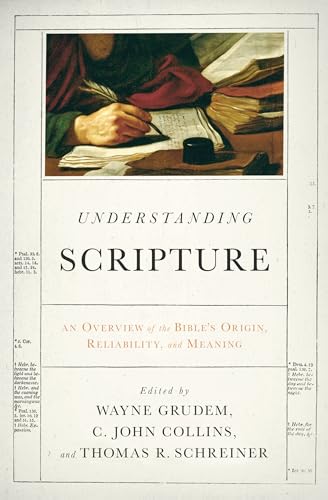
Originally published within the ESV Study Bible, these articles feature first-rate contributors delivering concise studies on topics such as the origin and meaning of Scripture, apologetics, and world religions.
Die Inhaltsangabe kann sich auf eine andere Ausgabe dieses Titels beziehen.
Über die Autorinnen und Autoren
Wayne Grudem (PhD, University of Cambridge; DD, Westminster Theological Seminary) is Distinguished Research Professor of Theology and Biblical Studies at Phoenix Seminary, having previously taught for twenty years at Trinity Evangelical Divinity School. He is a former president of the Evangelical Theological Society, a member of the Translation Oversight Committee for the English Standard Version of the Bible, the general editor of the ESV Study Bible, and has published over twenty books.
C. John Collins (PhD, University of Liverpool) is professor of Old Testament at Covenant Theological Seminary in St. Louis, Missouri. He has been a research engineer, church-planter, and teacher. He was the Old Testament Chairman for the English Standard Version Bible and is author of The God of Miracles, Science and Faith: Friends or Foes?, and Genesis 1–4: A Linguistic, Literary, and Theological Commentary. He and his wife have two grown children.
Thomas R. Schreiner (MDiv and ThM, Western Conservative Baptist Seminary; PhD, Fuller Theological Seminary) is the James Buchanan Harrison Professor of New Testament Interpretation and associate dean of the school of theology at the Southern Baptist Theological Seminary.
J. I. Packer (DPhil, Oxford University) serves as the Board of Governors’ Professor of Theology at Regent College. He is the author of numerous books, including the classic best-seller Knowing God. Packer served as general editor for the English Standard Version Bible and as theological editor for the ESV Study Bible.
John Piper (DTheol, University of Munich) is the founder and teacher of desiringGod.org and the chancellor of Bethlehem College & Seminary. He served for thirty-three years as the senior pastor of Bethlehem Baptist Church in Minneapolis, Minnesota, and is the author of more than fifty books, including Desiring God; Don’t Waste Your Life; This Momentary Marriage; A Peculiar Glory; and Reading the Bible Supernaturally.
R. Kent Hughes (DMin, Trinity Evangelical Divinity School) is senior pastor emeritus of College Church in Wheaton, Illinois, and former professor of practical theology at Westminster Theological Seminary in Philadelphia, Pennsylvania. Hughes is also a founder of the Charles Simeon Trust, which conducts expository preaching conferences throughout North America and worldwide. He serves as the series editor for the Preaching the Word commentary series and is the author or coauthor of many books. He and his wife, Barbara, live in Wyncote, Pennsylvania, and have four children and an ever-increasing number of grandchildren.
Leland Ryken (PhD, University of Oregon) served as professor of English at Wheaton College for nearly 50 years. He has authored or edited over fifty books, including The Word of God in English and A Complete Handbook of Literary Forms in the Bible. He is a frequent speaker at the Evangelical Theological Society's annual meetings and served as literary stylist for the English Standard Version Bible.
Vern S. Poythress (PhD, Harvard University; ThD, University of Stellenbosch) is professor of New Testament interpretation at Westminster Theological Seminary in Philadelphia, Pennsylvania, where he has taught for nearly four decades. In addition to earning six academic degrees, he is the author of numerous books and articles on biblical interpretation, language, and science.
John D. Currid (PhD, University of Chicago) is the Carl W. McMurray Professor of Old Testament at Reformed Theological Seminary. He is currently an adjunct faculty member at the Jerusalem Center for Biblical Studies in Jerusalem, Israel, and serves as project director of the Bethsaida Excavations Project in Israel (1995-present). He lectures and preaches worldwide.
Peter J. Gentry (PhD, University of Toronto) is professor of Old Testament interpretation at the Southern Baptist Theological Seminary and director of the Hexapla Institute.
Daniel B. Wallace (PhD, Dallas Theological Seminary) is professor of New Testament studies at Dallas Theological Seminary and the founder of the Center for the Study of New Testament Manuscripts, an institute purposed to preserve Scripture by taking digital photographs of all known Greek New Testament manuscripts. Dr. Wallace influences students across the country through his textbook on Greek grammar, Greek Grammar Beyond the Basics, as it is used in more than two-thirds of the nation’s schools for the study of Greek. His postdoctoral work includes work on Greek grammar at Tyndale House in Cambridge and textual criticism studies at the Institut für Neutestamentliche Textforschung in Münster. When he is not involved in scholarly pursuits, Dr. Wallace and wife, Pati, enjoy spending time with their boys and beagles.
Peter J. Williams (PhD, University of Cambridge) is the principal of Tyndale House and the consulting editor and coordinator of this project. He is also chair of the International Greek New Testament Project, which is producing the largest scholarly edition ever attempted of a single book of the New Testament, namely the Editio Critica Maior of John's Gospel. He is the author of Early Syriac Translation Technique and the Textual Criticism of the Greek Gospels.
David Chapman (PhD, University of Cambridge) is professor of New Testament and Archaeology at Covenant Theological Seminary. He is also the author of Ancient Jewish and Christian Perceptions of Crucifixion. He presents research and lectures worldwide.
Dan Doriani (PhD, Westminster Theological Seminary) serves as the vice president of strategic academic projects and professor of theology at Covenant Seminary. He previously served as the senior pastor of Central Presbyterian Church in Clayton, Missouri, and has been involved in several planning and study committees at the presbytery level in both the Presbyterian Church in America (PCA) and the Evangelical Presbyterian Church (EPC). Dan lives with his wife, Debbie, in Chesterfield, Missouri, and has three grown daughters.
John D. Hannah (PhD, University of Texas at Dallas) is research professor of theological studies and distinguished professor of historical theology at Dallas Theological Seminary. He is a frequent church and conference speaker both at home and abroad. He remains active in church ministries and serves on the boards of several organizations.
Charles E. Hill (PhD, Cambridge University) serves as John R. Richardson Professor of New Testament and Early Christianity at Reformed Theological Seminary. He is the author of Who Chose the Gospels? and a coeditor of The Early Text of the New Testament.
David Powlison (1949–2019) was a teacher, a counselor, and the executive director of the Christian Counseling & Educational Foundation for many years. He received his PhD from the University of Pennsylvania and was also the senior editor of the Journal of Biblical Counseling. He wrote a number of books, including How Does Sanctification Work?; Making All Things New; and God's Grace in Your Suffering.
Wayne Grudem (PhD, University of Cambridge) is Distinguished Research Professor Emeritus of Theology and Biblical Studies at Phoenix Seminary in Phoenix, Arizona. He is the author of more than twenty-five books, including Bible Doctrine and Christian Beliefs.
C. John Collins (PhD, University of Liverpool) is professor of Old Testament at Covenant Theological Seminary in St. Louis, Missouri. He has been a research engineer, church-planter, and teacher. He was the Old Testament Chairman for the English Standard Version Bible and is author of The God of Miracles, Science and Faith: Friends or Foes?, and Genesis 1–4: A Linguistic, Literary, and Theological Commentary. He and his wife have two grown children.
Thomas R. Schreiner (PhD, Fuller Theological Seminary) is the James Buchanan Harrison Professor of New Testament Interpretation and associate dean of the School of Theology at the Southern Baptist Theological Seminary.
J. I. Packer (1926–2020) served as the Board of Governors’ Professor of Theology at Regent College. He authored numerous books, including the classic bestseller Knowing God. Packer also served as general editor for the English Standard Version Bible and as theological editor for the ESV Study Bible.
John Piper is founder and lead teacher of desiringGod.org and chancellor of Bethlehem College & Seminary. He served for thirty-three years as a pastor at Bethlehem Baptist Church in Minneapolis, Minnesota, and is the author of more than fifty books, including Desiring God; Don’t Waste Your Life; and Providence.
R. Kent Hughes (DMin, Trinity Evangelical Divinity School) is senior pastor emeritus of College Church in Wheaton, Illinois, and former professor of practical theology at Westminster Theological Seminary in Philadelphia, Pennsylvania. Hughes is also a founder of the Charles Simeon Trust, which conducts expository preaching conferences throughout North America and worldwide. He serves as the series editor for the Preaching the Word commentary series and is the author or coauthor of many books. He and his wife, Barbara, live in Spokane, Washington, and have four children and an ever-increasing number of grandchildren.
Leland Ryken (PhD, University of Oregon) served as professor of English at Wheaton College for nearly fifty years. He served as literary stylist for the English Standard Version Bible and has authored or edited over sixty books, including The Word of God in English and A Complete Handbook of Literary Forms in the Bible.
Vern S. Poythress (PhD, Harvard University; ThD, University of Stellenbosch) is Distinguished Professor of New Testament, Biblical Interpretation, and Systematic Theology at Westminster Theological Seminary in Philadelphia, Pennsylvania, where he has taught for four decades. In addition to earning six academic degrees, he is the author of numerous books and articles on biblical interpretation, language, and science.
John D. Currid (PhD, University of Chicago) is the Carl W. McMurray Professor of Old Testament at Reformed Theological Seminary. He is currently an adjunct faculty member at the Jerusalem Center for Biblical Studies in Jerusalem, Israel, and serves as project director of the Bethsaida Excavations Project in Israel (1995-present). He lectures and preaches worldwide.
Peter J. Gentry (PhD, University of Toronto) is professor of Old Testament interpretation at the Southern Baptist Theological Seminary and director of the Hexapla Institute.
Daniel B. Wallace (PhD, Dallas Theological Seminary) is professor of New Testament studies at Dallas Theological Seminary and the founder of the Center for the Study of New Testament Manuscripts, an institute purposed to preserve Scripture by taking digital photographs of all known Greek New Testament manuscripts. Dr. Wallace influences students across the country through his textbook on Greek grammar, Greek Grammar Beyond the Basics, as it is used in more than two-thirds of the nation’s schools for the study of Greek. His postdoctoral work includes work on Greek grammar at Tyndale House in Cambridge and textual criticism studies at the Institut für Neutestamentliche Textforschung in Münster. When he is not involved in scholarly pursuits, Dr. Wallace and wife, Pati, enjoy spending time with their boys and beagles.
Peter J. Williams (PhD, University of Cambridge) is the principal of Tyndale House, Cambridge, the chair of the International Greek New Testament Project, and a member of the ESV Translation Oversight Committee. He is the author of Can We Trust the Gospels? and Early Syriac Translation Technique and the Textual Criticism of the Greek Gospels.
David Chapman (PhD, University of Cambridge) is professor of New Testament and Archaeology at Covenant Theological Seminary. He is also the author of Ancient Jewish and Christian Perceptions of Crucifixion. He presents research and lectures worldwide.
Dan Doriani (PhD, Westminster Theological Seminary) is a former pastor and currently serves as professor of biblical and systematic theology at Covenant Theological Seminary, where he previously served as academic dean or vice president for fifteen years. Dan has been involved in several planning and study committees at the presbytery level in both the Presbyterian Church in America (PCA) and the Evangelical Presbyterian Church (EPC). Dan lives with his wife, Debbie, in Chesterfield, Missouri, and has three grown daughters.
John D. Hannah (PhD, University of Texas at Dallas) is research professor of theological studies and distinguished professor of historical theology at Dallas Theological Seminary. He is a frequent church and conference speaker both at home and abroad. He remains active in church ministries and serves on the boards of several organizations.
Charles E. Hill (PhD, Cambridge University) serves as John R. Richardson Professor of New Testament and Early Christianity at Reformed Theological Seminary. He is the author of Who Chose the Gospels? and a coeditor of The Early Text of the New Testament.
David Powlison (1949–2019) was a teacher, a counselor, and the executive director of the Christian Counseling & Educational Foundation. He received his PhD from the University of Pennsylvania and was also the senior editor of the Journal of Biblical Counseling. He wrote a number of books, including How Does Sanctification Work?; Making All Things New; and God's Grace in Your Suffering.
Auszug. © Genehmigter Nachdruck. Alle Rechte vorbehalten.
Understanding Scripture
An Overview of the Bible's Origin, Reliability, and Meaning
By Wayne Grudem, C. John Collins, Thomas R. SchreinerGood News Publishers
Copyright © 2012 Crossway
All rights reserved.
ISBN: 978-1-4335-2999-3All rights reserved.
Contents
Part 1: Interpreting the Bible,
1 Interpreting the Bible: An Introduction, Daniel Doriani,
2 Interpreting the Bible: A Historical Overview, John Hannah,
Part 2: Reading the Bible,
3 Reading the Bible Theologically, J. I. Packer,
4 Reading the Bible as Literature, Leland Ryken,
5 Reading the Bible in Prayer and Communion with God, John Piper,
6 Reading the Bible for Personal Application, David Powlison,
7 Reading the Bible for Preaching and Public Worship, R. Kent Hughes,
Part 3: The Canon of Scripture,
8 The Canon of the Old Testament, Roger T. Beckwith,
9 The Canon of the New Testament, Charles E. Hill,
10 The Apocrypha, Roger T. Beckwith,
Part 4: The Reliability of Bible Manuscripts,
11 The Reliability of the Old Testament Manuscripts, Paul D. Wegner,
12 The Reliability of the New Testament Manuscripts, Daniel B. Wallace,
Part 5: Archaeology and the Bible,
13 Archaeology and the Reliability of the Old Testament, John Currid,
14 Archaeology and the Reliability of the New Testament, David W. Chapman,
Part 6: The Original Languages of the Bible,
15 Hebrew and Aramaic, and How They Work, Peter J. Williams,
16 Greek, and How It Works, David Alan Black,
17 The Septuagint, Peter J. Gentry,
Part 7: Old Testament and New,
18 A Survey of the History of Salvation, Vern S. Poythress,
19 How the New Testament Quotes and Interprets the Old Testament, C. John Collins,
CHAPTER 1
Interpreting the Bible: An Introduction
Daniel Doriani
The Bible contains sixty-six books, written in three languages over fifteen hundred years by dozens of authors writing in numerous genres for diverse audiences. Scripture is clear enough that anyone can grasp the essentials of the faith. At the same time, extensive reading leads to riddles: Why does Moses apparently condone polygamy and slavery? What is a denarius? Who is Apollyon? Why do the apostles care about meat that is offered to idols?
THE REQUIREMENTS FOR INTERPRETATION
Skill in interpretation is needed to gain the most from the Bible. When Scriptures are read in the church, leaders can answer questions and orient listeners to its great themes. Still, people rightly desire to read and understand the Bible for themselves (Jer. 31:31–34; 1 John 2:27).
Interpretation of the Bible requires technical skill and spiritual receptivity. Though all God's people have a significant ability to read and understand the great teachings of the Bible in their own language (see Deut. 6:6–7; Pss. 1:1–2; 19:7; 119:130; 1 Cor. 1:2; Eph. 3:4; Col. 4:16), there also remain more detailed and precise questions about meaning that sometimes require technical knowledge of Greek and Hebrew, as well as of Scripture's historical, cultural, and intellectual backgrounds. Here interpretation resembles the reading of dense poetry or constitutional documents. Interpretation is also an art, mastered not by rigid adherence to procedures but by long practice conducted under tutors. Interpretation is also a spiritual task. To read the Bible is not to dissect a lifeless text that only contains marks on a page. As people read Scripture, Scripture reads them, questions them, reveals their thoughts (Heb. 4:12) — and it leads to a Person, not just truths. All Scripture points to Jesus's death and resurrection, to forgiveness, and to personal knowledge of God through him.
To profit from Scripture, one must take the right posture. At one extreme, the skeptic questions and judges whatever he or she reads. At the other, the overconfident believer, convinced that he has mastered biblical or systematic theology, ignores or explains away whatever fails to support his system. Interpreters should come to Scripture humbly, expecting to learn and be corrected and willing to observe Scripture closely and accept whatever they find. All Scripture is breathed out by God (2 Tim. 3:16), so every word counts. If a biblical narrator mentions something as seemingly insignificant as a character's hair, this detail will probably be important — as the hair of Esau, Samson, and Absalom shows!
Interpreters also need skills. The remainder of this chapter explains the skills necessary to read the Bible in context, to find the main point of a passage, to develop a theme, and to apply Scripture.
KNOWING THE CONTEXT
It is a truism that one must read the Bible in context, but the truism hides a distinction. "Context" can refer to the historical or the literary context. The literary context includes the words, sentences, and paragraphs preceding and following a passage. The literary context locates a passage within the larger purposes of a book. Readers should ask why a particular passage is here and not elsewhere, how it builds upon prior passages, and how it prepares for the next. The disciples once said to Jesus, "Increase our faith" (Luke 17:5). Absent a context, it seems like a godly request (which it may be in some contexts). But here the disciples say it after they hear a difficult command and before Jesus tells them they merely need the faith of a mustard seed. Considering this context, some interpreters have seen "Increase our faith" as an excuse, not a godly request.
One should also locate a passage in the context of its entire book. Paul's statement "I appeal to you therefore, brothers, by the mercies of God, to present your bodies as a living sacrifice, holy and acceptable to God ..." (Rom. 12:1) stands at a hinge in Romans. Paul had just finished recounting God's mercies in Romans 3–11. His "therefore" summons readers to see that God's abundant mercies lead them into heartfelt service.
The historical context includes knowledge of the culture, economy, geography, climate, agriculture, architecture, family life, morals, and social structure of the Bible's actors, authors, and readers. Over the centuries, climate and topography hardly vary, but other factors shift more. For example, Israel was poor and weak under Samuel and Saul, strong and rich under David and Solomon.
Historical contexts help readers make sense of passages like Deuteronomy 22:8, which says a builder "shall make a parapet" around the roof of a new home, lest someone fall from it and "bring the guilt of blood" upon the house. A parapet is a retaining wall around the edge of a flat roof. Since Israelites worked, ate, and slept on their roofs, parapets kept reckless boys and restless sleepers from tumbling off. The law taught Israel how to preserve life and to love neighbors.
Again, in Luke 11:27–28 a woman called out to Jesus, "Blessed is the womb that bore you and the breasts at which you nursed." The woman's mind-set explains her odd-sounding speech. In antiquity, women gained honor by marrying a great man or bearing great children. The woman praised Jesus by praising his mother — only a great woman could bear such a great son. Jesus nudges her in another direction: "Blessed rather are those who hear the word of God and obey it." In other words, a woman finds greatness in discipleship more than in matrimony or maternity.
Interpreters must read carefully to recognize both obvious and hidden riddles. Some matters are less clear than they seem. Do contemporary...
„Über diesen Titel“ kann sich auf eine andere Ausgabe dieses Titels beziehen.
Suchergebnisse für Understanding Scripture: An Overview of the Bible's...

Foto des Verkäufers
Understanding Scripture: An Overview of the Bible's Origin, Reliability, and Meaning
Anbieter: Dream Books Co., Denver, CO, USA
Verkäuferbewertung 5 von 5 Sternen

Zustand: acceptable. This copy has clearly been enjoyedâ"expect noticeable shelf wear and some minor creases to the cover. Binding is strong, and all pages are legible. May contain previous library markings or stamps. Bestandsnummer des Verkäufers DBV.1433529998.A
Gebraucht kaufen
EUR 6,37
Versand gratis
Versand innerhalb von USA
Versand innerhalb von USA
Anzahl: 1 verfügbar
Beispielbild für diese ISBN
Understanding Scripture : An Overview of the Bible's Origin, Reliability, and Meaning
Anbieter: Better World Books, Mishawaka, IN, USA
Verkäuferbewertung 5 von 5 Sternen
Zustand: Good. Pages intact with minimal writing/highlighting. The binding may be loose and creased. Dust jackets/supplements are not included. Stock photo provided. Product includes identifying sticker. Better World Books: Buy Books. Do Good. Bestandsnummer des Verkäufers 5800548-6
Gebraucht kaufen
EUR 6,78
Versand gratis
Versand innerhalb von USA
Versand innerhalb von USA
Anzahl: 2 verfügbar
Beispielbild für diese ISBN
Understanding Scripture : An Overview of the Bible's Origin, Reliability, and Meaning
Anbieter: Better World Books, Mishawaka, IN, USA
Verkäuferbewertung 5 von 5 Sternen
Zustand: Fine. Used book that is in almost brand-new condition. May contain a remainder mark. Better World Books: Buy Books. Do Good. Bestandsnummer des Verkäufers 67488800-6
Gebraucht kaufen
EUR 6,78
Versand gratis
Versand innerhalb von USA
Versand innerhalb von USA
Anzahl: 1 verfügbar
Beispielbild für diese ISBN
Understanding Scripture: An Overview of the Bible's Origin, Reliability, and Meaning
Anbieter: HPB Inc., Dallas, TX, USA
Verkäuferbewertung 5 von 5 Sternen
Paperback. Zustand: Very Good. Connecting readers with great books since 1972! Used books may not include companion materials, and may have some shelf wear or limited writing. We ship orders daily and Customer Service is our top priority! Bestandsnummer des Verkäufers S_472133419
Gebraucht kaufen
EUR 3,80
EUR 3,23 Versand
Versand innerhalb von USA
Versand innerhalb von USA
Anzahl: 1 verfügbar
Foto des Verkäufers
Understanding Scripture: An Overview of the Bible's Origin, Reliability, and Meaning
Anbieter: Goodwill Southern California, Los Angeles, CA, USA
Verkäuferbewertung 5 von 5 Sternen
Zustand: good. Paperback Book. Bestandsnummer des Verkäufers LACV.1433529998.G
Gebraucht kaufen
EUR 6,22
EUR 2,59 Versand
Versand innerhalb von USA
Versand innerhalb von USA
Anzahl: 1 verfügbar
Foto des Verkäufers
Understanding Scripture: An Overview of the Bible's Origin, Reliability, and Meaning
Anbieter: Goodwill of Central and Coastal Virginia, Richmond, VA, USA
Verkäuferbewertung 4 von 5 Sternen

Zustand: acceptable. Bestandsnummer des Verkäufers CCVV.1433529998.A
Gebraucht kaufen
EUR 4,16
EUR 4,95 Versand
Versand innerhalb von USA
Versand innerhalb von USA
Anzahl: 1 verfügbar
Foto des Verkäufers
Understanding Scripture: An Overview of the Bible's Origin, Reliability, and Meaning
Anbieter: Southampton Books, Sag Harbor, NY, USA
Verkäuferbewertung 5 von 5 Sternen
Paperback. Zustand: Very Good. First Edition. First Edition, Later Printing. Published by Crossway, 2012. Octavo. Paperback. Book is very good. Bestandsnummer des Verkäufers 545313
Gebraucht kaufen
EUR 8,88
EUR 4,30 Versand
Versand innerhalb von USA
Versand innerhalb von USA
Anzahl: 1 verfügbar
Beispielbild für diese ISBN
Understanding Scripture: An Overview of the Bibles Origin, Reliability, and Meaning
Anbieter: Lakeside Books, Benton Harbor, MI, USA
Verkäuferbewertung 5 von 5 Sternen
Zustand: New. Brand New! Not Overstocks or Low Quality Book Club Editions! Direct From the Publisher! We're not a giant, faceless warehouse organization! We're a small town bookstore that loves books and loves it's customers! Buy from Lakeside Books! Bestandsnummer des Verkäufers OTF-9781433529993
Neu kaufen
EUR 10,51
EUR 3,44 Versand
Versand innerhalb von USA
Versand innerhalb von USA
Anzahl: 2 verfügbar
Foto des Verkäufers
Understanding Scripture : An Overview of the Bible's Origin, Reliability, and Meaning
Anbieter: GreatBookPrices, Columbia, MD, USA
Verkäuferbewertung 5 von 5 Sternen
Zustand: New. Bestandsnummer des Verkäufers 16095218-n
Neu kaufen
EUR 11,71
EUR 2,28 Versand
Versand innerhalb von USA
Versand innerhalb von USA
Anzahl: 5 verfügbar
Foto des Verkäufers
Understanding Scripture: An Overview of the Bible's Origin, Reliability, and Meaning (Paperback or Softback)
Verlag:
Crossway Books 2/29/2012, 2012
ISBN 10: 1433529998
ISBN 13: 9781433529993
Neu
Paperback or Softback
Anbieter: BargainBookStores, Grand Rapids, MI, USA
Verkäuferbewertung 5 von 5 Sternen
Paperback or Softback. Zustand: New. Understanding Scripture: An Overview of the Bible's Origin, Reliability, and Meaning. Book. Bestandsnummer des Verkäufers BBS-9781433529993