
Verwandte Artikel zu Return to Point Zero: The Turkish-Kurdish Question...
Return to Point Zero: The Turkish-Kurdish Question and How Politics and Ideas (Re)Make Empires, Nations, and States - Softcover
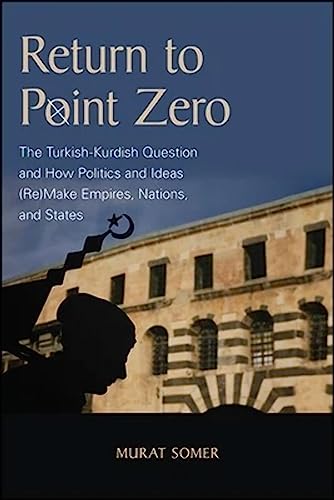
Inhaltsangabe
Analyzes Turkey's Kurdish conflict since post-Ottoman nation-building through recent peace attempts, from a novel perspective highlighting the dilemmas of the Turk majority and reshaping our understanding of ethnic conflicts, and offers solutions for a sustainable peace. How did the Turkish-Kurdish Conflict arise? Why have Turks and Kurds failed for so long to solve it? How can they solve it today? How can social scientists better analyze this and other protracted conflicts and propose better prescriptions for sustainable peace? Return to Point Zero develops a novel framework for analyzing the historical-structural and contemporary causes of ethnic-national conflicts, highlighting an understudied dimension: politics. Murat Somer argues that intramajority group politics rather than majority-minority differences better explains ethnic-national conflicts. Hence, the political-ideological divisions among Turks are the key to understanding the Turkish-Kurdish Conflict; though it was nationalism that produced the Kurdish Question during late-Ottoman imperial modernization, political elite decisions by the Turks created the Kurdish Conflict during the postimperial nation-state building. Today, ideational rigidities reinforce the conflict. Analyzing this conflict from "premodern" times to today, Somer emphasizes two distinct periods: the formative era of 1918-1926 and the post-2011 reformative period. Somer argues that during the formative era, political elites inadequately addressed three fundamental dilemmas of security, identity, and cooperation and includes a discussion of how the legacy of those political elite decisions impacted and framed peace attempts that have failed in the 1990s and 2010s. Return to Point Zero develops new concepts to analyze conflicts and concrete conflict-resolution proposals.
Die Inhaltsangabe kann sich auf eine andere Ausgabe dieses Titels beziehen.
Über die Autorin bzw. den Autor
Murat Somer is Professor of Political Science and International Relations at Koç University in Istanbul, Turkey.
„Über diesen Titel“ kann sich auf eine andere Ausgabe dieses Titels beziehen.
Suchergebnisse für Return to Point Zero: The Turkish-Kurdish Question...

Beispielbild für diese ISBN
Return to Point Zero: The Turkish-Kurdish Question and How Politics and Ideas (Re)Make Empires, Nations, and States
Verlag:
State Univ of New York Pr, 2023
ISBN 10: 1438486723
ISBN 13: 9781438486727
Gebraucht
paperback
Anbieter: Books From California, Simi Valley, CA, USA
Verkäuferbewertung 4 von 5 Sternen

paperback. Zustand: Good. General shelf wear. Pages are clean. Bestandsnummer des Verkäufers mon0003389484
Gebraucht kaufen
EUR 25,86
EUR 4,29 Versand
Versand innerhalb von USA
Versand innerhalb von USA
Anzahl: 1 verfügbar
Beispielbild für diese ISBN
Return to Point Zero : The Turkish-Kurdish Question and How Politics and Ideas Remake Empires, Nations, and States
Verlag:
State University of New York Press, 2023
ISBN 10: 1438486723
ISBN 13: 9781438486727
Gebraucht
Softcover
Anbieter: GreatBookPrices, Columbia, MD, USA
Verkäuferbewertung 5 von 5 Sternen

Zustand: As New. Unread book in perfect condition. Bestandsnummer des Verkäufers 45413626
Gebraucht kaufen
EUR 34,09
EUR 2,27 Versand
Versand innerhalb von USA
Versand innerhalb von USA
Anzahl: 1 verfügbar
Beispielbild für diese ISBN
Return to Point Zero : The Turkish-Kurdish Question and How Politics and Ideas Remake Empires, Nations, and States
Verlag:
State University of New York Press, 2023
ISBN 10: 1438486723
ISBN 13: 9781438486727
Neu
Softcover
Anbieter: GreatBookPrices, Columbia, MD, USA
Verkäuferbewertung 5 von 5 Sternen
Zustand: New. Bestandsnummer des Verkäufers 45413626-n
Neu kaufen
EUR 34,64
EUR 2,27 Versand
Versand innerhalb von USA
Versand innerhalb von USA
Anzahl: 1 verfügbar
Beispielbild für diese ISBN
Return to Point Zero
Anbieter: PBShop.store US, Wood Dale, IL, USA
Verkäuferbewertung 5 von 5 Sternen
PAP. Zustand: New. New Book. Shipped from UK. Established seller since 2000. Bestandsnummer des Verkäufers CX-9781438486727
Foto des Verkäufers
Return to Point Zero
Verlag:
State University of New York Press, US, 2023
ISBN 10: 1438486723
ISBN 13: 9781438486727
Neu
Paperback
Anbieter: Rarewaves.com USA, London, LONDO, Vereinigtes Königreich
Verkäuferbewertung 5 von 5 Sternen
Paperback. Zustand: New. Analyzes Turkey's Kurdish conflict since post-Ottoman nation-building through recent peace attempts, from a novel perspective highlighting the dilemmas of the Turk majority and reshaping our understanding of ethnic conflicts, and offers solutions for a sustainable peace.How did the Turkish-Kurdish Conflict arise? Why have Turks and Kurds failed for so long to solve it? How can they solve it today? How can social scientists better analyze this and other protracted conflicts and propose better prescriptions for sustainable peace? Return to Point Zero develops a novel framework for analyzing the historical-structural and contemporary causes of ethnic-national conflicts, highlighting an understudied dimension: politics. Murat Somer argues that intramajority group politics rather than majority-minority differences better explains ethnic-national conflicts. Hence, the political-ideological divisions among Turks are the key to understanding the Turkish-Kurdish Conflict; though it was nationalism that produced the Kurdish Question during late-Ottoman imperial modernization, political elite decisions by the Turks created the Kurdish Conflict during the postimperial nation-state building. Today, ideational rigidities reinforce the conflict. Analyzing this conflict from "premodern" times to today, Somer emphasizes two distinct periods: the formative era of 1918-1926 and the post-2011 reformative period. Somer argues that during the formative era, political elites inadequately addressed three fundamental dilemmas of security, identity, and cooperation and includes a discussion of how the legacy of those political elite decisions impacted and framed peace attempts that have failed in the 1990s and 2010s. Return to Point Zero develops new concepts to analyze conflicts and concrete conflict-resolution proposals. Bestandsnummer des Verkäufers LU-9781438486727
Neu kaufen
EUR 39,22
Versand gratis
Versand von Vereinigtes Königreich nach USA
Versand von Vereinigtes Königreich nach USA
Anzahl: 6 verfügbar
Beispielbild für diese ISBN
Return to Point Zero
Anbieter: PBShop.store UK, Fairford, GLOS, Vereinigtes Königreich
Verkäuferbewertung 5 von 5 Sternen
PAP. Zustand: New. New Book. Shipped from UK. Established seller since 2000. Bestandsnummer des Verkäufers CX-9781438486727
Neu kaufen
EUR 33,45
EUR 5,85 Versand
Versand von Vereinigtes Königreich nach USA
Versand von Vereinigtes Königreich nach USA
Anzahl: 15 verfügbar
Beispielbild für diese ISBN
Return to Point Zero (Paperback)
Verlag:
State University of New York Press, Albany, NY, 2023
ISBN 10: 1438486723
ISBN 13: 9781438486727
Neu
Paperback
Anbieter: Grand Eagle Retail, Bensenville, IL, USA
Verkäuferbewertung 5 von 5 Sternen
Paperback. Zustand: new. Paperback. Analyzes Turkey's Kurdish conflict since post-Ottoman nation-building through recent peace attempts, from a novel perspective highlighting the dilemmas of the Turk majority and reshaping our understanding of ethnic conflicts, and offers solutions for a sustainable peace.How did the Turkish-Kurdish Conflict arise? Why have Turks and Kurds failed for so long to solve it? How can they solve it today? How can social scientists better analyze this and other protracted conflicts and propose better prescriptions for sustainable peace? Return to Point Zero develops a novel framework for analyzing the historical-structural and contemporary causes of ethnic-national conflicts, highlighting an understudied dimension: politics. Murat Somer argues that intramajority group politics rather than majority-minority differences better explains ethnic-national conflicts. Hence, the political-ideological divisions among Turks are the key to understanding the Turkish-Kurdish Conflict; though it was nationalism that produced the Kurdish Question during late-Ottoman imperial modernization, political elite decisions by the Turks created the Kurdish Conflict during the postimperial nation-state building. Today, ideational rigidities reinforce the conflict. Analyzing this conflict from "premodern" times to today, Somer emphasizes two distinct periods: the formative era of 19181926 and the post-2011 reformative period. Somer argues that during the formative era, political elites inadequately addressed three fundamental dilemmas of security, identity, and cooperation and includes a discussion of how the legacy of those political elite decisions impacted and framed peace attempts that have failed in the 1990s and 2010s. Return to Point Zero develops new concepts to analyze conflicts and concrete conflict-resolution proposals. Analyzes Turkey's Kurdish conflict since post-Ottoman nation-building through recent peace attempts, from a novel perspective highlighting the dilemmas of the Turk majority and reshaping our understanding of ethnic conflicts, and offers solutions for a sustainable peace. Shipping may be from multiple locations in the US or from the UK, depending on stock availability. Bestandsnummer des Verkäufers 9781438486727
Beispielbild für diese ISBN
Return to Point Zero : The Turkish-Kurdish Question and How Politics and Ideas Remake Empires, Nations, and States
Verlag:
State University of New York Press, 2023
ISBN 10: 1438486723
ISBN 13: 9781438486727
Neu
Softcover
Anbieter: GreatBookPricesUK, Woodford Green, Vereinigtes Königreich
Verkäuferbewertung 5 von 5 Sternen
Zustand: New. Bestandsnummer des Verkäufers 45413626-n
Neu kaufen
EUR 33,44
EUR 17,47 Versand
Versand von Vereinigtes Königreich nach USA
Versand von Vereinigtes Königreich nach USA
Anzahl: 6 verfügbar
Beispielbild für diese ISBN
Return to Point Zero : The Turkish-Kurdish Question and How Politics and Ideas Remake Empires, Nations, and States
Verlag:
State University of New York Press, 2023
ISBN 10: 1438486723
ISBN 13: 9781438486727
Gebraucht
Softcover
Anbieter: GreatBookPricesUK, Woodford Green, Vereinigtes Königreich
Verkäuferbewertung 5 von 5 Sternen
Zustand: As New. Unread book in perfect condition. Bestandsnummer des Verkäufers 45413626
Gebraucht kaufen
EUR 35,89
EUR 17,47 Versand
Versand von Vereinigtes Königreich nach USA
Versand von Vereinigtes Königreich nach USA
Anzahl: 6 verfügbar
Beispielbild für diese ISBN
Return to Point Zero: The Turkish-Kurdish Question and How Politics and Ideas (Re)Make Empires, Nations, and States
Verlag:
State University of New York Press, 2023
ISBN 10: 1438486723
ISBN 13: 9781438486727
Neu
Softcover
Anbieter: Ria Christie Collections, Uxbridge, Vereinigtes Königreich
Verkäuferbewertung 5 von 5 Sternen
Zustand: New. In. Bestandsnummer des Verkäufers ria9781438486727_new
Neu kaufen
EUR 42,52
EUR 13,15 Versand
Versand von Vereinigtes Königreich nach USA
Versand von Vereinigtes Königreich nach USA
Anzahl: Mehr als 20 verfügbar