
Verwandte Artikel zu Shadow Boxer
Inhaltsangabe
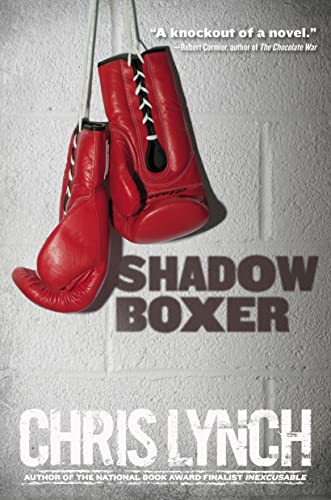
Boxing is the family sport—but it’s killing the family in this riveting read from the author of Inexcusable, a National Book Award finalist.
It’s been five years since his father died, and fourteen-year-old George is the man of the family. He knows all too well how brutal the life of a fighter can be. Didn’t it kill his father?
But Monty, George’s younger brother, has a completely different attitude. Boxing comes naturally to him. It’s in his blood. He thinks of it as his father’s legacy.
Unless George figures out a way to stop it, will boxing kill Monty, too?
Die Inhaltsangabe kann sich auf eine andere Ausgabe dieses Titels beziehen.
Über die Autorin bzw. den Autor
Chris Lynch is the award-winning author of several highly acclaimed young adult novels, including Printz Honor Book Freewill, Iceman, Gypsy Davey, and Shadow Boxer—all ALA Best Books for Young Adults—as well as Killing Time in Crystal City, Little Blue Lies, Pieces, Kill Switch, Angry Young Man, and Inexcusable, which was a National Book Award finalist and the recipient of six starred reviews. Chris is the author of middle grade novel Walkin’ the Dog. He holds an MA from the writing program at Emerson College. He teaches in the creative writing MFA program at Lesley University. He lives in Boston and in Scotland.
Auszug. © Genehmigter Nachdruck. Alle Rechte vorbehalten.
Shadow Boxer
1
GROUNDWORK
Easter Sunday afternoon Monty was lying on the couch in front of the TV. He was sleeping in front of one of those Jesus movies with a thousand different actors in it that he always sleeps through on a Sunday afternoon. First, he eats his weight at dinner, which isn’t all that much, then he sacks out for a couple of hours. I sat next to him, by his feet, since he didn’t take up more than half the length of the sofa, and Ma was in the kitchen doing the dishes. I got up to put my suit coat on.
“Where do you go, George?” Monty surprised me, opening his eyes a crack.
“No place. Go back to sleep.”
He propped himself up on one elbow. “Every holiday, you put on your suit coat and sneak away, like if we have a Friday or a Monday off from school, George has to go someplace on Sunday to pay for it.”
“I don’t sneak. I just walk right out the door, and everybody who’s awake knows about it.”
“So where do you go?”
“Out.”
“Is it any fun—out?”
“Everything doesn’t have to be for fun, Monty.”
“Then it’s not fun, right? It couldn’t be fun if you gotta wear a jacket for it. So why do you go?”
“Watch your movie, or go back to your nap.”
“Can I come with you?”
I made a sucking-lemons face. “No.”
He sat up, like he was going to come anyway. “Why not?” he said.
“Because you’re a kid.”
“I am not a kid.”
“Monty, you’re eleven years old, and you still take naps. That’s about eight years later than when I stopped.”
“George.” Monty looked and sounded like I’d hurt his feelings. “You know that the doctor said I’m hyperactive, and that by the end of the week I get run-down.”
“That’s right, I did know that. I’m sorry. So, take the rest of your nappy now so you don’t get too run-down.”
Monty stood up and put his jacket on. He walked over and stood beside me, his head coming just above my shoulder. I stared down at him. He didn’t move.
“Listen, if you just follow me saying stupid things, and spoil my day, I’m sending you home. And change that jacket—put on your good one.”
Monty put on his blue blazer with the gold buttons. We went up to Ma, at the kitchen sink. “I’m going out, Ma,” I said. She looked around me at grinning Monty. “He’s coming with me,” I said without a lot of enthusiasm.
She raised her eyebrows, smiled, almost laughed, nodded, and kissed us both. “Have a fine time, men,” she said.
When we got downstairs, Monty asked, “How do you do that? All I have to do is go into the bathroom, and Ma says ‘Where are you going, Monty?’ ‘What are you doing, Monty?’”
“Me and Ma understand each other. She trusts me. She pretty much knows all the time what I’m doing, and it’s okay with her. But here’s a tip: If you go out of the house in a suit coat, she cuts you a little more slack since you’re probably not going to be jumping off roofs or hangin’ with your boys down on the corner.”
Monty waved his finger at me like “Hey, there’s news you can use,” as if my story were a trick story. That’s why I have to be careful about what information I give him. “But I don’t care if you go out in a tuxedo,” I reminded him. “I’ll want to know where your little butt is going.” He sighed.
We waited for the bus in the bright sun, in our navy-blue jackets, light-blue pants, white shirts with white ties. It wasn’t very hot out, but it started to seem it. The bus pulled up close to us on the curb, making it even hotter.
Monty put his hand on my arm as I was about to sit. “Remember, George, I get bus sick when I have my suit on,” he said. I looked up at the ceiling as he climbed into the double bench first, to get the window seat. It was only a ten-minute ride anyway, out of our neighborhood, past the brick apartment houses, the few playgrounds, the cars on either side of the street jacked up with somebody underneath, or abandoned. A few corner stores with kids hanging out in front. It was the later, lazy part of Easter Sunday, and we only saw a few bonnets, baskets, families walking together but looking hotter and less happy than they had at church in the morning. The guys selling droopy flowers out of station wagons were pretty much out of business.
The bus pulled into a section of town where real flower shops seemed to be everywhere. There weren’t a lot of houses around, but a lot of open space, a batch of four or five cemeteries. A big, wide intersection on a parkway, four corners, four florists.
“This is it,” I told Monty as I stood up.
“This? This is where we’re going? There’s nothing here, George.” I pointed at Mount Calvary Cemetery while he followed me down the stairs of the bus. “You sure know how to have fun, man,” he said.
We crossed the street and walked in through the big front gate, past the square cement office. “They have maps in there,” I said. “You can find anybody you want. They have a kind of celebrity tour. Some guys from the Revolution and the Civil War are over in section C. Ray Bolger, the guy who was the Scarecrow in The Wizard of Oz, is up on that hill there in D. Eugene O’Neill is in B.”
“Who’s Eugene O’Neill?” Monty said as we walked down the wide asphalt path.
“He was a great writer,” I said.
“Oh ya,” Monty said, not looking at me, trying to read the names on every stone we passed. “What did he write?”
“Well, I can’t think of any of the titles right now. But they were great, they were big, and he’s here.”
Monty read the name of someone we knew from the old neighborhood, but it wasn’t the same person. He suddenly stopped short, looking over at me.
“And who else is here, George?” He looked at me sideways.
“Come on, Monty. You’re a kid, but you’re not a dink. You know Dad’s here.”
Monty looked at the ground. “Ya, I know he is.” He looked up and down the rows to his left and right, at the many piles of flowers that were left that day, at little flags stuck in the ground. The wrapper off of a peanut-butter egg tumble-weeded down the road.
“We don’t have anything,” he said.
“Don’t worry about it.”
“I was little the last time I came here. It was a long time ago, I don’t remember it much.”
I slapped him on the arm. “Come on,” I told him. It had been a long time since he’d been there, probably three years. Ma doesn’t care much for coming, and I like to come alone. So by the time I was ten and could travel pretty much everywhere the buses went, Ma mostly left it up to me.
We got to the top of the hill in section B. Turning off the main drive, we walked past the Robinsons, mother and father and three kids. They weren’t in the ground, they were live people from the old neighborhood. They were the most religious people we knew, the whole family going to...
„Über diesen Titel“ kann sich auf eine andere Ausgabe dieses Titels beziehen.
Suchergebnisse für Shadow Boxer

Beispielbild für diese ISBN
Shadow Boxer
Verlag:
Simon & Schuster Books For Young Readers, 2013
ISBN 10: 1442446870
ISBN 13: 9781442446878
Gebraucht
Softcover
Anbieter: Better World Books, Mishawaka, IN, USA
Verkäuferbewertung 5 von 5 Sternen

Zustand: Good. Reprint. Former library copy. Pages intact with minimal writing/highlighting. The binding may be loose and creased. Dust jackets/supplements are not included. Includes library markings. Stock photo provided. Product includes identifying sticker. Better World Books: Buy Books. Do Good. Bestandsnummer des Verkäufers 4709584-6
Gebraucht kaufen
EUR 6,68
Versand gratis
Versand innerhalb von USA
Versand innerhalb von USA
Anzahl: 1 verfügbar
Beispielbild für diese ISBN
Shadow Boxer
Verlag:
Simon & Schuster Books For Young Readers, 2013
ISBN 10: 1442446870
ISBN 13: 9781442446878
Gebraucht
Softcover
Anbieter: Better World Books, Mishawaka, IN, USA
Verkäuferbewertung 5 von 5 Sternen
Zustand: Very Good. Reprint. Former library copy. Pages intact with possible writing/highlighting. Binding strong with minor wear. Dust jackets/supplements may not be included. Includes library markings. Stock photo provided. Product includes identifying sticker. Better World Books: Buy Books. Do Good. Bestandsnummer des Verkäufers 11865734-75
Gebraucht kaufen
EUR 6,68
Versand gratis
Versand innerhalb von USA
Versand innerhalb von USA
Anzahl: 1 verfügbar
Foto des Verkäufers
Shadow Boxer
Verlag:
Simon & Schuster Books for Young Readers, 2013
ISBN 10: 1442446870
ISBN 13: 9781442446878
Gebraucht
Softcover
Anbieter: Greenworld Books, Arlington, TX, USA
Verkäuferbewertung 5 von 5 Sternen
Zustand: good. Fast Free Shipping â" Good condition. It may show normal signs of use, such as light writing, highlighting, or library markings, but all pages are intact and the book is fully readable. A solid, complete copy that's ready to enjoy. Bestandsnummer des Verkäufers GWV.1442446870.G
Gebraucht kaufen
EUR 6,68
Versand gratis
Versand innerhalb von USA
Versand innerhalb von USA
Anzahl: 1 verfügbar
Beispielbild für diese ISBN
Shadow Boxer
Verlag:
Simon & Schuster Books for Young Readers, 2013
ISBN 10: 1442446870
ISBN 13: 9781442446878
Gebraucht
Paperback
Anbieter: ThriftBooks-Atlanta, AUSTELL, GA, USA
Verkäuferbewertung 5 von 5 Sternen
Paperback. Zustand: Good. No Jacket. Pages can have notes/highlighting. Spine may show signs of wear. ~ ThriftBooks: Read More, Spend Less. Bestandsnummer des Verkäufers G1442446870I3N00
Gebraucht kaufen
EUR 7,34
Versand gratis
Versand innerhalb von USA
Versand innerhalb von USA
Anzahl: 1 verfügbar
Beispielbild für diese ISBN
Shadow Boxer
ISBN 10: 1442446870
ISBN 13: 9781442446878
Gebraucht
Paperback
Anbieter: BooksRun, Philadelphia, PA, USA
Verkäuferbewertung 5 von 5 Sternen
Paperback. Zustand: Very Good. Reprint. It's a well-cared-for item that has seen limited use. The item may show minor signs of wear. All the text is legible, with all pages included. It may have slight markings and/or highlighting. Bestandsnummer des Verkäufers 1442446870-11-1
Gebraucht kaufen
EUR 7,34
Versand gratis
Versand innerhalb von USA
Versand innerhalb von USA
Anzahl: 1 verfügbar
Beispielbild für diese ISBN
Shadow Boxer Format: Paperback
Anbieter: INDOO, Avenel, NJ, USA
Verkäuferbewertung 5 von 5 Sternen
Zustand: As New. Unread copy in mint condition. Bestandsnummer des Verkäufers SS9781442446878
Gebraucht kaufen
EUR 11,02
Versand gratis
Versand innerhalb von USA
Versand innerhalb von USA
Anzahl: Mehr als 20 verfügbar
Beispielbild für diese ISBN
Shadow Boxer Format: Paperback
Anbieter: INDOO, Avenel, NJ, USA
Verkäuferbewertung 5 von 5 Sternen
Zustand: New. Brand New. Bestandsnummer des Verkäufers 9781442446878
Neu kaufen
EUR 11,11
Versand gratis
Versand innerhalb von USA
Versand innerhalb von USA
Anzahl: Mehr als 20 verfügbar
Beispielbild für diese ISBN
Shadow Boxer
Verlag:
Simon & Schuster Books for Young Readers, 2013
ISBN 10: 1442446870
ISBN 13: 9781442446878
Neu
paperback
Anbieter: BennettBooksLtd, Los Angeles, CA, USA
Verkäuferbewertung 5 von 5 Sternen
paperback. Zustand: New. In shrink wrap. Looks like an interesting title! Bestandsnummer des Verkäufers Q-1442446870
Neu kaufen
EUR 67,74
EUR 5,98 Versand
Versand innerhalb von USA
Versand innerhalb von USA
Anzahl: 1 verfügbar