
Verwandte Artikel zu Silver Bullets: How Interoperable Data Will Revolutionize...
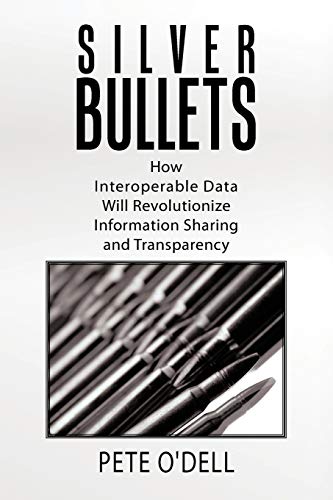
Silver Bullets: How Interoperable Data Will Revolutionize Information Sharing and Transparency - Softcover
Inhaltsangabe
The Author has written this novel with women in mind. More of a book to encourage women to stand up for themselves and not tolerate abuse or cruelty in any form. There is much more help today than when this story took place over forty years ago. Women had very few rights in those days. It was not easy to walk out. She tells women not to believe all that is told them and be as trustworthy as she was. This is a true story with fictitious names. The story relates to how a married man took advantage of a young school girl. She was infatuated and besotted with him. It led to an illicit affair which neither of them were willing to end. The author has tried to show how the wife trusted her husband implicitly and never suspected that there was anything going on untoward. It is a family story almost beyond belief and comprehension. The story tells of lies and deceit. The girl is sexually greedy and manipulative, her aim is to get rid of the wife. The husband is completely over whelmed with her. She traps a young man into accepting and that he is responsible for her pregnancy given to her by her lover. She dumps him at a later date and at her convenience when her lover has finally got rid of his wife. She is eighteen years younger than him and is the wife's younger sister. The author wishes the reader all the best and hope that she or he enjoys reading this novel
Die Inhaltsangabe kann sich auf eine andere Ausgabe dieses Titels beziehen.
Über die Autorin bzw. den Autor
Pete O'Dell is a technology executive based in Washington, DC. He's had a long career on the information highway, working for companies including Digital Equipment Corporation, Autodesk, Microwarehouse, Microsoft, and Online Interactive, and cofounding Swan Island Networks. Pete consults for companies including SAIC, CommsFirst, HCLTEM, and Village Roadshow Limited. Pete's first book, The Computer Networking Book, was published in 1989 by Ventana Press. He has authored numerous articles, and speaks at conferences on technology and business topics. He served honorably in the U.S. Army, and has been involved in emergency management, situational awareness, and secure information since 9/11. He has an undergraduate degree in business and an MBA. In his free time, Pete is an avid fly fisherman, a reasonable runner, a voracious consumer of technology information, and a poor golfer. He can be reached at peterlodell@gmail.com. Comments on actions you took based on reading this book would be highly appreciated. If you like the book, please post a review online somewhere.
Auszug. © Genehmigter Nachdruck. Alle Rechte vorbehalten.
SILVER BULLETS
How Interoperable Data Will Revolutionize Information Sharing and TransparencyBy Pete O'DellAuthorHouse
Copyright © 2010 Pete O'DellAll right reserved.
ISBN: 978-1-4490-4075-8
Contents
Foreword..........................................................................................................xiiiAcknowledgements..................................................................................................xvChapter One A major opportunity to improve civilization..........................................................11An Opinion The top ten benefits resulting from the broad adoption of interoperable data..........................31Chapter Two Long-ago standards: things you'll recognize..........................................................37Case Study Jefferson Parish, Louisiana tackles Hurricane Gustav..................................................47Chapter Three Near-past lessons: standardized technology and computing...........................................49Chapter Four The beginning of standardized data transactions.....................................................61Case Study Using interoperable data to improve diabetes management...............................................71Chapter Five The emergence of Extensible Markup Language; (XML); a tour of major initiatives.....................73Chapter Six Two great interoperable data standards: CAP and KML..................................................91Case Study Golden Phoenix........................................................................................109Chapter Seven Interoperable data efforts: things you can watch, use, leverage, and adopt.........................115Chapter Eight Executing a data interoperability pilot (right now)................................................131Case Study External alarm interface exchange standard............................................................141Chapter Nine The far-flung future: where do we go from here?.....................................................145Chapter Ten Raves and conclusions................................................................................163Appendix A Chapter notes and suggested reading...................................................................175Appendix B Best of NIEM Awards 2009 Inaugural....................................................................187Appendix C World Meteorological Organization Members.............................................................193About the Author..................................................................................................195Index.............................................................................................................197
Chapter One
A major opportunity to improve civilizationWe're only at the beginning of what we have to do here. -Bill Gates
We live in an accelerating world of information, innovation, and networks, with a rapidly increasing number of "Netizens" - people who communicate and interact with others through the Internet - for business, government, personal, and other purposes. More people can communicate directly with each other in real time today than in the cumulative history of man. An event that 30 years ago would have captured local front-page newspaper headlines can whiz by almost unnoticed today, because so many other incredible things are happening around the globe in parallel. Newspapers themselves are losing relevance as people increasingly use the web to gather and sort information from a broader range of new sources. When something exciting happens, we want to learn about it right now. The Internet gives us that immediacy. Just as important, we can participate; we can exchange comments and share knowledge about what's happening around the world, in real time.
My life span is a typical illustration of this high-speed rate of change. I grew up on a dairy farm in upstate New York, where our main communication methods were a telephone party line (which we shared with six other families) and the U.S. mail. Local access could be challenging if there were young girls on the party line, but everyone typically had a way to signal others if access was important. Long distance calls were tremendously expensive relative to the incomes of the day, so only emergencies and special events triggered a phone call beyond the local calling area.
Compare and contrast that existence with today - a mere 45 years later. I have at least three phone numbers, multiple email addresses, Skype, text messaging, instant messaging, Twitter, a rarely used Facebook account, a heavily used LinkedIn account, and more - most with free, unlimited, unconstrained usage plans. That's just to reach me. The world that I can reach is virtually unlimited, and I'm the weakest link; I have to figure out what I need and allocate my consumption to fit within my ever-more-jammed 24 x 7 days.
My friends and business associates span the world, so email that's important can show up anytime, not just during normal business hours - if "normal" exists for anyone anymore. Mix in your social life, and you have a recipe for a complicated souffl of capabilities and needs. Change the recipe slightly by subscribing to too many or irrelevant information feeds, and the whole information collection recipe turns into overload - it's a very delicate balance.
Even mere existence seems more complicated now. As I write this, we're in dangerous financial and economic times. Worldwide disasters are increasing, from deadly weather events (Hurricane Katrina, the 2010 Haitian earthquake) to man-made threats (the Mumbai terrorist attacks, the Madrid train bombings, the London Under ground bombings, the Fort Hood shootings) to potential global health crises (the potential H1N1 pandemic) ... with undoubtedly more by publication time.
A recent congressional report predicted that we'll have either a biological weapon attack or a nuclear attack by terrorists by 2013 if we don't take precautions to prevent such acts. Statistically, your odds of survival as an individual are very good, but few of us take comfort in that. It's much more human to be concerned about acute events - a sudden, unexpected threat from an improvised explosive device (IED), a sniper, or natural disaster - than to pay attention to the chronic problems to which we grow accustomed. To use health as an analogy, people often put off dealing with a chronic high-risk factor (e.g., high blood pressure that may led to a fatal heart attack) but respond immediately to an acute event (e.g., a broken leg in a car accident). Interoperable data can help mitigate some of the acute risks, but you'll still have to watch your diet and go for a run.
Humans are the weakest link. As this accelerating technology unfolds, we find that humans are still the weakest link in the information processing chain. Many of us are literally drowning in information on multiple fronts. This problem manifested when the Internet first came into the mainstream - the number of web sites, email addresses, ecommerce opportunities and web resources exploded, and finding anything was tough, even for early adopters.
Search engines were invented to help with the problem of finding what you want and ignoring the overload, and few of us go many days (or minutes) without using Google. (Google is the winner in the unstructured search engine wars, at least for today. One false step, or missed technological...
„Über diesen Titel“ kann sich auf eine andere Ausgabe dieses Titels beziehen.
Suchergebnisse für Silver Bullets: How Interoperable Data Will Revolutionize...

Foto des Verkäufers
Silver Bullets : How Interoperable Data Will Revolutionize Information Sharing and Transparency
Anbieter: GreatBookPrices, Columbia, MD, USA
Verkäuferbewertung 5 von 5 Sternen

Zustand: New. Bestandsnummer des Verkäufers 8765084-n
Neu kaufen
EUR 23,71
EUR 2,31 Versand
Versand innerhalb von USA
Versand innerhalb von USA
Anzahl: Mehr als 20 verfügbar
Beispielbild für diese ISBN
Silver Bullets: How Interoperable Data Will Revolutionize Information Sharing and Transparency
Anbieter: California Books, Miami, FL, USA
Verkäuferbewertung 4 von 5 Sternen

Zustand: New. Bestandsnummer des Verkäufers I-9781449040758
Neu kaufen
EUR 26,09
Versand gratis
Versand innerhalb von USA
Versand innerhalb von USA
Anzahl: Mehr als 20 verfügbar
Foto des Verkäufers
Silver Bullets : How Interoperable Data Will Revolutionize Information Sharing and Transparency
Anbieter: GreatBookPrices, Columbia, MD, USA
Verkäuferbewertung 5 von 5 Sternen
Zustand: As New. Unread book in perfect condition. Bestandsnummer des Verkäufers 8765084
Gebraucht kaufen
EUR 24,66
EUR 2,31 Versand
Versand innerhalb von USA
Versand innerhalb von USA
Anzahl: Mehr als 20 verfügbar
Beispielbild für diese ISBN
Silver Bullets: How Interoperable Data Will Revolutionize Information Sharing and Transparency
Anbieter: Chiron Media, Wallingford, Vereinigtes Königreich
Verkäuferbewertung 5 von 5 Sternen
Paperback. Zustand: New. Brand new book, sourced directly from publisher. Dispatch time is 6-7 days from our warehouse. Book will be sent in robust, secure packaging to ensure it reaches you securely. Bestandsnummer des Verkäufers 6666-IUK-9781449040758
Neu kaufen
EUR 21,28
EUR 5,82 Versand
Versand von Vereinigtes Königreich nach USA
Versand von Vereinigtes Königreich nach USA
Anzahl: Mehr als 20 verfügbar
Foto des Verkäufers
Silver Bullets
Anbieter: Rarewaves.com USA, London, LONDO, Vereinigtes Königreich
Verkäuferbewertung 5 von 5 Sternen
Paperback. Zustand: New. Bestandsnummer des Verkäufers LU-9781449040758
Neu kaufen
EUR 27,26
Versand gratis
Versand von Vereinigtes Königreich nach USA
Versand von Vereinigtes Königreich nach USA
Anzahl: Mehr als 20 verfügbar
Beispielbild für diese ISBN
Silver Bullets
Print-on-DemandAnbieter: PBShop.store US, Wood Dale, IL, USA
Verkäuferbewertung 5 von 5 Sternen
PAP. Zustand: New. New Book. Shipped from UK. THIS BOOK IS PRINTED ON DEMAND. Established seller since 2000. Bestandsnummer des Verkäufers L0-9781449040758
Neu kaufen
EUR 28,19
Versand gratis
Versand innerhalb von USA
Versand innerhalb von USA
Anzahl: Mehr als 20 verfügbar
Beispielbild für diese ISBN
Silver Bullets
Print-on-DemandAnbieter: PBShop.store UK, Fairford, GLOS, Vereinigtes Königreich
Verkäuferbewertung 5 von 5 Sternen
PAP. Zustand: New. New Book. Delivered from our UK warehouse in 4 to 14 business days. THIS BOOK IS PRINTED ON DEMAND. Established seller since 2000. Bestandsnummer des Verkäufers L0-9781449040758
Neu kaufen
EUR 25,93
EUR 4,85 Versand
Versand von Vereinigtes Königreich nach USA
Versand von Vereinigtes Königreich nach USA
Anzahl: Mehr als 20 verfügbar
Beispielbild für diese ISBN
Silver Bullets: How Interoperable Data Will Revolutionize Information Sharing and Transparency
Anbieter: Ria Christie Collections, Uxbridge, Vereinigtes Königreich
Verkäuferbewertung 5 von 5 Sternen
Zustand: New. In English. Bestandsnummer des Verkäufers ria9781449040758_new
Neu kaufen
EUR 28,57
EUR 10,92 Versand
Versand von Vereinigtes Königreich nach USA
Versand von Vereinigtes Königreich nach USA
Anzahl: Mehr als 20 verfügbar
Foto des Verkäufers
Silver Bullets : How Interoperable Data Will Revolutionize Information Sharing and Transparency
Anbieter: GreatBookPricesUK, Woodford Green, Vereinigtes Königreich
Verkäuferbewertung 5 von 5 Sternen
Zustand: New. Bestandsnummer des Verkäufers 8765084-n
Neu kaufen
EUR 24,27
EUR 17,48 Versand
Versand von Vereinigtes Königreich nach USA
Versand von Vereinigtes Königreich nach USA
Anzahl: Mehr als 20 verfügbar
Beispielbild für diese ISBN
Silver Bullets: How Interoperable Data Will Revolutionize Information Sharing and Transparency
Print-on-DemandAnbieter: THE SAINT BOOKSTORE, Southport, Vereinigtes Königreich
Verkäuferbewertung 5 von 5 Sternen
Paperback. Zustand: New. This item is printed on demand. New copy - Usually dispatched within 5-9 working days. Bestandsnummer des Verkäufers C9781449040758
Neu kaufen
EUR 28,02
EUR 16,80 Versand
Versand von Vereinigtes Königreich nach USA
Versand von Vereinigtes Königreich nach USA
Anzahl: Mehr als 20 verfügbar