
Verwandte Artikel zu The Vault: An Inspector Wexford Novel
Inhaltsangabe
INCLUDES AN EXCERPT OF RENDELL’S FINAL NOVEL, DARK CORNERS
From “the reigning queen of crime fiction” (Time Out), a sequel to A Sight for Sore Eyes, one of Rendell’s most beloved novels—featuring the retired Inspector Wexford.
From “the reigning queen of crime fiction” (Time Out), a sequel to A Sight for Sore Eyes, one of Rendell’s most beloved novels—featuring the retired Inspector Wexford.
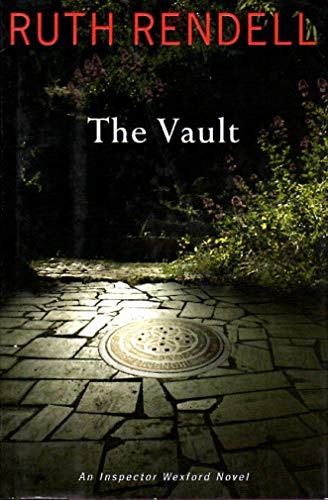
In the stunning climax to Rendell’s classic A Sight for Sore Eyes, three bodies—two dead, one living—are entombed in an underground chamber beneath a picturesque London house. Twelve years later, when a manhole cover is pulled back, the house’s new owner makes a grisly discovery. Only now, the number of bodies is four. How did somebody else end up in the chamber? And who knew of its existence?
With their own detectives at an impasse, police call on former Chief Inspector Wexford, now retired and living with his wife in London, to advise them on the unsolved murders. Wexford, missing the thrill of a good case, jumps at the chance to sleuth again. His dogged detective skills and knack for figuring out the criminal mind take him to London neighborhoods, posh and poor, as he follows a complex criminal trail back to the original murders.
But just as Wexford’s case gets hot, a devastating family tragedy pulls Wexford back to Kingsmarkham, and for the first time in his life, Wexford finds himself transforming from investigator into victim. Masterfully plotted, The Vault will satisfy both longtime Wexford fans and new Rendell readers.
Die Inhaltsangabe kann sich auf eine andere Ausgabe dieses Titels beziehen.
Über die Autorin bzw. den Autor
Ruth Rendell (1930–2015) won three Edgar Awards, the highest accolade from Mystery Writers of America, as well as four Gold Daggers and a Diamond Dagger for outstanding contribution to the genre from England’s prestigious Crime Writers’ Association. Her remarkable career spanned a half century, with more than sixty books published. A member of the House of Lords, she was one of the great literary figures of our time.
Auszug. © Genehmigter Nachdruck. Alle Rechte vorbehalten.
The Vault
1
A CURIOUS WORLD WE live in,” said Franklin Merton, “where one can afford a house but not a picture of a house. That must tell us some profound truth. But what? I wonder.”
The picture he was talking about was Simon Alpheton’s Marc and Harriet in Orcadia Place, later bought by Tate Britain—simply “the Tate” in those days—and the house the one in the picture, Orcadia Cottage. His remark about the curious world was addressed to the Harriet of the picture, for whom he had bought it and whom he intended to marry when his divorce came through. Later on, when passion had cooled and they were husband and wife, Franklin said, “I didn’t want to get married. I married you because I’m a man of honour and you were my mistress. Some would say my views are out-of-date, but I dispute that. The apparent change is only superficial. I reasoned that no one would want my leavings, so for your sake, the decent thing was to make an honest woman of you.”
His first wife was Anthea. When he deserted her, he was also obliged to desert their dog, O’Hara, and to him that was the most painful thing about it.
“You don’t keep a bitch and bark yourself,” he said to Harriet when she protested at having to do all the housework.
“Pity I’m not an Irish setter,” she said, and had the satisfaction of seeing him wince.
They lived together for five years and were married for twenty-three, the whole time in that house, Orcadia Cottage or number 7a Orcadia Place, London NW8. Owing to Franklin’s sharp tongue, verbal cruelty, and indifference, and to Harriet’s propensity for sleeping with young tradesmen in the afternoons, it was not a happy marriage. They took separate holidays, Franklin going away ostensibly on his own but in fact with his first wife, and he came back from the last one only to tell Harriet he was leaving. He returned to Anthea and her present Irish setter, De Valera, intending to divorce Harriet as soon as feasible. Anthea, a generous woman, urged him to do his best to search for her, for Harriet couldn’t be found at Orcadia Cottage. The largest suitcase, most of her clothes, and the best of the jewellery he had bought her were missing, and Franklin’s belief was that she had gone off with her latest young man.
“She’ll be in touch as soon as she’s in need,” said Franklin to Anthea, “and that won’t be long delayed.”
But Harriet never got in touch. Franklin went back to Orcadia Cottage to look for some clue to where she might have gone but found only that the place was exceptionally neat, tidy, and clean.
“One odd thing,” he said. “I lived there for all those years and never went into the cellar. There was no reason to do so. Just the same, I could have sworn there was a staircase going down to it with a door just by the kitchen door. But there isn’t.”
Anthea was a much cleverer woman than Harriet. “When you say you could have sworn, darling, do you mean you would go into court, face a jury, and say, ‘I swear there was a staircase in that house going down to the cellar’?”
After thinking about it, Franklin said, “I don’t think so. Well, no, I wouldn’t.”
He put the house on the market and bought one for Anthea and himself in South Kensington. In their advertisements the estate agents described Orcadia Cottage as “the Georgian home immortalized in the internationally acclaimed artwork of Simon Alpheton.” The purchasers, an American insurance broker and his wife, wanted to move in quickly, and when Franklin offered them the report his own surveyors had made thirty years before, they were happy to do without a survey. After all, the house had been there for two hundred years and wasn’t likely to fall down now.
CLAY AND DEVORA SILVERMAN bought the house from Franklin Merton in 1998 and lived there until 2002 before returning to the house they had rented out in Hartford, Connecticut. The first autumn they spent at Orcadia Cottage the leaves on the Virginia creeper which covered the entire front and much of the back of the house turned from green to copper and copper to red and then started to fall off. Clay Silverman watched them settle on the front garden and the paving stones in the back. He was appalled by the red, sticky, sodden mass of leaves on which he and Devora slipped and slid and Devora sprained her ankle. Knowing nothing about natural history and still less about gardening, he was well-informed about art and was familiar with the Alpheton painting. It was one of his reasons for buying Orcadia Cottage. But he had assumed that the green leaves covering the house that formed the background to the lovers’ embrace remained green always and remained on the plant. After all of them had fallen, he had the creeper cut down.
Orcadia Cottage emerged as built of bricks in a pretty pale red colour. Clay had shutters put on the windows and the front door painted a pale greenish gray. In the paved yard at the back of the house was what he saw as an unsightly drain cover with a crumbling stone pot on top of it. He had a local nursery fill a tub with senecios, heathers, and cotoneaster to replace the pot. But four years later he and Devora moved out and returned home. Clay Silverman had given £800,000 for the house and sold it for £1.5 million to Martin and Anne Rokeby.
The Rokebys had a son and daughter; there were only two bedrooms in Orcadia Cottage, but one was large enough to be divided and this was done. For the first time in nearly half a century the house was home to children. Again there was no survey on the house, for Martin and Anne paid cash and needed no mortgage. They moved into Orcadia Cottage in 2002 and had been living there for four years, their children teenagers by this time, when Martin raised the possibility with his wife of building underground. Excavations to construct an extra room or two—a wine cellar, say, or a “family room,” a study, or all of those things—were becoming fashionable. You couldn’t build on to your historic house or add an extra story, but the planning authority might let you build subterraneanly. A similar thing had been done in Hall Road, which was near Orcadia Place, and Martin had watched the project with interest.
A big room under Orcadia Cottage would be just the place for their children to have a large-screen television, their computers, their ever-more-sophisticated arrangements for making music, and maybe an exercise room too for Anne, who was something of a workout fanatic. In the late summer of 2006 Martin began by consulting the builders who had divided the large bedroom, but they had gone out of business. A company whose board outside the Hall Road house gave their name, phone number, and an e-mail address were next. But the men who came round to have a look said it wouldn’t be feasible. A different firm was recommended to him by a neighbour. One who came said he thought it could be done. Another said it was possible if Martin didn’t mind losing all the mature trees in the front garden.
Martin and Anne and the children all went to Australia for a month. The house was too old, prospective builders said; it would be unwise to disturb the foundations. Others said it could be done but at a cost twice that which Martin had estimated. They said all this on the phone without even looking at it. Nevertheless, he applied to the...
„Über diesen Titel“ kann sich auf eine andere Ausgabe dieses Titels beziehen.
Suchergebnisse für The Vault: An Inspector Wexford Novel

Beispielbild für diese ISBN
The Vault: An Inspector Wexford Novel
Anbieter: More Than Words, Waltham, MA, USA
Verkäuferbewertung 5 von 5 Sternen

Zustand: Good. A sound copy with only light wear. Overall a solid copy at a great price! Bestandsnummer des Verkäufers BOS-Q-10h-01470
Gebraucht kaufen
EUR 1,22
EUR 3,55 Versand
Versand innerhalb von USA
Versand innerhalb von USA
Anzahl: 2 verfügbar
Beispielbild für diese ISBN
The Vault
Anbieter: World of Books (was SecondSale), Montgomery, IL, USA
Verkäuferbewertung 5 von 5 Sternen
Hardback. Zustand: Good. Exquisitely intricate. --The New York Times Book Review A skeletal hand is unearthed in the vault under the Pump Room in Bath, England, near the site where Mary Shelley wrote Frankenstein. Then a skull is excavated. The bones came from different corpses, and one is modern. Detective Superintendent Peter Diamond must solve a series of crimes including murder and forgery, requiring a knowledge of history, nineteenth century art, literature . . . and human nature. Bestandsnummer des Verkäufers 00106022124
Gebraucht kaufen
EUR 4,86
Versand gratis
Versand innerhalb von USA
Versand innerhalb von USA
Anzahl: 4 verfügbar
Beispielbild für diese ISBN
The Vault
Anbieter: World of Books (was SecondSale), Montgomery, IL, USA
Verkäuferbewertung 5 von 5 Sternen
Hardback. Zustand: Very Good. Exquisitely intricate. --The New York Times Book Review A skeletal hand is unearthed in the vault under the Pump Room in Bath, England, near the site where Mary Shelley wrote Frankenstein. Then a skull is excavated. The bones came from different corpses, and one is modern. Detective Superintendent Peter Diamond must solve a series of crimes including murder and forgery, requiring a knowledge of history, nineteenth century art, literature . . . and human nature. Bestandsnummer des Verkäufers 00106522430
Gebraucht kaufen
EUR 4,86
Versand gratis
Versand innerhalb von USA
Versand innerhalb von USA
Anzahl: 2 verfügbar
Beispielbild für diese ISBN
The Vault: An Inspector Wexford Novel
Verlag:
Scribner (edition First Edition), 2011
ISBN 10: 1451624085
ISBN 13: 9781451624083
Gebraucht
Hardcover
Erstausgabe
Anbieter: BooksRun, Philadelphia, PA, USA
Verkäuferbewertung 5 von 5 Sternen
Hardcover. Zustand: Very Good. First Edition. With dust jacket. It's a well-cared-for item that has seen limited use. The item may show minor signs of wear. All the text is legible, with all pages included. It may have slight markings and/or highlighting. Bestandsnummer des Verkäufers 1451624085-8-1-29
Gebraucht kaufen
EUR 4,92
Versand gratis
Versand innerhalb von USA
Versand innerhalb von USA
Anzahl: 1 verfügbar
Beispielbild für diese ISBN
The Vault: An Inspector Wexford Novel
Verlag:
Scribner (edition First Edition), 2011
ISBN 10: 1451624085
ISBN 13: 9781451624083
Gebraucht
Hardcover
Erstausgabe
Anbieter: BooksRun, Philadelphia, PA, USA
Verkäuferbewertung 5 von 5 Sternen
Hardcover. Zustand: Fair. First Edition. With dust jacket. The item might be beaten up but readable. May contain markings or highlighting, as well as stains, bent corners, or any other major defect, but the text is not obscured in any way. Bestandsnummer des Verkäufers 1451624085-7-1-29
Gebraucht kaufen
EUR 5,41
Versand gratis
Versand innerhalb von USA
Versand innerhalb von USA
Anzahl: 1 verfügbar
Beispielbild für diese ISBN
The Vault: An Inspector Wexford Novel
Anbieter: Wonder Book, Frederick, MD, USA
Verkäuferbewertung 5 von 5 Sternen
Zustand: Very Good. Very Good condition. Very Good dust jacket. A copy that may have a few cosmetic defects. May also contain light spine creasing or a few markings such as an owner's name, short gifter's inscription or light stamp. Bestandsnummer des Verkäufers P01B-02843
Gebraucht kaufen
EUR 6,40
Versand gratis
Versand innerhalb von USA
Versand innerhalb von USA
Anzahl: 3 verfügbar
Beispielbild für diese ISBN
The Vault : An Inspector Wexford Novel
Anbieter: Better World Books, Mishawaka, IN, USA
Verkäuferbewertung 5 von 5 Sternen
Zustand: Very Good. First Edition. Former library copy. Pages intact with possible writing/highlighting. Binding strong with minor wear. Dust jackets/supplements may not be included. Includes library markings. Stock photo provided. Product includes identifying sticker. Better World Books: Buy Books. Do Good. Bestandsnummer des Verkäufers 6220369-6
Gebraucht kaufen
EUR 6,54
Versand gratis
Versand innerhalb von USA
Versand innerhalb von USA
Anzahl: 1 verfügbar
Beispielbild für diese ISBN
The Vault : An Inspector Wexford Novel
Anbieter: Better World Books, Mishawaka, IN, USA
Verkäuferbewertung 5 von 5 Sternen
Zustand: Good. First Edition. Former library copy. Pages intact with minimal writing/highlighting. The binding may be loose and creased. Dust jackets/supplements are not included. Includes library markings. Stock photo provided. Product includes identifying sticker. Better World Books: Buy Books. Do Good. Bestandsnummer des Verkäufers GRP102269509
Gebraucht kaufen
EUR 6,54
Versand gratis
Versand innerhalb von USA
Versand innerhalb von USA
Anzahl: 1 verfügbar
Beispielbild für diese ISBN
The Vault
Anbieter: World of Books Inc, Montgomery, IL, USA
Verkäuferbewertung 4 von 5 Sternen

Hardback. Zustand: Good. Exquisitely intricate. --The New York Times Book Review A skeletal hand is unearthed in the vault under the Pump Room in Bath, England, near the site where Mary Shelley wrote Frankenstein. Then a skull is excavated. The bones came from different corpses, and one is modern. Detective Superintendent Peter Diamond must solve a series of crimes including murder and forgery, requiring a knowledge of history, nineteenth century art, literature . . . and human nature. Bestandsnummer des Verkäufers CIN1451624085G
Gebraucht kaufen
EUR 6,69
Versand gratis
Versand innerhalb von USA
Versand innerhalb von USA
Anzahl: 4 verfügbar
Beispielbild für diese ISBN
The Vault
Anbieter: World of Books Inc, Montgomery, IL, USA
Verkäuferbewertung 4 von 5 Sternen
Hardback. Zustand: Very Good. Exquisitely intricate. --The New York Times Book Review A skeletal hand is unearthed in the vault under the Pump Room in Bath, England, near the site where Mary Shelley wrote Frankenstein. Then a skull is excavated. The bones came from different corpses, and one is modern. Detective Superintendent Peter Diamond must solve a series of crimes including murder and forgery, requiring a knowledge of history, nineteenth century art, literature . . . and human nature. Bestandsnummer des Verkäufers CIN1451624085VG
Gebraucht kaufen
EUR 6,69
Versand gratis
Versand innerhalb von USA
Versand innerhalb von USA
Anzahl: 2 verfügbar