
Verwandte Artikel zu The Girl on the Cliff: A Novel
Inhaltsangabe
From the author of the international bestseller The Orchid House, comes a mesmerizing story about two Irish families and the tangled ties that have bound them since World War I.
From the author of the #1 international bestseller The Orchid House, the mesmerizing story of two Irish families entangled by a tragic past that seems destined to repeat itself
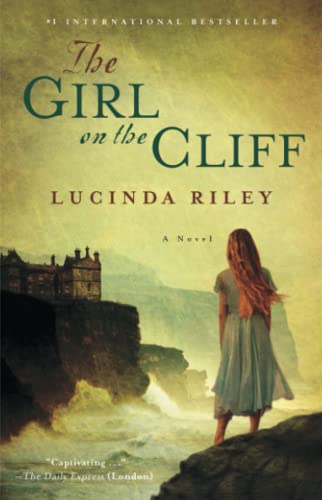
To escape a recent heartbreak in New York, Grania Ryan returns to her family home on the rugged, wind-swept coast of Ireland. Here, on the cliff edge in the middle of a storm, she meets a young girl, Aurora Lisle, who will profoundly change her life.
Despite the warnings Grania receives from her mother to be wary of the Lisle family, Aurora and Grania forge a close friendship. Through a trove of old family letters dating from 1914, Grania begins to learn just how deeply their families’ histories are entwined. The horrors of World War I, the fate of a beautiful foundling child, and the irresistible lure of the ballet give rise to a legacy of heartache that leaves its imprint on each new generation. Ultimately, it will be Aurora whose intuition and spirit may be able to unlock the chains of the past.
Sweeping from Edwardian England to present-day New York, from the majestic Irish coast to the crumbling splendor of a legendary London town house, The Girl on the Cliff introduces two remarkable women whose quest to understand their past sends them toward a future where love can triumph over loss.
Die Inhaltsangabe kann sich auf eine andere Ausgabe dieses Titels beziehen.
Über die Autorin bzw. den Autor
Lucinda Riley was the New York Times bestselling author of over twenty novels, including The Orchid House, The Girl on the Cliff, and the Seven Sisters series. Her books have sold twenty million copies in thirty-five languages globally. She was born in Ireland and divided her time between England and West Cork with her husband and four children. Visit her website at LucindaRiley.com.
Auszug. © Genehmigter Nachdruck. Alle Rechte vorbehalten.
The Girl on the Cliff
1
Dunworley Bay, West Cork, Ireland
The small figure was standing perilously close to the edge of the cliff. Her luxuriant, long red hair had been caught by the strong breeze and was flying out behind her. A thin white cotton dress reached to her ankles and exposed her small, bare feet. Her arms were held taut, palms facing out toward the foaming mass of gray sea beneath her, her pale face looking upward, as if she were offering herself as a sacrifice to the elements.
Grania Ryan stood watching her, hypnotized by the wraithlike vision. Her senses were too jumbled to tell her whether what she was seeing before her was real or imagined. She closed her eyes for a split second, then reopened them, and saw that the figure was still there. With the appropriate messages sent to her brain, she took a couple of tentative steps forward.
As she drew nearer, Grania realized the figure was no more than a child; that the white cotton she was wearing was a nightdress. Grania could see the black storm clouds hovering out over the sea and the first saltwater droplets of impending rain stung her cheeks. The frailty of the small human against the wildness of her surroundings made her steps toward the child more urgent in pace.
The wind was whipping around her ears now and had started to voice its rage. Grania stopped ten yards from the girl, who was still unmoving. She saw the tiny blue toes holding her stoically to the rock, as the rising wind whipped and swayed her thin body like a willow sapling. She moved closer to the girl, stopping just behind her, uncertain of what to do next. Grania’s instinct was to run forward and grab her, but if the girl was startled and turned around, one missed footfall could result in unthinkable tragedy, taking the child to certain death on the foam-covered rocks a hundred feet below.
Grania stood, panic gripping her as she desperately tried to think of the best way to remove her from danger. But before she could reach a decision, the girl slowly turned around and stared at her with unseeing eyes.
Instinctively Grania held out her arms. “I won’t hurt you, I promise. Walk toward me and you’ll be safe.”
Still the girl stared at her, not moving from her spot on the edge of the cliff.
“I can take you home if you tell me where you live. You’ll catch your death out here. Please, let me help you,” Grania begged.
She took another step toward the child, and then, as if the girl had woken up from a dream, a look of fear crossed her face. Instantly, she turned to her right and began to run away from Grania along the cliff’s edge, disappearing from view.
• • •
“I was just about to be sending out the search party for you. That storm’s blowing up well and good, so it is.”
“Mam, I’m thirty-one years old, and I’ve lived in Manhattan for the past ten of those,” replied Grania drily as she entered the kitchen and hung her wet jacket over the AGA stove. “You don’t have to mind me. I’m a big girl now, remember?” She smiled as she walked toward her mother, who was setting the table for supper, and kissed her on the cheek. “Really.”
“That’s as may be, but I’ve known stronger men by far blown off the cliff in a gale like this.” Kathleen Ryan indicated the wildness of the wind outside the kitchen window, which was causing the flowerless wisteria bush to tap its twiggy brown deadness monotonously against the pane. “I’ve just made a brew.” Kathleen wiped her hands on her apron and walked toward the AGA. “Would you be wanting a cup?”
“That would be grand, Mam. Why don’t you sit down and take the weight off your feet for a few minutes, and I’ll pour it for both of us?” Grania steered her mother to a kitchen chair, pulled it back from the table and sat her gently onto it.
“Only five minutes, mind, the boys will be back at six for their tea.”
As Grania poured the strong liquid into two cups, she raised a silent eyebrow at her mother’s domestic dedication to her husband and her son. Not that anything had changed in the past ten years since she’d been away—Kathleen had always pandered to her men, putting their needs and desires first. But the contrast of her mother’s life to her own, where emancipation and equality of the sexes was standard, made Grania feel uncomfortable.
And yet . . . for all her own freedom from what many modern women would consider outdated male tyranny, who was currently the most content out of mother and daughter? Grania sighed sadly as she added milk to her mother’s tea. She knew the answer to that.
“There you go, Mam. Would you like a biscuit?” Grania put the tin in front of Kathleen and opened it. As usual, it was full to the brim with custard creams, bourbons and shortbread rounds. Another relic of childhood, and one that would be looked on with the same horror as a small nuclear device by her figure-conscious New York contemporaries.
Kathleen took two and said, “Go on, have one yourself to keep me company. To be sure, you don’t eat enough to keep a mouse alive.”
Grania nibbled dutifully at a biscuit, thinking how, ever since she’d arrived home ten days ago, she’d felt stuffed to bursting with her mother’s copious home cooking. Yet Grania would say that she had the healthiest appetite out of most of the women she knew in New York. And she actually used her oven as it was designed for, not as a convenient place to store plates.
“The walk cleared your head a little, did it?” ventured Kathleen, making her way through her third biscuit. “Whenever I have a problem in my mind to be sorted, I’ll be off walking and come back knowing the answer.”
“Actually . . .” Grania took a sip of tea. “I saw something strange, Mam, when I was out. A little girl, maybe eight or nine, standing in her nightie right up on the cliff’s edge. She had beautiful long, curly red hair . . . it was as if she was sleepwalking, because she turned to look at me when I walked toward her and her eyes were”—she searched for the right description—“blank. Like she wasn’t seeing me. Then she seemed to wake up and scampered off like a startled rabbit up the cliff path. Do you know who she might have been?”
Grania watched the color drain from Kathleen’s face. “Are you OK, Mam?”
Kathleen visibly shook herself. She stared at her daughter. “You say you saw her just a few minutes ago on your walk?”
“Yes.”
“Mary, Mother of God.” Kathleen crossed herself. “They’re back.”
“Who’s ‘back,’ Mam?” asked Grania, concerned by how shaken her mother seemed to be.
“Why have they returned?” Kathleen stared off through the window and into the night. “Why would they be wanting to? I thought . . . I thought it was finally over, that they’d be gone for good.” Kathleen grabbed Grania’s hand. “Are you sure it was a little girl you saw, not a grown woman?”
“Positive, Mam. As I said, she was aged about eight or nine. I was concerned for her; she had nothing on her feet and looked frozen. To be honest, I wondered whether I was seeing a ghost.”
“You were of a fashion, Grania,” Kathleen muttered....
„Über diesen Titel“ kann sich auf eine andere Ausgabe dieses Titels beziehen.
Weitere beliebte Ausgaben desselben Titels

Suchergebnisse für The Girl on the Cliff: A Novel

Beispielbild für diese ISBN
The Girl on the Cliff
Anbieter: World of Books (was SecondSale), Montgomery, IL, USA
Verkäuferbewertung 5 von 5 Sternen

Zustand: Acceptable. Item in acceptable condition! Textbooks may not include supplemental items i.e. CDs, access codes etc. Bestandsnummer des Verkäufers 00100994993
Gebraucht kaufen
EUR 3,75
Versand gratis
Versand innerhalb von USA
Versand innerhalb von USA
Anzahl: 4 verfügbar
Beispielbild für diese ISBN
The Girl on the Cliff
Anbieter: World of Books (was SecondSale), Montgomery, IL, USA
Verkäuferbewertung 5 von 5 Sternen
Zustand: Good. Item in good condition. Textbooks may not include supplemental items i.e. CDs, access codes etc. Bestandsnummer des Verkäufers 00104015795
Gebraucht kaufen
EUR 3,75
Versand gratis
Versand innerhalb von USA
Versand innerhalb von USA
Anzahl: 6 verfügbar
Beispielbild für diese ISBN
The Girl on the Cliff
Anbieter: World of Books (was SecondSale), Montgomery, IL, USA
Verkäuferbewertung 5 von 5 Sternen
Zustand: Very Good. Item in very good condition! Textbooks may not include supplemental items i.e. CDs, access codes etc. Bestandsnummer des Verkäufers 00106059450
Gebraucht kaufen
EUR 3,75
Versand gratis
Versand innerhalb von USA
Versand innerhalb von USA
Anzahl: 1 verfügbar
Beispielbild für diese ISBN
The Girl on the Cliff: A Novel
Anbieter: Gulf Coast Books, Cypress, TX, USA
Verkäuferbewertung 5 von 5 Sternen
Paperback. Zustand: Fair. Bestandsnummer des Verkäufers 1451655827-4-25085170
Gebraucht kaufen
EUR 3,75
Versand gratis
Versand innerhalb von USA
Versand innerhalb von USA
Anzahl: 1 verfügbar
Foto des Verkäufers
The Girl on the Cliff: A Novel
Anbieter: Aspen Book Co., Denver, CO, USA
Verkäuferbewertung 5 von 5 Sternen
Zustand: good. A well-loved companion. Corners and cover might show a little wear, and you could find some notes or highlights. The dust jacket might be MIA, it might have been a library book and extras aren't guaranteedâ"but the story's all there! Bestandsnummer des Verkäufers PKV.1451655827.G
Gebraucht kaufen
EUR 3,78
Versand gratis
Versand innerhalb von USA
Versand innerhalb von USA
Anzahl: 1 verfügbar
Foto des Verkäufers
The Girl on the Cliff: A Novel
Anbieter: Zoom Books East, Glendale Heights, IL, USA
Verkäuferbewertung 5 von 5 Sternen
Zustand: good. Book is in good condition and may include underlining highlighting and minimal wear. The book can also include "From the library of" labels. May not contain miscellaneous items toys, dvds, etc. . We offer 100% money back guarantee and 24 7 customer service. Bestandsnummer des Verkäufers ZEV.1451655827.G
Gebraucht kaufen
EUR 3,95
Versand gratis
Versand innerhalb von USA
Versand innerhalb von USA
Anzahl: 1 verfügbar
Foto des Verkäufers
The Girl on the Cliff: A Novel
Anbieter: 2nd Life Books, Burlington, NJ, USA
Verkäuferbewertung 5 von 5 Sternen
Zustand: good. Used book in good condition. May have some wear to binding, spine, cover, and pages. Some light highlighting markings writing may be present. May have some stickers and or sticker residue present. May be Ex-lib. copy. May NOT include discs, or access code or other supplemental material. We ship Monday-Saturday and respond to inquiries within 24 hours. Bestandsnummer des Verkäufers BXM.ALHM
Gebraucht kaufen
EUR 0,91
EUR 3,48 Versand
Versand innerhalb von USA
Versand innerhalb von USA
Anzahl: 1 verfügbar
Foto des Verkäufers
The Girl on the Cliff: A Novel
Anbieter: 2nd Life Books, Burlington, NJ, USA
Verkäuferbewertung 5 von 5 Sternen
Zustand: very_good. Used book in very good condition. May have some minor wear. May NOT include discs, or access code or other supplemental material. Ships directly from Amazon and is eligible for Prime or super saver FREE shipping. We ship Monday-Saturday and respond to inquiries within 24 hours. Bestandsnummer des Verkäufers BXM.D0HJ
Gebraucht kaufen
EUR 1,18
EUR 3,48 Versand
Versand innerhalb von USA
Versand innerhalb von USA
Anzahl: 1 verfügbar
Foto des Verkäufers
The Girl on the Cliff: A Novel
Anbieter: ZBK Books, Carlstadt, NJ, USA
Verkäuferbewertung 5 von 5 Sternen
Zustand: good. Fast & Free Shipping â" Good condition. It may show normal signs of use, such as light writing, highlighting, or library markings, but all pages are intact and the book is fully readable. A solid, complete copy that's ready to enjoy. Bestandsnummer des Verkäufers ZWV.1451655827.G
Gebraucht kaufen
EUR 4,80
Versand gratis
Versand innerhalb von USA
Versand innerhalb von USA
Anzahl: 1 verfügbar
Foto des Verkäufers
The Girl on the Cliff: A Novel
Anbieter: Greenworld Books, Arlington, TX, USA
Verkäuferbewertung 5 von 5 Sternen
Zustand: very_good. Fast Free Shipping â" Very Good condition book with a firm cover and clean pages. Shows normal use and some light wear or limited notes markings. A solid, nice copy to enjoy. Bestandsnummer des Verkäufers GWV.1451655827.VG
Gebraucht kaufen
EUR 4,80
Versand gratis
Versand innerhalb von USA
Versand innerhalb von USA
Anzahl: 1 verfügbar