
Verwandte Artikel zu Changeology: 5 Steps to Realizing Your Goals and Resolutions
Inhaltsangabe
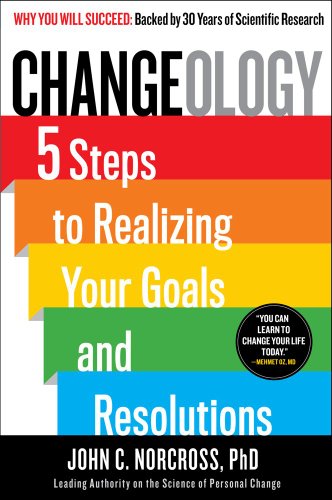
From one of America’s foremost authorities on personal change comes the blueprint for his cutting-edge system, showing readers how to execute permanent lifestyle changes in just five steps.
Is there a scientific formula you can follow to change your life?
Change is hard. But not if you know the 5-step formula that works whether you’re trying to stop smoking or start recycling. Dr. John C. Norcross, an internationally recognized expert, has studied how people make transformative, permanent changes in their lives. Over the past thirty years, he and his research team have helped thousands of people overcome dozens of behavioral ailments. Now his cutting-edge, scientific approach to personal improvement is being made available in this indispensable guide.
Unlike 95 percent of self-help books, the Changeology plan has a documented track record of success. Whether you want to quit overeating or drinking, or end depression, debt, and relationship distress, Dr. Norcross gives you the tools you need to change what you want within 90 days. Changeology shows you:
*¦ How to define your goals and get started in a new direction
* How to pump up your motivation and prepare for self-change
* How to prevent relapses into old patterns
* How to master the skills that will help you sustain change
* How to personalize your journey with Check Yourself assessments and an inter- active website, www.ChangeologyBook.com.
Whatever your goal or resolution, you can use Changeology to achieve a life filled with greater health and happiness.
Die Inhaltsangabe kann sich auf eine andere Ausgabe dieses Titels beziehen.
Über die Autorin bzw. den Autor
John C. Norcross, PhD, is Distinguished Professor of Psychology at the University of Scranton, Adjunct Professor of Psychiatry at SUNY Upstate Medical College, and a board-certified clinical psychologist in part time practice. He has authored more than 300 publications and edited or co-written twenty-two professional books.
Kristin Loberg has collaborated on a lengthy list of successful books, including three #1 New York Times bestsellers, most recently The End of Illness by David B. Agus, MD.
Jonathon Norcross graduated from St. Joseph’s University, where he studied English and film. He works in the TV and film industry in New York City.
Auszug. © Genehmigter Nachdruck. Alle Rechte vorbehalten.
Changeology
INTRODUCTION
CHANGEOLOGY: WHAT IT IS AND
WHAT IT CAN DO FOR YOU
Let’s begin with the end in mind: think of one, maybe two, things that you’d like to change in yourself, something you really want to modify about your behavior. If you’re like most people, it doesn’t take long to come up with something. Perhaps a laundry list of goals and ambitions rushes through your mind, some harder to achieve than others. Maybe a quick smile breaks out on your face when you proudly recall a goal you have recently realized. Perhaps, too, you feel a brief pang of guilt for not trying to change certain things or a fleeting sense of dismay because your previous attempts have proven unsuccessful. All of these complicated feelings are part of the universal constellation of emotions toward change.
Now take a deep breath and consider the following: whether you’re hoping to stop smoking or gambling, commit to exercising more hours a week (maybe run a marathon), eliminate fast food and bike to work, or learn a new skill that will earn you a promotion, following the scientific program outlined in this book can dramatically increase your chance of success—without drugs or other types of formal treatment. This proven program shows you exactly how to execute the steps necessary to change on your own. And best of all: you can experience lasting results within 90 days.
Sound too good to be true? Much in the way Elisabeth Kübler-Ross distinguished stages of grief, my colleagues and I have identified five distinct stages of behavior change. This is hardly an inconsequential finding; these stages, which I’ve simplified to just 5 straightforward steps, reflect three decades of scientific research and millions of dollars in funding. Finally, this well-documented program for successful change is accessible to everyone in this practical book.
From chronic addictions to minor habits, the range of behaviors that we can change is vast but the process of change is the same. In other words, the steps an overweight individual has to take to lose pounds permanently will be the same as those taken by a workaholic seeking to cut back on time spent in the office so he can spend more time with his family. Granted, as each person passes through the steps, he or she will have different goals, but the overall experience will be astonishingly similar.
How do I know this for sure? That’s what part of this book is going to reveal to you; I’ll be detailing what I’ve learned as a clinical psychologist and university professor helping tens of thousands of people—in both research and clinical settings—achieve permanent changes.
A LITTLE HISTORY
I was there at the beginning. Not at the creation of the world, mind you, but at the start of defining one of the most effective and celebrated systems ever for changing human behavior: the Stages of Change. Before I detail exactly how you’ll create successful change in your life, let me take a few moments to introduce myself and provide the backstory. It will help you understand just how different Changeology is from any other program that you might have tried in the past.
It all started in 1980. Jimmy Carter was in the White House, and Dallas was flickering across the nation’s TV screens. I had just moved to Rhode Island to earn my doctorate and to work with Dr. James O. Prochaska on his first National Institutes of Health grant to study self-change—how people modify their behavior without professional treatment. He and one of his recent graduates, Dr. Carlo C. DiClemente, were studying how a thousand people stopped smoking on their own. Little did any of us imagine that those early studies would lead to revolutionary advances in understanding how people change their behavior on their own.
Five years later, I had my clinical psychology PhD in hand and an internship at Brown University Medical School under my belt. I accepted a professorship at the University of Scranton, nestled in the rolling foothills of the Pocono Mountains in northeastern Pennsylvania. I continued my research into self-change and psychotherapy, much of it in collaboration with Jim Prochaska.
In the 1990s, the research got really interesting as research assistants and I conducted three nationally publicized studies that tracked New Year’s resolutions. We learned, scientifically speaking, what predicted some resolvers’ success and others’ failures. Our investigations also looked at change in psychotherapists—the most educated and experienced change agents. How do the experts change themselves?
After the new millennium, my comrades and I conducted another series of studies—a dozen, in fact—to identify the effectiveness of myriad self-help resources. We separated the chaff from the wheat among thousands of self-help books, autobiographies, films, and websites. We managed to determine what kind of self-help resources work and what constitutes ineffective, unscientific pabulum.
Today, there is a staggering number of published studies that have been done on the stages of change—more than two thousand and counting. Our work has added to this undeniably impressive body of research, which has enjoyed the support of $80 million in federal grant funding. Although the early studies concentrated on addictions, such as smoking, drinking, and overeating, over the years they have expanded to include three dozen challenges that millions of people face in daily living, including distressed relationships, anxiety, getting ahead at work, troubling finances, depression, and procrastination.
The program resulting from this research works across a variety of problems, across countries and cultures, and across the spectrum of healing. It’s been used successfully by individuals, couples, families, organizations, and entire health systems worldwide. What’s more, it’s been proven to work whether you’re attempting to change on your own or are armed with a self-help book, assisted by a formal support group, treated by a psychologist, bolstered by medication, or any combination thereof.
Our change system has a documented track record of success. It has guided tens of thousands of research participants and psychotherapy patients to lives filled with greater health and happiness. That same research can now guide you through the labyrinth of self-change to your goal. This revolutionary system has been translated into the step-by-step program explained in this book. In other words, you can reap the same benefits of our research that our patients have experienced—just by reading and following the advice offered in Changeology.
HOW CHANGEOLOGY DIFFERS FROM OTHER SELF-HELP
At this point you’re probably thinking, “He’s making awfully strong claims!” Or perhaps you’re silently protesting, “The usual oversold promises of self-help books.” Correct on both counts: These are strong claims, and most self-help books do guarantee unrealistic and unproven results. Decades of research validate the methods described in this book: that’s the crucial difference between Changeology and the morass of other self-help books. I deplore the insulting, antiscientific fare of most self-help books. In fact, that’s been a huge motivator for my career as a clinical psychologist, university professor, and researcher focused on studying behavior change. I have devoted decades of my life to determining what works and what doesn’t.
After investigating people’s attempts to realize their...
„Über diesen Titel“ kann sich auf eine andere Ausgabe dieses Titels beziehen.
Weitere beliebte Ausgaben desselben Titels

Suchergebnisse für Changeology: 5 Steps to Realizing Your Goals and Resolutions

Beispielbild für diese ISBN
Changeology: 5 Steps to Realizing Your Goals and Resolutions
Anbieter: Evergreen Goodwill, Seattle, WA, USA
Verkäuferbewertung 5 von 5 Sternen

hardcover. Zustand: Good. Bestandsnummer des Verkäufers mon0000766525
Gebraucht kaufen
EUR 1,40
EUR 3,42 Versand
Versand innerhalb von USA
Versand innerhalb von USA
Anzahl: 1 verfügbar
Beispielbild für diese ISBN
Changeology: 5 Steps to Realizing Your Goals and Resolutions
Anbieter: World of Books (was SecondSale), Montgomery, IL, USA
Verkäuferbewertung 5 von 5 Sternen
Zustand: Good. Item in good condition. Textbooks may not include supplemental items i.e. CDs, access codes etc. Bestandsnummer des Verkäufers 00096998462
Gebraucht kaufen
EUR 4,91
Versand gratis
Versand innerhalb von USA
Versand innerhalb von USA
Anzahl: 2 verfügbar
Beispielbild für diese ISBN
Changeology: 5 Steps to Realizing Your Goals and Resolutions
Anbieter: HPB-Ruby, Dallas, TX, USA
Verkäuferbewertung 5 von 5 Sternen
hardcover. Zustand: Very Good. Connecting readers with great books since 1972! Used books may not include companion materials, and may have some shelf wear or limited writing. We ship orders daily and Customer Service is our top priority! Bestandsnummer des Verkäufers S_464274794
Gebraucht kaufen
EUR 2,25
EUR 3,21 Versand
Versand innerhalb von USA
Versand innerhalb von USA
Anzahl: 1 verfügbar
Beispielbild für diese ISBN
Changeology : 5 Steps to Realizing Your Goals and Resolutions
Anbieter: Better World Books, Mishawaka, IN, USA
Verkäuferbewertung 5 von 5 Sternen
Zustand: Good. Former library copy. Pages intact with minimal writing/highlighting. The binding may be loose and creased. Dust jackets/supplements are not included. Includes library markings. Stock photo provided. Product includes identifying sticker. Better World Books: Buy Books. Do Good. Bestandsnummer des Verkäufers GRP102577905
Gebraucht kaufen
EUR 5,94
Versand gratis
Versand innerhalb von USA
Versand innerhalb von USA
Anzahl: 1 verfügbar
Beispielbild für diese ISBN
Changeology : 5 Steps to Realizing Your Goals and Resolutions
Anbieter: Better World Books: West, Reno, NV, USA
Verkäuferbewertung 5 von 5 Sternen
Zustand: Very Good. Former library copy. Pages intact with possible writing/highlighting. Binding strong with minor wear. Dust jackets/supplements may not be included. Includes library markings. Stock photo provided. Product includes identifying sticker. Better World Books: Buy Books. Do Good. Bestandsnummer des Verkäufers 3713815-6
Gebraucht kaufen
EUR 5,94
Versand gratis
Versand innerhalb von USA
Versand innerhalb von USA
Anzahl: 1 verfügbar
Beispielbild für diese ISBN
Changeology : 5 Steps to Realizing Your Goals and Resolutions
Anbieter: Better World Books, Mishawaka, IN, USA
Verkäuferbewertung 5 von 5 Sternen
Zustand: Good. Pages intact with minimal writing/highlighting. The binding may be loose and creased. Dust jackets/supplements are not included. Stock photo provided. Product includes identifying sticker. Better World Books: Buy Books. Do Good. Bestandsnummer des Verkäufers 7672264-6
Gebraucht kaufen
EUR 5,94
Versand gratis
Versand innerhalb von USA
Versand innerhalb von USA
Anzahl: 1 verfügbar
Beispielbild für diese ISBN
Changeology: 5 Steps to Realizing Your Goals and Resolutions
Anbieter: ThriftBooks-Dallas, Dallas, TX, USA
Verkäuferbewertung 5 von 5 Sternen
Hardcover. Zustand: Good. No Jacket. Pages can have notes/highlighting. Spine may show signs of wear. ~ ThriftBooks: Read More, Spend Less. Bestandsnummer des Verkäufers G1451657617I3N00
Gebraucht kaufen
EUR 6,51
Versand gratis
Versand innerhalb von USA
Versand innerhalb von USA
Anzahl: 1 verfügbar
Foto des Verkäufers
Changeology: 5 Steps to Realizing Your Goals and Resolutions
Anbieter: ChristianBookbag / Beans Books, Inc., Westlake, OH, USA
Verkäuferbewertung 5 von 5 Sternen
Hardcover. Zustand: Very Good. Scratch and dent. Cover may have wear, dings, tears, other damage, or be missing dust jacket. Buy multiples from our store to save on shipping. Bestandsnummer des Verkäufers 1705230306
Gebraucht kaufen
EUR 3,71
EUR 3,38 Versand
Versand innerhalb von USA
Versand innerhalb von USA
Anzahl: 4 verfügbar
Beispielbild für diese ISBN
Changeology: 5 Steps to Realizing Your Goals and Resolutions
Anbieter: Downtown Atlantis Books, EVANSTON, IL, USA
Verkäuferbewertung 4 von 5 Sternen

Hardcover. Zustand: Very Good. Zustand des Schutzumschlags: Very Good. Book and dust jacket are in very good condition. Spine is strong, and inside pages are clean. Bestandsnummer des Verkäufers 120621008
Gebraucht kaufen
EUR 7,73
EUR 3,38 Versand
Versand innerhalb von USA
Versand innerhalb von USA
Anzahl: 1 verfügbar
Foto des Verkäufers
Changeology: 5 Steps to Realizing Your Goals and Resolutions
Anbieter: Cycle Books LA, South el monte, CA, USA
Verkäuferbewertung 5 von 5 Sternen
Zustand: new. Bestandsnummer des Verkäufers AMTV.1451657617.N
Neu kaufen
EUR 17,38
EUR 2,56 Versand
Versand innerhalb von USA
Versand innerhalb von USA
Anzahl: 1 verfügbar