
Verwandte Artikel zu Living The Journey: Using The Journey Method to Heal...
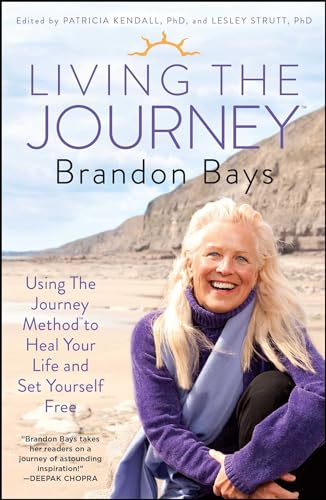
Living The Journey: Using The Journey Method to Heal Your Life and Set Yourself Free (Atria) - Softcover
Inhaltsangabe
In this compilation of inspiring stories, edited by renowned healing expert Brandon Bays, practitioners of The Journey method share their powerful experiences with natural healing.
EXPERIENCE HOPE AND HEALING BY LIVING THE JOURNEY
The Journey inspired people worldwide to follow Brandon Bays’s teachings in an effort to achieve healthful, more fulfilling lives. In 1992, Bays was diagnosed with a basketball-sized tumor in her uterus and refused surgery. Catapulted into a remarkable, soul-searching, and ultimately freeing healing journey, six and a half weeks later, she was pronounced completely tumor free. The Journey outlined practical steps for ordinary people to take toward a path of healing.
Now, Living The Journey is an opportunity for those seeking wellness to learn from the many people who have successfully integrated The Journey into their lives. Sixteen contributors tell remarkable stories of profound healing–– of overcoming post-traumatic stress disorder and depression; ridding the body of cancer and chronic pain; clearing addictions; and transforming devastating grief into peace, all through the measured steps of The Journey Method.
Die Inhaltsangabe kann sich auf eine andere Ausgabe dieses Titels beziehen.
Über die Autorin bzw. den Autor
Internationally bestselling author Brandon Bays is one of the most dynamic, inspirational, and innovative teachers in the filed of personal growth and consciousness training today. Known for her radically transformative work in the fields of cellular healing, emotional well-being, and spiritual awakening, the powerful teachings of The Journey were born from her own direct experience of healing naturally from a large tumor, without drugs or surgery, by way of a life transforming spiritual journey. She has been teaching journeywork for more than seventeen years, and she currently resides in Wales.
Auszug. © Genehmigter Nachdruck. Alle Rechte vorbehalten.
Living The Journey
1
One Crumb at a Time
by Debbie Clarke
Change . . . it’s something that can occur in the blink of an eye, or it can be something that happens so slowly that it’s not until you wake up one day and ask, “How did I get here?” that you even notice the change. This can be either change for the better or for the worse, on the scale of, How’s your life working for you?
My experience of change has been the slow, subtle type. It wasn’t until my life had tipped to a very low point that I woke up and began to realize that I couldn’t continue on the path I was on. Even my awakening to the fact of how bad I felt was slow. It was as if I couldn’t have tolerated noticing it all at once, so I become aware of each aspect, one little bit at a time.
Let me describe what my life was like back in October 2006. I was a month away from turning forty-six years old, and I was in a longtime relationship with my spouse, Dan. We had just celebrated twenty-four years of being together, and our relationship had grown unhappy and unhealthy in many ways. In my eyes, at that time, it was all because of Dan. I blamed Dan’s discontent, his choices, his moods and unhappiness as being the cause of our problems and ultimately my own unhappiness. I felt so sad most of the time, as well as alone, isolated, stressed, frustrated, hopeless and unloved; the list was endless.
To make matters worse, I had been diagnosed with rheumatoid arthritis nineteen years earlier. This disease had, at times rapidly and more often slowly and insidiously, accelerated to the point that eventually I was no longer able to work. Despite the evidence that something was very wrong, though, I had lived in denial from the time I had first gotten sick.
My jaw was the first area to be affected. Within two months I couldn’t open my mouth more than enough to fit my baby finger between my top and bottom teeth. I would force myself to go to work every day, and I remember that, while sitting at my desk, it would take me the entire morning to eat a muffin, one crumb at a time.
Surgery repaired my jaw somewhat, but then the disease began in earnest as one joint at a time began to inflame and swell. Soon my breastbone was swollen and protruding, and it felt like someone was sitting on my chest at all times. If I coughed or sneezed, the pain was unbelievable, almost as if someone had ripped me wide open. My shoulders were painful, and I couldn’t reach over my head. In order to get myself out of bed in the morning, I would grab the front of my own pajamas and pull myself up. To wash my hair in the shower, I would need to bend forward and bring my head down to where I could reach my hair. Both of my knees ached, and I limped; my neck barely turned, and each movement of my head was agonizing. My low back was stiff and very painful. There were almost no spots on my body that didn’t hurt. Each morning it was only after hours of struggle and incredible pain that I would be ready to start the trip to work via public transit.
I read an article once by a woman suffering from rheumatoid arthritis, and she said that her life was about planning. She had to preplan every step she took and every moment of her day. I had been doing exactly that, and such was the depth of my denial that I had not even been aware of it! I would plan ahead what hand I would hold on with when I boarded a bus, and make sure not to carry anything and always to have a hand free. I would pray that there would be a seat available, and one that I could get in and out of easily and not make a spectacle of myself.
As I write this now, I’m still amazed that even with all the pain and suffering that I endured, not calling attention to myself was foremost in my mind. I have to laugh, because the visual I have of a female version of the Tin Man of Oz making her way through her day and not calling attention to herself is so ridiculous. The good news is that most people around me were so “asleep” in their lives that they didn’t notice me in mine.
Even when I did stop working, only my closest friends were even aware that there was anything wrong with me. People who worked beside me every day had no idea. I was the master of disguise. I kept a smile on my face and hid my pain, because that is what I believed I was supposed to do.
I was the consummate people pleaser and had to give 150 percent at work and be the best social worker ever. At home all I wanted was for Dan to be happy, because I believed if he was happy, then I would be. I ignored and denied my pain in an attempt to keep everyone else happy.
My family lived about four hours away, and I traveled there as much as I could, because I needed to be close to them and please them, too. I always felt split: there was my family and my life in my hometown, and there was Dan and my life in Toronto. Whenever I was with my family, I felt I should be with Dan, and when I was with Dan, I felt that my family needed me. I remember a toy called Stretch Armstrong that my nephew Keith had back in the ’90s. The toy was made of a soft rubber; you could pull Stretch’s arms, and they would extend to abnormal lengths. I see my face on the Stretch Armstrong toy, being pulled until my arms can stretch from Toronto to the Ottawa Valley. There is sadness here as I realize what I expected from my body, and yet I can laugh because it really is a funny visual.
It’s all so obvious to me now that the outer struggles were being reflected in my body. Playing these games and using these strategies to fulfill myself—and looking outside of myself to others to give me value and meaning—was causing my joints and my body to be in a metaphorical tug-of-war that week by week, month by month was becoming physical. However, at that time I was so busy planning my every movement and just getting through my day that I couldn’t see the big picture. I was like a workhorse wearing blinders and plodding along through what felt like wet concrete. I felt as if I carried the weight of the world on my shoulders. Every step and movement was a struggle.
I continued like this for thirteen years, until I needed to have a second surgery on my shoulder as well as surgery on both my knees. The doctor told me that they could do a few more surgeries and then they would need to start replacing my joints; but if the artificial joints wore out, there was nothing that could be done. It was all very difficult because I was so young. Usually people are getting joints replaced in their senior years, and I was only in my forties. The cold, hard truth finally hit me: my body was deteriorating, and I only had the one body. I had better wake up.
With a heavy heart and incredible fear I agreed to leave work. I will never forget the day that I read the doctor’s report that my rheumatologist had completed in order for me to receive long-term disability benefits from my employer. I opened the envelope that he had given me and read “Permanently Disabled.” I felt like someone had pulled the bottom out of my world.
At the time, I was sitting waiting to have my blood tests done, and as much as I wanted to sob like a baby, I felt I had to hold it together, just as I had always done. The technician called me in, and I stuffed that sadness down inside me and smiled brightly. When I got home, I cried to Dan, at first, but whenever I cried, it seemed to physically hurt him, so eventually I held it in.
My family was the same. I didn’t want to worry them, and if I cried, they appeared to be so uncomfortable with my sadness. The worst thing for me is to see someone else uncomfortable. It was less painful to hold it inside than to risk making them feel uncomfortable.
I...
„Über diesen Titel“ kann sich auf eine andere Ausgabe dieses Titels beziehen.
Suchergebnisse für Living The Journey: Using The Journey Method to Heal...

Beispielbild für diese ISBN
Living The Journey: Using The Journey Method to Heal Your Life and Set Yourself Free
Anbieter: New Legacy Books, Annandale, NJ, USA
Verkäuferbewertung 5 von 5 Sternen

paperback. Zustand: Very Good. Fast shipping and order satisfaction guaranteed. A portion of your purchase benefits Non-Profit Organizations, First Aid and Fire Stations! Bestandsnummer des Verkäufers mon0000197274
Gebraucht kaufen
EUR 4,11
EUR 2,22 Versand
Versand innerhalb von USA
Versand innerhalb von USA
Anzahl: 1 verfügbar
Beispielbild für diese ISBN
Living the Journey : Using the Journey Method to Heal Your Life and Set Yourself Free
Anbieter: Better World Books: West, Reno, NV, USA
Verkäuferbewertung 5 von 5 Sternen
Zustand: Good. Pages intact with minimal writing/highlighting. The binding may be loose and creased. Dust jackets/supplements are not included. Stock photo provided. Product includes identifying sticker. Better World Books: Buy Books. Do Good. Bestandsnummer des Verkäufers 9436286-20
Gebraucht kaufen
EUR 6,57
Versand gratis
Versand innerhalb von USA
Versand innerhalb von USA
Anzahl: 1 verfügbar
Beispielbild für diese ISBN
Living the Journey : Using the Journey Method to Heal Your Life and Set Yourself Free
Anbieter: Better World Books, Mishawaka, IN, USA
Verkäuferbewertung 5 von 5 Sternen
Zustand: Good. Pages intact with minimal writing/highlighting. The binding may be loose and creased. Dust jackets/supplements are not included. Stock photo provided. Product includes identifying sticker. Better World Books: Buy Books. Do Good. Bestandsnummer des Verkäufers 9436286-20
Gebraucht kaufen
EUR 6,92
Versand gratis
Versand innerhalb von USA
Versand innerhalb von USA
Anzahl: 1 verfügbar
Beispielbild für diese ISBN
Living The Journey: Using The Journey Method to Heal Your Life and Set Yourself Free
Anbieter: St Vincent de Paul of Lane County, Eugene, OR, USA
Verkäuferbewertung 5 von 5 Sternen
Zustand: Good. Paperback 100% of proceeds go to charity! Good condition with all pages in tact. Item shows signs of use and may have cosmetic defects. Bestandsnummer des Verkäufers 2DD-005-2779
Gebraucht kaufen
EUR 3,67
EUR 3,56 Versand
Versand innerhalb von USA
Versand innerhalb von USA
Anzahl: 1 verfügbar
Beispielbild für diese ISBN
Living The Journey: Using The Journey Method to Heal Your Life and Set Yourself Free
Anbieter: Idaho Youth Ranch Books, Boise, ID, USA
Verkäuferbewertung 5 von 5 Sternen
Zustand: Acceptable. A readable copy. All pages are intact, and the cover is intact (However the dust cover may be missing). Pages can include considerable notes--in pen or highlighter--but the notes cannot obscure the text. Book may be a price cutter or have a remainder mark. Bestandsnummer des Verkäufers 10-A-1-2314
Gebraucht kaufen
EUR 3,70
EUR 3,56 Versand
Versand innerhalb von USA
Versand innerhalb von USA
Anzahl: 1 verfügbar
Foto des Verkäufers
Living The Journey: Using The Journey Method to Heal Your Life and Set Yourself Free
Anbieter: Greenworld Books, Arlington, TX, USA
Verkäuferbewertung 5 von 5 Sternen
Zustand: like_new. Fast Free Shipping â" Excellent condition book with clean cover and pages. Barely handled, with minimal wear. An outstanding copy, close to enjoy! Bestandsnummer des Verkäufers GWV.1451665628.LN
Gebraucht kaufen
EUR 10,92
Versand gratis
Versand innerhalb von USA
Versand innerhalb von USA
Anzahl: 1 verfügbar
Beispielbild für diese ISBN
Living the Journey: Using the Journey Method to Heal Your Life and Set Yourself Free
Anbieter: WorldofBooks, Goring-By-Sea, WS, Vereinigtes Königreich
Verkäuferbewertung 5 von 5 Sternen
Paperback. Zustand: Very Good. The book has been read, but is in excellent condition. Pages are intact and not marred by notes or highlighting. The spine remains undamaged. Bestandsnummer des Verkäufers GOR005275444
Gebraucht kaufen
EUR 6,94
EUR 6,62 Versand
Versand von Vereinigtes Königreich nach USA
Versand von Vereinigtes Königreich nach USA
Anzahl: 6 verfügbar
Foto des Verkäufers
Living the Journey : Using the Journey Method to Heal Your Life and Set Yourself Free
Anbieter: GreatBookPrices, Columbia, MD, USA
Verkäuferbewertung 5 von 5 Sternen
Zustand: New. Bestandsnummer des Verkäufers 18659709-n
Neu kaufen
EUR 15,08
EUR 2,36 Versand
Versand innerhalb von USA
Versand innerhalb von USA
Anzahl: 1 verfügbar
Beispielbild für diese ISBN
Living The Journey: Using The Journey Method to Heal Your Life and Set Yourself Free
Anbieter: Lakeside Books, Benton Harbor, MI, USA
Verkäuferbewertung 5 von 5 Sternen
Zustand: New. Brand New! Not Overstocks or Low Quality Book Club Editions! Direct From the Publisher! We're not a giant, faceless warehouse organization! We're a small town bookstore that loves books and loves it's customers! Buy from Lakeside Books! Bestandsnummer des Verkäufers OTF-S-9781451665628
Neu kaufen
EUR 13,92
EUR 3,56 Versand
Versand innerhalb von USA
Versand innerhalb von USA
Anzahl: Mehr als 20 verfügbar
Foto des Verkäufers
Living the Journey: Using the Journey Method to Heal Your Life and Set Yourself Free (Paperback or Softback)
Verlag:
Atria Books 8/21/2012, 2012
ISBN 10: 1451665628
ISBN 13: 9781451665628
Neu
Paperback or Softback
Anbieter: BargainBookStores, Grand Rapids, MI, USA
Verkäuferbewertung 5 von 5 Sternen
Paperback or Softback. Zustand: New. Living the Journey: Using the Journey Method to Heal Your Life and Set Yourself Free. Book. Bestandsnummer des Verkäufers BBS-9781451665628