
Inhaltsangabe
In reading this book, you will discover that you are much more powerful than your addiction, much more powerful than the obsessive thoughts, compulsive feelings, and physical cravings that create so much pain and suffering in your life and the lives of those you love. You will learn that there is no future in addiction, just a regrettable past that keeps repeating itself over and over again. You will cut through the recovery myths that result in an endless cycle of relapses. It can inspire and motivate you to reach deep inside yourself and awaken the extraordinary powers that nature has bestowed on you as it guides you through a process that transforms cravings for alcohol or drugs into cravings for courage, freedom, honesty, integrity, humility, and peace. According to HBO's documentary, Rehab, of the 2 million people who seek treatment each year in the United States, 1,840,000 will relapse within twelve months; some the first day. That's a 92 percent failure rate. This is a national disgrace. THE ANTIDOTE FOR ADDICTION With more than thirty-five years of continuous sobriety, Kelly presents not a cure but a powerful antidote for addiction, something that counteracts or relieves a harmful or unwanted condition.
Die Inhaltsangabe kann sich auf eine andere Ausgabe dieses Titels beziehen.
Über die Autorin bzw. den Autor
With professional success in the music and entertainment industries, Chuck Kelly fulfilled another lifelong ambition when he took Dr. Finzi's hypnotherapy course at Long Beach Community Hospital in January 1986 to become a Certified Hypnotherapist. While still writing and editing books, Chuck began his hypnotherapy practice in Long Beach, California. Always eager to learn more, Chuck took another hypnosis course from the American Institute of Hypnotherapy in December 1989 for his second certification. Being a writer with an understanding of the value of hypnosis, Chuck wanted to write a book to help others help themselves through self-hypnosis. Viola! The Little Book about Self-Hypnosis was born. Chuck has a Master's Degree in Communication from International College. In 2017 Chuck was awarded the Marquis Who's Who Lifetime Achievement Award for 20 consecutive years' listing in a Marquis Who's Who publication.
Auszug. © Genehmigter Nachdruck. Alle Rechte vorbehalten.
Radical Recovery
12 Recovery Myths: The Addiction Survivor's Guide To The Twelve StepsBy KELLYBalboa Press
Copyright © 2012 KellyAll right reserved.
ISBN: 978-1-4525-5711-3
Contents
PREFACE...................................................................xiALCOHOLICS AND ADDICTS THE RELUCTANT WARRIORS.............................1Myth 1: ADDICTION IS A BAD HABIT NOT A DISEASE............................15Myth 2: I AM DIFFERENT FROM YOU...........................................25Myth 3: WE ARE POWERLESS OVER OUR ADDICTION...............................35Myth 4: WE NEED A HIGHER POWER TO RECOVER.................................49Myth 5: JUST DON'T PICK UP................................................63Myth 6: ALCOHOL AND DRUGS MAKE OUR LIVES UNMANAGEABLE.....................77Myth 7: MEETING MAKERS MAKE IT............................................87Myth 8: THERE IS NO CURE FOR ADDICTION....................................99Myth 9: WE HAVE TO GET OUT OF THE DRIVER'S SEAT...........................111Myth 10: THE STEPS SHOULD BE TAKEN IN ORDER...............................121Myth 11: OUR DISEASE SPEAKS TO US.........................................133Myth 12: WILL-POWER IS USELESS WITH ADDICTION.............................141SUMMARY...................................................................151
Chapter One
MYTH 1
ADDICTION IS A BAD HABIT NOT A DISEASE
"I have learned this. It is not what one does that is wrong, but what one becomes as a consequence of it." (Oscar Wilde)
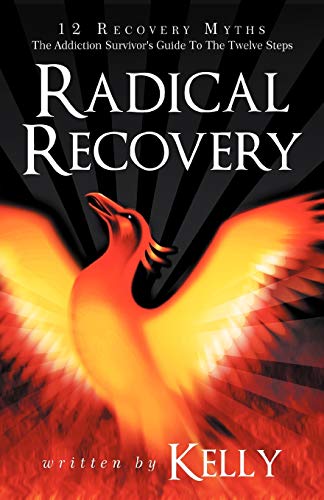
The cover of the book has an image of the Phoenix. In Egyptian mythology, the Phoenix is an immortal bird. When it dies, it bursts into flames, and is reborn from its own ashes. To Rise From the Ashes of the Phoenix means To make a miraculous comeback. If you believe that you are ready To Rise From the Ashes of Addiction, and make a miraculous comeback then Welcome to Radical Recovery.
The word "radical" can bring to mind images of extreme anarchy or violent revolution, but according to Webster's Dictionary, the word radical has a much softer connotation. It is defined as:
1. Getting to the root or origin of something.
2. Thoroughgoing, as regards a change from accepted or traditional forms.
When chemotherapy was first introduced as a method of treating cancer, it was considered a very radical way of getting to the root of the disease, because the "chemo" part of the therapy is a poison. But the poison works. It kills cancer cells. Unfortunately, it also kills healthy cells which results in very unpleasant side effects. The person infected with the poison most often experiences hair loss, nausea, vomiting, etc.
The good news here is that, in many cases, the temporary pain and discomfort that comes with the treatment puts the disease into full remission. The odds of staying in full remission increase, if the cancer survivor does certain other things such as eating healthy foods, exercising, taking prescribed medications, vitamin supplements, and of course, no smoking.
The bad news for us alcoholics and drug addicts is that the odds of becoming a cancer survivor are much greater than the odds of becoming an addiction survivor. Why?
Well, just as we don't consider cigarette smoking a "disease," on some level we tend to link cigarette smoking with alcohol and drugs. Bad habits we would like to get rid of - some day in the future.
Addiction is not just a disease. Left untreated, it is a terminal disease. But we really don't believe this, even though millions of addicts and alcoholics have proven this to us over and over again. Some of the more prominent ones include: Marilyn Monroe, Elvis Presley, Anna Nicole Smith, Janis Joplin, Jimmy Hendricks, John Belushi, etc. While we may give lip service to the idea that we have a terminal disease, our actions and attitudes tell a diff erent story. For example, at meetings newcomers are often told, "Don't rush into the Steps."
Once, while attending a meeting on Step 4: "Made A Fearless and Searching Moral Inventory of Ourselves," a man who had not had a drink in eight years, said, "It took me more than five years to complete Step 4. You didn't get sick overnight; you're not going to get well over night. Easy does it."
Bad advice! He may not have had a drink in eight years, but he sure didn't have anything I wanted.
Imagine being diagnosed with cancer, and going to your first meeting of Cancer Survivors Anonymous. You let everyone know that you are a newcomer. Can you imagine anyone in that room telling you, "Don't rush into getting treatment. Your cancer didn't happen overnight. It's not going to disappear overnight. So, easy does it."
If we really believed that we had a terminal disease, we would read the book, How To Become An Addiction Survivor, otherwise known as Alcoholics Anonymous. We would approach treatment with the same desire, motivation, and passion that someone diagnosed with cancer seeks treatment, the same desire, motivation, and passion that someone who is drowning reaches for a life preserver. But we don't. Why not? The answer should obvious - brain damage. Another reason why we have Step 2, "Came to believe that a Power greater than ourselves could restore us to sanity."
As the chemicals in alcohol and drugs kill more and more of our brain cells, our primitive brain takes over. The primitive brain works on the philosophy of, "If it feels good - do it."
Just as an infant has no access to speech, we have no access to the memory of what happened the last time we picked up a pill, drink, or drug. Here's what happens as the disease progresses.
We go into a coma, which is defined as: "A state of prolonged unconsciousness, including a lack of response to stimuli, from which it is impossible to rouse a person." This is pretty accurate because:
We look - but we don't see.
We hear - but we don't listen.
We touch - but we don't feel.
Another reason we fail to believe we have a terminal disease is that - we don't believe that rules and odds apply to us. We like to make up our own rules and odds and about life. For example, in addition to not really believing that addiction, left untreated, is a terminal disease, we really don't believe that cigarette smoking causes lung cancer, emphysema, heart disease, etc. If we did, we would stop smoking, but about 90 percent of the people who seek treatment for alcohol or drugs are also addicted to nicotine. I sympathize! I smoked two packs a day for many years.
The Disease of Chemical Dependency, whether it's an addiction to pills, alcohol, drugs, nicotine, or the comfort we get from eating unhealthy foods, is cunning, baffling, and powerful. That's one reason why the relapse rate is so high.
But, was it always this way?
Let's look at the history of our fellowship. The original members of A.A. tell us:
"Of alcoholics who came to A.A. and really tried, 50% got sober at once, and remained that way; 25% sobered up after some relapses, and among the remainder, those who stayed on with A.A. showed improvement." (A.A. Page xx)
According to the U.S. Substance Abuse and Mental Health Services Administration, 80% of the drug addicts and alcoholics coming out of treatment centers relapse within twelve months; some, the first day, (www.ncadi.samhsa.gov). HBO's documentary, REHAB, states that the relapse rate is much worse, more than 90%. Either way, the cost to the U.S economy, including actual treatment, time lost from work,...
„Über diesen Titel“ kann sich auf eine andere Ausgabe dieses Titels beziehen.
Weitere beliebte Ausgaben desselben Titels

Suchergebnisse für Radical Recovery: 12 Recovery Myths: The Addiction...

Beispielbild für diese ISBN
Radical Recovery: 12 Recovery Myths: The Addiction Survivor's Guide to the Twelve Steps
Anbieter: ThriftBooks-Dallas, Dallas, TX, USA
Verkäuferbewertung 5 von 5 Sternen

Paperback. Zustand: Very Good. No Jacket. May have limited writing in cover pages. Pages are unmarked. ~ ThriftBooks: Read More, Spend Less. Bestandsnummer des Verkäufers G145255711XI4N00
Gebraucht kaufen
EUR 6,74
Versand gratis
Versand innerhalb von USA
Versand innerhalb von USA
Anzahl: 1 verfügbar
Foto des Verkäufers
Radical Recovery: 12 Recovery Myths: The Addiction Survivor's Guide To The Twelve Steps
Anbieter: Shakespeare Book House, Rockford, IL, USA
Verkäuferbewertung 5 von 5 Sternen
Zustand: new. Bestandsnummer des Verkäufers EBBV.145255711X.N
Foto des Verkäufers
Radical Recovery : 12 Recovery Myths: the Addiction Survivor's Guide to the Twelve Steps
Anbieter: GreatBookPrices, Columbia, MD, USA
Verkäuferbewertung 5 von 5 Sternen
Zustand: As New. Unread book in perfect condition. Bestandsnummer des Verkäufers 19204120
Gebraucht kaufen
EUR 10,16
EUR 2,32 Versand
Versand innerhalb von USA
Versand innerhalb von USA
Anzahl: Mehr als 20 verfügbar
Foto des Verkäufers
Radical Recovery : 12 Recovery Myths: the Addiction Survivor's Guide to the Twelve Steps
Anbieter: GreatBookPrices, Columbia, MD, USA
Verkäuferbewertung 5 von 5 Sternen
Zustand: New. Bestandsnummer des Verkäufers 19204120-n
Neu kaufen
EUR 10,55
EUR 2,32 Versand
Versand innerhalb von USA
Versand innerhalb von USA
Anzahl: Mehr als 20 verfügbar
Foto des Verkäufers
Radical Recovery: 12 Recovery Myths: The Addiction Survivor's Guide to the Twelve Steps (Paperback or Softback)
Verlag:
Balboa Press 12/18/2012, 2012
ISBN 10: 145255711X
ISBN 13: 9781452557113
Neu
Paperback or Softback
Anbieter: BargainBookStores, Grand Rapids, MI, USA
Verkäuferbewertung 5 von 5 Sternen
Paperback or Softback. Zustand: New. Radical Recovery: 12 Recovery Myths: The Addiction Survivor's Guide to the Twelve Steps. Book. Bestandsnummer des Verkäufers BBS-9781452557113
Foto des Verkäufers
Radical Recovery
Anbieter: Rarewaves.com USA, London, LONDO, Vereinigtes Königreich
Verkäuferbewertung 5 von 5 Sternen
Paperback. Zustand: New. Bestandsnummer des Verkäufers LU-9781452557113
Neu kaufen
EUR 13,19
Versand gratis
Versand von Vereinigtes Königreich nach USA
Versand von Vereinigtes Königreich nach USA
Anzahl: Mehr als 20 verfügbar
Beispielbild für diese ISBN
Radical Recovery: 12 Recovery Myths: The Addiction Survivor's Guide To The Twelve Steps
Anbieter: California Books, Miami, FL, USA
Verkäuferbewertung 4 von 5 Sternen

Zustand: New. Bestandsnummer des Verkäufers I-9781452557113
Neu kaufen
EUR 14,50
Versand gratis
Versand innerhalb von USA
Versand innerhalb von USA
Anzahl: Mehr als 20 verfügbar
Beispielbild für diese ISBN
Radical Recovery
Print-on-DemandAnbieter: PBShop.store US, Wood Dale, IL, USA
Verkäuferbewertung 5 von 5 Sternen
PAP. Zustand: New. New Book. Shipped from UK. THIS BOOK IS PRINTED ON DEMAND. Established seller since 2000. Bestandsnummer des Verkäufers L0-9781452557113
Neu kaufen
EUR 14,82
Versand gratis
Versand innerhalb von USA
Versand innerhalb von USA
Anzahl: Mehr als 20 verfügbar
Beispielbild für diese ISBN
Radical Recovery
Print-on-DemandAnbieter: PBShop.store UK, Fairford, GLOS, Vereinigtes Königreich
Verkäuferbewertung 5 von 5 Sternen
PAP. Zustand: New. New Book. Delivered from our UK warehouse in 4 to 14 business days. THIS BOOK IS PRINTED ON DEMAND. Established seller since 2000. Bestandsnummer des Verkäufers L0-9781452557113
Neu kaufen
EUR 13,49
EUR 4,86 Versand
Versand von Vereinigtes Königreich nach USA
Versand von Vereinigtes Königreich nach USA
Anzahl: Mehr als 20 verfügbar
Beispielbild für diese ISBN
Radical Recovery
Print-on-DemandAnbieter: Majestic Books, Hounslow, Vereinigtes Königreich
Verkäuferbewertung 4 von 5 Sternen
Zustand: New. Print on Demand pp. 188 1:B&W 5.5 x 8.5 in or 216 x 140 mm (Demy 8vo) Perfect Bound on Creme w/Gloss Lam. Bestandsnummer des Verkäufers 96014415
Neu kaufen
EUR 14,13
EUR 7,60 Versand
Versand von Vereinigtes Königreich nach USA
Versand von Vereinigtes Königreich nach USA
Anzahl: 4 verfügbar