
Verwandte Artikel zu Brilliance Is the Clothing I Wear (New Writing from...
Inhaltsangabe
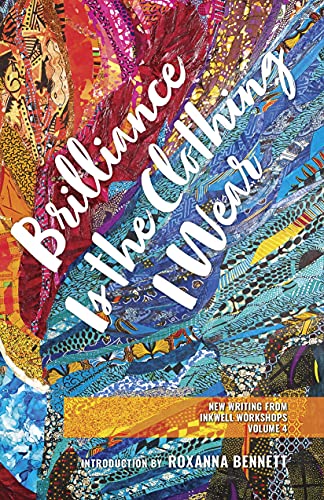
A diverse anthology of poetry, fiction, and creative non-fiction compiled from writers in the mental health and addiction communities.
In this anthology of poetry, fiction, and memoir, twenty-five writers with lived experience of mental health and addictions issues speak up. All are participants in Inkwell Workshops, an innovative project that offers creative writing workshops to people with “unruly minds,” led by award-winning professional writers with lived experience themselves. Raw, complex, funny, and wise, these tales from the margins will transport you.
Die Inhaltsangabe kann sich auf eine andere Ausgabe dieses Titels beziehen.
Über die Autorinnen und Autoren
InkWell Workshops offers creative writing workshops to adults living with mental health and addiction issues, led by accomplished professional writers with lived experience. Founded in 2016, the workshops bring together a lively, intergenerational mix of emerging talents from every part of Toronto.
InkWell Workshops offers creative writing workshops to adults living with mental health and addictions issues, led by accomplished professional writers with lived experience. Founded in 2016, the workshops bring together a lively, intergenerational mix of emerging talents from every part of Toronto.
Auszug. © Genehmigter Nachdruck. Alle Rechte vorbehalten.
Chinese Food with David
Rebecca Chernecki
I was always happy when David suggested we order in Chinese food. It was kind of romantic, and I loved how it was “our thing” to do, when we could leave our troubles behind and just eat.
Sometimes he paid for it, bless his heart. I didn’t always have the money. The food was so abundant, it made me feel like I was in Heaven. His healthy appetite almost startled me; he ate heartily, and with a grace and countenance that expressed real gratitude.
That’s what I loved most about him—he always seemed so grateful for his lot. I, on the other hand, struggled to eat. I fluctuated between two states: feeling glory with all this food, then suddenly retreating in embarrassment that I actually had an appetite at all.
My eating disorder was quite pronounced in those days. Years ago, my sister had humiliated me in front of the whole family at an Italian restaurant. I was very hungry, and I announced to the table what I would be ordering. My sister looked at me and said flatly, “You are obese!”
I will never forget that day. She has also called me a hindrance and a failure, and she insists that I do nothing to help myself—that I stay in a rut, get in trouble with bad people, and don’t care about my own life.
Anyway, David was full of a bountiful generosity, whereby I did not usually feel guilty about eating, did not hate myself for being hungry, did not feel remorse when I looked at him, and did not regret the $6.50 meal. It accented our sex life, as after eating, we both had energy and strength to make love while also feeling that we loved ourselves.
The peace in our relationship lasted for some time. Then my mother complained about the cost of Chinese food and said, “When you get a job, that’s when you can entertain or eat takeout food.”
Since then I have felt a permanent guilt about eating restaurant food. It’s no wonder I am grumpy and lost—poverty zaps nearly all my strength. Whereas my sister eats exactly what she wants, when she wants, with whom she wants.
—
My starvation doesn’t get noticed or addressed anymore. But when and if I eat Chinese food again, I’ll remember David as a friend who loved my belly, breasts, and rotund arms. Even when I was hungry.
„Über diesen Titel“ kann sich auf eine andere Ausgabe dieses Titels beziehen.
Suchergebnisse für Brilliance Is the Clothing I Wear (New Writing from...

Beispielbild für diese ISBN
Brilliance Is the Clothing I Wear
Anbieter: GreatBookPrices, Columbia, MD, USA
Verkäuferbewertung 5 von 5 Sternen

Zustand: As New. Unread book in perfect condition. Bestandsnummer des Verkäufers 42429658
Gebraucht kaufen
EUR 6,15
EUR 2,30 Versand
Versand innerhalb von USA
Versand innerhalb von USA
Anzahl: 1 verfügbar
Beispielbild für diese ISBN
Brilliance Is the Clothing I Wear
Anbieter: GreatBookPrices, Columbia, MD, USA
Verkäuferbewertung 5 von 5 Sternen
Zustand: New. Bestandsnummer des Verkäufers 42429658-n
Foto des Verkäufers
Brilliance Is the Clothing I Wear
Anbieter: Rarewaves.com USA, London, LONDO, Vereinigtes Königreich
Verkäuferbewertung 5 von 5 Sternen
Paperback. Zustand: New. A diverse anthology of poetry, fiction, and creative non-fiction compiled from writers in the mental health and addiction communities.The latest in InkWell Workshops' groundbreaking anthology series, this volume features poetry, fiction, and creative non-fiction from twenty-eight talented writers who are participants in the workshops. Led by accomplished professional writers with "unruly minds," InkWell is a liberatory project that offers free creative opportunities to people with mental health and addiction issues. With themes of nourishment and desire, madness and connection, grief and hunger for a new world, these are fierce writings from the margins: honest, defiant, funny, and wise. Bestandsnummer des Verkäufers LU-9781459747708
Neu kaufen
EUR 9,45
Versand gratis
Versand von Vereinigtes Königreich nach USA
Versand von Vereinigtes Königreich nach USA
Anzahl: 1 verfügbar
Beispielbild für diese ISBN
Brilliance Is the Clothing I Wear
Anbieter: PBShop.store US, Wood Dale, IL, USA
Verkäuferbewertung 5 von 5 Sternen
PAP. Zustand: New. New Book. Shipped from UK. Established seller since 2000. Bestandsnummer des Verkäufers GB-9781459747708
Foto des Verkäufers
Brilliance Is the Clothing I Wear
Anbieter: Rarewaves USA, HEBRON, KY, USA
Verkäuferbewertung 5 von 5 Sternen
Paperback. Zustand: New. A diverse anthology of poetry, fiction, and creative non-fiction compiled from writers in the mental health and addiction communities.The latest in InkWell Workshops' groundbreaking anthology series, this volume features poetry, fiction, and creative non-fiction from twenty-eight talented writers who are participants in the workshops. Led by accomplished professional writers with "unruly minds," InkWell is a liberatory project that offers free creative opportunities to people with mental health and addiction issues. With themes of nourishment and desire, madness and connection, grief and hunger for a new world, these are fierce writings from the margins: honest, defiant, funny, and wise. Bestandsnummer des Verkäufers LU-9781459747708
Neu kaufen
EUR 13,88
Versand gratis
Versand innerhalb von USA
Versand innerhalb von USA
Anzahl: Mehr als 20 verfügbar
Beispielbild für diese ISBN
Brilliance Is the Clothing I Wear
Anbieter: PBShop.store UK, Fairford, GLOS, Vereinigtes Königreich
Verkäuferbewertung 5 von 5 Sternen
PAP. Zustand: New. New Book. Shipped from UK. Established seller since 2000. Bestandsnummer des Verkäufers GB-9781459747708
Neu kaufen
EUR 9,17
EUR 4,85 Versand
Versand von Vereinigtes Königreich nach USA
Versand von Vereinigtes Königreich nach USA
Anzahl: 1 verfügbar
Beispielbild für diese ISBN
Brilliance Is the Clothing I Wear
Anbieter: Revaluation Books, Exeter, Vereinigtes Königreich
Verkäuferbewertung 5 von 5 Sternen
Paperback. Zustand: Brand New. 96 pages. 8.50x5.50x1.00 inches. In Stock. Bestandsnummer des Verkäufers __1459747704
Neu kaufen
EUR 4,47
EUR 11,66 Versand
Versand von Vereinigtes Königreich nach USA
Versand von Vereinigtes Königreich nach USA
Anzahl: 1 verfügbar
Beispielbild für diese ISBN
Brilliance Is the Clothing I Wear (New Writing from InkWell Workshops, 4)
Anbieter: Ria Christie Collections, Uxbridge, Vereinigtes Königreich
Verkäuferbewertung 5 von 5 Sternen
Zustand: New. In English. Bestandsnummer des Verkäufers ria9781459747708_new
Neu kaufen
EUR 7,77
EUR 10,93 Versand
Versand von Vereinigtes Königreich nach USA
Versand von Vereinigtes Königreich nach USA
Anzahl: Mehr als 20 verfügbar
Beispielbild für diese ISBN
Brilliance Is the Clothing I Wear
Anbieter: Kennys Bookshop and Art Galleries Ltd., Galway, GY, Irland
Verkäuferbewertung 5 von 5 Sternen
Zustand: New. 2021. Paperback. . . . . . Bestandsnummer des Verkäufers V9781459747708
Neu kaufen
EUR 12,68
EUR 9,50 Versand
Versand von Irland nach USA
Versand von Irland nach USA
Anzahl: 1 verfügbar
Beispielbild für diese ISBN
Brilliance Is the Clothing I Wear
Anbieter: THE SAINT BOOKSTORE, Southport, Vereinigtes Königreich
Verkäuferbewertung 5 von 5 Sternen
Paperback / softback. Zustand: New. New copy - Usually dispatched within 3 working days. Bestandsnummer des Verkäufers B9781459747708
Neu kaufen
EUR 7,72
EUR 14,50 Versand
Versand von Vereinigtes Königreich nach USA
Versand von Vereinigtes Königreich nach USA
Anzahl: 1 verfügbar