
Verwandte Artikel zu Understanding The Gift Of Salvation: And a Concise...
Understanding The Gift Of Salvation: And a Concise History of how the Church through ignorance and unbelief lost the power of the Holy Spirit - Softcover
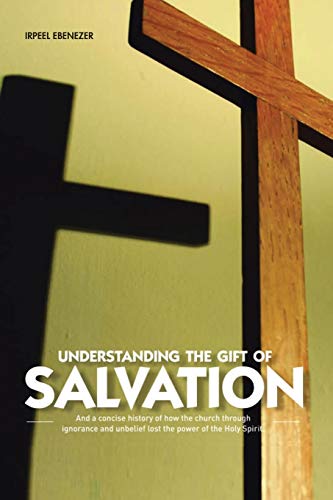
Inhaltsangabe
What exactly did Jesus Christ save us from other than hell fire? That was the question a somewhat frustrated friend asked while going through a difficult period in his life. Many Christians have asked similar questions or wondered why the Christian life in reality is so different from what is usually professed. This book is a true seeker's manual on the Gift of Salvation. It is for those who are not satisfied with only doctrines and creeds handed down by parents or pastors. It is for those willing to build on what they've learnt, dig deeper and find out the fullness of what God in His mercy gave to mankind in Jesus Christ. It not a book to rush or breeze through, like the Berean Christians, readers are encouraged to carefully study the Scripture references and dig out the truth for themselves. The promise of God is: "You will seek Me and find Me, when you seek Me with all your heart.
Die Inhaltsangabe kann sich auf eine andere Ausgabe dieses Titels beziehen.
Auszug. © Genehmigter Nachdruck. Alle Rechte vorbehalten.
UNDERSTANDING THE GIFT OF SALVATION
And a concise history of how the church through ignorance and unbelief lost the power of the Holy SpiritBy IRPEEL EBENEZERAuthorHouse
Copyright © 2012 Irpeel EbenezerAll right reserved.
ISBN: 978-1-4685-4166-3
Contents
Introduction................................................................................................xiChapter 1 What is Salvation?................................................................................1Chapter 2 Receiving the Gift of Salvation...................................................................10Chapter 3 Salvation—A Covenant Relationship...........................................................27Chapter 4 The Early Church and the Ante-Nicene Church Fathers...............................................52Chapter 5 The Imperial Church and the Post Nicene Church Fathers............................................85Chapter 6 'Heresies' and Schisms of the Early Church........................................................105Chapter 7 The Church During the Dark Ages—(c500-1100 AD)..............................................115Chapter 8 The Byzantine Empire and the Greek Orthodox Church—(450-1055 AD)............................131Chapter 9 The Church in the Middle Ages (c1000-1500)........................................................144Chapter 10 Theologians, Philosophers and Reformers of the Middle Ages.......................................168Chapter 11 Controversies, 'Heresies' and Schisms of the Middle Ages.........................................193Chapter 12 Monastic Movements of the Middle Ages............................................................205Chapter 13 Renaissance and Renaissance Humanism.............................................................210Chapter 14 The Reformation and the Reformers—1450-1750 AD.............................................223Chapter 15 European Wars of Religion........................................................................252Chapter 16 The Roman Catholic Counter-Reformation...........................................................261Chapter 17 The Enlightenment and Enlightenment Philosophers—17th & 18th Centuries.....................267Chapter 18 Global Evangelization and Re-Evangelization......................................................278Chapter 19 Three Revolutions and the Impact on Christianity—1760-1850.................................294Chapter 20 The Great Awakenings and Protestant Missions and Missionaries....................................302Chapter 21 Theologians and Philosophers of the 19th and 20th Centuries......................................318Chapter 22 Global Trends in Christianity in the 19th and 20th Centuries.....................................332Chapter 23 The Christian and Christianity Today.............................................................381Chapter 24 Evolutionary Trends from the Early Church to the 21st Century....................................391References..................................................................................................419
Chapter One
What is Salvation?"For god so loved the world, that He gave His only begotten Son, that whoever believes in Him, should not perish but have everlasting life."—John 3:16
Salvation means: "the act of rescuing, keeping or preserving the soul from sin or the punishment for sin.
It also means: "the act of being rescued, kept or preserved from destruction, ruin, calamity or loss."
Why does Man need Salvation?
To address this question fully, it is necessary to go to the very beginning, to creation and the Garden of Eden.
In the beginning, God created the heavens and the earth; He made Man the crown of His creation, made Him the keeper of it and gave him dominion over it, God even made Adam a partner in His creative work by giving him the honor of christening every living creature—Genesis 1:27-28; Genesis 2:15-23.
God made man for fellowship with Himself; Adam and Eve frolicked in Eden and communed with God "in the coolness of the day" until the fellowship was broken by Satan. By deception, Satan convinced Eve to desire "to be like God." She disbelieved God and disobeyed by eating the forbidding fruit and so did her companion, Adam. Rather than becoming like God, they died spiritually, the glory of God departed and they became naked.
The idyllic life which Adam and Eve enjoyed in Eden was destroyed and the fellowship they had with God was broken. The disintegration of their bodies set in and physical death was just a matter of time—Genesis 3. By choosing to believe and obey Satan rather than God, Adam and Eve unwittingly, but voluntarily, changed the power equation. Man lost the authority and dominion that God gave them over His creation to Satan because, as the Scriptures say: "you are the slave of the one you choose to obey"—John 8:34; Romans 6:16.
Man fell to the same Sin that got Satan kicked out of heaven—"the desire to be like God"—Genesis 3:1-6; isaiah 14:12-14.
Therefore, at the heart of every Sin is the rebellion springing from the desire to be like God. Adam and Eve were kicked out of Eden with the natural consequences of their actions—curses instead of blessings.
Children born to slaves in the house of their masters are also slaves, therefore all the descendants of Adam and Eve remain slaves to Satan and Sin unless they are "Redeemed", that is, "bought back". That is why the entire human race needs Redemption or Salvation.
What is Sin?
As stated earlier, at the core of every Sin is rebellion arising from the desire to be like God. However according to the Scriptures, it manifests in many ways:
a) Sin is breaking the law—(also characterized as lawlessness)—1John 3:4.
b) Sin is wrongdoing; or unrighteousness—1John 5:17
c) Sin is Failing to do what is known to be right—James 4:17
d) Sin is doing anything, the rightness of which is doubtful—Romans 14:23.
Sin is not only wrongdoing or breaking the law; it is also failing to do what is right. In other words, sin can be by commission or omission.
Sin can also be intentional or unintentional.
According to the Bible, guilt is imputed even for unintentional sins and these also require propitiation—Leviticus 4:13, 27; Leviticus 5:17.
The Bible talked about Trespass, Transgression, and iniquity—Leviticus 5:15; Leviticus 6:2; Psalm 51:2-3; Isaiah 59:12. Trespass and Transgression imply violating a lawful boundary, in essence, breaking a law or command, by commission or omission and whether intentional or unintentional. Iniquity is acts of wickedness or injustice, more likely intentionally by commission or omission.
The Consequences of Sin
The main consequence of Sin is separation from God—isaiah 59:1-2.
Because God is Holy, He cannot tolerate Sin nor can sinful man behold a holy God without disintegrating—(Exodus 33:20; Isaiah 6:1-5); therefore, man in sin cannot fellowship with God.
The separation from God resulted in devastating derivatives for mankind, namely—Disasters, Diseases, Defeat, Despair, Desperation, Desolation, Destitution, Diminution, Destruction, Disillusionment and finally...
„Über diesen Titel“ kann sich auf eine andere Ausgabe dieses Titels beziehen.
Suchergebnisse für Understanding The Gift Of Salvation: And a Concise...

Beispielbild für diese ISBN
Understanding The Gift Of Salvation: And a Concise History of how the Church through ignorance and unbelief lost the power of the Holy Spirit
Anbieter: Book Dispensary, Concord, ON, Kanada
Verkäuferbewertung 5 von 5 Sternen

Soft cover. Zustand: As New. BRAND NEW softcover. Book. Bestandsnummer des Verkäufers 104992
Gebraucht kaufen
EUR 10,60
EUR 6,00 Versand
Versand von Kanada nach USA
Versand von Kanada nach USA
Anzahl: 1 verfügbar
Beispielbild für diese ISBN
Understanding The Gift Of Salvation: And a Concise History of how the Church through ignorance and unbelief lost the power of the Holy Spirit
Anbieter: California Books, Miami, FL, USA
Verkäuferbewertung 4 von 5 Sternen

Zustand: New. Bestandsnummer des Verkäufers I-9781468541663
Neu kaufen
EUR 23,86
Versand gratis
Versand innerhalb von USA
Versand innerhalb von USA
Anzahl: Mehr als 20 verfügbar
Beispielbild für diese ISBN
Understanding the Gift of Salvation
Print-on-DemandAnbieter: PBShop.store US, Wood Dale, IL, USA
Verkäuferbewertung 5 von 5 Sternen
PAP. Zustand: New. New Book. Shipped from UK. THIS BOOK IS PRINTED ON DEMAND. Established seller since 2000. Bestandsnummer des Verkäufers L0-9781468541663
Neu kaufen
EUR 28,03
Versand gratis
Versand innerhalb von USA
Versand innerhalb von USA
Anzahl: Mehr als 20 verfügbar
Beispielbild für diese ISBN
Understanding the Gift of Salvation
Print-on-DemandAnbieter: PBShop.store UK, Fairford, GLOS, Vereinigtes Königreich
Verkäuferbewertung 5 von 5 Sternen
PAP. Zustand: New. New Book. Delivered from our UK warehouse in 4 to 14 business days. THIS BOOK IS PRINTED ON DEMAND. Established seller since 2000. Bestandsnummer des Verkäufers L0-9781468541663
Neu kaufen
EUR 23,88
EUR 6,85 Versand
Versand von Vereinigtes Königreich nach USA
Versand von Vereinigtes Königreich nach USA
Anzahl: Mehr als 20 verfügbar
Beispielbild für diese ISBN
Understanding The Gift Of Salvation: And a Concise History of how the Church through ignorance and unbelief lost the power of the Holy Spirit
Anbieter: Chiron Media, Wallingford, Vereinigtes Königreich
Verkäuferbewertung 5 von 5 Sternen
Paperback. Zustand: New. Bestandsnummer des Verkäufers 6666-IUK-9781468541663
Neu kaufen
EUR 19,29
EUR 18,07 Versand
Versand von Vereinigtes Königreich nach USA
Versand von Vereinigtes Königreich nach USA
Anzahl: 10 verfügbar
Beispielbild für diese ISBN
Understanding the Gift of Salvation
Print-on-DemandAnbieter: Majestic Books, Hounslow, Vereinigtes Königreich
Verkäuferbewertung 4 von 5 Sternen
Zustand: New. Print on Demand pp. 484 2:B&W 6 x 9 in or 229 x 152 mm Perfect Bound on Creme w/Gloss Lam. Bestandsnummer des Verkäufers 128959599
Neu kaufen
EUR 30,02
EUR 7,58 Versand
Versand von Vereinigtes Königreich nach USA
Versand von Vereinigtes Königreich nach USA
Anzahl: 4 verfügbar
Beispielbild für diese ISBN
Understanding The Gift Of Salvation: And a Concise History of how the Church through ignorance and unbelief lost the power of the Holy Spirit
Anbieter: Ria Christie Collections, Uxbridge, Vereinigtes Königreich
Verkäuferbewertung 5 von 5 Sternen
Zustand: New. In. Bestandsnummer des Verkäufers ria9781468541663_new
Neu kaufen
EUR 23,94
EUR 13,98 Versand
Versand von Vereinigtes Königreich nach USA
Versand von Vereinigtes Königreich nach USA
Anzahl: Mehr als 20 verfügbar
Beispielbild für diese ISBN
Understanding the Gift of Salvation
Print-on-DemandAnbieter: Books Puddle, New York, NY, USA
Verkäuferbewertung 4 von 5 Sternen
Zustand: New. Print on Demand pp. 484. Bestandsnummer des Verkäufers 26131627952
Neu kaufen
EUR 36,03
EUR 3,42 Versand
Versand innerhalb von USA
Versand innerhalb von USA
Anzahl: 4 verfügbar
Beispielbild für diese ISBN
Understanding the Gift of Salvation
Print-on-DemandAnbieter: Biblios, Frankfurt am main, HESSE, Deutschland
Verkäuferbewertung 4 von 5 Sternen
Zustand: New. PRINT ON DEMAND pp. 484. Bestandsnummer des Verkäufers 18131627962
Neu kaufen
EUR 29,66
EUR 9,95 Versand
Versand von Deutschland nach USA
Versand von Deutschland nach USA
Anzahl: 4 verfügbar
Beispielbild für diese ISBN
Understanding the Gift of Salvation: And a Concise History of How the Church Through Ignorance and Unbelief Lost the Power of the Holy Spirit
Print-on-DemandAnbieter: THE SAINT BOOKSTORE, Southport, Vereinigtes Königreich
Verkäuferbewertung 5 von 5 Sternen
Paperback / softback. Zustand: New. This item is printed on demand. New copy - Usually dispatched within 5-9 working days. Bestandsnummer des Verkäufers C9781468541663
Neu kaufen
EUR 26,87
EUR 21,11 Versand
Versand von Vereinigtes Königreich nach USA
Versand von Vereinigtes Königreich nach USA
Anzahl: Mehr als 20 verfügbar