
Verwandte Artikel zu How Can I Help?: A Week in My Life as a Psychiatrist
Inhaltsangabe
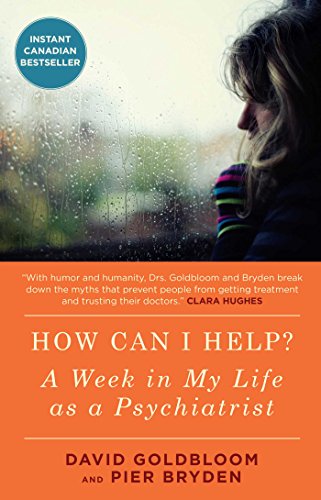
A humane behind-the-scenes account of a week in the life of a psychiatrist at one of Canada’s leading mental health hospitals. How Can I Help? takes us to the frontlines of modern psychiatric care.
How Can I Help? portrays a week in the life of Dr. David Goldbloom as he treats patients, communicates with families, and trains staff at CAMH, the largest psychiatric facility in Canada. This highly readable and touching behind-the-scenes account of his daily encounters with a wide range of psychiatric concerns—from his own patients and their families to Emergency Department arrivals—puts a human face on an often misunderstood area of medical expertise. From schizophrenia and borderline personality disorder to post-traumatic stress syndrome and autism, How Can I Help? investigates a range of mental issues.
What is it like to work as a psychiatrist now? What are the rewards and challenges? What is the impact of the suffering—and the recovery—of people with mental illness on families and the clinicians who treat them? What does the future hold for psychiatric care?
How Can I Help? demystifies a profession that has undergone profound change over the past twenty-five years, a profession that is often misunderstood by the public and the media, and even by doctors themselves. It offers a compassionate, realistic picture of a branch of medicine that is entering a new phase, as increasingly we are able to decode the mysteries of the brain and offer new hope for sufferers of mental illness.
Die Inhaltsangabe kann sich auf eine andere Ausgabe dieses Titels beziehen.
Über die Autorinnen und Autoren
David Goldbloom, MD, is Senior Medical Advisor at the Centre for Addiction and Mental Health in Toronto. He is a graduate of Harvard University, Oxford University (Rhodes Scholar), and McGill University. In 2007, he was appointed Vice-Chair of the Mental Health Commission of Canada and served as Chair from 2012–2015. He is a Professor of Psychiatry at the University of Toronto. He has authored over 100 scientific articles and book chapters, and edited two psychiatric textbooks. His first book, How Can I Help?, gave readers a humane behind-the-scenes account of a week in the life of a psychiatrist at one of Canada’s leading mental health hospitals. A noted public speaker, he has received many awards for his contribution to the field of psychiatry, including appointment as an Officer of the Order of Canada. He lives in Toronto, Canada.
Pier Bryden, MD, is a psychiatrist and award-winning clinical teacher at The Hospital for Sick Children, and an associate professor at the University of Toronto Faculty of Medicine. A graduate of the University of Toronto, Oxford University, and McMaster University, she specializes in the ethical and legal aspects of the treatment of children and adolescents with psychiatric disorders. She is the current Chair of the Medical Council of Canada’s Central Examination committee, and was previously the Canadian representative to the American Academy of Child and Adolescent Psychiatry’s Ethics Committee. She is the coauthor of How Can I Help?, a national bestseller, and Start Here: A Parent’s Guide to Helping Children and Teens through Mental Health Challenges.
Auszug. © Genehmigter Nachdruck. Alle Rechte vorbehalten.
How Can I Help? Introduction
“THEY” ARE “US”
Almost thirty years ago, a patient on the psychiatry inpatient unit where I had just started working approached me as if we were lifelong friends. He was tall, skinny, unshaven, dressed in threadbare jeans and a pale blue hospital pajama shirt. His hair was long and matted, and it was clearly some time since he had bathed. I assumed my best psychiatrist manner – unthreatening, warm but not familiar, and firm – and prepared to tell him that I was not actually his doctor, that we had never met, and that my colleague Dr. Buckingham would be looking after him.
He started speaking before I could deliver my blurb.
“David Goldbloom! I heard you had gone to medical school. How amazing to see you here. Do you remember me?”
There was something about the man’s deep, slow voice, with an Ottawa valley drawl, that was familiar. But I couldn’t recognize or place him.
“It’s Andrew. Andrew Balkos. We played squash together at university.”
His voice, height, and smile coalesced immediately into an older, gaunt phantom of the muscular twenty-something squash player who had won a healthy number of games off me during round-robins in university. We had been part of a group of young men who played sports and socialized before we all headed off to further education or our first serious jobs. We were a confident bunch in those days, encouraged by our education, our youth, and our health to think we would attain whatever life goals we set ourselves. I hadn’t known him particularly well, but I now recalled that he had dropped out of school – no one said why – and that I was short a squash partner as a result.
Usually when I run into old school friends, we discuss work, family, travel. Andrew told me that he had been admitted from the emergency room the previous night. He explained that he had been struggling with mental illness for years, and this was not the first time he had been hospitalized.
I made the right noises about Dr. Buckingham being a good psychiatrist and about the treatments available in the hospital, but my brain was in overdrive. It was hard to reconcile this emaciated, unkempt individual who looked easily fifteen years older than me with the virile young man with whom I had competed for corner drop shots ten years earlier.
It was clear from our discussion that whatever psychiatric disorder Andrew was suffering from had completely changed his life course. He told me that he was estranged from his family and had never married. He had dropped out of school and done odd jobs, but within a few years he started to experience the paranoia and hallucinations that continued to haunt him, despite his intermittent efforts to quiet them with medication and talk therapy. Currently he was living in a rooming house a few blocks away, surviving on public assistance. His only social contact was with the other inhabitants of the rooming house and a social worker assigned to him after his most recent hospitalization.
I told him how sorry I was to hear about his illness and wished him well in his treatment. I couldn’t think of what else to say. What I didn’t tell him was how sorry I was that a decade earlier I had not been attuned to whatever struggle he was having, that I was oblivious. Back then, I knew nothing about mental illness.
Andrew told me that knowing I worked in the hospital as a psychiatrist would help him to trust Dr. Buckingham and his recommendations for treatment, something that had been difficult for him during past hospitalizations. I didn’t comment at the time but have wondered in retrospect why our meeting – our first in more than ten years – had this impact on him. I know that he stayed until Dr. Buckingham thought he was ready for discharge and accepted both medication and referrals for outpatient therapy.
My hypothesis, looking back, is that his knowledge of me as a person rather than simply as a psychiatrist helped him to trust me and to think differently about psychiatrists in general, including Dr. Buckingham. I also believe the fact that I had known him before his illness made a difference. I hadn’t known him well, just in the way young men know each other when they share similar backgrounds, goals, and an enjoyment of sports. We had been equals once in terms of our potential, and he knew that to me he was more than just a patient with a psychiatric disorder. I wonder if his experience of knowing and being known by me in a way not limited to his illness spread to his relationships with his doctor, nurses, and social worker, allowing him to trust.
Andrew left the hospital two weeks later, and I have neither seen nor heard from him since. But that brief encounter at the beginning of my clinical career would be an enduring reminder that “they” are “us.”
WHEN I BEGAN A career in psychiatry in 1982, five years after Andrew and I had played squash together, I was naïve about what my choice would mean. I didn’t realize then that I was entering the most misunderstood – and mistrusted – specialty in medicine. Coming from a family of physicians and inspired by my father-in-law, who was a psychiatrist, I assumed that everyone saw psychiatry the way I did: as the branch of medicine that offered its most complex diagnoses, its most profound relationships with patients, and its most dazzling frontiers for scientific discovery. Given my youth and relative inexperience, it was arguably a natural mistake.
My early passion for psychiatry has not changed over the intervening decades, even if my view and understanding of it has: psychiatry remains for me medicine’s most intellectually challenging, eclectic, and diverse specialty. It is also the most open to considering different theories of illness, examining explanatory models that bring together the contributions of biology, psychology, culture, and society into a coherent whole. I tell my residents that all their prior education – whether in the sciences, social sciences, or humanities – will be relevant to their work in psychiatry, and that they will need to read voraciously in all those disciplines to keep up in a field where knowledge is constantly expanding and intellectual paradigms evolving.
More selfishly, as a natural extrovert who is incurably curious, I revel in the opportunity that psychiatry gives me to meet new people almost every day of my working life, to hear their stories, and to try to help them. I also love the variety inherent in my work: seeing patients with a range of psychiatric disorders in different settings, teaching students, working with colleagues from various disciplines, participating in research, and speaking publicly about mental illness and its treatment. I am too restless and easily bored to do the same thing every day.
But thirty years later, my naïveté in believing that my passion for psychiatry would be shared uniformly by others is long gone. I now recognize that powerful forces (both inside and outside my specialty) dog public perceptions of psychiatry and psychiatrists, and converge to create an environment of mistrust and skepticism regarding our potential to help people struggling with mental illness.
Some of the damage to public trust, of course, has been perpetrated by psychiatrists themselves. It would be disingenuous not to acknowledge the role that psychiatry’s own history – its fads, therapeutic dead ends, and ethical breaches and abuses – has played in creating its persistently negative image, amplified by the popular culture of movies and television where both patients and psychiatrists are either mocked or vilified. It is also unarguable that modern...
„Über diesen Titel“ kann sich auf eine andere Ausgabe dieses Titels beziehen.
Suchergebnisse für How Can I Help?: A Week in My Life as a Psychiatrist

Beispielbild für diese ISBN
How Can I Help?: A Week in My Life as a Psychiatrist
Anbieter: World of Books (was SecondSale), Montgomery, IL, USA
Verkäuferbewertung 5 von 5 Sternen

Zustand: Good. Item in good condition. Textbooks may not include supplemental items i.e. CDs, access codes etc. Bestandsnummer des Verkäufers 00097286293
Gebraucht kaufen
EUR 3,96
Versand gratis
Versand innerhalb von USA
Versand innerhalb von USA
Anzahl: 1 verfügbar
Beispielbild für diese ISBN
How Can I Help?: A Week in My Life as a Psychiatrist
Anbieter: World of Books (was SecondSale), Montgomery, IL, USA
Verkäuferbewertung 5 von 5 Sternen
Zustand: Very Good. Item in very good condition! Textbooks may not include supplemental items i.e. CDs, access codes etc. Bestandsnummer des Verkäufers 00097282480
Gebraucht kaufen
EUR 3,96
Versand gratis
Versand innerhalb von USA
Versand innerhalb von USA
Anzahl: 1 verfügbar
Foto des Verkäufers
How Can I Help?: A Week in My Life as a Psychiatrist
Anbieter: Zoom Books Company, Lynden, WA, USA
Verkäuferbewertung 5 von 5 Sternen
Zustand: like_new. Bestandsnummer des Verkäufers ZBV.1476706794.LN
Gebraucht kaufen
EUR 3,97
Versand gratis
Versand innerhalb von USA
Versand innerhalb von USA
Anzahl: 1 verfügbar
Beispielbild für diese ISBN
How Can I Help?: A Week in My Life as a Psychiatrist
Anbieter: World of Books Inc, Montgomery, IL, USA
Verkäuferbewertung 4 von 5 Sternen

Paperback. Zustand: Very Good. A humane behind-the-scenes account of a week in the life of a psychiatrist at one of Canada?s leading mental health hospitals. How Can I Help? takes us to the frontlines of modern psychiatric care.How Can I Help? portrays a week in the life of Dr. David Goldbloom as he treats patients, communicates with families, and trains staff at CAMH, the largest psychiatric facility in Canada. This highly readable and touching behind-the-scenes account of his daily encounters with a wide range of psychiatric concerns?from his own patients and their families to Emergency Department arrivals?puts a human face on an often misunderstood area of medical expertise. From schizophrenia and borderline personality disorder to post-traumatic stress syndrome and autism, How Can I Help? investigates a range of mental issues. What is it like to work as a psychiatrist now? What are the rewards and challenges? What is the impact of the suffering?and the recovery?of people with mental illness on families and the clinicians who treat them? What does the future hold for psychiatric care? How Can I Help? demystifies a profession that has undergone profound change over the past twenty-five years, a profession that is often misunderstood by the public and the media, and even by doctors themselves. It offers a compassionate, realistic picture of a branch of medicine that is entering a new phase, as increasingly we are able to decode the mysteries of the brain and offer new hope for sufferers of mental illness. Bestandsnummer des Verkäufers CIN1476706794VG
Gebraucht kaufen
EUR 5,76
Versand gratis
Versand innerhalb von USA
Versand innerhalb von USA
Anzahl: 1 verfügbar
Beispielbild für diese ISBN
How Can I Help?: A Week in My Life as a Psychiatrist
Anbieter: World of Books Inc, Montgomery, IL, USA
Verkäuferbewertung 4 von 5 Sternen
Paperback. Zustand: Good. A humane behind-the-scenes account of a week in the life of a psychiatrist at one of Canada?s leading mental health hospitals. How Can I Help? takes us to the frontlines of modern psychiatric care.How Can I Help? portrays a week in the life of Dr. David Goldbloom as he treats patients, communicates with families, and trains staff at CAMH, the largest psychiatric facility in Canada. This highly readable and touching behind-the-scenes account of his daily encounters with a wide range of psychiatric concerns?from his own patients and their families to Emergency Department arrivals?puts a human face on an often misunderstood area of medical expertise. From schizophrenia and borderline personality disorder to post-traumatic stress syndrome and autism, How Can I Help? investigates a range of mental issues. What is it like to work as a psychiatrist now? What are the rewards and challenges? What is the impact of the suffering?and the recovery?of people with mental illness on families and the clinicians who treat them? What does the future hold for psychiatric care? How Can I Help? demystifies a profession that has undergone profound change over the past twenty-five years, a profession that is often misunderstood by the public and the media, and even by doctors themselves. It offers a compassionate, realistic picture of a branch of medicine that is entering a new phase, as increasingly we are able to decode the mysteries of the brain and offer new hope for sufferers of mental illness. Bestandsnummer des Verkäufers CIN1476706794G
Gebraucht kaufen
EUR 5,76
Versand gratis
Versand innerhalb von USA
Versand innerhalb von USA
Anzahl: 1 verfügbar
Beispielbild für diese ISBN
How Can I Help?: A Week in My Life as a Psychiatrist
Anbieter: Bellwetherbooks, McKeesport, PA, USA
Verkäuferbewertung 4 von 5 Sternen
paperback. Zustand: Fine. LIKE NEW!!! Has a red or black remainder mark on bottom/exterior edge of pages. Bestandsnummer des Verkäufers 483746
Gebraucht kaufen
EUR 3,10
EUR 3,45 Versand
Versand innerhalb von USA
Versand innerhalb von USA
Anzahl: Mehr als 20 verfügbar
Beispielbild für diese ISBN
How Can I Help?: A Week in My Life as a Psychiatrist
Anbieter: ThriftBooks-Dallas, Dallas, TX, USA
Verkäuferbewertung 5 von 5 Sternen
Paperback. Zustand: Good. No Jacket. Pages can have notes/highlighting. Spine may show signs of wear. ~ ThriftBooks: Read More, Spend Less. Bestandsnummer des Verkäufers G1476706794I3N00
Gebraucht kaufen
EUR 6,99
Versand gratis
Versand innerhalb von USA
Versand innerhalb von USA
Anzahl: 1 verfügbar
Beispielbild für diese ISBN
How Can I Help?: A Week in My Life as a Psychiatrist
Anbieter: ThriftBooks-Atlanta, AUSTELL, GA, USA
Verkäuferbewertung 5 von 5 Sternen
Paperback. Zustand: Fair. No Jacket. Readable copy. Pages may have considerable notes/highlighting. ~ ThriftBooks: Read More, Spend Less. Bestandsnummer des Verkäufers G1476706794I5N00
Gebraucht kaufen
EUR 6,99
Versand gratis
Versand innerhalb von USA
Versand innerhalb von USA
Anzahl: 1 verfügbar
Beispielbild für diese ISBN
How Can I Help? : A Week in My Life As a Psychiatrist
Anbieter: Better World Books, Mishawaka, IN, USA
Verkäuferbewertung 5 von 5 Sternen
Zustand: Good. Former library copy. Pages intact with minimal writing/highlighting. The binding may be loose and creased. Dust jackets/supplements are not included. Includes library markings. Stock photo provided. Product includes identifying sticker. Better World Books: Buy Books. Do Good. Bestandsnummer des Verkäufers 13646408-6
Gebraucht kaufen
EUR 7,05
Versand gratis
Versand innerhalb von USA
Versand innerhalb von USA
Anzahl: 1 verfügbar
Beispielbild für diese ISBN
How Can I Help?: A Week in My Life as a Psychiatrist
Anbieter: HPB-Movies, Dallas, TX, USA
Verkäuferbewertung 5 von 5 Sternen
paperback. Zustand: Very Good. Connecting readers with great books since 1972! Used books may not include companion materials, and may have some shelf wear or limited writing. We ship orders daily and Customer Service is our top priority! Bestandsnummer des Verkäufers S_474724145
Gebraucht kaufen
EUR 4,96
EUR 3,27 Versand
Versand innerhalb von USA
Versand innerhalb von USA
Anzahl: 1 verfügbar