
Verwandte Artikel zu Badluck Way: A Year on the Ragged Edge of the West
Inhaltsangabe
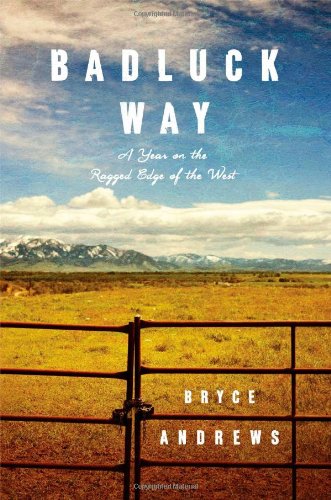
The gripping memoir of a young man, a wolf, their parallel lives and ultimate collision, Badluck Way is also an ode to the satisfaction of hard work on some of the wildest and most beautiful land in the world.
“Mine might have been a simple, pretty story, if not for the wolves. In late July, they emerged from the foothills . . .”
In this gripping memoir of a young man, a wolf, their parallel lives and ultimate collision, Bryce Andrews describes life on the remote, windswept Sun Ranch in southwest Montana. The Sun’s twenty thousand acres of rangeland occupy a still-wild corner of southwest Montana—a high valley surrounded by mountain ranges and steep creeks with portentous names like Grizzly, Dead Man, and Bad Luck. Just over the border from Yellowstone National Park, the Sun holds giant herds of cattle and elk amid many predators—bears, mountain lions, and wolves. In lyrical, haunting language, Andrews recounts marathon days and nights of building fences, riding, roping, and otherwise learning the hard business of caring for cattle, an initiation that changes him from an idealistic city kid into a skilled ranch hand. But when wolves suddenly begin killing the ranch’s cattle, Andrews has to shoulder a rifle, chase the pack, and do what he’d hoped he would never have to do.
Badluck Way is about transformation and complications, about living with dirty hands every day. It is about the hard choices that wake us at night and take a lifetime to reconcile. Above all, Badluck Way celebrates the breathtaking beauty of wilderness and the satisfaction of hard work on some of the harshest, most beautiful land in the world. Called “an important meditation on what it means to share space and breathe the same air as truly wild animals” (Tom Groneberg, author of The Secret Life of Cowboys), Badluck Way is the memorable story of one young man’s rebirth in the crucible of the West’s timeless landscape, a place at the center of the heart’s geography, savage and gorgeous in equal measure.
Die Inhaltsangabe kann sich auf eine andere Ausgabe dieses Titels beziehen.
Über die Autorin bzw. den Autor
Bryce Andrews was born and raised in Seattle, Washington. He studied at Whitman College and the University of Montana, and has managed several cattle ranches in the West. He lives in Montana.
Auszug. © Genehmigter Nachdruck. Alle Rechte vorbehalten.
Eastbound to the West
One way to say how I ended up on the Sun is that my life in Walla Walla, Washington, where I’d stacked basalt, poured concrete foundations, and waited for a girl to finish her last year of college, ended. The door slammed shut and I just kept moving, out of desperation more than anything else. I went home to Seattle, slept on the floor in a friend’s house in Fremont, and knocked around miserably in bars. Then I joined up with another buddy, who lived on a sailboat that was thirty years old and twenty-eight feet long, and sailed that tub up to the San Juan Islands in a January storm. I was at the helm when the boom snapped in half and threw us broadside to the swells. As I fought the wheel and Bill cursed his rickety diesel inboard motor, I thought about how small the warmth of my body was and how endless the chill of water. I thought of how things thrown in the ocean sink down beyond the reach of the sun. Waves broke over the bow and it was raining so hard that I breathed through my nose to keep from choking. In spite of oilskins, rubber boots, a plastic hood, and neoprene gloves, I was soaked to the skin.
When the motor finally kicked over, Bill folded the sail into a packet no bigger than a bedsheet, and we limped against the storm back toward Port Townsend. Veils of rain hid the Olympic Peninsula, so it seemed the world was made of only water. I tasted the ocean. It flooded my eyes. I watched it rise into jagged topographies that passed like mountain ranges on the move. When we docked, I had to pry my hands from around the wheel. I stepped onto dry land and thought: Enough.
Getting lost was easy. One day I went down to the Amtrak station and slid out of Seattle on a pair of steel rails, traveling three unwashed days down the coast to San Diego, where I surfed poorly and did chores for my grandparents. My grandfather was on the mend from his first go-round with cancer. Though we couldn’t walk the beach together, he was optimistic when he left me at the station.
I took trains that rattled across the Southwest: Phoenix, Tucson, San Antonio, and a hundred map dots in between. I got a hotel room in New Orleans for my twenty-third birthday, did what everyone does there, then ran north to get away. From D.C. and New York to Chicago, where clinker ice hissed against a concrete breakwater, I was quick and free. My feet had barely touched the ground since California. I bought a southbound ticket and one week later crossed into Juárez, Mexico, in the middle of the night.
It makes a difference when your money runs out, especially in Mexico. I ate tacos of dubious provenance, scraped through the twisting innards of the Copper Canyon, and hitchhiked up Baja in a propane delivery truck with no starter and no brakes. After crossing back into the States at Tijuana, I spent three days retching in my grandparents’ bathroom, and went home to Seattle feeling as though I could handle just about anything. I looked for work, and the first good thing I found was a summer ranch job.
That’s one way to explain how I got to the Sun.
Another way to say it is that, ever since I can remember, I’ve been obsessed with the West. I grew up in Seattle, the son of a professional photographer and an art director. My father started running the University of Washington’s art museum when I was four and kept the job for twenty years. He must have had a touch of my own mania, because when I was seven he organized a show called The Myth of the West. While the curators installed it, I played with balls of wadded masking tape in front of Albert Bierstadt’s lightsoaked picture of Yellowstone Falls and practiced my quick draw facing Andy Warhol’s duded-up Double Elvis.
Dad brought home crowds of artists from work to eat at our long kitchen table. I was six when Pat Zentz came to dinner and kept everyone up with stories until night gave way to morning. In Seattle’s art scene, Pat was something different. He hailed from a ranch outside of Billings: a two-thousand-acre spread of dryland wheat, old homestead buildings, Black Angus cattle, grass, and sky where he built sculptures and worked like hell to keep from losing the land. One of these summers, Pat said, we should come out and see it.
Our first visit to the Zentz Ranch, when I was seven years old, lasted only a couple of days. We pulled spotted knapweed with Pat, his wife, Suzie, and their three boys and helped move a few cows on horseback. My mother photographed every skeletal cottonwood and disintegrating outbuilding she could find. On the last evening, we drove out to a high bluff that Pat called Martini Ridge and watched the sky grow dark above the Crazy Mountains.
Emergent stars seemed closer than the horizon. When we left I pressed my face to a dusty backseat window and cried.
I came back the next summer—stayed longer, worked a little bit harder, got paid two bucks an hour. I learned to roll up rusty, ground-bound strands of barbwire. In the summers that followed, I built fence, fixed fence, moved cows, and learned how to catch and tack a horse. I drove a 1978 GMC High Sierra on tracks so rough my forehead smacked the steering wheel. When the work was done I lay faceup on the truck’s roof looking into the deep blue bowl of the sky. Thunderstorms rose in the southwest, raged a short while, and then blew east to die in the Badlands. The smell of wet dirt followed.
Every summer until I turned eighteen, I returned to the Zentz Ranch to work for nothing, or next to nothing, finding recompense in the little calluses on my palms. Whenever I went home to the damp claustrophobia of Seattle, I would dream about big, dry, lonely country. I pictured it each time I bought a ticket to anywhere or filled up the gas tank on my truck.
After returning from Mexico, when I sat down in front of my parents’ computer to look for a job, I could not put the idea of ranching from my mind. I found a job announcement on the Montana State University website. The first paragraph read: The Sun Ranch is located on the edge of the Lee Metcalf Wilderness, in the upper Madison River Valley of southwestern Montana, about 30 miles south of Ennis. It encompasses approximately 25,000 acres of deeded land and grazing leases. The Ranch is committed to conservation and improving the health of the land for wildlife and livestock through progressive management.
The position was seasonal, a six-month gig beginning on the first of May. The job title was Assistant Grazing Technician/Livestock Manager. Of the nine traits listed as the “Successful Applicant’s Qualities,” six were unremarkable, couched in the narcotic jargon of human resources, but the last three were different. I read them slowly and more than once: “Common Sense, Adaptability, Gumption.”
I did a little research and found that the Sun Ranch straddles one of the most important wildlife corridors in the Greater Yellowstone Ecosystem, providing habitat for grizzly bears, wolves, lynx, and wolverines. Elk herds numbering in the thousands move across it. The ranch was at the vanguard of a movement to rethink the way agriculture is practiced in the West. Large herds of yearling cattle grazed the ranch each summer. The movement of these heifers and steers across the landscape was carefully choreographed to complement, rather than hinder, the systems of the wild. Simply put, the idea was to integrate ranching into a functional, natural ecosystem.
The Madison Valley, and especially the south end of the Madison Valley, was my father’s fishing heaven. He’d taken me to the river as a teenager, and we’d leapfrogged up the pocket water near Three Dollar Bridge. From my time on the Zentz place I knew a bit...
„Über diesen Titel“ kann sich auf eine andere Ausgabe dieses Titels beziehen.
Weitere beliebte Ausgaben desselben Titels

Suchergebnisse für Badluck Way: A Year on the Ragged Edge of the West

Beispielbild für diese ISBN
Badluck Way: A Year on the Ragged Edge of the West
Anbieter: Evergreen Goodwill, Seattle, WA, USA
Verkäuferbewertung 5 von 5 Sternen

hardcover. Zustand: Good. Bestandsnummer des Verkäufers mon0000064017
Gebraucht kaufen
EUR 1,13
EUR 3,45 Versand
Versand innerhalb von USA
Versand innerhalb von USA
Anzahl: 1 verfügbar
Beispielbild für diese ISBN
Badluck Way: A Year on the Ragged Edge of the West
Anbieter: World of Books (was SecondSale), Montgomery, IL, USA
Verkäuferbewertung 5 von 5 Sternen
Zustand: Very Good. Item in very good condition! Textbooks may not include supplemental items i.e. CDs, access codes etc. Bestandsnummer des Verkäufers 00077004728
Gebraucht kaufen
EUR 4,93
Versand gratis
Versand innerhalb von USA
Versand innerhalb von USA
Anzahl: 3 verfügbar
Beispielbild für diese ISBN
Badluck Way: A Year on the Ragged Edge of the West
Anbieter: World of Books (was SecondSale), Montgomery, IL, USA
Verkäuferbewertung 5 von 5 Sternen
Zustand: Good. Item in good condition. Textbooks may not include supplemental items i.e. CDs, access codes etc. Bestandsnummer des Verkäufers 00100002436
Gebraucht kaufen
EUR 4,93
Versand gratis
Versand innerhalb von USA
Versand innerhalb von USA
Anzahl: 1 verfügbar
Beispielbild für diese ISBN
Badluck Way: A Year on the Ragged Edge of the West
Verlag:
Atria Books (edition First Edition), 2014
ISBN 10: 147671083X
ISBN 13: 9781476710839
Gebraucht
Hardcover
Erstausgabe
Anbieter: BooksRun, Philadelphia, PA, USA
Verkäuferbewertung 5 von 5 Sternen
Hardcover. Zustand: Very Good. First Edition. It's a well-cared-for item that has seen limited use. The item may show minor signs of wear. All the text is legible, with all pages included. It may have slight markings and/or highlighting. Bestandsnummer des Verkäufers 147671083X-11-1
Gebraucht kaufen
EUR 5,37
Versand gratis
Versand innerhalb von USA
Versand innerhalb von USA
Anzahl: 1 verfügbar
Beispielbild für diese ISBN
Badluck Way: A Year on the Ragged Edge of the West
Anbieter: HPB-Ruby, Dallas, TX, USA
Verkäuferbewertung 5 von 5 Sternen
hardcover. Zustand: Good. Connecting readers with great books since 1972! Used books may not include companion materials, and may have some shelf wear or limited writing. We ship orders daily and Customer Service is our top priority! Bestandsnummer des Verkäufers S_425672766
Gebraucht kaufen
EUR 3,56
EUR 3,24 Versand
Versand innerhalb von USA
Versand innerhalb von USA
Anzahl: 1 verfügbar
Beispielbild für diese ISBN
Badluck Way : A Year on the Ragged Edge of the West
Anbieter: Better World Books, Mishawaka, IN, USA
Verkäuferbewertung 5 von 5 Sternen
Zustand: Very Good. Former library copy. Pages intact with possible writing/highlighting. Binding strong with minor wear. Dust jackets/supplements may not be included. Includes library markings. Stock photo provided. Product includes identifying sticker. Better World Books: Buy Books. Do Good. Bestandsnummer des Verkäufers 4063757-6
Gebraucht kaufen
EUR 6,97
Versand gratis
Versand innerhalb von USA
Versand innerhalb von USA
Anzahl: 1 verfügbar
Beispielbild für diese ISBN
Badluck Way : A Year on the Ragged Edge of the West
Anbieter: Better World Books: West, Reno, NV, USA
Verkäuferbewertung 5 von 5 Sternen
Zustand: Very Good. Former library copy. Pages intact with possible writing/highlighting. Binding strong with minor wear. Dust jackets/supplements may not be included. Includes library markings. Stock photo provided. Product includes identifying sticker. Better World Books: Buy Books. Do Good. Bestandsnummer des Verkäufers 4063757-6
Gebraucht kaufen
EUR 6,97
Versand gratis
Versand innerhalb von USA
Versand innerhalb von USA
Anzahl: 1 verfügbar
Beispielbild für diese ISBN
Badluck Way : A Year on the Ragged Edge of the West
Anbieter: Better World Books, Mishawaka, IN, USA
Verkäuferbewertung 5 von 5 Sternen
Zustand: Good. Former library copy. Pages intact with minimal writing/highlighting. The binding may be loose and creased. Dust jackets/supplements are not included. Includes library markings. Stock photo provided. Product includes identifying sticker. Better World Books: Buy Books. Do Good. Bestandsnummer des Verkäufers 5522873-6
Gebraucht kaufen
EUR 6,97
Versand gratis
Versand innerhalb von USA
Versand innerhalb von USA
Anzahl: 1 verfügbar
Beispielbild für diese ISBN
Badluck Way: A Year on the Ragged Edge of the West
Anbieter: ThriftBooks-Dallas, Dallas, TX, USA
Verkäuferbewertung 5 von 5 Sternen
Hardcover. Zustand: Very Good. No Jacket. May have limited writing in cover pages. Pages are unmarked. ~ ThriftBooks: Read More, Spend Less. Bestandsnummer des Verkäufers G147671083XI4N00
Gebraucht kaufen
EUR 7,31
Versand gratis
Versand innerhalb von USA
Versand innerhalb von USA
Anzahl: 1 verfügbar
Beispielbild für diese ISBN
Badluck Way: A Year on the Ragged Edge of the West
Anbieter: ThriftBooks-Atlanta, AUSTELL, GA, USA
Verkäuferbewertung 5 von 5 Sternen
Hardcover. Zustand: Very Good. No Jacket. May have limited writing in cover pages. Pages are unmarked. ~ ThriftBooks: Read More, Spend Less. Bestandsnummer des Verkäufers G147671083XI4N00
Gebraucht kaufen
EUR 7,31
Versand gratis
Versand innerhalb von USA
Versand innerhalb von USA
Anzahl: 1 verfügbar