
Verwandte Artikel zu Shift Work
Inhaltsangabe
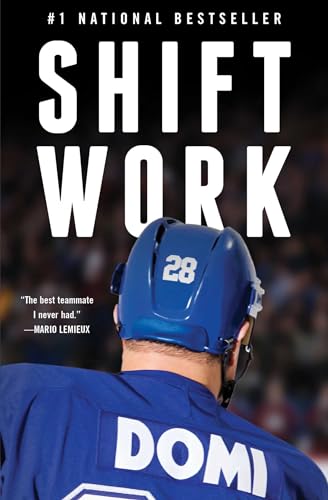
From hockey’s most prolific fighter comes a sports memoir unlike any other—passionate, funny, and candid, Shift Work chronicles Domi’s sixteen tumultuous seasons in the NHL.
Making it through a single fight as an enforcer in the NHL is a sign of toughness. Making it through 333 of them is a mark of greatness. Whether it was on the ice or off it, Tie Domi was driven to be the best at his job and was gifted with an extraordinary ability to withstand pain. He made a career out of protecting the people around him and became known as someone who would stand up for the people who needed it most.
Raised by immigrant parents in Belle River, Domi found success from an early age on the field and the rink. A gifted athlete in whatever sport he played, Tie eventually focused his sights on hockey. As he moved up the junior ranks, he made a name for himself as a player who was always ready to take on anyone who dared to cross his teammates.
Tie’s reputation followed him into the NHL, and it wasn’t long before he ranked among the game’s most feared—and fearless—enforcers. From New York to Winnipeg to Toronto, Tie quickly became a fan favourite in whatever city he played. As he went about working his name into the record books, Tie surrounded himself with people from every walk of life, learning from each one as he evolved into a respected leader who was never afraid to tell it like it was.
In Shift Work, Tie recounts the ups and downs of his life on and off the ice, showing what he has learned and how he has grown as both a player and a person. He offers insight into the most memorable points of his career, sharing his successes and mistakes with unparalleled honesty. Shift Work shows Tie Domi as he is—a devoted father and friend, a valued and loyal team player, a magnetic personality, and an athlete of immense skill and courage.
Die Inhaltsangabe kann sich auf eine andere Ausgabe dieses Titels beziehen.
Über die Autorinnen und Autoren
Tie Domi was raised in Belle River, Ontario. Over his sixteen-year NHL career, he played for the New York Rangers, the Winnipeg Jets, and the Toronto Maple Leafs, where he was and still is a beloved fan favourite. With 333 career NHL fights, Domi has the most fights in NHL history. Now a consultant, Domi is also active in many charitable foundations. He is the proud father of Carlin, Max, and Avery. Domi splits his time between Toronto and New York City, where he spends time with his girlfriend, Heather.
Jim Lang is a sportscaster, journalist, and the coauthor of hockey memoirs by Tie Domi, Max Domi, Wendel Clark, and Bryan Berard, as well as Everyday Hockey Heroes Volumes I and II with Bob McKenzie, Everyday Hockey Heroes III and My Day with the Cup. He lives outside Toronto with his wife and kids. Follow him on Instagram @LangersWorld.
Auszug. © Genehmigter Nachdruck. Alle Rechte vorbehalten.
Shift Work
1
Beginnings
MY STORY doesn’t begin with me. It begins with my parents. Growing up in Albania, my dad, John Domi, experienced a lot of hardship, both during World War II and after the war, under the communists. While my sister, brother, and I were growing up, one of the earliest stories we remember being told was about the time that my father was shot in the head while he was fleeing Albania. For the rest of my dad’s life, long after the wound healed, the bullet fragment stayed lodged in his forehead. I guess there was a piece that the doctors weren’t able to remove, and so it was just left there until the day he died. It was on the outer part of his left eyebrow, and when you touched the spot, you could feel the bullet fragment; it was like a small rock stuck under his skin.
I can’t count the number of times we heard that story when we were kids. Every time we felt for the bullet, we heard it told again. But I’m not sure my brother, sister, or I ever understood the reality of it. As we listened to the story, we sat in our living room, on our dad’s lap, with the comforts of a good home and a nice family. His stories of tough times and the war were, to us, just that—a bunch of stories. Dash and Trish and I were all born in Canada. We didn’t know anything about war or what it was like to be shot at. We were more worried about the kinds of things most kids are worried about: school, our friends, or what sport we would play next.
My dad’s struggles only began with the war. His life in Albania and his journey to make a better life for himself and his family were ordeals in and of themselves. Following the war, the communists in Albania—who had led the resistance against the Italians and the Nazis—became the main military and political power in the country. After Albania had been liberated from the Nazis, it officially became a communist country and changed its name to the People’s Republic of Albania. The communist regime that then followed was nasty. My dad was completely anticommunist. He remembered how anyone caught practising any kind of religion would be arrested, tortured, and even killed. Albania eventually became part of the Soviet Union’s communist bloc, and my dad could only see life getting more difficult because of it. Albania was not a good place to be living in the late 1940s and early 1950s.
Not everyone was happy with where the country was headed. There were lots of people who served in the anticommunist movement, but in reality, many of them were actually spies for the communists. My father and his brother were in the same unit working against the Communist Party. But their unit had been infiltrated by a group of these spies, so all of their activities were being reported to the communist powers that had taken over the country. I am not sure exactly when or how my father and uncle realized they were in trouble, but it was clear that they were at risk, and so, in 1950, they decided they had to get out of the country immediately.
At that time, Albania was one of the hardest countries in the world to enter or exit. So just getting out was an incredible challenge. But it was even more difficult for my dad and my uncle—because their anticommunist past had been reported, they had to avoid any official exits. That meant they would have to sneak across the border. It took my dad and uncle a long time to get out of the country. They moved only by foot or car, and only at night. During the daylight, they would hide out with sympathetic Albanian families in their barns or basements. They were smart and lucky, and eventually they made their way to the border of what was then Yugoslavia, which they finally ended up crossing in the middle of the night.
After escaping, my dad found himself in a town called Pristina, part of present-day Kosovo. It was there that he met my mom, Meyrem, in 1954. It didn’t take long for my dad to promise my mom that he would marry her, but neither one of them expected that to take as long as it did. Things got even more complicated when my mom and her family immigrated to Turkey. My grandmother on my mom’s side was Albanian and my grandfather was Turkish, and they would switch between languages whenever they felt like it. Luckily, my dad could keep up—he spoke seven languages. But he couldn’t travel to Turkey with my mom and her family, so he ended up bouncing through Austria, Germany, and Italy, trying to find the right country to settle his new family in. Dad ended up spending time in seven countries before deciding that Canada was the place for him.
My dad finally arrived in Canada in 1963. When he first got there, he settled in Winnipeg and worked for a time for the Canadian Pacific Railway; it was common for new immigrants to work on the railway. After a lonely year of working out west and saving money, my dad moved to Toronto, where he worked for Cara Foods, loading supplies onto planes at the airport. Finally, nine years after they had met in Pristina, my dad managed to scrape together enough savings to bring my mom over to join him in Canada.
I can’t even imagine how tough it must have been for my mom when she settled in Canada. She was in a strange country and she didn’t speak a word of English. But she and my dad had each other, and in May 1965, a year after my mom arrived in Canada, my brother, Dash, was born. When my mom gave birth to Dash, she didn’t know a single person in Canada other than my dad, and she felt incredibly lonely in the hospital as she watched the woman next to her receive flowers and visitors. But then, one day, a woman arrived with flowers not for the other person in the room, but for my mom. This woman came over and actually introduced herself in Albanian. It turns out that my father had met the woman’s husband while frequenting a coffee shop where he met with other Albanian men. He told them that he and my mom had a new baby boy, and they all knew my mother was new to the country. So this woman’s husband had come home and suggested that his wife go to visit my mom, and she did. From that moment on, they were best friends for life. Suddenly, my parents had a whole new connection to their new home, and their community began to grow.
It was about this time, when Dash was a baby and my dad was still working at Cara Foods, that Dad took a trip to Windsor, Ontario, where he heard some other Albanians had settled. Nobody in our family had ever been to Windsor or the surrounding area before. The only thing they knew was that there were some Albanians living there. My dad got to know some of the people from that network, and so, once he got to Windsor, he discovered that the people he was supposed to meet actually lived outside of Windsor, in a town called Belle River. He arrived there and found that the family he was supposed to meet owned a restaurant. And that restaurant just happened to be up for sale.
All of a sudden, my dad loved the idea of living in Belle River and running that restaurant. As a place to raise a family, Belle River was a good spot. There weren’t many people living there—maybe 3,500 at the time—and it was a tight-knit community with a large number of French-Canadian families. Above all else, it was a very safe little town. Back in those days, nobody locked their front doors. And after what my mom and dad had gone through their whole lives, a nice, small, safe town was just what they were looking for.
Using whatever savings he had, and partnering with another Albanian family...
„Über diesen Titel“ kann sich auf eine andere Ausgabe dieses Titels beziehen.
Suchergebnisse für Shift Work

Foto des Verkäufers
Shift Work
Anbieter: Zoom Books East, Glendale Heights, IL, USA
Verkäuferbewertung 5 von 5 Sternen

Zustand: good. Book is in good condition and may include underlining highlighting and minimal wear. The book can also include "From the library of" labels. May not contain miscellaneous items toys, dvds, etc. . We offer 100% money back guarantee and 24 7 customer service. Bestandsnummer des Verkäufers ZEV.1476782512.G
Gebraucht kaufen
EUR 5,28
Versand gratis
Versand innerhalb von USA
Versand innerhalb von USA
Anzahl: 2 verfügbar
Foto des Verkäufers
Shift Work
Anbieter: Zoom Books Company, Lynden, WA, USA
Verkäuferbewertung 5 von 5 Sternen
Zustand: very_good. Book is in very good condition and may include minimal underlining highlighting. The book can also include "From the library of" labels. May not contain miscellaneous items toys, dvds, etc. . We offer 100% money back guarantee and 24 7 customer service. Bestandsnummer des Verkäufers ZBV.1476782512.VG
Gebraucht kaufen
EUR 5,56
Versand gratis
Versand innerhalb von USA
Versand innerhalb von USA
Anzahl: 1 verfügbar
Foto des Verkäufers
Shift Work
Anbieter: 2nd Life Books, Burlington, NJ, USA
Verkäuferbewertung 5 von 5 Sternen
Zustand: good. Used book in good condition. May have some wear to binding, spine, cover, and pages. Some light highlighting markings writing may be present. May have some stickers and or sticker residue present. May be Ex-lib. copy. May NOT include discs, or access code or other supplemental material. We ship Monday-Saturday and respond to inquiries within 24 hours. Bestandsnummer des Verkäufers BXM.A234
Gebraucht kaufen
EUR 2,25
EUR 3,45 Versand
Versand innerhalb von USA
Versand innerhalb von USA
Anzahl: 1 verfügbar
Foto des Verkäufers
Shift Work
Anbieter: Greenworld Books, Arlington, TX, USA
Verkäuferbewertung 5 von 5 Sternen
Zustand: very_good. Fast Free Shipping â" Very Good condition book with a firm cover and clean pages. Shows normal use and some light wear or limited notes markings. A solid, nice copy to enjoy. Bestandsnummer des Verkäufers GWV.1476782512.VG
Gebraucht kaufen
EUR 6,11
Versand gratis
Versand innerhalb von USA
Versand innerhalb von USA
Anzahl: 1 verfügbar
Beispielbild für diese ISBN
Shift Work
Anbieter: Wonder Book, Frederick, MD, USA
Verkäuferbewertung 5 von 5 Sternen
Zustand: As New. Like New condition. A near perfect copy that may have very minor cosmetic defects. Bestandsnummer des Verkäufers X09C-01949
Gebraucht kaufen
EUR 6,22
Versand gratis
Versand innerhalb von USA
Versand innerhalb von USA
Anzahl: 1 verfügbar
Foto des Verkäufers
Shift Work
Anbieter: Shakespeare Book House, Rockford, IL, USA
Verkäuferbewertung 5 von 5 Sternen
Zustand: new. Bestandsnummer des Verkäufers EBBV.1476782512.N
Beispielbild für diese ISBN
Shift Work
Anbieter: Lakeside Books, Benton Harbor, MI, USA
Verkäuferbewertung 5 von 5 Sternen
Zustand: New. Brand New! Not Overstocks or Low Quality Book Club Editions! Direct From the Publisher! We're not a giant, faceless warehouse organization! We're a small town bookstore that loves books and loves it's customers! Buy from Lakeside Books! Bestandsnummer des Verkäufers OTF-9781476782515
Neu kaufen
EUR 10,23
EUR 3,45 Versand
Versand innerhalb von USA
Versand innerhalb von USA
Anzahl: Mehr als 20 verfügbar
Foto des Verkäufers
Shift Work
Anbieter: GreatBookPrices, Columbia, MD, USA
Verkäuferbewertung 5 von 5 Sternen
Zustand: New. Bestandsnummer des Verkäufers 26401607-n
Neu kaufen
EUR 11,42
EUR 2,28 Versand
Versand innerhalb von USA
Versand innerhalb von USA
Anzahl: Mehr als 20 verfügbar
Foto des Verkäufers
Shift Work (Paperback or Softback)
Verlag:
Simon & Schuster 10/11/2016, 2016
ISBN 10: 1476782512
ISBN 13: 9781476782515
Neu
Paperback or Softback
Anbieter: BargainBookStores, Grand Rapids, MI, USA
Verkäuferbewertung 5 von 5 Sternen
Paperback or Softback. Zustand: New. Shift Work. Book. Bestandsnummer des Verkäufers BBS-9781476782515
Foto des Verkäufers
Shift Work
Anbieter: GreatBookPrices, Columbia, MD, USA
Verkäuferbewertung 5 von 5 Sternen
Zustand: As New. Unread book in perfect condition. Bestandsnummer des Verkäufers 26401607
Gebraucht kaufen
EUR 12,37
EUR 2,28 Versand
Versand innerhalb von USA
Versand innerhalb von USA
Anzahl: Mehr als 20 verfügbar