
Verwandte Artikel zu Three More Words
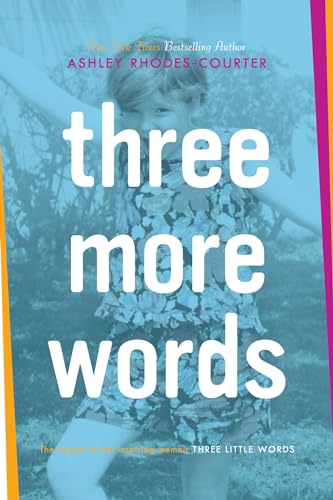
Inhaltsangabe
In the sequel to the New York Times bestselling memoir Three Little Words, Ashley Rhodes-Courter expands on life beyond the foster care system, the joys and heartbreak with the family she’s created, and her efforts to make peace with her past.
Ashley Rhodes-Courter spent a harrowing nine years of her life in fourteen different foster homes. Her memoir, Three Little Words, captivated audiences everywhere and went on to become a New York Times bestseller. Now Ashley reveals the nuances of life after foster care: College and its assorted hijinks, including meeting “the one.” Marriage, which began with a beautiful wedding on a boat that was almost hijacked (literally) by some biological family members. Having kids—from fostering children and the heartbreak of watching them return to destructive environments, to the miraculous joy of blending biological and adopted offspring.
Whether she’s overcoming self-image issues, responding to calls asking for her to run for Senate, or dealing with continuing drama from her biological family, Ashley Rhodes-Courter never fails to impress or inspire with her authentic voice and uplifting message of hope.
Die Inhaltsangabe kann sich auf eine andere Ausgabe dieses Titels beziehen.
Über die Autorin bzw. den Autor
Ashley Rhodes-Courter has been featured in Teen People, The New York Times, USA TODAY, and Glamour, as well as on Good Morning America. Her first memoir, Three Little Words, began as an essay, which won a writing contest for high school students, and was published in The New York Times Magazine. She is also the author of Three More Words. A graduate of Eckerd College and a champion for the reformation of the foster care system, Ashley speaks internationally on foster care and adoption. Visit her at Rhodes-Courter.com.
Auszug. © Genehmigter Nachdruck. Alle Rechte vorbehalten.
Three More Words
1.
three little words
The ones I pity are the ones who never stick out their neck for something they believe, never know the taste of moral struggle, and never have the thrill of victory.
—Jonathan Kozol
A thousand eyes were staring, expectant and ready to listen to me. For some people public speaking triggers a primal fear, arousing the fight-or-flight response, but each time I face an audience I look forward to another chance to be heard. During my almost ten years in Florida’s foster care system I had no voice, even when I had something important—possibly lifesaving—to say. Even more, I was branded a liar because nobody wanted to hear the truth. Since everything I did as a kid became a part of my case file, attempts to discredit my word were written up as official documents and could have ruined any chances I had to be adopted or to lead a normal life.
The people who come to hear me speak often have special connections to the foster care system. Among them are parents, judges, legislators, social workers, child welfare executives, and teachers. Sometimes my audience is made up of children or teens who have experienced loss or trauma like I did, or maybe they are young people from more traditional backgrounds and my story shows them what it might be like to grow up without a stable family. Maybe there are people who realize for the first time that children like me are in their midst.
Even if my audiences have read my first memoir, Three Little Words, they want to hear me repeat some of the stories and ask me questions. Many are fascinated that someone can be adopted successfully as a young teen. I also defy the stereotypes of former foster youth. I don’t have a criminal record. I’d never been homeless or lived in poverty as an adult. I did not become a teen parent.
“I spent almost ten years in foster care, during which time I lived in fourteen different foster placements,” I begin. If there are caseworkers or foster youth in the audience, there are often nods of recognition or nervous laughter. My story is hard to hear, I know—and it’s also difficult for me to recount over and over.
“Imagine being three years old,” I say. “The police put your mother in one car and you and your baby brother in another. A few hours later caseworkers separate you from your brother. Nobody explains anything. That night you are in a shelter home, crying yourself to sleep. The next day you are moved again, and you then enter a world of ever-changing ‘placements’ and ‘beds,’ broken promises, confusion, and the overwhelming feeling that everything is your fault or that something is inherently wrong with you.”
My audiences are often well intentioned and dedicated to helping children, but my story reminds them of the crushing impact of their decisions. “After seven years, my mother’s parental rights were finally severed. Even though this was the only way for me to move on, it felt like she had died. I mourned her then, and in some ways I mourn her still—even though she is now a peripheral part of my life. For several years after the termination of parental rights (TPR), or final legal separation, I remained in foster care, eventually landing in a children’s home with a staff that helped me heal. I am one of the lucky ones who finally got out of the system. Even at the awkward age of twelve, the perfect family came forward to adopt me. You would have thought I would have been thrilled, but I had lived in so many hideous homes—including with people who were later convicted of child abuse, molestation, and other felonies—that I didn’t trust anyone to be kind to me, let alone keep me more than a few months.
“On my adoption day I was sullen and wary; so when the judge asked if I wanted to be adopted, I mumbled, ‘I guess so’—the three little words that were also the title of my first memoir.
“Yet none of the assumptions I made that day turned out to be true. Our family now laughs about the tug-of-war as they tried to welcome me into their fold while I pulled back with all my might. For years, I couldn’t admit—even to myself—that I had left an ember burning in my heart for my biological mother, the person who had smothered me with kisses and called me affectionate names when she showed up for the infrequent visits social services arranged.
“My new life with Phil and Gay Courter seemed too good to be true. I had my own room and could have slumber parties. There were no locks on the cabinets or refrigerator. I always had someone to help me with my homework, and they were interested in whatever was happening in my life. I worried that one day they would discover I wasn’t perfect and would send me back. To speed the process, I found ways to make my new parents quarrel with each other, and lied indiscriminately to keep them guessing. I tried pushing every button they had. I was admonished, but they did not reject me.”
This part of my speech always gets resounding applause—not for me but for my adoptive parents. I’ve told my story many times, and still the shame of my antics never fades. It’s all part of my life. I don’t like thinking of a time when I was cruel or withholding to someone who was trying to love me—especially after having been on the other side of the equation while I was growing up. But my honest admissions illustrate a crucial point for me. I had no blueprint for healthy relationships; I had no maps or role models. I had to learn on my own that love means forgiveness at many levels.
“I began to trust in baby steps. When I felt accepted no matter what I did, I started to attach. That attachment led to love.”
I had been giving different versions of this speech since I was fourteen, but on this occasion my memorized patter sounded hollow. I wondered if anyone sensed that I felt as though I was standing on a precipice with a few pebbles of loose gravel beginning to fall with faint pings down into a valley so deep that I had no idea where they were landing. I have been to the edge many times before—not knowing if I would finally return home to my mother or be shuffled to yet another temporary home run by people who were paid to house and feed me. This time, it was the summer after my senior year of high school, and I was about to voluntarily leave my first real sanctuary for college. All my friends were more than ready to get out from parental control, but my adoptive home was my first real refuge, and I hadn’t really been there that long.
I continued to speak, my mind swirling with the paradox of sounding secure while trying to navigate my way through new complications with boyfriends and my birth family. I took a deep breath. Audiences like to feel closure and hear a happy ending, but the reality was that my story was evolving every day. “I’m thankful to the parents and professionals who dedicate their time to helping young people, especially those who assisted me during critical times. Without strong advocates, so many more would fall through the cracks with no one to speak for us.” The audience rose to their feet, clapping. As the sound melted away, the chattering began. The little questions, the small talk, the compliments, and my responses made me seem like I had it all together. If only they knew how nervous I was to be going away to college—or that my biological mother had just emerged from the shadows.
My birth mother, Lorraine, once asked my adoptive mother, “When...
„Über diesen Titel“ kann sich auf eine andere Ausgabe dieses Titels beziehen.
Suchergebnisse für Three More Words

Beispielbild für diese ISBN
Three More Words
Anbieter: World of Books (was SecondSale), Montgomery, IL, USA
Verkäuferbewertung 5 von 5 Sternen

Paperback. Zustand: Good. In the sequel to the New York Times bestselling memoir Three Little Words, Ashley Rhodes-Courter expands on life beyond the foster care system, the joys and heartbreak with the family she's created, and her efforts to make peace with her past. Ashley Rhodes-Courter spent a harrowing nine years of her life in fourteen different foster homes. Her memoir, Three Little Words, captivated audiences everywhere and went on to become a New York Times bestseller. Now Ashley reveals the nuances of life after foster care: College and its assorted hijinks, including meeting "the one." Marriage, which began with a beautiful wedding on a boat that was almost hijacked (literally) by some biological family members. Having kids--from fostering children and the heartbreak of watching them return to destructive environments, to the miraculous joy of blending biological and adopted offspring. Whether she's overcoming self-image issues, responding to calls asking for her to run for Senate, or dealing with continuing drama from her biological family, Ashley Rhodes-Courter never fails to impress or inspire with her authentic voice and uplifting message of hope. Bestandsnummer des Verkäufers 00107806555
Gebraucht kaufen
EUR 4,11
Versand gratis
Versand innerhalb von USA
Versand innerhalb von USA
Anzahl: 4 verfügbar
Beispielbild für diese ISBN
Three More Words
Verlag:
Atheneum/Caitlyn Dlouhy Books (edition Reprint), 2016
ISBN 10: 1481415581
ISBN 13: 9781481415583
Gebraucht
Paperback
Anbieter: BooksRun, Philadelphia, PA, USA
Verkäuferbewertung 5 von 5 Sternen
Paperback. Zustand: Fair. Reprint. The item might be beaten up but readable. May contain markings or highlighting, as well as stains, bent corners, or any other major defect, but the text is not obscured in any way. Bestandsnummer des Verkäufers 1481415581-7-1
Gebraucht kaufen
EUR 4,93
Versand gratis
Versand innerhalb von USA
Versand innerhalb von USA
Anzahl: 1 verfügbar
Foto des Verkäufers
Three More Words
Verlag:
Atheneum/Caitlyn Dlouhy Books, 2016
ISBN 10: 1481415581
ISBN 13: 9781481415583
Gebraucht
Softcover
Anbieter: Greenworld Books, Arlington, TX, USA
Verkäuferbewertung 5 von 5 Sternen
Zustand: very_good. Fast Free Shipping â" Very Good condition book with a firm cover and clean pages. Shows normal use and some light wear or limited notes markings. A solid, nice copy to enjoy. Bestandsnummer des Verkäufers GWV.1481415581.VG
Gebraucht kaufen
EUR 5,43
Versand gratis
Versand innerhalb von USA
Versand innerhalb von USA
Anzahl: 1 verfügbar
Beispielbild für diese ISBN
Three More Words
Anbieter: World of Books Inc, Montgomery, IL, USA
Verkäuferbewertung 4 von 5 Sternen

Paperback. Zustand: Good. In the sequel to the New York Times bestselling memoir Three Little Words, Ashley Rhodes-Courter expands on life beyond the foster care system, the joys and heartbreak with the family she's created, and her efforts to make peace with her past. Ashley Rhodes-Courter spent a harrowing nine years of her life in fourteen different foster homes. Her memoir, Three Little Words, captivated audiences everywhere and went on to become a New York Times bestseller. Now Ashley reveals the nuances of life after foster care: College and its assorted hijinks, including meeting "the one." Marriage, which began with a beautiful wedding on a boat that was almost hijacked (literally) by some biological family members. Having kids--from fostering children and the heartbreak of watching them return to destructive environments, to the miraculous joy of blending biological and adopted offspring. Whether she's overcoming self-image issues, responding to calls asking for her to run for Senate, or dealing with continuing drama from her biological family, Ashley Rhodes-Courter never fails to impress or inspire with her authentic voice and uplifting message of hope. Bestandsnummer des Verkäufers CIN1481415581G
Gebraucht kaufen
EUR 5,94
Versand gratis
Versand innerhalb von USA
Versand innerhalb von USA
Anzahl: 4 verfügbar
Beispielbild für diese ISBN
Three More Words
Verlag:
Atheneum/Caitlyn Dlouhy Books, 2016
ISBN 10: 1481415581
ISBN 13: 9781481415583
Gebraucht
Paperback
Anbieter: HPB-Ruby, Dallas, TX, USA
Verkäuferbewertung 5 von 5 Sternen
Paperback. Zustand: Very Good. Connecting readers with great books since 1972! Used books may not include companion materials, and may have some shelf wear or limited writing. We ship orders daily and Customer Service is our top priority! Bestandsnummer des Verkäufers S_457771983
Gebraucht kaufen
EUR 2,76
EUR 3,35 Versand
Versand innerhalb von USA
Versand innerhalb von USA
Anzahl: 1 verfügbar
Beispielbild für diese ISBN
Three More Words
Anbieter: ThriftBooks-Atlanta, AUSTELL, GA, USA
Verkäuferbewertung 5 von 5 Sternen
Paperback. Zustand: Very Good. No Jacket. May have limited writing in cover pages. Pages are unmarked. ~ ThriftBooks: Read More, Spend Less. Bestandsnummer des Verkäufers G1481415581I4N00
Gebraucht kaufen
EUR 6,11
Versand gratis
Versand innerhalb von USA
Versand innerhalb von USA
Anzahl: 1 verfügbar
Beispielbild für diese ISBN
Three More Words
Anbieter: ThriftBooks-Reno, Reno, NV, USA
Verkäuferbewertung 5 von 5 Sternen
Paperback. Zustand: Very Good. No Jacket. May have limited writing in cover pages. Pages are unmarked. ~ ThriftBooks: Read More, Spend Less. Bestandsnummer des Verkäufers G1481415581I4N00
Gebraucht kaufen
EUR 6,11
Versand gratis
Versand innerhalb von USA
Versand innerhalb von USA
Anzahl: 1 verfügbar
Beispielbild für diese ISBN
Three More Words
Anbieter: ThriftBooks-Atlanta, AUSTELL, GA, USA
Verkäuferbewertung 5 von 5 Sternen
Paperback. Zustand: Good. No Jacket. Pages can have notes/highlighting. Spine may show signs of wear. ~ ThriftBooks: Read More, Spend Less. Bestandsnummer des Verkäufers G1481415581I3N00
Gebraucht kaufen
EUR 6,11
Versand gratis
Versand innerhalb von USA
Versand innerhalb von USA
Anzahl: 1 verfügbar
Beispielbild für diese ISBN
Three More Words
Anbieter: ThriftBooks-Dallas, Dallas, TX, USA
Verkäuferbewertung 5 von 5 Sternen
Paperback. Zustand: Good. No Jacket. Pages can have notes/highlighting. Spine may show signs of wear. ~ ThriftBooks: Read More, Spend Less. Bestandsnummer des Verkäufers G1481415581I3N00
Gebraucht kaufen
EUR 6,11
Versand gratis
Versand innerhalb von USA
Versand innerhalb von USA
Anzahl: 1 verfügbar
Beispielbild für diese ISBN
Three More Words
Anbieter: ThriftBooks-Dallas, Dallas, TX, USA
Verkäuferbewertung 5 von 5 Sternen
Paperback. Zustand: Very Good. No Jacket. May have limited writing in cover pages. Pages are unmarked. ~ ThriftBooks: Read More, Spend Less. Bestandsnummer des Verkäufers G1481415581I4N00
Gebraucht kaufen
EUR 6,11
Versand gratis
Versand innerhalb von USA
Versand innerhalb von USA
Anzahl: 2 verfügbar