
Verwandte Artikel zu The Nowhere Girls
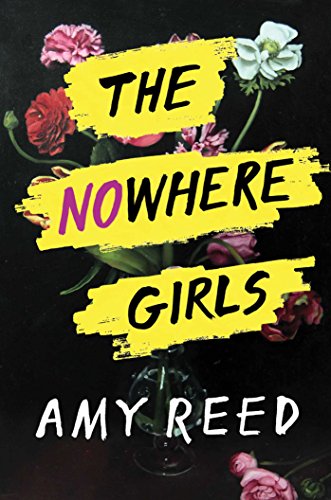
Inhaltsangabe
“A call-to-action to everyone out there who wants to fight back.” —Bustle
“Subversive anti-sexism—just try to put it down.” —Kirkus Reviews (starred review)
“Cuts straight to the core of rape culture—masterfully fierce, stirring, and deeply empowering.” —Amber Smith, New York Times bestselling author of The Way I Used to Be
Three misfits come together to avenge the rape of a fellow classmate and in the process trigger a change in the misogynist culture at their high school transforming the lives of everyone around them in this searing and timely story.
Who are the Nowhere Girls?
They’re everygirl. But they start with just three:
Grace Salter is the new girl in town, whose family was run out of their former community after her southern Baptist preacher mom turned into a radical liberal after falling off a horse and bumping her head.
Rosina Suarez is the queer punk girl in a conservative Mexican immigrant family, who dreams of a life playing music instead of babysitting her gaggle of cousins and waitressing at her uncle’s restaurant.
Erin Delillo is obsessed with two things: marine biology and Star Trek: The Next Generation, but they aren’t enough to distract her from her suspicion that she may in fact be an android.
When Grace learns that Lucy Moynihan, the former occupant of her new home, was run out of town for having accused the popular guys at school of gang rape, she’s incensed that Lucy never had justice. For their own personal reasons, Rosina and Erin feel equally deeply about Lucy’s tragedy, so they form an anonymous group of girls at Prescott High to resist the sexist culture at their school, which includes boycotting sex of any kind with the male students.
Told in alternating perspectives, this groundbreaking novel is an indictment of rape culture and explores with bold honesty the deepest questions about teen girls and sexuality.
Die Inhaltsangabe kann sich auf eine andere Ausgabe dieses Titels beziehen.
Über die Autorin bzw. den Autor
Amy Reed is the author of the contemporary young adult novels Beautiful, Clean, Crazy, Over You, Damaged, Invincible, Unforgivable, The Nowhere Girls, and The Boy and Girl Who Broke the World. She is also the editor of Our Stories, Our Voices. She is a feminist, mother, and quadruple Virgo who enjoys running, making lists, and wandering around the mountains of western North Carolina where she lives. You can find her online at AmyReedFiction.com.
Auszug. © Genehmigter Nachdruck. Alle Rechte vorbehalten.
The Nowhere Girls
US.
Prescott, Oregon.
Population: 17,549. Elevation: 578 feet above sea level.
Twenty miles east of Eugene and the University of Oregon. One hundred thirty miles southeast of Portland. Halfway between a farm town and a suburb. Home of the Spartans (Go Spartans!).
Home of so many girls. Home of so many almost-women, waiting for their skin to fit.
* * *
The U-Haul truck opens its sliding door for the first time since Adeline, Kentucky, unleashing the stale air from the small southern town that used to be Grace Salter’s home, back when her mother was still a dutiful Baptist church leader (though not technically a “pastor,” because as a woman in a church belonging to the Southern Baptist Convention, she could not technically claim the official title, nor its significantly higher pay grade, even with her PhD in Ministry and more than a decade of service). Everything in Grace’s life changed when Mom fell off that horse and bumped her head and suffered the concussion and subsequent spiritual experience that, according to Mom’s version of events, freed her mind and helped her hear the true voice of the Lord and, according to Grace’s version of events, got them booted out of Adeline and ruined their lives.
Couches, beds, and dressers are in their approximate positions in the new house. Grace’s mother starts unpacking the kitchen. Dad searches on his phone for pizza delivery. Grace climbs steep, creaking stairs to the room she has never seen before today, the room Mom and Dad only saw in photos their real estate agent sent them, the room she knows is meant to be hers because of the yellow wall paint and purple flower decals.
She sits on the stained twin mattress she’s had since she was three and wants nothing more than to curl up and fall asleep, but she doesn’t know where her sheets are. After five days of nonstop driving, fast food, and sharing motel rooms with her parents, she wants to shut the door and not come out for a long time, and she certainly doesn’t want to sit on boxes of dishes while eating pizza off a paper towel.
She lies on her bed and looks at the bare ceiling. She studies a water-damaged corner. It is early September, still technically summer, but this is Oregon, known for its year-round wetness, something Grace learned during her disappointing Web searches. She wonders if she should try to find a bucket to put on the floor in anticipation of a leak. “Be prepared.” Isn’t that the Boy Scout motto? She wouldn’t know; she had been a Girl Scout. Her troop learned how to do things like knit and make marzipan.
Grace turns her head to look out the window, but her eyes catch texture beneath the peeling white lip of the frame. Carved words, like a prisoner’s inside a cell, through layers of peeling yellow, then blue, then white, the fresh words sliced through decades of paint:
Kill me now.
I’m already dead.
Grace’s breath catches in her throat as she stares at the words, as she reads the pain of a stranger who must have lived and breathed and slept in this room. Was their bed in this very same place? Did their body already carve out this position in space where Grace’s body lies now?
How intimate these tiny words are. How alone a person must feel to cry out to someone they can’t even see.
* * *
Across town, Erin DeLillo is watching Season Five, Episode Eleven, of Star Trek: The Next Generation. The title of this episode is “Hero Worship.” It’s about a traumatized, orphaned boy who becomes emotionally attached to Lieutenant Commander Data, an android. The boy admires Data’s superior intelligence and speed, but perhaps even more, he wishes he shared Data’s lack of ability to experience human emotions. If the boy were an android, he wouldn’t be so sad and lonely. If he were an android, he wouldn’t feel responsible for the careless mistake that tore his ship apart and killed his parents.
Data is an android who wants to be human. He is watching them from the outside. Like Data, Erin is often confounded by the behavior of humans.
But unlike Data, Erin is more than capable of feeling. She feels too much. She is a raw nerve and the world is always trying to touch her.
Mom says, “It’s a beautiful day! You should be outside!” She speaks in exclamation points. But Erin’s skin is almost as pale as Data’s and she burns easily. She doesn’t like being hot or sweaty, or any other discomfort that reminds her she lives in her imperfectly human body, which is why she takes a minimum of two baths a day (but definitely not showers—they feel too stabby on her skin). Her mother knows this about Erin, and yet she keeps saying things she thinks normal moms of normal kids are supposed to say, as if Erin is capable of being a normal kid, as if that is something she would even aspire to be. Mostly, what Erin aspires to be is more like Data.
If they lived by the ocean, Erin might not have the same reluctance to go outside. She might even be willing to subject her skin to the stickiness of sunscreen if it meant she could spend the day turning over rocks and cataloging her findings, mostly invertebrates like mollusks, cnidarians, and polychaete worms, which, in Erin’s opinion, are all highly underappreciated creatures. At their old house near Alki Beach in West Seattle, she could walk out her front door and spend entire days searching for various life-forms. But that was when they still lived in Seattle, before the events that led to Erin’s decision that trying to be “normal” was way more trouble than it was worth, a decision her mother still refuses to accept.
The problem with humans is they’re too enamored with themselves, and with mammals in general. As if big brains and live birth are necessarily signs of superiority. As if the hairy, air-breathing world is the only one that matters. There is a whole universe underwater to be explored. There are engineers building ships that can travel miles beneath the surface. One day, Erin aims to design and drive one of those ships, armed with PhDs in both marine biology and engineering. She will find creatures that have never been found, will catalog them and give them names, will help tell the story of how each being came to be, where it fits within life’s perfectly orchestrated web.
Erin is, unapologetically, a science geek. She knows this is an Asperger’s stereotype, as are many other things about her—the difficulties expressing emotion, the social awkwardness, the sometimes inappropriate behavior. But what can she do? These are parts of who she is. It’s everyone else who decided to make them a stereotype.
One thing Erin knows for sure is that no matter what you do, people will find a way to put you in a box. It’s how we’re programmed. Our default is laziness. We categorize things to make them easier to understand.
That’s what makes science so satisfying. It is complicated and massive, but it is also so tidy, so organized. What Erin loves most about science is the order, the logic, the way every bit of information fits into a system, even if we can’t see it yet. She has faith in that system the way some people have faith in God. Evolution and taxonomy are comforting. They are stable and right.
But there’s the pesky problem of chance, which never ceases to...
„Über diesen Titel“ kann sich auf eine andere Ausgabe dieses Titels beziehen.
Suchergebnisse für The Nowhere Girls

Beispielbild für diese ISBN
The Nowhere Girls
Verlag:
Simon & Schuster Books for Young Readers, 2017
ISBN 10: 1481481738
ISBN 13: 9781481481731
Gebraucht
Hardcover
Anbieter: World of Books (was SecondSale), Montgomery, IL, USA
Verkäuferbewertung 5 von 5 Sternen

Zustand: Good. Good condition ex-library book with usual library markings and stickers. Bestandsnummer des Verkäufers 00090936705
Gebraucht kaufen
EUR 5,33
Versand gratis
Versand innerhalb von USA
Versand innerhalb von USA
Anzahl: 5 verfügbar
Beispielbild für diese ISBN
The Nowhere Girls
Anbieter: World of Books (was SecondSale), Montgomery, IL, USA
Verkäuferbewertung 5 von 5 Sternen
Hardback. Zustand: Very Good. A call-to-action to everyone out there who wants to fight back. --Bustle Subversive anti-sexism--just try to put it down. --Kirkus Reviews (starred review) Cuts straight to the core of rape culture--masterfully fierce, stirring, and deeply empowering. --Amber Smith, New York Times bestselling author of The Way I Used to Be Three misfits come together to avenge the rape of a fellow classmate and in the process trigger a change in the misogynist culture at their high school transforming the lives of everyone around them in this searing and timely story. Who are the Nowhere Girls? They're everygirl. But they start with just three: Grace Salter is the new girl in town, whose family was run out of their former community after her southern Baptist preacher mom turned into a radical liberal after falling off a horse and bumping her head. Rosina Suarez is the queer punk girl in a conservative Mexican immigrant family, who dreams of a life playing music instead of babysitting her gaggle of cousins and waitressing at her uncle's restaurant. Erin Delillo is obsessed with two things: marine biology and Star Trek: The Next Generation, but they aren't enough to distract her from her suspicion that she may in fact be an android. When Grace learns that Lucy Moynihan, the former occupant of her new home, was run out of town for having accused the popular guys at school of gang rape, she's incensed that Lucy never had justice. For their own personal reasons, Rosina and Erin feel equally deeply about Lucy's tragedy, so they form an anonymous group of girls at Prescott High to resist the sexist culture at their school, which includes boycotting sex of any kind with the male students. Told in alternating perspectives, this groundbreaking novel is an indictment of rape culture and explores with bold honesty the deepest questions about teen girls and sexuality. Bestandsnummer des Verkäufers 00090962136
Gebraucht kaufen
EUR 5,33
Versand gratis
Versand innerhalb von USA
Versand innerhalb von USA
Anzahl: 3 verfügbar
Beispielbild für diese ISBN
The Nowhere Girls
Verlag:
Simon & Schuster Books for Young Readers (edition ), 2017
ISBN 10: 1481481738
ISBN 13: 9781481481731
Gebraucht
Hardcover
Anbieter: BooksRun, Philadelphia, PA, USA
Verkäuferbewertung 5 von 5 Sternen
Hardcover. Zustand: Very Good. With dust jacket. It's a well-cared-for item that has seen limited use. The item may show minor signs of wear. All the text is legible, with all pages included. It may have slight markings and/or highlighting. Bestandsnummer des Verkäufers 1481481738-11-1-29
Gebraucht kaufen
EUR 5,35
Versand gratis
Versand innerhalb von USA
Versand innerhalb von USA
Anzahl: 1 verfügbar
Foto des Verkäufers
The Nowhere Girls
Verlag:
Simon & Schuster Books for Young Readers, 2017
ISBN 10: 1481481738
ISBN 13: 9781481481731
Gebraucht
Hardcover
Anbieter: Greenworld Books, Arlington, TX, USA
Verkäuferbewertung 5 von 5 Sternen
Zustand: very_good. Fast Free Shipping â" Very Good condition book with a firm cover and clean pages. Shows normal use and some light wear or limited notes markings. A solid, nice copy to enjoy. Bestandsnummer des Verkäufers GWV.1481481738.VG
Gebraucht kaufen
EUR 5,70
Versand gratis
Versand innerhalb von USA
Versand innerhalb von USA
Anzahl: 1 verfügbar
Beispielbild für diese ISBN
The Nowhere Girls
Verlag:
Simon & Schuster Books for Young, 2017
ISBN 10: 1481481738
ISBN 13: 9781481481731
Gebraucht
Hardcover
Anbieter: Evergreen Goodwill, Seattle, WA, USA
Verkäuferbewertung 5 von 5 Sternen
hardcover. Zustand: Good. Bestandsnummer des Verkäufers mon0000494732
Gebraucht kaufen
EUR 2,29
EUR 3,55 Versand
Versand innerhalb von USA
Versand innerhalb von USA
Anzahl: 1 verfügbar
Beispielbild für diese ISBN
The Nowhere Girls
Verlag:
Simon & Schuster Books for Young Readers, 2017
ISBN 10: 1481481738
ISBN 13: 9781481481731
Gebraucht
Hardcover
Anbieter: ThriftBooks-Dallas, Dallas, TX, USA
Verkäuferbewertung 5 von 5 Sternen
Hardcover. Zustand: Very Good. No Jacket. Former library book; May have limited writing in cover pages. Pages are unmarked. ~ ThriftBooks: Read More, Spend Less. Bestandsnummer des Verkäufers G1481481738I4N10
Gebraucht kaufen
EUR 5,94
Versand gratis
Versand innerhalb von USA
Versand innerhalb von USA
Anzahl: 1 verfügbar
Beispielbild für diese ISBN
The Nowhere Girls
Verlag:
Simon & Schuster Books for Young Readers, 2017
ISBN 10: 1481481738
ISBN 13: 9781481481731
Gebraucht
Hardcover
Anbieter: ThriftBooks-Atlanta, AUSTELL, GA, USA
Verkäuferbewertung 5 von 5 Sternen
Hardcover. Zustand: Very Good. No Jacket. Former library book; May have limited writing in cover pages. Pages are unmarked. ~ ThriftBooks: Read More, Spend Less. Bestandsnummer des Verkäufers G1481481738I4N10
Gebraucht kaufen
EUR 5,94
Versand gratis
Versand innerhalb von USA
Versand innerhalb von USA
Anzahl: 1 verfügbar
Beispielbild für diese ISBN
The Nowhere Girls
Verlag:
Simon & Schuster Books for Young Readers, 2017
ISBN 10: 1481481738
ISBN 13: 9781481481731
Gebraucht
Hardcover
Anbieter: ThriftBooks-Atlanta, AUSTELL, GA, USA
Verkäuferbewertung 5 von 5 Sternen
Hardcover. Zustand: Good. No Jacket. Missing dust jacket; Pages can have notes/highlighting. Spine may show signs of wear. ~ ThriftBooks: Read More, Spend Less. Bestandsnummer des Verkäufers G1481481738I3N01
Gebraucht kaufen
EUR 5,94
Versand gratis
Versand innerhalb von USA
Versand innerhalb von USA
Anzahl: 1 verfügbar
Beispielbild für diese ISBN
The Nowhere Girls
Verlag:
Simon & Schuster Books for Young Readers, 2017
ISBN 10: 1481481738
ISBN 13: 9781481481731
Gebraucht
Hardcover
Anbieter: ThriftBooks-Reno, Reno, NV, USA
Verkäuferbewertung 5 von 5 Sternen
Hardcover. Zustand: Very Good. No Jacket. Former library book; May have limited writing in cover pages. Pages are unmarked. ~ ThriftBooks: Read More, Spend Less. Bestandsnummer des Verkäufers G1481481738I4N10
Gebraucht kaufen
EUR 5,94
Versand gratis
Versand innerhalb von USA
Versand innerhalb von USA
Anzahl: 1 verfügbar
Beispielbild für diese ISBN
The Nowhere Girls
Verlag:
Simon & Schuster Books for Young Readers, 2017
ISBN 10: 1481481738
ISBN 13: 9781481481731
Gebraucht
Hardcover
Anbieter: Wonder Book, Frederick, MD, USA
Verkäuferbewertung 5 von 5 Sternen
Zustand: As New. Like New condition. Very Good dust jacket. A near perfect copy that may have very minor cosmetic defects. Bestandsnummer des Verkäufers K03Q-00437
Gebraucht kaufen
EUR 6,40
Versand gratis
Versand innerhalb von USA
Versand innerhalb von USA
Anzahl: 1 verfügbar