
Verwandte Artikel zu Life Inside My Mind: 31 Authors Share Their Personal...
Inhaltsangabe
“Who better to raise teens’ awareness of mental illness and health than the YA authors they admire?” —Booklist (starred review)
“[A] much-needed, enlightening book.” —School Library Journal (starred review)
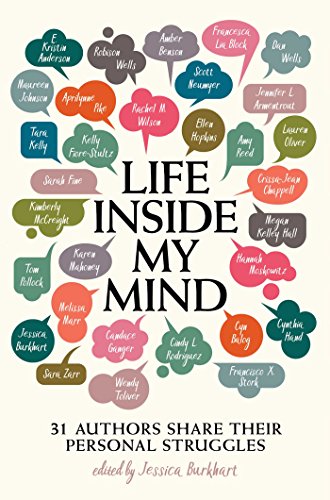
Your favorite YA authors including Ellen Hopkins, Maureen Johnson, and more recount their own experiences with mental health in this raw, real, and powerful collection of essays that explores everything from ADD to PTSD.
Have you ever felt like you just couldn’t get out of bed? Not the occasional morning, but every day? Do you find yourself listening to a voice in your head that says “you’re not good enough,” “not good looking enough,” “not thin enough,” or “not smart enough”? Have you ever found yourself unable to do homework or pay attention in class unless everything is “just so” on your desk? Everyone has had days like that, but what if you have them every day?
You’re not alone. Millions of people are going through similar things. However issues around mental health still tend to be treated as something shrouded in shame or discussed in whispers. It’s easier to have a broken bone—something tangible that can be “fixed”—than to have a mental illness, and easier to have a discussion about sex than it is to have one about mental health.
Life Inside My Mind is an anthology of true-life events from writers of this generation, for this generation. These essays tackle everything from neurodiversity to addiction to OCD to PTSD and much more. The goals of this book range from providing a home to those who are feeling alone, awareness to those who are witnessing a friend or family member struggle, and to open the floodgates to conversation.
Die Inhaltsangabe kann sich auf eine andere Ausgabe dieses Titels beziehen.
Über die Autorinnen und Autoren
Maureen Johnson is the New York Times bestselling author of over a dozen YA novels, including 13 Little Blue Envelopes, The Name of the Star, Suite Scarlett, and Truly Devious. Visit her at MaureenJohnsonBooks.com, MaureenJohnsonBooks on Tumblr, or @MaureenJohnson on Twitter.
Amy Reed is the author of the contemporary young adult novels Beautiful, Clean, Crazy, Over You, Damaged, Invincible, Unforgivable, The Nowhere Girls, and The Boy and Girl Who Broke the World. She is also the editor of Our Stories, Our Voices. She is a feminist, mother, and quadruple Virgo who enjoys running, making lists, and wandering around the mountains of western North Carolina where she lives. You can find her online at AmyReedFiction.com.
Amber Benson is a writer, actress, and director who has written for the stage, screen, books, and comic books. She is perhaps best known for playing the role of "Tara" on the hit television show Buffy the Vampire Slayer. Amber lives in Los Angeles, California.This is her first children's book.
Sarah Fine is the author of Of Metal and Wishes, Of Dreams and Rust, The Impostor Queen, The Cursed Queen, The True Queen, and The Guards of the Shadowlands series. She was born on the West Coast, raised in the Midwest, and is now firmly entrenched on the East Coast. When she’s not writing, she’s working as a child psychologist. Visit her at SarahFineBooks.com.
Ellen Hopkins is the #1 New York Times bestselling author of numerous young adult novels, as well as the adult novels such as Triangles, Collateral, and Love Lies Beneath. She lives with her family in Carson City, Nevada, where she has founded Ventana Sierra, a nonprofit youth housing and resource initiative. Follow her on Twitter at @EllenHopkinsLit.
Auszug. © Genehmigter Nachdruck. Alle Rechte vorbehalten.
Life Inside My Mind Stupid Monsters and Child Surgeons
by Maureen Johnson
I have had anxiety. I suffered a serious bout of it a few years ago. It hit me like a bolt out of the blue and stuck with me for a while.
If you have anxiety, you may know that reading about anxiety usually makes more anxiety. When I had anxiety, I could not read about anxiety without getting anxiety, and yet I read about it pretty compulsively, looking for answers. I was looking for something that told me there was a light at the end of the tunnel. I am letting you know that this essay has that light. It has a sunrise. I know that matters. Trust me. Hold my hand as we go, if you want to go with me.
Anxiety bouts can end. They end all the time. Never give up hope that yours can and will end. I am not a mental health professional, and if you are suffering from severe anxiety, I strongly, strongly suggest seeing one. You may already be doing so. Also, what I write about here is what happened to me. We are all different, and your mileage may vary. Anxiety has a lot of causes and pathways. There is no one way to deal with it—which is good. There are a LOT of ways. Millions—billions?—of people deal with anxiety. Almost all of us deal with some form of mental infirmity at one point or another in our lives. You’re not only not alone—you’re in the majority.
I want you to know that people can have it and do lots of stuff and actually be happy. I want you to know that exists.
I want you to know it is not all bad. I swear I am not making this up. I want you to know the bout of anxiety that I thought would crush me may have been one of the very best things that ever happened to me. It can be useful.
Now I’ll just tell you my story, and if it is of use to you, that’s good.
So what happened was that things were going pretty well for me when the anxiety hit. Before then, I thought I knew what anxiety was. I thought it was that feeling I’d had before tests, or in certain situations. I thought it was just that nervous feeling. I soon learned that anxiety was a very weird beast.
It came on first as some strange sensations—pounding in the chest, things that felt like electrical shocks going down my arms. At the time, I was working a lot. I thought nothing of sitting at my desk until midnight or later, pounding away. My brain was going and going like a train, and then these shocks would come on. It really felt like I had been hit with a bolt of juice right out of a power outlet. Then came the panic attacks in the night, when I would wake up with my heart racing, feeling like I couldn’t breathe. They got more and more frequent. Then I was often up at five a.m., pacing around. And then one day I had one of those that didn’t shut off when I woke up. My body was racing. What was most disturbing was that suddenly I didn’t feel like I was in control of my thoughts. It was like I had always been in the driver’s seat of my brain, and then one morning it was hijacked. I was shoved to the passenger’s seat. I could see where we were going, but I couldn’t steer. Almost as if I was watching myself think. I was filled with dread and energy, and I had no idea why. My brain was veering around all over the place.
This all happened on a beautiful summer’s day. I was supposed to meet two friends to write. I got myself dressed and went out. I called my mother (who is a nurse) and spoke to her. I was teary and shaking. I tried to work, but the words were moving around on the page in front of me. I told my friends what was going on, and they were very helpful. I felt like I had to walk. They walked with me for a few hours, and then one of them got in a cab with me and took me to the doctor. (The doctor had already checked me over for the symptoms I’d been having. He had concluded I had anxiety.)
I was given Ativan that night. My mother came up to stay with me—I was in that much of a state of distress. I took the pill. My system slowed down a bit for the night and kicked up again the next day. This was the start of months of this. I won’t go through the bad stuff and all the thoughts I had, because you probably already know them if you have been through it. I did wonder a lot about how I was going to do anything, how I was going to live my life and do my job. I wondered how I was going to go to bed, and then what would happen when I woke up. These are the kinds of fun times anxiety gives you. It’s a jerk. During that summer, writing was hard. I couldn’t focus very well. Then I got angry, and I attacked the anxiety. I attacked it with EVERYTHING I COULD FIND. I said, “I have decided this anxiety is a signal that I need to do something, so I am going to do it.”
Let me tell you what I learned and WHAT I DID ABOUT IT, because that is what matters.
First, the anxiety is not you. It’s drifting around you, but it’s not you. I like to imagine anxiety as the big red monster from Bugs Bunny. (Google this if you want the visual.) It sits outside you. It’s kind of ridiculous-looking. The anxiety may be with you now, but it can just as easily go away. It is not a permanent part of you, no matter how it seems.
Second thing: You know how depression lies? Well, anxiety is stupid. I did not just say people with anxiety are stupid. No, no. I mean that anxiety itself is stupid. If you asked anxiety what two plus two is, anxiety will think very hard and then say “triangle” or “a bag of Fritos” or “a commemorative stamp.” Because anxiety doesn’t know what anything is. It will try to convince you that things that are totally fine are worthy of dread. That summer, when it was bad, it didn’t matter what I looked at or engaged in at first; the anxiety monster was scared of it. It was scared of busy situations, accidents, spiders, sleeping, being awake, my sneakers, the wall . . . I caught on to the stupidity thing the day I broke down and watched the most boring nature show I could possibly find, just to slow my mind down. It was just pretty pictures of mountains and trees. An anxiety attack came on as I was watching, and I said to it, “You are totally stupid. Nothing this stupid can defeat me. You’re going down, you idiotic monster. I AM RULER HERE!”
Another helpful visual: I started to think of anxiety as being very, very small, like a child in an oversize lab coat who was trying to order me around. “You’re adorable, kid,” I said. “Now let’s go find your parents. Or maybe put you in an orphanage.”1
With that realization, anxiety was genuinely put on notice.
Third: I looked around at my life and situation. I saw a few things clearly for the first time. For a start, I had no boundaries between work and life. I had no time limits. I would stay online until all hours and let my brain drink in the electricity. There is a lot of research (so much I can’t just link here) that indicates this is not super good for our brains. I started to set limits. I stopped work at certain hours, no matter what. If the anxiety had made it hard to write during the day, I didn’t try again at night. I stopped.
I slowed down everything. I put myself on a gentler mental diet, and I didn’t care who knew it. If it was slow and boring and something that would be enjoyed in a nursing home, then it was for me. I adopted what I called the Grandma Lifestyle, and I’ve never looked back. This idea that we have to be Doing! Things! All! The! Time! is bullshit. That’s television talking to you, or articles, or the persistent but false impression that literally everyone is out accomplishing more and doing more and loving it all 100 PERCENT...
„Über diesen Titel“ kann sich auf eine andere Ausgabe dieses Titels beziehen.
Suchergebnisse für Life Inside My Mind: 31 Authors Share Their Personal...

Beispielbild für diese ISBN
Life Inside My Mind: 31 Authors Share Their Personal Struggles
Anbieter: World of Books (was SecondSale), Montgomery, IL, USA
Verkäuferbewertung 5 von 5 Sternen

Paperback. Zustand: Fair. ?Who better to raise teens? awareness of mental illness and health than the YA authors they admire?? ?Booklist (starred review) ?[A] much-needed, enlightening book.? ?School Library Journal (starred review) Your favorite YA authors including Ellen Hopkins, Maureen Johnson, and more recount their own experiences with mental health in this raw, real, and powerful collection of essays that explores everything from ADD to PTSD.Have you ever felt like you just couldn?t get out of bed? Not the occasional morning, but every day? Do you find yourself listening to a voice in your head that says ?you?re not good enough,? ?not good looking enough,? ?not thin enough,? or ?not smart enough?? Have you ever found yourself unable to do homework or pay attention in class unless everything is ?just so? on your desk? Everyone has had days like that, but what if you have them every day? You?re not alone. Millions of people are going through similar things. However issues around mental health still tend to be treated as something shrouded in shame or discussed in whispers. It?s easier to have a broken bone?something tangible that can be ?fixed??than to have a mental illness, and easier to have a discussion about sex than it is to have one about mental health. Life Inside My Mind is an anthology of true-life events from writers of this generation, for this generation. These essays tackle everything from neurodiversity to addiction to OCD to PTSD and much more. The goals of this book range from providing a home to those who are feeling alone, awareness to those who are witnessing a friend or family member struggle, and to open the floodgates to conversation. Bestandsnummer des Verkäufers 00065358471
Gebraucht kaufen
EUR 4,03
Versand gratis
Versand innerhalb von USA
Versand innerhalb von USA
Anzahl: 1 verfügbar
Foto des Verkäufers
Life Inside My Mind: 31 Authors Share Their Personal Struggles
Verlag:
Simon & Schuster Books for Young Readers, 2019
ISBN 10: 1481494651
ISBN 13: 9781481494656
Gebraucht
Softcover
Anbieter: Zoom Books East, Glendale Heights, IL, USA
Verkäuferbewertung 5 von 5 Sternen
Zustand: good. Book is in good condition and may include underlining highlighting and minimal wear. The book can also include "From the library of" labels. May not contain miscellaneous items toys, dvds, etc. . We offer 100% money back guarantee and 24 7 customer service. Bestandsnummer des Verkäufers ZEV.1481494651.G
Gebraucht kaufen
EUR 4,04
Versand gratis
Versand innerhalb von USA
Versand innerhalb von USA
Anzahl: 1 verfügbar
Beispielbild für diese ISBN
Life Inside My Mind: 31 Authors Share Their Personal Struggles
ISBN 10: 1481494651
ISBN 13: 9781481494656
Gebraucht
Paperback
Anbieter: BooksRun, Philadelphia, PA, USA
Verkäuferbewertung 5 von 5 Sternen
Paperback. Zustand: Very Good. Reprint. It's a well-cared-for item that has seen limited use. The item may show minor signs of wear. All the text is legible, with all pages included. It may have slight markings and/or highlighting. Bestandsnummer des Verkäufers 1481494651-11-1
Gebraucht kaufen
EUR 4,67
Versand gratis
Versand innerhalb von USA
Versand innerhalb von USA
Anzahl: 1 verfügbar
Foto des Verkäufers
Life Inside My Mind: 31 Authors Share Their Personal Struggles
Verlag:
Simon & Schuster Books for Young Readers, 2019
ISBN 10: 1481494651
ISBN 13: 9781481494656
Gebraucht
Softcover
Anbieter: ZBK Books, Carlstadt, NJ, USA
Verkäuferbewertung 5 von 5 Sternen
Zustand: very_good. Fast & Free Shipping â" Very Good condition book with a firm cover and clean pages. Shows normal use and some light wear or limited notes markings. A solid, nice copy to enjoy. Bestandsnummer des Verkäufers ZWV.1481494651.VG
Gebraucht kaufen
EUR 5,41
Versand gratis
Versand innerhalb von USA
Versand innerhalb von USA
Anzahl: 1 verfügbar
Beispielbild für diese ISBN
Life Inside My Mind: 31 Authors Share Their Personal Struggles
Anbieter: World of Books Inc, Montgomery, IL, USA
Verkäuferbewertung 4 von 5 Sternen

Paperback. Zustand: Fair. ?Who better to raise teens? awareness of mental illness and health than the YA authors they admire?? ?Booklist (starred review) ?[A] much-needed, enlightening book.? ?School Library Journal (starred review) Your favorite YA authors including Ellen Hopkins, Maureen Johnson, and more recount their own experiences with mental health in this raw, real, and powerful collection of essays that explores everything from ADD to PTSD.Have you ever felt like you just couldn?t get out of bed? Not the occasional morning, but every day? Do you find yourself listening to a voice in your head that says ?you?re not good enough,? ?not good looking enough,? ?not thin enough,? or ?not smart enough?? Have you ever found yourself unable to do homework or pay attention in class unless everything is ?just so? on your desk? Everyone has had days like that, but what if you have them every day? You?re not alone. Millions of people are going through similar things. However issues around mental health still tend to be treated as something shrouded in shame or discussed in whispers. It?s easier to have a broken bone?something tangible that can be ?fixed??than to have a mental illness, and easier to have a discussion about sex than it is to have one about mental health. Life Inside My Mind is an anthology of true-life events from writers of this generation, for this generation. These essays tackle everything from neurodiversity to addiction to OCD to PTSD and much more. The goals of this book range from providing a home to those who are feeling alone, awareness to those who are witnessing a friend or family member struggle, and to open the floodgates to conversation. Bestandsnummer des Verkäufers CIN1481494651A
Gebraucht kaufen
EUR 5,87
Versand gratis
Versand innerhalb von USA
Versand innerhalb von USA
Anzahl: 1 verfügbar
Foto des Verkäufers
Life Inside My Mind: 31 Authors Share Their Personal Struggles
Verlag:
Simon & Schuster Books for Young Readers, 2019
ISBN 10: 1481494651
ISBN 13: 9781481494656
Gebraucht
Softcover
Anbieter: Austin Goodwill 1101, Austin, TX, USA
Verkäuferbewertung 5 von 5 Sternen
Zustand: good. Book shows general signs of use and handling. May have light wear on the cover or edges and minimal writing or highlighting. Binding remains tight, and pages are clean and readable. Bestandsnummer des Verkäufers CTXV.1481494651.G
Gebraucht kaufen
EUR 3,01
EUR 2,93 Versand
Versand innerhalb von USA
Versand innerhalb von USA
Anzahl: 1 verfügbar
Beispielbild für diese ISBN
Life Inside My Mind: 31 Authors Share Their Personal Struggles
Verlag:
Simon & Schuster Books for Young Readers, 2019
ISBN 10: 1481494651
ISBN 13: 9781481494656
Gebraucht
Paperback
Anbieter: ThriftBooks-Dallas, Dallas, TX, USA
Verkäuferbewertung 5 von 5 Sternen
Paperback. Zustand: Very Good. No Jacket. Former library book; May have limited writing in cover pages. Pages are unmarked. ~ ThriftBooks: Read More, Spend Less. Bestandsnummer des Verkäufers G1481494651I4N10
Gebraucht kaufen
EUR 5,94
Versand gratis
Versand innerhalb von USA
Versand innerhalb von USA
Anzahl: 1 verfügbar
Beispielbild für diese ISBN
Life Inside My Mind: 31 Authors Share Their Personal Struggles
Verlag:
Simon & Schuster Books for Young Readers, 2019
ISBN 10: 1481494651
ISBN 13: 9781481494656
Gebraucht
Paperback
Anbieter: ThriftBooks-Atlanta, AUSTELL, GA, USA
Verkäuferbewertung 5 von 5 Sternen
Paperback. Zustand: Fair. No Jacket. Readable copy. Pages may have considerable notes/highlighting. ~ ThriftBooks: Read More, Spend Less. Bestandsnummer des Verkäufers G1481494651I5N00
Gebraucht kaufen
EUR 5,94
Versand gratis
Versand innerhalb von USA
Versand innerhalb von USA
Anzahl: 1 verfügbar
Beispielbild für diese ISBN
Life Inside My Mind: 31 Authors Share Their Personal Struggles
Verlag:
Simon & Schuster Books for Young, 2019
ISBN 10: 1481494651
ISBN 13: 9781481494656
Gebraucht
paperback
Anbieter: HPB-Ruby, Dallas, TX, USA
Verkäuferbewertung 5 von 5 Sternen
paperback. Zustand: Very Good. Connecting readers with great books since 1972! Used books may not include companion materials, and may have some shelf wear or limited writing. We ship orders daily and Customer Service is our top priority! Bestandsnummer des Verkäufers S_471756894
Gebraucht kaufen
EUR 2,75
EUR 3,33 Versand
Versand innerhalb von USA
Versand innerhalb von USA
Anzahl: 1 verfügbar
Beispielbild für diese ISBN
Life Inside My Mind : 31 Authors Share Their Personal Struggles
Anbieter: Better World Books, Mishawaka, IN, USA
Verkäuferbewertung 5 von 5 Sternen
Zustand: Good. Pages intact with minimal writing/highlighting. The binding may be loose and creased. Dust jackets/supplements are not included. Stock photo provided. Product includes identifying sticker. Better World Books: Buy Books. Do Good. Bestandsnummer des Verkäufers 56801226-6
Gebraucht kaufen
EUR 8,31
Versand gratis
Versand innerhalb von USA
Versand innerhalb von USA
Anzahl: 2 verfügbar