
Inhaltsangabe
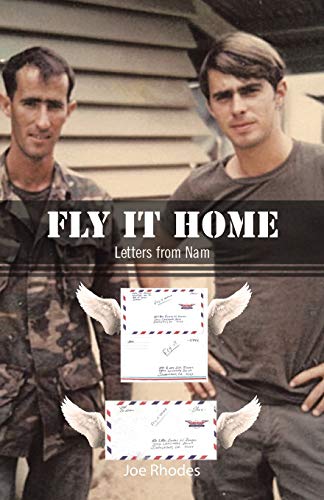
This book, Fly It Home, is a biographical compilation about the year that I spent in the war in Viet Nam. It is drawn from many letters that I wrote home to my family. My mother always saved the letters that her sons wrote home from their duty stations and when I was reading some of them a while back, I decided to put them in monthly order and write my thoughts about the letters. The letters that I wrote home usually were specific about what was happening at my duty station. Some were about visiting with my brother, some were about working in the hanger and some were about the weather or the South China Sea. Some were even about the food that we had or about the sorties that our helicopters flew. Many were written about what I was looking forward to when my tour was over. Then there was one that I wrote about the day that my brother left Viet Nam and the lonely feeling that I had upon his departure. I believe that was the day of my transformation from boy to man. I remain thankful that both my brother and I were able to serve our country for a year each in a war zone and returned back home unimpaired. Many served and came back home. Many served and came back home in a box. Fifty eight thousand of them. Please remember their family's sacrifice. Thank you.
Die Inhaltsangabe kann sich auf eine andere Ausgabe dieses Titels beziehen.
Auszug. © Genehmigter Nachdruck. Alle Rechte vorbehalten.
FLY IT HOME
Letters From Nam
By Joe RhodesTrafford Publishing
Copyright © 2014 Joe Rhodes
All rights reserved.
ISBN: 978-1-4907-3371-5All rights reserved.
CHAPTER 1
So How Did I Wind Up Here?
I was born in the Deep South. I had spent my entire life in North Louisiana, living sometimes in the city and sometimes in the country. I probably enjoyed the country more than the city because there are creeks to wade across, snakes to kill, cows to feed, and even oil well derricks to climb. There is, however, a lot to be said about indoor plumbing, like everybody had in the city. In the area of North Louisiana, strong Christian values are taught to children. The Golden Rule is to be adhered to at all times: help those who need help, give to those who are in need, just do the right thing. It's the way we were raised, and we were expected to stay that way. But then, the mid-sixties came, and things started changing. Big change! So there I was ... the youngest of seven sons, the baby brother, about to go away to college. This would be the first time that I was ever away from home for more than a week.
Then things started happening pretty fast; I moved seventy miles east of home to Ruston, Louisiana, enrolled in the Louisiana Polytechnic Institute, got a job at the Piggly Wiggly Grocery Store, secured a student loan from Ruston State Bank, pledged Kappa Sigma Fraternity (founded by General Robert E. Lee), learned how to fly small airplanes, and learned the operative definition of the phrase "party hearty." To borrow the title of one of Chuck Berry's songs, I was "Almost Grown." Or at least I tried to convince myself that I was almost grown.
I majored in Professional Aviation, which I keenly enjoyed, especially on the days that we got to fly. Ground School consisted of learning the principles of flight, FAA Rules and Regulations, meteorology, call signs, aviation terminology, rate of climb, angle of attack, carburetor heat, wing ice, stall speed, take-off speeds, landing speeds, short-field landing, downwind leg, final approach, as well as how to enter notes in the airplane logbook. Some of the things that the aviation student was required to know were quite interesting, while others were not quite so intriguing. Wing ice—what's that? Carburetor heat—why? Well, if one is flying at fifteen thousand feet, one's carburetor could freeze, and the wings could actually develop ice on the leading edge because it's a lot colder at fifteen thousand feet than at ground level. Meteorology was interesting. I was not aware that thunderstorms were so violent inside. There is absolutely no reason for one to fly directly into a cumulonimbus (thunderstorm) cloud. Those who have penetrated these types of clouds and lived to tell about it had stories of losing engines from the wings or even losing the wings from the fuselage of the aircraft. This turned out to be pretty deep stuff but very interesting to the student who desired to learn how to fly an airplane.
Flight school is another realm altogether. The student goes to the airport and gets a literal hands-on class about the airplane that he is about to learn to fly. In this class, you get to learn how to complete a preflight inspection of the aircraft. You get to do things like checking the propeller for any nicks or dings on the leading edge of the prop and checking the gas in the tank for any water accumulation by draining a small amount of gas from the wing tank and inspecting for any separation of gas and water. Sometimes, water vapor can accumulate in a sealed gas tank, and if so, the water will "pool" in the lowest part of the tank, which is where the check drain is located. The leading edges of the wings need to be checked for any dents. The flaps, ailerons, elevators, and rudders are moved by hand to be sure they are attached. The pitot tube, which powers the airspeed indicator in the cockpit, must be clear of debris because it operates on ram air. Then, if all is up to standard, unlock the chain that holds the plane in its parking spot, climb aboard with the instructor, and start her up! Next, radio the control tower, identify yourself and your airplane, ask for permission to take off and go to the end of the runway, rev your engine to check some gauges (while applying the brakes), and if everything checks out, put the throttle to the wall, release the brakes, and when the airspeed indicator is at takeoff speed, pull the yoke back gently, and you will become airborne. What a feeling! What a thrill! After you fly around for a couple of hours and get the "feel" of flight, the time comes to return to the airport and land your airplane on its shadow. Safely. Gently and safely. There is absolutely no need to stress the landing gear. After all, stressing the landing gear greatly stresses the instructor. And after eight to ten hours of learning how to handle the airplane with takeoff and landing and maneuvering, you get to perform your first solo flight. This is a milestone. This is a tremendous builder of confidence ... to know that you can board the machine, start it, take off, fly to "who knows where," and bring it back down safely to its shadow. Up until the point of my first solo flight, there was no greater thrill and confidence builder in my young life than that first solo.
So there I was, away from home, having a little spending money and access to one of my brothers' cars, in a fraternity, watching Terry Bradshaw quarterback our Bulldogs—yes, that Terry Bradshaw—learned how to drink beer, and, in short, discovered exactly how to, as some of my Cajun friends would say, "pass a good time." So started my college education, one that would be interrupted by a trip that would take me much further than seventy miles from home.
The world, however, kept spinning, and things other than what I primarily had an interest in kept spinning with it. Music of the sixties changed the ideas many people had and also the manner in which they expressed themselves. Politics also changed the outlook that people proclaimed. There was Woodstock, Janis Joplin, Jimi Hendrix, and many other artists who gave people ideas about how the world was changing. And it changed. Rowan and Martin's "Laugh In," was a stretch to watch in many of the homes in the Bible Belt. There were go-go dancers who were good at go-going. There was something called "free love." Being a son of the Heart of Dixie, I am not sure that I ever really learned exactly what that meant. And of course, "Make love, not war" was a popular proclamation. So within a year of my first solo flight of an airplane, the U.S. Army convinced me that in all actuality, we, in fact, needed to make more war and apparently less love. Thus came my introduction to the Army of the United States of America and my duty to serve the country that affords us the freedoms that I had grown up knowing were the best freedoms that the world had to offer. So after the Department of Defense reactivated the Draft Lottery, I took it upon myself to chat it up with an Armed Forces Recruiter. I talked to the Navy Recruiter first, but enlistments in the Navy were for four years, and I just didn't want to be away from my roots for that long. Then I met with the Army Recruiter, and he actually painted quite a nice picture that I considered to be beneficial to me and my country. Since my draft lottery number, which was based on birthdates, was forty-seven, I felt that I would be drafted within just a few months.
The expectations that my recruiter said were pretty standardized were: 1) I was eighteen years old, 2) I had some college time, and 3) I could fly an airplane. If I were to wait...
„Über diesen Titel“ kann sich auf eine andere Ausgabe dieses Titels beziehen.
Weitere beliebte Ausgaben desselben Titels

Suchergebnisse für Fly It Home: Letters from Nam

Foto des Verkäufers
Fly It Home
Anbieter: Rarewaves.com USA, London, LONDO, Vereinigtes Königreich
Verkäuferbewertung 5 von 5 Sternen

Paperback. Zustand: New. Bestandsnummer des Verkäufers LU-9781490733715
Neu kaufen
EUR 13,58
Versand gratis
Versand von Vereinigtes Königreich nach USA
Versand von Vereinigtes Königreich nach USA
Anzahl: Mehr als 20 verfügbar
Beispielbild für diese ISBN
Fly It Home
Print-on-DemandAnbieter: PBShop.store US, Wood Dale, IL, USA
Verkäuferbewertung 5 von 5 Sternen
PAP. Zustand: New. New Book. Shipped from UK. THIS BOOK IS PRINTED ON DEMAND. Established seller since 2000. Bestandsnummer des Verkäufers L0-9781490733715
Neu kaufen
EUR 13,59
Versand gratis
Versand innerhalb von USA
Versand innerhalb von USA
Anzahl: Mehr als 20 verfügbar
Beispielbild für diese ISBN
Fly It Home Letters from Nam
Print-on-DemandAnbieter: PBShop.store UK, Fairford, GLOS, Vereinigtes Königreich
Verkäuferbewertung 5 von 5 Sternen
PAP. Zustand: New. New Book. Delivered from our UK warehouse in 4 to 14 business days. THIS BOOK IS PRINTED ON DEMAND. Established seller since 2000. Bestandsnummer des Verkäufers L0-9781490733715
Neu kaufen
EUR 12,97
EUR 3,85 Versand
Versand von Vereinigtes Königreich nach USA
Versand von Vereinigtes Königreich nach USA
Anzahl: Mehr als 20 verfügbar
Beispielbild für diese ISBN
Fly It Home: Letters from Nam
Anbieter: Ria Christie Collections, Uxbridge, Vereinigtes Königreich
Verkäuferbewertung 5 von 5 Sternen
Zustand: New. In. Bestandsnummer des Verkäufers ria9781490733715_new
Neu kaufen
EUR 11,50
EUR 14,03 Versand
Versand von Vereinigtes Königreich nach USA
Versand von Vereinigtes Königreich nach USA
Anzahl: Mehr als 20 verfügbar
Beispielbild für diese ISBN
Fly It Home: Letters from Nam
Anbieter: Chiron Media, Wallingford, Vereinigtes Königreich
Verkäuferbewertung 5 von 5 Sternen
PF. Zustand: New. Bestandsnummer des Verkäufers 6666-IUK-9781490733715
Neu kaufen
EUR 8,68
EUR 18,14 Versand
Versand von Vereinigtes Königreich nach USA
Versand von Vereinigtes Königreich nach USA
Anzahl: 10 verfügbar
Beispielbild für diese ISBN
Fly It Home: Letters from Nam
Print-on-DemandAnbieter: THE SAINT BOOKSTORE, Southport, Vereinigtes Königreich
Verkäuferbewertung 5 von 5 Sternen
Paperback. Zustand: New. This item is printed on demand. New copy - Usually dispatched within 5-9 working days. Bestandsnummer des Verkäufers C9781490733715
Neu kaufen
EUR 13,89
EUR 14,43 Versand
Versand von Vereinigtes Königreich nach USA
Versand von Vereinigtes Königreich nach USA
Anzahl: Mehr als 20 verfügbar
Foto des Verkäufers
Fly It Home
Verlag:
Trafford Publishing, 2014
ISBN 10: 149073371X
ISBN 13: 9781490733715
Neu
Kartoniert / Broschiert
Anbieter: moluna, Greven, Deutschland
Verkäuferbewertung 5 von 5 Sternen
Kartoniert / Broschiert. Zustand: New. Dieser Artikel ist ein Print on Demand Artikel und wird nach Ihrer Bestellung fuer Sie gedruckt. KlappentextrnrnThis book, Fly It Home, is a biographical compilation about the year that I spent in the war in Viet Nam. It is drawn from many letters that I wrote home to my family. My mother always saved the letters that her sons wrote home . Bestandsnummer des Verkäufers 447932388
Neu kaufen
EUR 16,54
EUR 48,99 Versand
Versand von Deutschland nach USA
Versand von Deutschland nach USA
Anzahl: Mehr als 20 verfügbar
Foto des Verkäufers
Fly It Home | Letters from Nam
Print-on-DemandAnbieter: preigu, Osnabrück, Deutschland
Verkäuferbewertung 5 von 5 Sternen
Taschenbuch. Zustand: Neu. Fly It Home | Letters from Nam | Joe Rhodes | Taschenbuch | Kartoniert / Broschiert | Englisch | 2014 | Trafford Publishing | EAN 9781490733715 | Verantwortliche Person für die EU: Libri GmbH, Europaallee 1, 36244 Bad Hersfeld, gpsr[at]libri[dot]de | Anbieter: preigu Print on Demand. Bestandsnummer des Verkäufers 108802421
Neu kaufen
EUR 15,45
EUR 70,00 Versand
Versand von Deutschland nach USA
Versand von Deutschland nach USA
Anzahl: 5 verfügbar
Foto des Verkäufers
Fly It Home
Anbieter: Rarewaves.com UK, London, Vereinigtes Königreich
Verkäuferbewertung 5 von 5 Sternen
Paperback. Zustand: New. Bestandsnummer des Verkäufers LU-9781490733715
Neu kaufen
EUR 11,49
EUR 76,11 Versand
Versand von Vereinigtes Königreich nach USA
Versand von Vereinigtes Königreich nach USA
Anzahl: Mehr als 20 verfügbar