
Verwandte Artikel zu This Messy Magnificent Life: A Field Guide
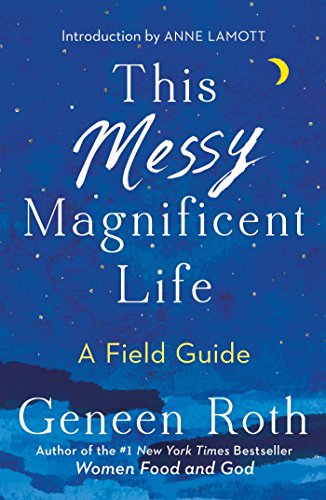
Inhaltsangabe
Inspiring, personal, and often spiritual reflections on how women can find peace, make wise choices, practice everyday joy, and step into their power from Geneen Roth—author of the #1 New York Times bestselling Women Food and God.
From the beginning, Geneen Roth was told she was too sensitive, too emotional, too curious, too demanding, too intense, and too big. Yet gaining and losing weight for decades did not improve her self-worth or reduce other people’s criticisms. Like most women who struggle with their weight, she believed that if she could resolve what seemed to be the source of her self-hatred—how and what she ate—she would be thin, happy, and free. That belief, she discovered, was false.
When her struggle with food ended—and didn’t change anything except the size of her thighs—she kept trying to fix other broken parts of herself with therapy, intensive meditation retreats, and rigorous spiritual practices. Yet it was only when Geneen stopped trying to change or fix herself—that she was at last able to feel at home in her mind, body, and life. Now, she shares the wisdom of giving up what Geneen calls "the Me Project," and finding the freedom, peace and power that await us just beyond it.
With humor, compassion, and insight, This Messy Magnificent Life explores the personal beliefs, hidden traumas, and social pressures that shape not just women’s feelings about their bodies, but also their confidence, choices, and relationships. This provocative, enchanting, and sometimes laugh-out-loud look at the imperfect path women take to step into their own power, presence, and ownership is based on the author’s personal journey and her decades of work with thousands of women around the country.
Roth embraces everyone’s unique and often unsung potential and shows us how to be open, curious, and kind with ourselves; how to say no to people and ideas that hold us back; how to let go of grudges and anxieties; how to pick ourselves up after setbacks; how to say a resounding yes to the world; how to move from fixing ourselves to finding ourselves; how to find joy in the ordinary; and how to experience the extraordinary right here and now in our bodies.
With a foreword by Anne Lamott, This Messy Magnificent Life is a compelling and often quirky look at what it means to be an imperfect but unapologetic woman living a (mostly) magnificent life.
Die Inhaltsangabe kann sich auf eine andere Ausgabe dieses Titels beziehen.
Über die Autorin bzw. den Autor
Geneen Roth is the author of ten books, including the New York Times bestsellers When Food Is Love, Lost and Found, and Women Food and God, as well as The Craggy Hole in My Heart and the Cat Who Fixed It. She has been speaking, teaching groundbreaking workshops, and offering retreats for over thirty years and has appeared on numerous national shows, including The Oprah Winfrey Show, 20/20, the Today show, Good Morning America, and The View. For more information about her work, please visit GeneenRoth.com
Auszug. © Genehmigter Nachdruck. Alle Rechte vorbehalten.
This Messy Magnificent Life
Attention is everything. Without it, all else is a temporary fix and no long-lasting change is possible.
CHAPTER ONE
Manna
Iam making a cup of tea in my favorite purple-flowered mug when I smell smoke. I look through the windows behind me and see plumes of smoke through the trees. I call the fire department and they tell me there is a fire down the road, that it’s not contained, and that we might have to evacuate our home. They’ll let me know. My husband, Matt, is away—he never seems to be around during the panoply of biblical California disasters (earthquakes, fires, mudslides)—so I will have to deal with this myself. My heart races. I feel panicked. But then I think, “This will be fine. Sometimes bad is good.” I remember a haiku by Zen teacher Masahide that I read just yesterday: Barn’s burnt down, now I can see the moon.
Since I have the luxury of time, I walk around the house looking at the things we’ve accumulated—my mother’s antique Bombay chest, doors from Bali, a cabinet from Japan. The photographs of Matt and me at our wedding, of my mother and me at my twin nephews’ bar mitzvahs last year. I put five framed pictures and three photo albums in a pile near the front door.
I walk into my closet and I look around, a bit dazed. All these clothes. The only time my father hinted that he knew he was dying was a few weeks after he was diagnosed with stage-four lymphoma, when we were walking past his closet. He said, “My clothes. What’s going to happen to all my clothes?” As if they had lives of their own and would miss his legs, his arms, his wrists, or had meaning beyond his insatiable hunger for things and his inability to understand the meaning of enough.
I look blankly at my shoes, my sweaters, my pants. If our house burns down and I am left with only the clothing I take now, what would I want? What can’t I live without? I finger an embroidered jacket, think about throwing it in my car, but then I realize I haven’t worn it in a year and although it was once my favorite piece of clothing, it isn’t now. I leave it hanging next to the black wool jacket with the short sleeves and the distressed gray corduroy jacket.
I call my neighbor Susan—whose husband is a volunteer firefighter—to find out if she knows anything more about the fire. “What fire?” she asks, voice rising. And then Susan begins to scream. “I’m in a wheelchair! I’m alone! I’ve just had back surgery! I can’t move!” I find myself thinking of the movie Sorry, Wrong Number, when the wheelchair-bound Barbara Stanwyck overhears a plan to commit a murder that turns out to be her own, but I keep this thought to myself. I tell Susan I will pick her up if we need to evacuate.
I move slowly, as if underwater. I put jewelry in a backpack—my wedding ring, my father’s Masonic ring that he wore until the day he died, my grandmother’s earrings, my mother’s enameled snake bracelet, my father’s first watch. I zip up the backpack, walk out to the car, and put the bag in the trunk. I can’t decide if I am numb or if I am enlightened because I’ve taken nothing else besides my purse, a computer, the stuffed toy pencil my first editor left me when she died, medicine, some underwear, the photograph albums, my favorite sweatshirt, our house insurance policy, our dog.
I call the sheriff’s office. They tell me they are going door-to-door and asking people to evacuate; it is not yet mandatory for our particular road, but soon may be. I decide to preempt the evacuation order, take the dog, call and pick up Susan, and leave, grateful that the flames I saw haven’t cut off my escape down our one-lane road. At least I am alive. I dial Matt’s number from the car and remember the call I placed to him on a Russian icebreaker in Antarctica a few years ago. (Hi honey, no one died, but Bernie Madoff’s been arrested and we’ve lost every cent of our money.)
As I drive I keep thinking about my jackets, my father, our stuff. About what enough actually is. Then, for some reason, I remember my college friend Linda. It was my senior year and I was a dinner guest at Linda’s mother’s house. Linda and I were bingeing buddies. She was the one who shared a gallon of Breyer’s vanilla fudge twirl ice cream with me, and mined for the chocolate veins with her fingers. The one who, when making a batch of Toll House chocolate chip cookies, used the entire recipe to bake two huge cookies. That way, she told me, we only eat one cookie apiece.
At her mother’s house, Linda was sitting at the head of the table, scooping out ice cream into delicate porcelain bowls with violets and geraniums painted on their lips. Each one was passed around the table until everyone but me had their dessert. I looked at Linda and said, “This one’s for me.” She nodded her head. “I get it,” she said, and proceeded to pile so much ice cream in the bowl that it began to drip down the red dahlias painted on the side of the bowl. The fact that I was already full from the dinner of fried oysters and gumbo didn’t factor into my desire for that ice cream, not for one second.
My motto was that if some was good, more had to be better. I was haunted by a wild hunger for something I couldn’t name, and while food didn’t fill it, having more of what I didn’t want was better than having nothing at all.
The word manna comes from the Hebrew word mah, which means “what,” or “what is it?” In Exodus the Torah says, “. . . in the morning there was a fall of dew about the camp. When the fall of dew lifted, there, over the surface of the wilderness, lay a fine and flaky substance, as fine as frost on the ground. When the Israelites saw it, they said to one another, ‘What is it?’—for they did not know what it was” (16:13–15). And, a few verses later, “. . . and so the House of Israel named it manna” (16:31). Each day, when they awoke and greeted the day, they would say “What is it?” for every day this manna was new, fresh, different from the day before. And no matter how much manna each person gathered, it was always exactly what that person needed—and although it tasted different to each person, it left each one satisfied and nourished. They couldn’t store manna, hang it in their closets, or put it in the refrigerator like leftover pizza. They couldn’t buy it, barter it, or use it against each other; there was only enough manna for that day. And no one had more than anyone else. But somehow, manna miraculously appeared each morning for forty years of wandering in the desert.
Man, oh man. From that perspective, refrigeration and closets sure messed things up. Because now we are wandering in the desert again, but this time, it’s the wilderness of too much. Of feeling perpetually discontent and hungry for more, even when our bellies and our houses are stuffed.
Halfway into an eating meditation at a retreat, a time when most people are no longer hungry, I ask people to put down their forks, take a breath, and stop eating. “Jesus,” I hear someone mutter, “just when I was getting going.”
I look around the room. Donna’s fork is in the air, ready...
„Über diesen Titel“ kann sich auf eine andere Ausgabe dieses Titels beziehen.
Suchergebnisse für This Messy Magnificent Life: A Field Guide

Beispielbild für diese ISBN
This Messy Magnificent Life: A Field Guide
Anbieter: World of Books (was SecondSale), Montgomery, IL, USA
Verkäuferbewertung 5 von 5 Sternen

Zustand: Very Good. Item in very good condition! Textbooks may not include supplemental items i.e. CDs, access codes etc. Bestandsnummer des Verkäufers 00100146758
Gebraucht kaufen
EUR 3,67
Versand gratis
Versand innerhalb von USA
Versand innerhalb von USA
Anzahl: 3 verfügbar
Beispielbild für diese ISBN
This Messy Magnificent Life: A Field Guide
Anbieter: World of Books (was SecondSale), Montgomery, IL, USA
Verkäuferbewertung 5 von 5 Sternen
Zustand: Acceptable. Item in acceptable condition! Textbooks may not include supplemental items i.e. CDs, access codes etc. Bestandsnummer des Verkäufers 00101189508
Gebraucht kaufen
EUR 3,67
Versand gratis
Versand innerhalb von USA
Versand innerhalb von USA
Anzahl: 2 verfügbar
Beispielbild für diese ISBN
This Messy Magnificent Life: A Field Guide
Anbieter: World of Books (was SecondSale), Montgomery, IL, USA
Verkäuferbewertung 5 von 5 Sternen
Zustand: Good. Item in good condition. Textbooks may not include supplemental items i.e. CDs, access codes etc. Bestandsnummer des Verkäufers 00062576811
Gebraucht kaufen
EUR 3,67
Versand gratis
Versand innerhalb von USA
Versand innerhalb von USA
Anzahl: 11 verfügbar
Beispielbild für diese ISBN
This Messy Magnificent Life: A Field Guide
Anbieter: Orion Tech, Kingwood, TX, USA
Verkäuferbewertung 5 von 5 Sternen
hardcover. Zustand: Good. Bestandsnummer des Verkäufers 1501182463-3-29910630
Gebraucht kaufen
EUR 3,68
Versand gratis
Versand innerhalb von USA
Versand innerhalb von USA
Anzahl: 1 verfügbar
Foto des Verkäufers
This Messy Magnificent Life: A Field Guide
Anbieter: Zoom Books East, Glendale Heights, IL, USA
Verkäuferbewertung 5 von 5 Sternen
Zustand: very_good. Book is in very good condition and may include minimal underlining highlighting. The book can also include "From the library of" labels. May not contain miscellaneous items toys, dvds, etc. . We offer 100% money back guarantee and 24 7 customer service. Bestandsnummer des Verkäufers ZEV.1501182463.VG
Gebraucht kaufen
EUR 4,00
Versand gratis
Versand innerhalb von USA
Versand innerhalb von USA
Anzahl: 2 verfügbar
Beispielbild für diese ISBN
This Messy Magnificent Life: A Field Guide
Verlag:
Scribner (edition First Edition), 2018
ISBN 10: 1501182463
ISBN 13: 9781501182464
Gebraucht
Hardcover
Erstausgabe
Anbieter: BooksRun, Philadelphia, PA, USA
Verkäuferbewertung 5 von 5 Sternen
Hardcover. Zustand: Very Good. First Edition. It's a well-cared-for item that has seen limited use. The item may show minor signs of wear. All the text is legible, with all pages included. It may have slight markings and/or highlighting. Bestandsnummer des Verkäufers 1501182463-11-1
Gebraucht kaufen
EUR 4,84
Versand gratis
Versand innerhalb von USA
Versand innerhalb von USA
Anzahl: 1 verfügbar
Foto des Verkäufers
This Messy Magnificent Life: A Field Guide
Anbieter: Greenworld Books, Arlington, TX, USA
Verkäuferbewertung 5 von 5 Sternen
Zustand: very_good. Fast Free Shipping â" Very Good condition book with a firm cover and clean pages. Shows normal use and some light wear or limited notes markings. A solid, nice copy to enjoy. Bestandsnummer des Verkäufers GWV.1501182463.VG
Gebraucht kaufen
EUR 4,85
Versand gratis
Versand innerhalb von USA
Versand innerhalb von USA
Anzahl: 3 verfügbar
Foto des Verkäufers
This Messy Magnificent Life: A Field Guide
Anbieter: ZBK Books, Carlstadt, NJ, USA
Verkäuferbewertung 5 von 5 Sternen
Zustand: very_good. Fast & Free Shipping â" Very Good condition book with a firm cover and clean pages. Shows normal use and some light wear or limited notes markings. A solid, nice copy to enjoy. Bestandsnummer des Verkäufers ZWV.1501182463.VG
Gebraucht kaufen
EUR 4,85
Versand gratis
Versand innerhalb von USA
Versand innerhalb von USA
Anzahl: 2 verfügbar
Beispielbild für diese ISBN
This Messy Magnificent Life: A Field Guide
Anbieter: World of Books Inc, Montgomery, IL, USA
Verkäuferbewertung 4 von 5 Sternen

Hardback. Zustand: Fair. Inspiring, personal, and often spiritual reflections on how women can find peace, make wise choices, practice everyday joy, and step into their power from Geneen Roth?author of the #1 New York Times bestselling Women Food and God.From the beginning, Geneen Roth was told she was too sensitive, too emotional, too curious, too demanding, too intense, and too big. Yet gaining and losing weight for decades did not improve her self-worth or reduce other people?s criticisms. Like most women who struggle with their weight, she believed that if she could resolve what seemed to be the source of her self-hatred?how and what she ate?she would be thin, happy, and free. That belief, she discovered, was false. When her struggle with food ended?and didn?t change anything except the size of her thighs?she kept trying to fix other broken parts of herself with therapy, intensive meditation retreats, and rigorous spiritual practices. Yet it was only when Geneen stopped trying to change or fix herself?that she was at last able to feel at home in her mind, body, and life. Now, she shares the wisdom of giving up what Geneen calls "the Me Project," and finding the freedom, peace and power that await us just beyond it. With humor, compassion, and insight, This Messy Magnificent Life explores the personal beliefs, hidden traumas, and social pressures that shape not just women?s feelings about their bodies, but also their confidence, choices, and relationships. This provocative, enchanting, and sometimes laugh-out-loud look at the imperfect path women take to step into their own power, presence, and ownership is based on the author?s personal journey and her decades of work with thousands of women around the country. Roth embraces everyone?s unique and often unsung potential and shows us how to be open, curious, and kind with ourselves; how to say no to people and ideas that hold us back; how to let go of grudges and anxieties; how to pick ourselves up after setbacks; how to say a resounding yes to the world; how to move from fixing ourselves to finding ourselves; how to find joy in the ordinary; and how to experience the extraordinary right here and now in our bodies. With a foreword by Anne Lamott, This Messy Magnificent Life is a compelling and often quirky look at what it means to be an imperfect but unapologetic woman living a (mostly) magnificent life. Bestandsnummer des Verkäufers CIN1501182463A
Gebraucht kaufen
EUR 5,48
Versand gratis
Versand innerhalb von USA
Versand innerhalb von USA
Anzahl: 2 verfügbar
Beispielbild für diese ISBN
This Messy Magnificent Life: A Field Guide
Anbieter: World of Books Inc, Montgomery, IL, USA
Verkäuferbewertung 4 von 5 Sternen
Hardback. Zustand: Very Good. Inspiring, personal, and often spiritual reflections on how women can find peace, make wise choices, practice everyday joy, and step into their power from Geneen Roth?author of the #1 New York Times bestselling Women Food and God.From the beginning, Geneen Roth was told she was too sensitive, too emotional, too curious, too demanding, too intense, and too big. Yet gaining and losing weight for decades did not improve her self-worth or reduce other people?s criticisms. Like most women who struggle with their weight, she believed that if she could resolve what seemed to be the source of her self-hatred?how and what she ate?she would be thin, happy, and free. That belief, she discovered, was false. When her struggle with food ended?and didn?t change anything except the size of her thighs?she kept trying to fix other broken parts of herself with therapy, intensive meditation retreats, and rigorous spiritual practices. Yet it was only when Geneen stopped trying to change or fix herself?that she was at last able to feel at home in her mind, body, and life. Now, she shares the wisdom of giving up what Geneen calls "the Me Project," and finding the freedom, peace and power that await us just beyond it. With humor, compassion, and insight, This Messy Magnificent Life explores the personal beliefs, hidden traumas, and social pressures that shape not just women?s feelings about their bodies, but also their confidence, choices, and relationships. This provocative, enchanting, and sometimes laugh-out-loud look at the imperfect path women take to step into their own power, presence, and ownership is based on the author?s personal journey and her decades of work with thousands of women around the country. Roth embraces everyone?s unique and often unsung potential and shows us how to be open, curious, and kind with ourselves; how to say no to people and ideas that hold us back; how to let go of grudges and anxieties; how to pick ourselves up after setbacks; how to say a resounding yes to the world; how to move from fixing ourselves to finding ourselves; how to find joy in the ordinary; and how to experience the extraordinary right here and now in our bodies. With a foreword by Anne Lamott, This Messy Magnificent Life is a compelling and often quirky look at what it means to be an imperfect but unapologetic woman living a (mostly) magnificent life. Bestandsnummer des Verkäufers CIN1501182463VG
Gebraucht kaufen
EUR 5,48
Versand gratis
Versand innerhalb von USA
Versand innerhalb von USA
Anzahl: 3 verfügbar