
Verwandte Artikel zu Last Ship from Rangoon: A Tale of the Courageous Survivors...
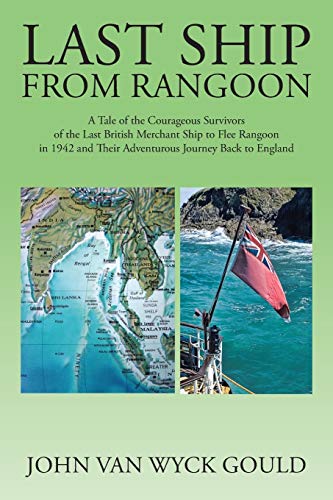
Last Ship from Rangoon: A Tale of the Courageous Survivors of the Last British Merchant Ship to Flee Rangoon in 1942 and Their Adventurous Journey Back to England - Softcover
Inhaltsangabe
On March 7, 1942, in the midst of Wwii, a British merchant ship fled Burma (now Myanmar) only minutes ahead of the invading Japanese army. This vessel, the last ship from Rangoon, acts as the starting point for an engrossing account of escape, suspense, hope and courage. In this period largely undocumented by American literature, fear and desperation invade the lives of British Merchant seamen as violence threatens their welfare, their ships, and their livelihoods. Last Ship from Rangoon recounts a harrowing tale of 132 seamen's arduous efforts to return to England; imprisoned by the Senegalese, these men must flee from an inescapable French prison and hack their way through dense jungle toward the English colony of Gambia. Based upon the story of a retired British Merchant Marine seaman, whom he met whilst traveling in South East Asia, John Van Wyck Gould has crafted a tale of adventure, courage, hardship, and survival.
Die Inhaltsangabe kann sich auf eine andere Ausgabe dieses Titels beziehen.
Auszug. © Genehmigter Nachdruck. Alle Rechte vorbehalten.
Last Ship from Rangoon
A Tale of the Courageous Survivors of the Last British Merchant Ship to Flee Rangoon in 1942 and Their Adventurous Journey Back to England
By John Van Wyck GouldAuthorHouse
Copyright © 2015 John Van Wyck Gould
All rights reserved.
ISBN: 978-1-5049-2130-5All rights reserved.
CHAPTER 1
Rangoon
March 7, 1942
The radio crackled. "All ships ... Rangoon ... evacuate ... repeat ... all ... Rangoon ... immediately ... Japs advancing ... Repeat ... evac ..." The weak, intermittent radio transmissions coming from Calcutta, laced with blather about General Alexander's heroic retreat to India, consisted mostly of static, but the message was clear enough — get out NOW.
"Idiots," Captain Crooks growled. "We know all that. The bloody idiots are a week late with their goddamn advice."
Frantically loading its shipment of critical war material (tin ore and teak), Her Majesty's Merchant Ship, H.M.S. Stafford, rubbed gently against the pier in the suffocating heat — the last English ship in Rangoon. All the others had pulled out, including the last naval vessel, a corvette, the Shetland.
The day before, the Captain of the Shetland had scolded Crooks, "You're on your own now, Stafford. We can't give you any protection if you insist on sticking it out."
"We have orders," Crooks had snapped, "direct from The War Office, orders to bring back this bloody shipment of tin ore at all costs. It's supposed to be a vital alloy for some damn thing. I hope they know what the hell they're talking about, because the `all costs' they're yapping about may be our hides."
"Well, good luck, old chap. I don't envy you."
Now Crooks scanned the deserted pier and scowled at First Mate Griggs. "Do you hear that? Sounds like rifle fire."
Before Griggs could answer, Petty Officer Carter tore open the wheelhouse door and shouted, "Captain, the Japs are coming. I can see 'em on the far end of the pier."
Crooks ran out onto the wing. "My God, you're right. Sound the alarm."
He ran back into the cabin, grabbed the intercom mike and yelled into it, "Abort loading. All hands on board — on the double!"
The loading crew, which included Ensign Jeremy Wheatley and Second Mate Bradford, dropped the sling-load of cargo bins onto the pier. A bullet thunked into the side of the ship narrowly missing Jerry, and scattered shots began peppering the superstructure. The men ran up the gangplank like frightened mice and Carter immediately activated the winch to retract the plank even as the men were still on it.
"Griggs, Wheatley," Captain shouted. "Man the Bofors guns NOW."
Anticipating the order, Griggs had already started tearing off the canvas cover, while Ensign Wheatley grabbed a rack of ammo. In a matter of seconds, Wheatley had the twenty-millimeter Bofors bow gun loaded and cocked. He swung it around and fired a burst at a squad of Japanese troops advancing down the dock. A cloud of splinters from the wooden dock engulfed the men and the rifle fire stopped momentarily. When it started again, another burst from the Bofors put another temporary stop to the ship's advance.
Crooks shouted, "Cut the lines NOW."
The well-trained crew responded instantly while Crooks shoved the throttle to full power and shouted orders to the engine room. "MAX POWER!"
"Keep on 'em, Wheatley," the Captain yelled into the mike. "Carter, check on the crew. Tell 'em to keep their heads down."
The propellers thrashed the water, and Crooks turned the ship hard away from the dock though it seemed like an eternity before a few yards of water opened up.
Ensign Wheatley gave the Japs one last burst from the Bofors. "Cap," he yelled up to the bridge, "I can't bear on 'em any more without putting a hole in our bulkhead."
Busy with a rifle, the Captain ignored Wheatley. "Griggs, Bradford. Grab a rifle. We'll do what we can."
The Japanese fire resumed, while the three officers lay flat on the deck and fired back with rifles, neither side doing any real damage. When the ship slowly picked up speed and pulled out of range, the firing gradually petered out. Crooks asked Griggs for a damage assessment, and then turned to Ensign Wheatley. With a scowl that would frighten a tiger, he bellowed, "Now, Wheatley, what the hell is this I hear about you bringing a woman on board?"
"Sir, I can ex —"
"What in the goddamn blue blazes do you think you're doing? I should have you court-martialed or better yet, have you thrown over the side."
"Well, sir. If you'll let me explain, sir, I ... It's a long story, sir."
A long story, indeed.
CHAPTER 2London
One Month Earlier - February 7, 1942
Jeremy Wheatley III slouched in an oversized leather chair, staring at Jeremy Wheatley II, his father. He restrained a yawn. "I've heard this lecture a hundred times," he muttered to himself. "The family history is a terrible bore, and what the devil does it have to do with me, anyway? I'd rather make my own history."
In 1882, his grandfather, Major Jeremy Wheatley, had fought in the Third Anglo-Burmese War. His regiment had succeeded in capturing Mandalay, annihilating several hundred Burmese, who had put up a short fight with lances and a few rusty muskets against the British cannons and modern rifles. As a reward, he had been knighted, becoming Sir Jeremy Wheatley, and was granted rights to two thousand hectares of Burmese land "by appointment to the Queen." It turned out that the land near Mandalay on the Irrawaddy River contained some of the finest teak timber in the world. Worth a fortune, the teak soon made the Wheatley family exceedingly wealthy.
At this moment, however, Jeremy III, who preferred to be called Jerry, was mistaken. His father had a different lecture in mind. The elder statesman of the family cleared his throat and paced the floor, his hands clasped behind his back. His flabby, florid features and neatly trimmed mustache twitched.
"Son, the time has come to discuss your future, time for you to assume certain family responsibilities. You will turn eighteen tomorrow, and you will be called up to fight. Of course, you are fully aware of that, but the question is: what kind of fighting?"
Standing in front of the fireplace, he cleared his throat again and fixed a stern gaze on his son. Jeremy III remained silent, and studied the stuffed tiger head over the fireplace and the leather-bound books lining the walls, which he suspected had never been read.
"As our only son and heir," Jeremy II continued, "you are, of course, the object of concern on our part — that you survive this damnable war to carry on the family name and tradition. You are no doubt aware that I have some powerful friends in the War Office and can arrange something suitable. In fact, I have —"
Jerry interrupted, "No, father, I don't want any special favors. I plan to join the RAF where I'm really needed and —"
"Don't interrupt me, son. I haven't finished. If you want to get yourself killed, you can do it in a way that is more important than the RAF. Besides, they have far too many volunteers and not enough airplanes. "You may request the RAF, but you'll end up in the infantry where they are sending everyone your age now. So be quiet and listen."
"Yes, father," Jerry answered in a slightly condescending voice.
"This war is becoming a frightful bother. Making a bloody mess of London, isn't it? Not much we can do about it, is there? But right now, son, I want to talk about Burma. As you know, the Wheatley...
„Über diesen Titel“ kann sich auf eine andere Ausgabe dieses Titels beziehen.
Suchergebnisse für Last Ship from Rangoon: A Tale of the Courageous Survivors...

Beispielbild für diese ISBN
Last Ship from Rangoon
Print-on-DemandAnbieter: PBShop.store US, Wood Dale, IL, USA
Verkäuferbewertung 5 von 5 Sternen

PAP. Zustand: New. New Book. Shipped from UK. THIS BOOK IS PRINTED ON DEMAND. Established seller since 2000. Bestandsnummer des Verkäufers L0-9781504921305
Neu kaufen
EUR 21,29
Versand gratis
Versand innerhalb von USA
Versand innerhalb von USA
Anzahl: Mehr als 20 verfügbar
Beispielbild für diese ISBN
Last Ship from Rangoon: A Tale of the Courageous Survivors of the Last British Merchant Ship to Flee Rangoon in 1942 and Their Adventurous Journey Back to England
Anbieter: California Books, Miami, FL, USA
Verkäuferbewertung 5 von 5 Sternen
Zustand: New. Bestandsnummer des Verkäufers I-9781504921305
Neu kaufen
EUR 21,80
Versand gratis
Versand innerhalb von USA
Versand innerhalb von USA
Anzahl: Mehr als 20 verfügbar
Beispielbild für diese ISBN
Last Ship from Rangoon A Tale of the Courageous Survivors of the Last British Merchant Ship to Flee Rangoon in 1942 and Their Adventurous Journey Back to England
Print-on-DemandAnbieter: PBShop.store UK, Fairford, GLOS, Vereinigtes Königreich
Verkäuferbewertung 5 von 5 Sternen
PAP. Zustand: New. New Book. Delivered from our UK warehouse in 4 to 14 business days. THIS BOOK IS PRINTED ON DEMAND. Established seller since 2000. Bestandsnummer des Verkäufers L0-9781504921305
Neu kaufen
EUR 19,20
EUR 4,85 Versand
Versand von Vereinigtes Königreich nach USA
Versand von Vereinigtes Königreich nach USA
Anzahl: Mehr als 20 verfügbar
Beispielbild für diese ISBN
Last Ship from Rangoon: A Tale of the Courageous Survivors of the Last British Merchant Ship to Flee Rangoon in 1942 and Their Adventurous Journey Back to England
Anbieter: Ria Christie Collections, Uxbridge, Vereinigtes Königreich
Verkäuferbewertung 5 von 5 Sternen
Zustand: New. In English. Bestandsnummer des Verkäufers ria9781504921305_new
Neu kaufen
EUR 21,30
EUR 10,93 Versand
Versand von Vereinigtes Königreich nach USA
Versand von Vereinigtes Königreich nach USA
Anzahl: Mehr als 20 verfügbar
Beispielbild für diese ISBN
Last Ship from Rangoon: A Tale of the Courageous Survivors of the Last British Merchant Ship to Flee Rangoon in 1942 and Their Adventurous Journey Back to England
Anbieter: Chiron Media, Wallingford, Vereinigtes Königreich
Verkäuferbewertung 5 von 5 Sternen
Paperback. Zustand: New. Bestandsnummer des Verkäufers 6666-IUK-9781504921305
Neu kaufen
EUR 14,66
EUR 18,07 Versand
Versand von Vereinigtes Königreich nach USA
Versand von Vereinigtes Königreich nach USA
Anzahl: 10 verfügbar
Beispielbild für diese ISBN
Last Ship from Rangoon: A Tale of the Courageous Survivors of the Last British Merchant Ship to Flee Rangoon in 1942 and Their Adventurous Journey Back to England
Print-on-DemandAnbieter: THE SAINT BOOKSTORE, Southport, Vereinigtes Königreich
Verkäuferbewertung 5 von 5 Sternen
Paperback. Zustand: New. This item is printed on demand. New copy - Usually dispatched within 5-9 working days. Bestandsnummer des Verkäufers C9781504921305
Neu kaufen
EUR 20,68
EUR 15,61 Versand
Versand von Vereinigtes Königreich nach USA
Versand von Vereinigtes Königreich nach USA
Anzahl: Mehr als 20 verfügbar
Foto des Verkäufers
Last Ship from Rangoon
Print-on-DemandAnbieter: moluna, Greven, Deutschland
Verkäuferbewertung 5 von 5 Sternen
Zustand: New. Dieser Artikel ist ein Print on Demand Artikel und wird nach Ihrer Bestellung fuer Sie gedruckt. KlappentextrnrnOn March 7, 1942, in the midst of WWII, a British merchant ship fled Burma (now Myanmar) only minutes ahead of the invading Japanese army. This vessel, the last ship from Rangoon, acts as the starting point for an engrossing accou. Bestandsnummer des Verkäufers 447987598
Neu kaufen
EUR 24,53
EUR 48,99 Versand
Versand von Deutschland nach USA
Versand von Deutschland nach USA
Anzahl: Mehr als 20 verfügbar
Foto des Verkäufers
Last Ship from Rangoon | A Tale of the Courageous Survivors of the Last British Merchant Ship to Flee Rangoon in 1942 and Their Adventurous Journey Back to England
Print-on-DemandAnbieter: preigu, Osnabrück, Deutschland
Verkäuferbewertung 5 von 5 Sternen
Taschenbuch. Zustand: Neu. Last Ship from Rangoon | A Tale of the Courageous Survivors of the Last British Merchant Ship to Flee Rangoon in 1942 and Their Adventurous Journey Back to England | John Van Wyck Gould | Taschenbuch | Kartoniert / Broschiert | Englisch | 2015 | AuthorHouse | EAN 9781504921305 | Verantwortliche Person für die EU: Libri GmbH, Europaallee 1, 36244 Bad Hersfeld, gpsr[at]libri[dot]de | Anbieter: preigu Print on Demand. Bestandsnummer des Verkäufers 104288412
Neu kaufen
EUR 24,65
EUR 70,00 Versand
Versand von Deutschland nach USA
Versand von Deutschland nach USA
Anzahl: 5 verfügbar