
Verwandte Artikel zu The Long-Distance Leader: Rules for Remarkable Remote...
Inhaltsangabe
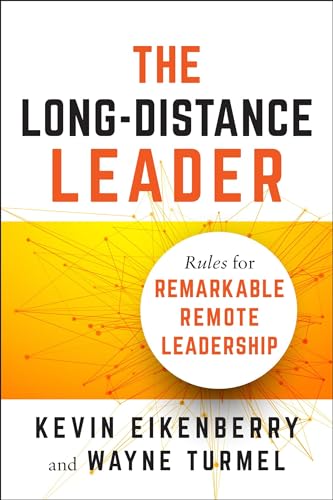
Leadership First, Locations Second. As more organizations adopt a remote workforce, the challenges of leading at a distance become more urgent than ever. The cofounders of the Remote Leadership Institute, Kevin Eikenberry and Wayne Turmel, show leaders how to guide their teams by recalling the foundational principles of leadership whether their teams are scattered globally or just working from home a few days a week.
The authors' "Three-O" Model refocuses leaders to think about outcomes, others, and ourselves--elements of leadership that remain unchanged, whether employees are down the hall or halfway around the world. By pairing it with the Remote Leadership Model, which emphasizes using technology as a tool and not a distraction, leaders can navigate the terrain of managing teams wherever they are. Filled with exercises that ensure projects stay on track, keep productivity and morale high, and build lasting relationships, this bookis the go-to guide for leading effectively, no matter where people work.
Die Inhaltsangabe kann sich auf eine andere Ausgabe dieses Titels beziehen.
Über die Autorin bzw. den Autor
Kevin Eikenberry is founder and chief potential officer of the Kevin Eikenberry Group. He's been named one of Inc.com's Top 100 Leadership and Management Experts in the World and is the author of several books, including Remarkable Leadership.
Wayne Turmel is the cofounder of the Remote Leadership Institute and the author of many books, including the Association for Talent Development's 10 Steps to Successful Virtual Presentations.
Auszug. © Genehmigter Nachdruck. Alle Rechte vorbehalten.
The Long-Distance Leader
Rules for Remarkable Remote Leadership
By Kevin Eikenberry, Wayne Turmel, First EditionBerrett-Koehler Publishers, Inc.
Copyright © 2018 The Kevin Eikenberry Group
All rights reserved.
ISBN: 978-1-5230-9461-5All rights reserved.
Contents
Rules for Remarkable Remote Leadership vii,
Introduction 1,
Section One Getting Started,
Chapter 1 What We've Learned about Long-Distance Leaders, 9,
Chapter 2 How We Got to Long-Distance Leadership, 17,
Chapter 3 What It Means to Lead at a Distance, 23,
Section Two Models That Matter,
Chapter 4 The Remote Leadership Model, 37,
Chapter 5 The Three O Model of Leadership, 43,
Section Three Achieving Outcomes at a Distance,
Section Three Introduction, 59,
Chapter 6 Types of Outcomes, 65,
Chapter 7 Setting (and Achieving) Goals at a Distance, 73,
Chapter 8 Coaching and Feedback at a Distance, 85,
Section Three Summary, 103,
Section Four Engaging Others,
Section Four Introduction, 107,
Chapter 9 The "Golden Suggestion" for Working with Others, 109,
Chapter 10 Understanding Politics without "Playing Politics", 115,
Chapter 11 Understanding and Building Trust at a Distance, 121,
Chapter 12 Choosing the Right Communication Tools, 129,
Chapter 13 Technology Tips for the Long-Distance Leader, 135,
Section Four Summary, 148,
Section Five Understanding Ourselves,
Section Five Introduction, 151,
Chapter 14 Getting Honest Feedback, 153,
Chapter 15 Your Beliefs and Self-Talk, 161,
Chapter 16 Setting Reasonable Boundaries, 165,
Chapter 17 Setting Personal Priorities, 171,
Section Five Summary, 175,
Section Six Developing Long-Distance Leaders,
Chapter 18 Questions to Ask about Developing Long-Distance Leaders, 179,
Epilogue Before We Go, 189,
Notes, 192,
Suggested Reading, 196,
Acknowledgments, 198,
Index, 200,
About the Authors, 209,
About Our Services, 211,
CHAPTER 1
What We've Learned about Long-Distance Leaders
Rule 1: Think about leadership first, location second.
You cannot manage men into battle. You manage things; you lead people.
— Admiral Grace Hopper
Eric is a solid manager and has had a traditional team in place for five years. Lately, he's been dealing with people working from home several days a week. On the surface everything's fine, but as he told us, he spends too much time worrying about what he doesn't know, or what might be happening, rather than the work itself. He second-guesses himself more than ever and feels less confident in his decisions. As he said, "So far so good, but for how long?" There are a lot of people like Eric.
If you're reading this, you agree with us that doing "okay" or "not terrible" isn't nearly good enough. Leadership is aspirational; no one who picked up this book wants to be merely average or normal. You want to be an excellent leader and, if possible, to achieve that with far less stress than you're experiencing now.
When we started looking at the day-to-day challenges faced by Long-Distance Leaders, we had a pretty good idea of what we'd find — after all, we've worked with dozens of organizations and thousands of people over the last few years. Still, we wanted to quantify what's happening in the world and check our assumptions with measurable data. That led to our Remote Leadership Survey.
In 2017, we conducted a voluntary survey of more than 225 managers who have at least part of their team working remotely. Admittedly, this is a small sample size, but the results bear out what we're hearing every day. If we were looking for shocking results or data that came out of left field, we didn't find it.
What we did discover is that the challenges for remote leaders very closely mirror those for managers in any situation, and that the majority of leaders report that things are ... okay. Not perfect — things could always be better — but certainly not the-place-is-about-to-collapse awful either. There are also signs that as part-time teleworking increases and more companies change to a remote labor force, the cracks we did find will only grow.
The survey highlights challenges that arise because of the distance between people and the use of technology to bridge those gaps. As you'll see in a moment, that makes perfect sense, and it confirms that what we are experiencing with our clients isn't unusual. The data points out what needs to be done to prepare leaders for a new way to work and to help develop the skills required to do the job well.
Here is what we learned.
Demographics
* The managers crossed every possible industry and discipline. Government and sales accounted for 11 to 12 percent each, and even with seven categories, 46 percent of respondents were "other." This is an important point — leading remotely is a fact of life not limited to specific industries or disciplines.
* The size of teams is changing. Of the respondents surveyed, more than half had teams of ten people or more, 25 percent led two to five people, and 21 percent led six to ten people (figure 2). This is slightly more than the average of direct reports under the same roof and may indicate a new trend toward broader spans of control, which only exacerbates the challenges of leading remotely.
* "Remote teams" doesn't mean everyone's working elsewhere. We often think of remote teams as either wholly remote (everyone is scattered to the winds) or co-located. In fact, over 70 percent of leaders said they had a "hybrid" team, with a 50-50 split between teams with full-time and part-time remote employees. The other 30 percent had a completely or mostly remote team (figure 3). This is by far the fastest growing segment of the workforce. Failure to address this now means more stress down the road.
* Other demographic data. Respondents were 60 percent male, 40 percent female, and they were an experienced bunch: 34 percent were aged forty to forty-nine and 37 percent were fifty to fifty-nine. A surprising 19 percent were over sixty. This makes sense since 78 percent of them had been managers for eight years or more. This confirms an important point: time as a leader doesn't seem to make the transition to long-distance leadership any easier.
What's Going On out There?
We reached a group of experienced managers, across multiple industries. Yet when we asked, "How's it going?" the answers were strangely in accord. Here are some examples:
* Over half say they "get the job done," and an additional 28 percent say their team is "highly productive."
* When asked, "Where do the productivity challenges lie?" 10 percent say the problems are with remote members, 4 percent say they are with the "home team," and 69 percent say there's no pattern to it or it's hard to identify the roots of the problems.
* Trust runs a little below productivity, and while most managers say the level of trust is okay (both between themselves and individuals, and between the various members of the team), there are more problems reported here than anywhere else on the survey. The largest part of our respondents say that trust levels aren't awful, but it's a gap worth working on.
The Biggest Worries
Finally, we asked specific questions about challenges these leaders face. We presented four common questions remote leaders often ask themselves and The feedback we received is shown in...
„Über diesen Titel“ kann sich auf eine andere Ausgabe dieses Titels beziehen.
Suchergebnisse für The Long-Distance Leader: Rules for Remarkable Remote...

Beispielbild für diese ISBN
The LongDistance Leader Rules
Verlag:
Berrett-Koehler Publishers, 2018
ISBN 10: 1523094613
ISBN 13: 9781523094615
Gebraucht
Softcover
Anbieter: World of Books (was SecondSale), Montgomery, IL, USA
Verkäuferbewertung 5 von 5 Sternen

Zustand: Very Good. Item in very good condition! Textbooks may not include supplemental items i.e. CDs, access codes etc. Bestandsnummer des Verkäufers 00090085572
Gebraucht kaufen
EUR 3,66
Versand gratis
Versand innerhalb von USA
Versand innerhalb von USA
Anzahl: 11 verfügbar
Beispielbild für diese ISBN
The LongDistance Leader Rules
Verlag:
Berrett-Koehler Publishers, 2018
ISBN 10: 1523094613
ISBN 13: 9781523094615
Gebraucht
Softcover
Anbieter: World of Books (was SecondSale), Montgomery, IL, USA
Verkäuferbewertung 5 von 5 Sternen
Zustand: Good. Item in good condition. Textbooks may not include supplemental items i.e. CDs, access codes etc. Bestandsnummer des Verkäufers 00098314872
Gebraucht kaufen
EUR 3,66
Versand gratis
Versand innerhalb von USA
Versand innerhalb von USA
Anzahl: 5 verfügbar
Beispielbild für diese ISBN
The Long-Distance Leader: Rules for Remarkable Remote Leadership
Verlag:
Berrett-Koehler Publishers, 2018
ISBN 10: 1523094613
ISBN 13: 9781523094615
Gebraucht
paperback
Anbieter: Gulf Coast Books, Cypress, TX, USA
Verkäuferbewertung 5 von 5 Sternen
paperback. Zustand: Good. Bestandsnummer des Verkäufers 1523094613-3-37101577
Gebraucht kaufen
EUR 3,67
Versand gratis
Versand innerhalb von USA
Versand innerhalb von USA
Anzahl: 1 verfügbar
Beispielbild für diese ISBN
The Long-Distance Leader: Rules for Remarkable Remote Leadership
Verlag:
Berrett-Koehler Publishers, 2018
ISBN 10: 1523094613
ISBN 13: 9781523094615
Gebraucht
Softcover
Anbieter: Indiana Book Company, Marion, IN, USA
Verkäuferbewertung 5 von 5 Sternen
Zustand: Acceptable. Book has minor liquid or water damage on pages. Ships same or next business day with delivery confirmation. Acceptable condition. Contains highlighting. Expedited shipping available. Bestandsnummer des Verkäufers 1000008063319-779
Gebraucht kaufen
EUR 1,36
EUR 2,86 Versand
Versand innerhalb von USA
Versand innerhalb von USA
Anzahl: 1 verfügbar
Beispielbild für diese ISBN
The Long-Distance Leader: Rules for Remarkable Remote Leadership
Verlag:
Berrett-Koehler Publishers, 2018
ISBN 10: 1523094613
ISBN 13: 9781523094615
Gebraucht
Softcover
Anbieter: Indiana Book Company, Marion, IN, USA
Verkäuferbewertung 5 von 5 Sternen
Zustand: Good. Ships same or next business day with delivery confirmation. Good condition. May or may not contain highlighting. Expedited shipping available. Bestandsnummer des Verkäufers 1000008908612-859
Gebraucht kaufen
EUR 1,36
EUR 2,86 Versand
Versand innerhalb von USA
Versand innerhalb von USA
Anzahl: 6 verfügbar
Foto des Verkäufers
The Long-Distance Leader: Rules for Remarkable Remote Leadership
Verlag:
Berrett-Koehler Publishers, 2018
ISBN 10: 1523094613
ISBN 13: 9781523094615
Gebraucht
Softcover
Anbieter: Greenworld Books, Arlington, TX, USA
Verkäuferbewertung 5 von 5 Sternen
Zustand: very_good. Fast Free Shipping â" Very Good condition book with a firm cover and clean pages. Shows normal use and some light wear or limited notes markings. A solid, nice copy to enjoy. Bestandsnummer des Verkäufers GWV.1523094613.VG
Gebraucht kaufen
EUR 4,46
Versand gratis
Versand innerhalb von USA
Versand innerhalb von USA
Anzahl: 2 verfügbar
Foto des Verkäufers
The Long-Distance Leader: Rules for Remarkable Remote Leadership
Verlag:
Berrett-Koehler Publishers, 2018
ISBN 10: 1523094613
ISBN 13: 9781523094615
Gebraucht
Softcover
Anbieter: Dream Books Co., Denver, CO, USA
Verkäuferbewertung 5 von 5 Sternen
Zustand: very_good. Pages are clean with no markings. May show minor signs of wear or cosmetic defects marks, cuts, bends, or scuffs on the cover, spine, pages, or dust jacket. May have remainder marks on edges. Bestandsnummer des Verkäufers DBV.1523094613.VG
Gebraucht kaufen
EUR 4,47
Versand gratis
Versand innerhalb von USA
Versand innerhalb von USA
Anzahl: 1 verfügbar
Beispielbild für diese ISBN
The Long-Distance Leader: Rules for Remarkable Remote Leadership
Verlag:
Berrett-Koehler Publishers, 2018
ISBN 10: 1523094613
ISBN 13: 9781523094615
Gebraucht
paperback
Anbieter: Evergreen Goodwill, Seattle, WA, USA
Verkäuferbewertung 5 von 5 Sternen
paperback. Zustand: Good. Bestandsnummer des Verkäufers mon0000548642
Gebraucht kaufen
EUR 1,36
EUR 3,51 Versand
Versand innerhalb von USA
Versand innerhalb von USA
Anzahl: 1 verfügbar
Beispielbild für diese ISBN
The Long-Distance Leader: Rules for Remarkable Remote Leadership
Verlag:
Berrett-Koehler Publishers (edition Illustrated), 2018
ISBN 10: 1523094613
ISBN 13: 9781523094615
Gebraucht
Paperback
Anbieter: BooksRun, Philadelphia, PA, USA
Verkäuferbewertung 5 von 5 Sternen
Paperback. Zustand: Very Good. Illustrated. It's a well-cared-for item that has seen limited use. The item may show minor signs of wear. All the text is legible, with all pages included. It may have slight markings and/or highlighting. Bestandsnummer des Verkäufers 1523094613-11-1
Gebraucht kaufen
EUR 4,89
Versand gratis
Versand innerhalb von USA
Versand innerhalb von USA
Anzahl: 1 verfügbar
Beispielbild für diese ISBN
The Long-Distance Leader: Rules for Remarkable Remote Leadership
Verlag:
Berrett-Koehler Publishers, 2018
ISBN 10: 1523094613
ISBN 13: 9781523094615
Gebraucht
paperback
Anbieter: Bellwetherbooks, McKeesport, PA, USA
Verkäuferbewertung 4 von 5 Sternen

paperback. Zustand: Very Good. Very Good Condition - May show some limited signs of wear and may have a remainder mark. Pages and dust cover are intact and not marred by notes or highlighting. Bestandsnummer des Verkäufers mon0000055923
Gebraucht kaufen
EUR 1,58
EUR 3,47 Versand
Versand innerhalb von USA
Versand innerhalb von USA
Anzahl: 1 verfügbar