
Verwandte Artikel zu A Prisoner of Stalin: The Chilling Story of a Luftwaffe...
A Prisoner of Stalin: The Chilling Story of a Luftwaffe Pilot Shot Down and Captured on the Eastern Front - Hardcover
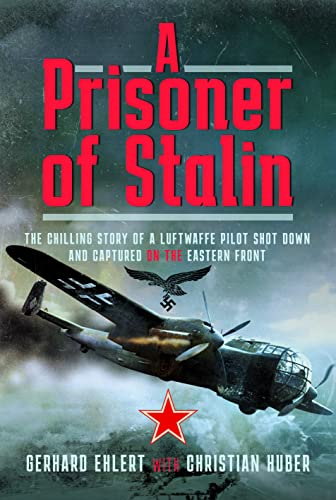
Inhaltsangabe
Leutnant Gerhard Ehlert was one of the few survivors of 2. Nachtaufklärungsstaffel, part of the Luftwaffe’s 6th Air Fleet, which operated on Eastern Front during the Second World War. Although he came from a family that spoke out against Hitler and the Nazi regime, he volunteered to join the Luftwaffe. He went on to undertake combat patrols under the most extreme circumstances.Facing hazardous weather conditions – often landing his aircraft ‘blind’ in heavy fog – and mountainous odds against Soviet air superiority, Ehlert completed twenty-two sorties before his Dornier Do 217M-1, coded K7+FK, was shot down on 14 June 1944. Despite strenuous efforts to escape the Soviets, along with his rear-gunner Feldwebel Wilhelm Burr, he was captured by the Red Army. What followed changed his life forever.Though interrogated repeatedly, Ehlert revealed nothing about his missions or duties. Then, during his transfer to a prisoner of war camp, he had to face a hostile crowd of Russian civilians who had suffered from the devastating effects of the Luftwaffe’s bombs. In the long journey eastwards across the bleak Russian steppes to the camp at Yelabuga, a town in the Republic of Tatarstan, Ehlert reflected on his early years and the road he took to the east and the horrifying situation he was in. But it was not the months he endured in the freezing prisoner of war camp which became his most haunting memory – it was when the war ended.The Russians announced that with peace came new rules. Now the prisoners must work and the food ration would be reduced. Their uniforms were removed, and all privileges of rank dismissed. To the Soviets they were no longer prisoners of war, they were mere criminals and were treated accordingly.Transferred to Bolshoy Bor in the north, day after day the men had to transport logs, even through the snow and ice of winter, with many of the prisoners dying of malnutrition and exposure. The Russians told them they were ‘to rebuild what they destroyed in the Soviet Union’.Ehlert’s suffering finally ended in 1949. He was able to return to his parental home, initially being treated as an unwelcome stranger. When he related his story to Christian Huber, Gerhard Ehlert was in his 90s, by then a happy father and grandfather, and undoubtedly a survivor.
Die Inhaltsangabe kann sich auf eine andere Ausgabe dieses Titels beziehen.
Über die Autorinnen und Autoren
Born in Wasserburg am Inn, Germany, in 1964, CHRISTIAN HUBER has worked as a journalist for some twenty years. As well as being the publisher of a weekly newspaper in south-east Bavaria, he has also published a number of books relating to the events of the Second World War.
GERHARD EHLERT was one of the few survivors of the Luftwaffe's 2nd Long-Range Reconnaissance Group, part of the 6th Air Fleet, which operated on Eastern Front during the Second World War. Captured in June 1944, he did not return to Germany until 1949. When he related his story to Christian Huber, Ehlert was in his 90s, by then a happy father and grandfather, and undoubtedly a survivor.
„Über diesen Titel“ kann sich auf eine andere Ausgabe dieses Titels beziehen.
Suchergebnisse für A Prisoner of Stalin: The Chilling Story of a Luftwaffe...

Foto des Verkäufers
Prisoner of Stalin : The Chilling Story of a Luftwaffe Pilot Shot Down and Captured on the Eastern Front
Anbieter: GLENN DAVID BOOKS, Wyomissing, PA, USA
Verkäuferbewertung 5 von 5 Sternen

Hardcover. Zustand: Near Fine+. Reprint Edition. This is a Very Solid and very bright WWII Memoir Hardback in Near Fine+ condition with a Near Fine+ jacket. c2022, Reprint edition from the German. This book is in wonderful condition both inside and out. It looks very, very lightly read perhaps Unread. The cover is Very clean & very bright. The edges are all very good. It has Very nice spine ends. The pages are tight & bright & unmarked, no names. The jacket, with price, is in Very nice condition with hardly any shelf wear. (No remainder marks.). 118 Pages. All books are securely packaged and Promptly Mailed. #23264-525. Bestandsnummer des Verkäufers 023264
Gebraucht kaufen
EUR 12,89
EUR 4,46 Versand
Versand innerhalb von USA
Versand innerhalb von USA
Anzahl: 1 verfügbar
Beispielbild für diese ISBN
Prisoner of Stalin : The Chilling Story of a Luftwaffe Pilot Shot Down and Captured on the Eastern Front
Anbieter: GreatBookPrices, Columbia, MD, USA
Verkäuferbewertung 5 von 5 Sternen
Zustand: New. Bestandsnummer des Verkäufers 44559533-n
Neu kaufen
EUR 17,99
EUR 2,36 Versand
Versand innerhalb von USA
Versand innerhalb von USA
Anzahl: 2 verfügbar
Foto des Verkäufers
A PRISONER OF STALIN (Hardcover)
Verlag:
Pen & Sword Books Ltd, Barnsley, 2022
ISBN 10: 1526733218
ISBN 13: 9781526733214
Neu
Hardcover
Anbieter: Grand Eagle Retail, Bensenville, IL, USA
Verkäuferbewertung 5 von 5 Sternen
Hardcover. Zustand: new. Hardcover. Lieutenant Gerhard Ehlert was one of the few survivors of 2. Nachtaufklaerungsstaffel, part of the Luftwaffe's 6th Air Fleet, which operated on Eastern Front during the Second World War. Although he came from a family that spoke out against Hitler and the Nazi regime, he volunteered to join the Luftwaffe. He went on to undertake combat patrols under the most extreme circumstances. Facing hazardous weather conditions often landing his aircraft 'blind' in heavy fog and mountainous odds against Soviet air superiority, Ehlert completed twenty-two sorties before his Dornier Do 217M-1, coded K7+FK, was shot down on 14 June 1944. Despite strenuous efforts to escape the Soviets, along with his rear-gunner Feldwebel Wilhelm Burr, he was captured by the Red Army. What followed changed his life forever. Though interrogated repeatedly, Ehlert revealed nothing about his missions or duties. Then, during his transfer to a prisoner of war camp, he had to face a hostile crowd of Russian civilians who had suffered from the devastating effects of the Luftwaffe's bombs. In the long journey eastwards across the bleak Russian steppes to the camp at Yelabuga, a town in the Republic of Tatarstan, Ehlert reflected on his early years and the road he took to the east and the horrifying situation he was in. But it was not the months he endured in the freezing prisoner of war camp which became his most haunting memory it was when the war ended. The Russians announced that with peace came new rules. Now the prisoners must work and the food ration would be reduced. Their uniforms were removed, and all privileges of rank dismissed. To the Soviets they were no longer prisoners of war, they were mere criminals and were treated accordingly. Transferred to Bolshoy Bor in the north, day after day the men had to transport logs, even through the snow and ice of winter, with many of the prisoners dying of malnutrition and exposure. The Russians told them they were 'to rebuild what they destroyed in the Soviet Union'. Ehlert's suffering finally ended in 1949. He was able to return to his parental home, initially being treated as an unwelcome stranger. When he related his story to Christian Huber, Gerhard Ehlert was in his 90s, by then a happy father and grandfather, and undoubtedly a survivor. AUTHORS: Gerhard Ehlert was one of the few survivors of the Luftwaffe's 2nd Long-Range Reconnaissance Group, part of the 6th Air Fleet, which operated on Eastern Front during the Second World War. Captured in June 1944, he did not return to Germany until 1949. When he related his story to Christian Huber, Ehlert was in his 90s, by then a happy father and grandfather, and undoubtedly a survivor. Born in Wasserburg am Inn, Germany, in 1964, Christian Huber has worked as a journalist for some twenty years. As well as being the publisher of a weekly newspaper in south-east Bavaria, he has also published a number of books relating to the events of the Second World War. A Luftwaffe pilot's chilling account of operating over the Eastern Front in the Second World War. Shipping may be from multiple locations in the US or from the UK, depending on stock availability. Bestandsnummer des Verkäufers 9781526733214
Beispielbild für diese ISBN
A Prisoner of Stalin Format: Hardback
Anbieter: INDOO, Avenel, NJ, USA
Verkäuferbewertung 5 von 5 Sternen
Zustand: New. Brand New. Bestandsnummer des Verkäufers 9781526733214
Neu kaufen
EUR 20,80
Versand gratis
Versand innerhalb von USA
Versand innerhalb von USA
Anzahl: Mehr als 20 verfügbar
Beispielbild für diese ISBN
Prisoner of Stalin : The Chilling Story of a Luftwaffe Pilot Shot Down and Captured on the Eastern Front
Anbieter: GreatBookPrices, Columbia, MD, USA
Verkäuferbewertung 5 von 5 Sternen
Zustand: As New. Unread book in perfect condition. Bestandsnummer des Verkäufers 44559533
Gebraucht kaufen
EUR 19,67
EUR 2,36 Versand
Versand innerhalb von USA
Versand innerhalb von USA
Anzahl: 2 verfügbar
Beispielbild für diese ISBN
A PRISONER OF STALIN
Anbieter: PBShop.store US, Wood Dale, IL, USA
Verkäuferbewertung 5 von 5 Sternen
HRD. Zustand: New. New Book. Shipped from UK. Established seller since 2000. Bestandsnummer des Verkäufers GB-9781526733214
Foto des Verkäufers
A PRISONER OF STALIN
Anbieter: Rarewaves.com USA, London, LONDO, Vereinigtes Königreich
Verkäuferbewertung 5 von 5 Sternen
Hardback. Zustand: New. Leutnant Gerhard Ehlert was one of the few survivors of 2. Nachtaufkl rungsstaffel, part of the Luftwaffe's 6th Air Fleet, which operated on Eastern Front during the Second World War. Although he came from a family that spoke out against Hitler and the Nazi regime, he volunteered to join the Luftwaffe. He went on to undertake combat patrols under the most extreme circumstances.Facing hazardous weather conditions - often landing his aircraft blind' in heavy fog - and mountainous odds against Soviet air superiority, Ehlert completed twenty-two sorties before his Dornier Do 217M-1, coded K7+FK, was shot down on 14 June 1944. Despite strenuous efforts to escape the Soviets, along with his rear-gunner Feldwebel Wilhelm Burr, he was captured by the Red Army. What followed changed his life forever.Though interrogated repeatedly, Ehlert revealed nothing about his missions or duties. Then, during his transfer to a prisoner of war camp, he had to face a hostile crowd of Russian civilians who had suffered from the devastating effects of the Luftwaffe's bombs. In the long journey eastwards across the bleak Russian steppes to the camp at Yelabuga, a town in the Republic of Tatarstan, Ehlert reflected on his early years and the road he took to the east and the horrifying situation he was in. But it was not the months he endured in the freezing prisoner of war camp which became his most haunting memory - it was when the war ended.The Russians announced that with peace came new rules. Now the prisoners must work and the food ration would be reduced. Their uniforms were removed, and all privileges of rank dismissed. To the Soviets they were no longer prisoners of war, they were mere criminals and were treated accordingly.Transferred to Bolshoy Bor in the north, day after day the men had to transport logs, even through the snow and ice of winter, with many of the prisoners dying of malnutrition and exposure. The Russians told them they were to rebuild what they destroyed in the Soviet Union'.Ehlert's suffering finally ended in 1949. He was able to return to his parental home, initially being treated as an unwelcome stranger. When he related his story to Christian Huber, Gerhard Ehlert was in his 90s, by then a happy father and grandfather, and undoubtedly a survivor. Bestandsnummer des Verkäufers LU-9781526733214
Neu kaufen
EUR 23,87
Versand gratis
Versand von Vereinigtes Königreich nach USA
Versand von Vereinigtes Königreich nach USA
Anzahl: 1 verfügbar
Beispielbild für diese ISBN
A Prisoner of Stalin: The Chilling Story of a Luftwaffe Pilot Shot Down and Captured on the Eastern Front
Anbieter: ABC Books, Springfield, MO, USA
Verkäuferbewertung 5 von 5 Sternen
hardcover. Zustand: Fine. DJ with little wear, now protected in archival mylar. Boards and spine tight. No apparent markings to pages. Tracking available on most domestic orders. Bestandsnummer des Verkäufers mon0000425514
Gebraucht kaufen
EUR 18,38
EUR 5,50 Versand
Versand innerhalb von USA
Versand innerhalb von USA
Anzahl: 1 verfügbar
Foto des Verkäufers
A PRISONER OF STALIN
Anbieter: Rarewaves USA, HEBRON, KY, USA
Verkäuferbewertung 5 von 5 Sternen
Hardback. Zustand: New. Leutnant Gerhard Ehlert was one of the few survivors of 2. Nachtaufkl rungsstaffel, part of the Luftwaffe's 6th Air Fleet, which operated on Eastern Front during the Second World War. Although he came from a family that spoke out against Hitler and the Nazi regime, he volunteered to join the Luftwaffe. He went on to undertake combat patrols under the most extreme circumstances.Facing hazardous weather conditions - often landing his aircraft blind' in heavy fog - and mountainous odds against Soviet air superiority, Ehlert completed twenty-two sorties before his Dornier Do 217M-1, coded K7+FK, was shot down on 14 June 1944. Despite strenuous efforts to escape the Soviets, along with his rear-gunner Feldwebel Wilhelm Burr, he was captured by the Red Army. What followed changed his life forever.Though interrogated repeatedly, Ehlert revealed nothing about his missions or duties. Then, during his transfer to a prisoner of war camp, he had to face a hostile crowd of Russian civilians who had suffered from the devastating effects of the Luftwaffe's bombs. In the long journey eastwards across the bleak Russian steppes to the camp at Yelabuga, a town in the Republic of Tatarstan, Ehlert reflected on his early years and the road he took to the east and the horrifying situation he was in. But it was not the months he endured in the freezing prisoner of war camp which became his most haunting memory - it was when the war ended.The Russians announced that with peace came new rules. Now the prisoners must work and the food ration would be reduced. Their uniforms were removed, and all privileges of rank dismissed. To the Soviets they were no longer prisoners of war, they were mere criminals and were treated accordingly.Transferred to Bolshoy Bor in the north, day after day the men had to transport logs, even through the snow and ice of winter, with many of the prisoners dying of malnutrition and exposure. The Russians told them they were to rebuild what they destroyed in the Soviet Union'.Ehlert's suffering finally ended in 1949. He was able to return to his parental home, initially being treated as an unwelcome stranger. When he related his story to Christian Huber, Gerhard Ehlert was in his 90s, by then a happy father and grandfather, and undoubtedly a survivor. Bestandsnummer des Verkäufers LU-9781526733214
Beispielbild für diese ISBN
A Prisoner of Stalin: The Chilling Story of a Luftwaffe Pilot Shot Down and Captured on the Eastern Front
Anbieter: Book Bunker USA, Havertown, PA, USA
Verkäuferbewertung 5 von 5 Sternen
hardcover. Zustand: New. *Brand new* Ships from USA. Bestandsnummer des Verkäufers 9781526733214
Neu kaufen
EUR 21,77
EUR 3,57 Versand
Versand innerhalb von USA
Versand innerhalb von USA
Anzahl: Mehr als 20 verfügbar