
Inhaltsangabe
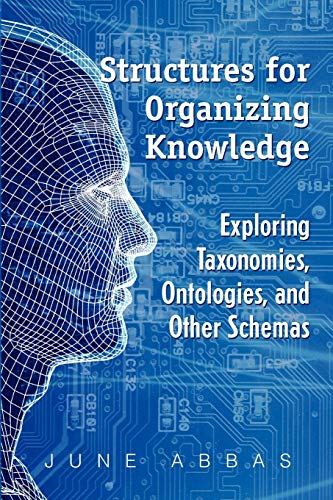
LIS professionals use structures for organizing knowledge when they catalog and classify objects in the collection, when they develop databases, when they design customized taxonomies, or when they search online. Structures for Organizing Knowledge: Exploring Taxonomies, Ontologies, and Other Schema explores and explains this basic function by looking at three questions: 1) How do we organize objects so that they make sense and are useful? 2) What role do categories, classifications, taxonomies, and other structures play in the process of organizing? 3) What do information professionals need to know about organizing behaviors in order to design useful structures for organizing knowledge? Taking a broad, yet specialized approach that is a first in the field, this book answers those questions by examining three threads: traditional structures for organizing knowledge; personal structures for organizing knowledge; and socially-constructed structures for organizing knowledge. Through these threads, it offers avenues for expanding thinking on classification and classification schemes, taxonomy and ontology development, and structures. Both a history of the development of taxonomies and an analysis of current research, theories, and applications, this volume explores a wide array of topics, including the new digital, social aspect of taxonomy development. Examples of subjects covered include: ¿ Formal and informal structures ¿ Applications of knowledge structures ¿ Classification schemes ¿ Early taxonomists and their contributions ¿ Social networking, bookmarking, and cataloging sites ¿ Cataloging codes ¿ Standards and best practices ¿ Tags, tagging, and folksonomies ¿ Descriptive cataloging ¿ Metadata schema standards Thought exercises, references, and a list of helpful websites augment each section. A final chapter, "Thinking Ahead: Are We at a Crossroads?" uses "envisioning exercises" to help LIS professionals look into the future.
Die Inhaltsangabe kann sich auf eine andere Ausgabe dieses Titels beziehen.
Suchergebnisse für Structures for Organizing Knowledge: Exploring Taxonomies,...

Beispielbild für diese ISBN
Structures for Organizing Knowledge: Exploring Taxonomies, Ontologies, and Other Schema
Verlag:
ALA Neal-Schuman (edition 1), 2010
ISBN 10: 1555706991
ISBN 13: 9781555706999
Gebraucht
Paperback
Anbieter: BooksRun, Philadelphia, PA, USA
Verkäuferbewertung 5 von 5 Sternen

Paperback. Zustand: Very Good. 1. It's a well-cared-for item that has seen limited use. The item may show minor signs of wear. All the text is legible, with all pages included. It may have slight markings and/or highlighting. Bestandsnummer des Verkäufers 1555706991-8-1
Gebraucht kaufen
EUR 66,20
Versand gratis
Versand innerhalb von USA
Versand innerhalb von USA
Anzahl: 1 verfügbar
Beispielbild für diese ISBN
Structures for Organizing Knowledge: Exploring Taxonomies, Ontologies, and Other Schema
Verlag:
Neal-Schuman Publishers, Inc., 2010
ISBN 10: 1555706991
ISBN 13: 9781555706999
Gebraucht
Softcover
Anbieter: World of Books (was SecondSale), Montgomery, IL, USA
Verkäuferbewertung 5 von 5 Sternen
Zustand: Good. Item in good condition and has highlighting/writing on text. Used texts may not contain supplemental items such as CDs, info-trac etc. Bestandsnummer des Verkäufers 00103013551
Gebraucht kaufen
EUR 66,40
Versand gratis
Versand innerhalb von USA
Versand innerhalb von USA
Anzahl: 1 verfügbar
Beispielbild für diese ISBN
Structures for Organizing Knowledge: Exploring Taxonomies, Ontologies, and Other Schema
Anbieter: Goodwill San Antonio, San Antonio, TX, USA
Verkäuferbewertung 5 von 5 Sternen
Zustand: good. Bestandsnummer des Verkäufers SANV.1555706991.G
Gebraucht kaufen
EUR 65,32
EUR 3,49 Versand
Versand innerhalb von USA
Versand innerhalb von USA
Anzahl: 1 verfügbar
Beispielbild für diese ISBN
Structures for Organizing Knowledge: Exploring Taxonomies, Ontologies, and Other Schema
Verlag:
ALA Neal-Schuman, 2010
ISBN 10: 1555706991
ISBN 13: 9781555706999
Gebraucht
paperback
Erstausgabe
Anbieter: The Maryland Book Bank, Baltimore, MD, USA
Verkäuferbewertung 5 von 5 Sternen
paperback. Zustand: Very Good. 1st Edition. Used - Very Good. Bestandsnummer des Verkäufers 5-ZZ-1-0385
Gebraucht kaufen
EUR 65,41
EUR 4,11 Versand
Versand innerhalb von USA
Versand innerhalb von USA
Anzahl: 1 verfügbar
Beispielbild für diese ISBN
Structures for Organizing Knowledge
Verlag:
MP-ALA American Library Assoc, 2010
ISBN 10: 1555706991
ISBN 13: 9781555706999
Gebraucht
PAP
Anbieter: PBShop.store UK, Fairford, GLOS, Vereinigtes Königreich
Verkäuferbewertung 5 von 5 Sternen
PAP. Zustand: Used - Very Good. Used - Like New Book. Shipped from UK. Established seller since 2000. Bestandsnummer des Verkäufers P1-9781555706999
Gebraucht kaufen
EUR 104,46
EUR 4,88 Versand
Versand von Vereinigtes Königreich nach USA
Versand von Vereinigtes Königreich nach USA
Anzahl: 1 verfügbar
Foto des Verkäufers
Structures for Organizing Knowledge : Exploring Taxonomies, Ontologies, and Other Schema
Anbieter: GreatBookPrices, Columbia, MD, USA
Verkäuferbewertung 5 von 5 Sternen
Zustand: As New. Unread book in perfect condition. Bestandsnummer des Verkäufers 11516626
Gebraucht kaufen
EUR 114,13
EUR 2,31 Versand
Versand innerhalb von USA
Versand innerhalb von USA
Anzahl: Mehr als 20 verfügbar
Foto des Verkäufers
Structures for Organizing Knowledge : Exploring Taxonomies, Ontologies, and Other Schema
Anbieter: GreatBookPricesUK, Woodford Green, Vereinigtes Königreich
Verkäuferbewertung 5 von 5 Sternen
Zustand: As New. Unread book in perfect condition. Bestandsnummer des Verkäufers 11516626
Gebraucht kaufen
EUR 119,94
EUR 17,59 Versand
Versand von Vereinigtes Königreich nach USA
Versand von Vereinigtes Königreich nach USA
Anzahl: Mehr als 20 verfügbar
Beispielbild für diese ISBN
Structures for Organizing Knowledge: Exploring Taxonomies, Ontologies, and Other Schema
Anbieter: Revaluation Books, Exeter, Vereinigtes Königreich
Verkäuferbewertung 5 von 5 Sternen
Paperback. Zustand: Brand New. 1st edition. 249 pages. 8.90x5.80x0.70 inches. In Stock. Bestandsnummer des Verkäufers x-1555706991
Neu kaufen
EUR 141,33
EUR 11,73 Versand
Versand von Vereinigtes Königreich nach USA
Versand von Vereinigtes Königreich nach USA
Anzahl: 2 verfügbar
Foto des Verkäufers
Structures for Organizing Knowledge : Exploring Taxonomies, Ontologies, and Other Schema
Anbieter: GreatBookPrices, Columbia, MD, USA
Verkäuferbewertung 5 von 5 Sternen
Zustand: New. Bestandsnummer des Verkäufers 11516626-n
Neu kaufen
EUR 155,56
EUR 2,31 Versand
Versand innerhalb von USA
Versand innerhalb von USA
Anzahl: Mehr als 20 verfügbar
Foto des Verkäufers
Structures for Organizing Knowledge : Exploring Taxonomies, Ontologies, and Other Schema
Anbieter: GreatBookPricesUK, Woodford Green, Vereinigtes Königreich
Verkäuferbewertung 5 von 5 Sternen
Zustand: New. Bestandsnummer des Verkäufers 11516626-n
Neu kaufen
EUR 147,50
EUR 17,59 Versand
Versand von Vereinigtes Königreich nach USA
Versand von Vereinigtes Königreich nach USA
Anzahl: Mehr als 20 verfügbar