
Verwandte Artikel zu A Field Guide to Roadside Technology
Inhaltsangabe
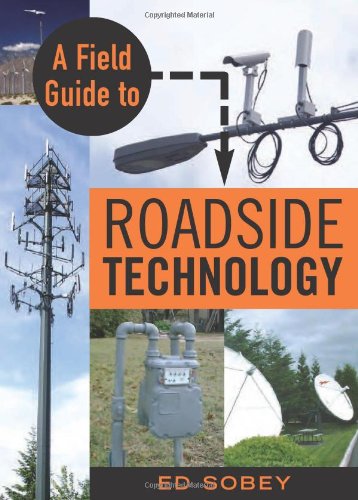
This fascinating handbook answers the questions of anyone who has ever wondered about the many strange devices found along the roadside, from utility poles to satellite dishes. Devices are grouped according to their habitatsalong highways and roads, atop buildings, near airports, and on utility towers. More than 150 different roadside technologies are covered, and each detailed entry describes what the device does, how it works, and also includes a photograph for easy identification. With helpful sidebars describing related technical issues such as why stoplights are constructed with the red light on top, this handbook for curious readers provides carefully detailed descriptions and the history behind many of the devices that roadside travelers take for granted.
Die Inhaltsangabe kann sich auf eine andere Ausgabe dieses Titels beziehen.
Über die Autorin bzw. den Autor
Ed Sobey is the author of several hands-on science books, including Inventing Toys and Loco-Motion.
Auszug. © Genehmigter Nachdruck. Alle Rechte vorbehalten.
A Field Guide to Roadside Technology
By Ed SobeyChicago Review Press Incorporated
Copyright © 2006 Ed Sobey
All rights reserved.
ISBN: 978-1-55652-609-1All rights reserved.
Contents
Acknowledgments,
Introduction,
1 HIGHWAYS AND ROADWAYS,
2 BRIDGES,
3 FIELDS AND STREAMS,
4 ON THE GROUND,
5 INDUSTRIAL SITES, BUILDINGS, AND THINGS ATTACHED TO BUILDINGS,
6 ANTENNAS,
7 IN THE AIR AND NEAR AIRPORTS,
8 NEAR NAVIGABLE WATERS,
9 ON UTILITY POLES AND TOWERS,
Index,
CHAPTER 1
HIGHWAYS AND ROADWAYS
HIGHWAYS AND ROADWAYS ARE technology showcases zipping past your car window as you travel along at 60 MPH (100 KM/H). Every few seconds you whiz by yet another piece of machinery. Luckily, the same type of device is often found at every intersection or every few miles, so you have many opportunities to see and identify each one.
Since state and local governments maintain their own roads and highways, many of the devices you see aren't uniform across the country. Highway devices in California may not look exactly like similar devices in Massachusetts. However, if you can identify a machine in one location, you will have clues as to what a device of similar size and shape does in a different location, even if it isn't exactly the same.
Traffic Signal
BEHAVIOR
Controls traffic by indicating which lane of cars should move through the intersection.
HABITAT
At busy intersections.
HOW IT WORKS
Watch a traffic signal and you'll figure out that it uses a timer. The light stays green for maybe 30 seconds, turns yellow for 5 or so seconds, then turns red for perhaps 35 seconds while the green and yellow lights for the other lanes of traffic complete their cycles.
Traffic engineers set the times for each part of the cycle based on the traffic load on each street. They may also change the cycle to run faster at night when there are fewer cars on the road. Many traffic signals are also controlled by switches (see below).
UNIQUE CHARACTERISTICS
Does the red light look different from the yellow and green lights? Instead of using normal incandescent light bulbs (like the ones you use at home) for red lights, many cities now use LEDs, or light-emitting diodes. LEDs have a deeper color than incandescent bulbs. You can see the many sources of light, which are the individual diodes. It takes dozens of tiny LEDs to make up one red traffic light.
LEDs are much more expensive than regular lights. Why would traffic departments switch to a more expensive light? LEDs can last as long as 10 years — several times longer than traditional lights. The expense of sending a crew out to change a traffic light bulb is so great that it's cheaper to use a more expensive light source that lasts longer. Lighting engineers just recently developed good yellow and green LEDs, and traffic departments are starting to install those colors now.
If you see a traffic signal that uses incandescent bulbs open for repair, look inside to see what color the bulbs are. They might not be red, green, and yellow. Some cities use a yellow bulb shining through a blue cover to make a green light.
Increasingly, engineers are installing additional devices called switches to control the lights as well. At an intersection, look for dark lines in the shape of a square or rectangle in the road's surface. The dark lines are patched strips in the road where workers sawed up the original roadway to install an induction vehicle detector (see page 19), which consists of loops, or coils, of wire that detect cars and change traffic lights accordingly.
At some intersections you'll see other devices that prompt traffic lights to change. These include video detection cameras (see page 20) and microwave vehicle detectors(see page 20), which are mounted on traffic poles.
Old traffic signals use mechanical systems to turn each light on and off. You can hear the motors and switches inside these signals working as the lights change.
Modern traffic signals use electronic circuits instead of mechanical systems to control the lights. The next time you're stopped at one of these, look for the traffic signal control box (see page 18), which houses the signal's timer, or clock, and switches. It may be mounted on one of the traffic-signal poles or placed on the ground behind the signal.
INTERESTING FACTS
Traffic lights were used even before automobiles were invented. Starting in 1868, the British used red and green lights to control horse carriage traffic at busy intersections. A police officer had to manually switch the lights from red to green and back. The use of a yellow light also originated in Great Britain, in 1918.
The first red and green traffic lights in America appeared in Cleveland, Ohio, in 1914. A police officer, William Potts, created the first three-color light used in the United States and had it installed in Detroit in 1920. Three years later the famous inventor Garrett Augustus Morgan invented the automatic traffic light.
Traffic Signal Control Box
BEHAVIOR
Houses electronic circuits and power supplies that control traffic lights.
HABITAT
At any intersection where you find a modern traffic signal you will find one or two control boxes, usually on one of the corners of the intersection. Often, as is the case shown here, you will see two boxes. One houses the electronic circuits and the other houses power supplies for the traffic signal.
HOW IT WORKS
One box (shown on the left in this photo) controls the signals. Inside it is a computer. The computer can be set to change the traffic lights at set time periods. For example, it may be set to cycle through the green, yellow, and red lights every 30 seconds. The timing can be set to change throughout the day to accommodate changes in traffic patterns. Traffic engineers study the flow of traffic and program a computer to run the lights accordingly.
If there is an induction vehicle detector (see page 19) at the intersection, its signals go into the control computer as well. As a car pulls up to the intersection and stops above the detector's wire ground loop, the sensor (loop) sends a message to the computer, which prompts the traffic light to change.
The second box distributes power to the computer and the traffic signal. Electrical power comes into this box from electric wires located on utility poles or underground. Inside this box are the connections.
Induction Vehicle Detector
BEHAVIOR
When a vehicle moves over the detector, the detector sends a message to the traffic signal's computer to start the cycle to change the lights.
HABITAT
Busy intersections. Look on the ground for a thin bead of black asphalt that covers up the square or rectangle of wire that was installed after the road was last paved.
HOW IT WORKS
This operates in the same way as do the metal detectors you see people using at the beach or in a park. An electric current flows through the coil of wires under the street. As a car moves over the coil, the car's metal changes the magnetic field in the coil. A sensor in the circuit of the coil detects the change in the magnetic field and sends a signal to the computer in the control box.
UNIQUE CHARACTERISTICS
Some cities mark the place in the road that covers the most sensitive area of the coil with an "X" so...
„Über diesen Titel“ kann sich auf eine andere Ausgabe dieses Titels beziehen.
Suchergebnisse für A Field Guide to Roadside Technology

Foto des Verkäufers
A Field Guide to Roadside Technology
Verlag:
Chicago Review Press Inc, 2006
ISBN 10: 1556526091
ISBN 13: 9781556526091
Gebraucht
Softcover
Anbieter: Zoom Books East, Glendale Heights, IL, USA
Verkäuferbewertung 5 von 5 Sternen

Zustand: good. Book is in good condition and may include underlining highlighting and minimal wear. The book can also include "From the library of" labels. May not contain miscellaneous items toys, dvds, etc. . We offer 100% money back guarantee and 24 7 customer service. Bestandsnummer des Verkäufers ZEV.1556526091.G
Gebraucht kaufen
EUR 3,93
Versand gratis
Versand innerhalb von USA
Versand innerhalb von USA
Anzahl: 1 verfügbar
Beispielbild für diese ISBN
A Field Guide to Roadside Technology
Verlag:
Chicago Review Press Inc (edition ), 2006
ISBN 10: 1556526091
ISBN 13: 9781556526091
Gebraucht
Paperback
Anbieter: BooksRun, Philadelphia, PA, USA
Verkäuferbewertung 5 von 5 Sternen
Paperback. Zustand: Very Good. It's a well-cared-for item that has seen limited use. The item may show minor signs of wear. All the text is legible, with all pages included. It may have slight markings and/or highlighting. Bestandsnummer des Verkäufers 1556526091-11-1
Gebraucht kaufen
EUR 4,13
Versand gratis
Versand innerhalb von USA
Versand innerhalb von USA
Anzahl: 1 verfügbar
Foto des Verkäufers
A Field Guide to Roadside Technology
Verlag:
Chicago Review Press Inc, 2006
ISBN 10: 1556526091
ISBN 13: 9781556526091
Gebraucht
Softcover
Anbieter: Greenworld Books, Arlington, TX, USA
Verkäuferbewertung 5 von 5 Sternen
Zustand: very_good. Fast Free Shipping â" Very Good condition book with a firm cover and clean pages. Shows normal use and some light wear or limited notes markings. A solid, nice copy to enjoy. Bestandsnummer des Verkäufers GWV.1556526091.VG
Gebraucht kaufen
EUR 5,09
Versand gratis
Versand innerhalb von USA
Versand innerhalb von USA
Anzahl: 1 verfügbar
Beispielbild für diese ISBN
A Field Guide to Roadside Technology
Verlag:
Chicago Review Press Inc, 2006
ISBN 10: 1556526091
ISBN 13: 9781556526091
Gebraucht
Softcover
Anbieter: World of Books (was SecondSale), Montgomery, IL, USA
Verkäuferbewertung 5 von 5 Sternen
Zustand: Very Good. Item in very good condition! Textbooks may not include supplemental items i.e. CDs, access codes etc. Bestandsnummer des Verkäufers 00108382693
Gebraucht kaufen
EUR 5,32
Versand gratis
Versand innerhalb von USA
Versand innerhalb von USA
Anzahl: 2 verfügbar
Beispielbild für diese ISBN
A Field Guide to Roadside Technology
Verlag:
Chicago Review Press Inc, 2006
ISBN 10: 1556526091
ISBN 13: 9781556526091
Gebraucht
Softcover
Anbieter: World of Books (was SecondSale), Montgomery, IL, USA
Verkäuferbewertung 5 von 5 Sternen
Zustand: Good. Item in good condition. Textbooks may not include supplemental items i.e. CDs, access codes etc. Bestandsnummer des Verkäufers 00108653368
Gebraucht kaufen
EUR 5,32
Versand gratis
Versand innerhalb von USA
Versand innerhalb von USA
Anzahl: 1 verfügbar
Beispielbild für diese ISBN
A Field Guide to Roadside Technology
Verlag:
Chicago Review Press Inc, 2006
ISBN 10: 1556526091
ISBN 13: 9781556526091
Gebraucht
Paperback
Anbieter: ThriftBooks-Dallas, Dallas, TX, USA
Verkäuferbewertung 5 von 5 Sternen
Paperback. Zustand: Good. No Jacket. Former library book; Pages can have notes/highlighting. Spine may show signs of wear. ~ ThriftBooks: Read More, Spend Less. Bestandsnummer des Verkäufers G1556526091I3N10
Gebraucht kaufen
EUR 5,76
Versand gratis
Versand innerhalb von USA
Versand innerhalb von USA
Anzahl: 1 verfügbar
Beispielbild für diese ISBN
A Field Guide to Roadside Technology
Verlag:
Chicago Review Press Inc, 2006
ISBN 10: 1556526091
ISBN 13: 9781556526091
Gebraucht
Softcover
Anbieter: Wonder Book, Frederick, MD, USA
Verkäuferbewertung 5 von 5 Sternen
Zustand: Good. Good condition. With remainder mark. A copy that has been read but remains intact. May contain markings such as bookplates, stamps, limited notes and highlighting, or a few light stains. Bestandsnummer des Verkäufers E08L-00083
Gebraucht kaufen
EUR 6,21
Versand gratis
Versand innerhalb von USA
Versand innerhalb von USA
Anzahl: 1 verfügbar
Foto des Verkäufers
A Field Guide to Roadside Technology
Verlag:
Chicago Review Press Inc, 2006
ISBN 10: 1556526091
ISBN 13: 9781556526091
Gebraucht
Softcover
Anbieter: Scissortail, Oklahoma City, OK, USA
Verkäuferbewertung 5 von 5 Sternen
Zustand: very_good. This is a well-cared-for used book with light signs of previous use. There may be minor cover wear, a faint crease, or slight spine wear, but overall it's in great shape and fully readable. Please note: -May contain library or rental stickers. -Supplemental materials e.g., CDs, access codes, inserts are not guaranteed. -Box sets may not include original exterior box. Your satisfaction is our top priority! If you have any questions or concerns about your order, please don't hesitate to reach out. Thank you for shopping with us and supporting small businessâ"happy reading! Bestandsnummer des Verkäufers STM.WAR
Gebraucht kaufen
EUR 9,95
Versand gratis
Versand innerhalb von USA
Versand innerhalb von USA
Anzahl: 1 verfügbar
Beispielbild für diese ISBN
A Field Guide to Roadside Technology
Verlag:
Chicago Review Press Inc, 2006
ISBN 10: 1556526091
ISBN 13: 9781556526091
Gebraucht
Paperback
Anbieter: WorldofBooks, Goring-By-Sea, WS, Vereinigtes Königreich
Verkäuferbewertung 5 von 5 Sternen
Paperback. Zustand: Very Good. The book has been read, but is in excellent condition. Pages are intact and not marred by notes or highlighting. The spine remains undamaged. Bestandsnummer des Verkäufers GOR014633089
Gebraucht kaufen
EUR 6,76
EUR 6,53 Versand
Versand von Vereinigtes Königreich nach USA
Versand von Vereinigtes Königreich nach USA
Anzahl: 1 verfügbar
Beispielbild für diese ISBN
A Field Guide to Roadside Technology
Verlag:
Chicago Review Press Inc, 2006
ISBN 10: 1556526091
ISBN 13: 9781556526091
Gebraucht
paperback
Anbieter: YESIBOOKSTORE, MIAMI, FL, USA
Verkäuferbewertung 3 von 5 Sternen

paperback. Zustand: As New. Bestandsnummer des Verkäufers 1556526091-VB
Gebraucht kaufen
EUR 63,29
Versand gratis
Versand innerhalb von USA
Versand innerhalb von USA
Anzahl: 1 verfügbar