
Verwandte Artikel zu Post Black: How a New Generation Is Redefining African...
Inhaltsangabe
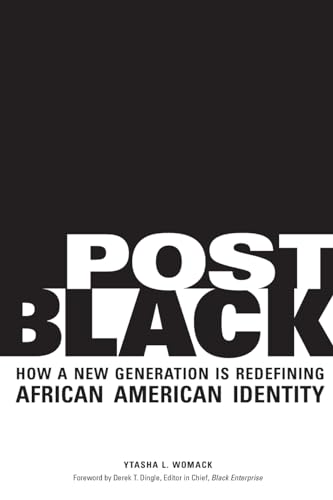
As a young journalist covering black life at large, author Ytasha L. Womack was caught unaware when she found herself straddling black culture&;s rarely acknowledged generation gaps and cultural divides. Traditional images show blacks unified culturally, politically, and socially, united by race at venues such as churches and community meetings. But in the &;post black&; era, even though individuals define themselves first as black, they do not necessarily define themselves by tradition as much as by personal interests, points of view, and lifestyle.
 
In Post Black: How a New Generation Is Redefining African American Identity, Womack takes a fresh look at dynamics shaping the lives of contemporary African Americans. Although grateful to generations that have paved the way, many cannot relate to the rhetoric of pundits who speak as ambassadors of black life any more than they see themselves in exaggerated hip-hop images. Combining interviews, opinions of experts, and extensive research, Post Black will open the eyes of some, validate the lives of others, and provide a realistic picture of the expanding community.
Die Inhaltsangabe kann sich auf eine andere Ausgabe dieses Titels beziehen.
Über die Autorin bzw. den Autor
Ytasha L. Womack is a journalist, a filmmaker, and the coeditor of the award-winning anthology Beats, Rhymes, and Life. She is the director and producer of several award-winning films, including The Engagement, Love Shorts, and Tupac. A current guest editor with NV Magazine and frequent contributor to Ebony, she is a former editor at Upscale and former staff writer for the Chicago Defender. Her work has appeared in the Chicago Tribune, Emerge, Essence, Honey, King, VIBE, and XXL, as well as the comic book Delete. Derek T. Dingle is the senior vice president and editor in chief of Black Enterprise magazine.
Auszug. © Genehmigter Nachdruck. Alle Rechte vorbehalten.
Post Black
How a New Generation is Redefining African American Identity
By Ytasha L. WomackChicago Review Press Incorporated
Copyright © 2010 Ytasha L. Womack
All rights reserved.
ISBN: 978-1-55652-805-7All rights reserved.
Contents
Foreword: A New Age: Derek Dingle, editor of Black Enterprise,
Introduction: Identity Theft,
1 The Generation Gap: The Young Black Professional,
2 The African Diaspora: New Immigrants in African America,
3 Bridges: Biracial, Bicultural Identity,
4 Black, Gay, Lesbian, and Proud: GLBT in Black America,
5 Spirituality: The New Black Religious Experience,
6 The Hip-Hop Factor: Black Art in a Commercial Landscape,
7 Black Entrepreneurs: New Urban Impresarios and Postracial Shopkeepers,
8 Talented Tenth Revisited: Capitalism Versus Social Responsibility,
9 Neofeminism: Womanist Values in the Age of the Video Girl,
10 The Obama Factor: Redefining Possibility,
Acknowledgments,
Sources,
Index,
CHAPTER 1
THE GENERATION GAP
THE YOUNG BLACK PROFESSIONAL
My dad doesn't think I have a job.
He's never said this, of course. He reads my stories on people he's never heard of in the Gen X and Y mags he wouldn't be reading without my byline. He's been to the movie premieres in chic places he wouldn't normally attend packed with the ghosts of futures present, aka the "invisibles" — the array of professional and artist types of color he's heard about via word of mouth, à la my word of mouth. The ones he's heard are moving into Chicago's old "low end," now Bronzeville, turning crack houses into quarter-mil condos.
These invisibles do things in the even more invisible world known as the Internet, where they find news that's not on the nightly six o'clock broadcast or in the paper. Where they send little messages called e-mails and texts, galvanizing more of our ilk to bond over issues that could easily be discussed in a phone conversation.
My dad doesn't believe in the Internet. Nor is he an advocate of cell phones, preferring to bag a bunch of quarters for those rare pay phones that have survived the cell phone takeover. Since computers haven't gone the way of the eight-track, he's resigned himself to be forever "old school."
My dad's an interesting guy. Born and raised in a small town in Texas, he is proud to be an old-school grad of Prairie View A&M. He was baptized in civil rights and wears the looming crown of justice, a ten-gallon cowboy hat that signals "I'm taking names and kicking butt" or "black cowboys live" or "I'm a federal investigator with the United States of America." He's a political news junkie and horse rider. Reads the Sun-Times and Jet. He's got a storehouse of collectibles from his heroes: a poster of boxing's first black heavyweight champion, Jack Johnson; a picture of himself with Muhammad Ali; Jesse Jackson for president buttons; and, more recently, a Barack Obama T-shirt my brother gave him for Father's Day.
As for hip-hop, to him it's a foreign aberration where kids twist their fingers in funny ways and spit indiscernible words to beats that resemble a train wreck in some space-age effort to highjack the real music that should be on the radio: James Brown, Otis Redding, and maybe a little Aretha.
As a kid during the house music versus rap war in Chicago, I asked Dad which of the roaring new school sounds he preferred. "That's like asking would I rather be shot or stabbed," he replied with a smile. The only rap song I remember him liking when I was growing up was "I Go to Work" by Kool Moe Dee, for obvious reasons.
A stickler for tradition, Dad usually meets me on a Sunday around the same time at the same restaurant. We changed restaurants only recently because his favorite place — a lonely, black-owned soul food diner across the street from the Regal Theater on Seventy-Ninth Street with no sign, never more than two customers, and a jukebox full of blues bootlegs — closed unexpectedly. So now we meet at a Hyde Park sports bar with a couple of pool tables and a bowling alley. We meet at one of two tables, one indoor, the other outdoor. Nevertheless, you can see his Clint Eastwood strut a mile away, and when we meet for lunch I always get a kick out of his perspective on life.
I should have known change was on the horizon when he made an unexpected comment about rapper 50 Cent. "I think he's finally starting to understand more about manhood," he remarked. I did a double take. Was my father talking about a rapper? My sister, who had joined us on this day, and I looked at one another. "Tell us more, Dad." And he went on about boys turning into men, understanding what's important in life. He made some analogy about young buffaloes and old buffaloes.
He retired recently. Now that Obama is president, impossible is possible. Hell has frozen over, so to speak, and thanks to my taking him around to a few of my own haunts, he's content that the world's not going to hell in a handbasket and that it is officially safe for him to retire. He can tuck the six-shooter away. There are apparently others who can now take the reins, he remarked, after recognizing that there were people in my demographic who were doing things with their lives, even if it didn't make a heap of sense.
While my dad would joke that he didn't have anything to say to anyone under fifty at his job and prided himself on being the youngest member of his all-black service organization, he was never opposed to progress. Opposed to technology, perhaps, but never progress. He was highly disappointed in peers of his generation who made disparaging remarks about Obama (before it became totally uncool to do so). "If you can't get excited about this," he said of Obama's presidential bid, "you can't get excited about anything."
Generation gaps don't begin with the advent of hip-hop. I ran across a quote from a literary great who took serious issue with the "new generations of erudite drunkards" in the 1400s. My mom, a Chicago-born daughter of the 1960s and social advocate who spent all of her professional career in educational administration, frequently talks of her own father, a classically trained musician whose world went topsy-turvy with the onslaught of civil rights and the Black Power movement. He couldn't get past the Afros, the brazen pride in the naturally tight curls he'd been taught should be straightened with Murray's grease. He couldn't stand them, she said. Nor was my grandfather a fan of the blues or its rock and rhythm-and-blues derivatives. "It's too repetitive," he'd say. "All that ooh, baby, baby, ooh, baby, baby. How many times is he going to say it?" He wouldn't let my mom march with King when he came to Chicago. King, in his mind, was a young, eloquent rabble-rouser kicking dust on their northern, middle-class convictions. "To think, today, King has a holiday. My father wouldn't know how to take that," Mom said, laughing. But even he knew times were changing. He was fascinated by humans' foray into space. As for earthly matters, my mother convinced him to go against the notorious political machine and vote for comic/activist Dick Gregory for mayor. In 1968, my grandfather passed away, a decision, my mom often says, that he made because the world flip to come was too radical for him. On the other hand, her mom, a Mississippi-born beauty and daughter of self-sufficient landowners, was all for this new world. As fashions and conventions turned the corner over the next few decades, so did my grandmother. Change was a part of life, she reasoned. She passed...
„Über diesen Titel“ kann sich auf eine andere Ausgabe dieses Titels beziehen.
Suchergebnisse für Post Black: How a New Generation Is Redefining African...

Beispielbild für diese ISBN
Post Black: How a New Generation Is Redefining African American Identity
Anbieter: World of Books (was SecondSale), Montgomery, IL, USA
Verkäuferbewertung 5 von 5 Sternen

Paperback. Zustand: Very Good. As a young journalist covering black life at large, author Ytasha L. Womack was caught unaware when she found herself straddling black culture's rarely acknowledged generation gaps and cultural divides. Traditional images show blacks unified culturally, politically, and socially, united by race at venues such as churches and community meetings. But in the post black era, even though individuals define themselves first as black, they do not necessarily define themselves by tradition as much as by personal interests, points of view, and lifestyle. In Post Black: How a New Generation Is Redefining African American Identity, Womack takes a fresh look at dynamics shaping the lives of contemporary African Americans. Although grateful to generations that have paved the way, many cannot relate to the rhetoric of pundits who speak as ambassadors of black life any more than they see themselves in exaggerated hip-hop images. Combining interviews, opinions of experts, and extensive research, Post Black will open the eyes of some, validate the lives of others, and provide a realistic picture of the expanding community. Bestandsnummer des Verkäufers 00093356405
Gebraucht kaufen
EUR 4,51
Versand gratis
Versand innerhalb von USA
Versand innerhalb von USA
Anzahl: 1 verfügbar
Beispielbild für diese ISBN
Post Black: How a New Generation Is Redefining African American Identity
Anbieter: World of Books (was SecondSale), Montgomery, IL, USA
Verkäuferbewertung 5 von 5 Sternen
Paperback. Zustand: Good. As a young journalist covering black life at large, author Ytasha L. Womack was caught unaware when she found herself straddling black culture's rarely acknowledged generation gaps and cultural divides. Traditional images show blacks unified culturally, politically, and socially, united by race at venues such as churches and community meetings. But in the post black era, even though individuals define themselves first as black, they do not necessarily define themselves by tradition as much as by personal interests, points of view, and lifestyle. In Post Black: How a New Generation Is Redefining African American Identity, Womack takes a fresh look at dynamics shaping the lives of contemporary African Americans. Although grateful to generations that have paved the way, many cannot relate to the rhetoric of pundits who speak as ambassadors of black life any more than they see themselves in exaggerated hip-hop images. Combining interviews, opinions of experts, and extensive research, Post Black will open the eyes of some, validate the lives of others, and provide a realistic picture of the expanding community. Bestandsnummer des Verkäufers 00102922937
Gebraucht kaufen
EUR 4,51
Versand gratis
Versand innerhalb von USA
Versand innerhalb von USA
Anzahl: 1 verfügbar
Foto des Verkäufers
Post Black: How a New Generation Is Redefining African American Identity
Anbieter: Greenworld Books, Arlington, TX, USA
Verkäuferbewertung 5 von 5 Sternen
Zustand: very_good. Fast Free Shipping â" Very Good condition book with a firm cover and clean pages. Shows normal use and some light wear or limited notes markings. A solid, nice copy to enjoy. Bestandsnummer des Verkäufers GWV.1556528051.VG
Gebraucht kaufen
EUR 4,52
Versand gratis
Versand innerhalb von USA
Versand innerhalb von USA
Anzahl: 1 verfügbar
Beispielbild für diese ISBN
Post Black : How a New Generation Is Redefining African American Identity
Verlag:
Chicago Review Press, Incorporated, 2010
ISBN 10: 1556528051
ISBN 13: 9781556528057
Gebraucht
Softcover
Anbieter: Better World Books, Mishawaka, IN, USA
Verkäuferbewertung 5 von 5 Sternen
Zustand: Very Good. Former library copy. Pages intact with possible writing/highlighting. Binding strong with minor wear. Dust jackets/supplements may not be included. Includes library markings. Stock photo provided. Product includes identifying sticker. Better World Books: Buy Books. Do Good. Bestandsnummer des Verkäufers 3727461-75
Gebraucht kaufen
EUR 6,18
Versand gratis
Versand innerhalb von USA
Versand innerhalb von USA
Anzahl: 2 verfügbar
Beispielbild für diese ISBN
Post Black: How a New Generation Is Redefining African American Identity
Anbieter: World of Books Inc, Montgomery, IL, USA
Verkäuferbewertung 4 von 5 Sternen

Paperback. Zustand: Very Good. As a young journalist covering black life at large, author Ytasha L. Womack was caught unaware when she found herself straddling black culture's rarely acknowledged generation gaps and cultural divides. Traditional images show blacks unified culturally, politically, and socially, united by race at venues such as churches and community meetings. But in the post black era, even though individuals define themselves first as black, they do not necessarily define themselves by tradition as much as by personal interests, points of view, and lifestyle. In Post Black: How a New Generation Is Redefining African American Identity, Womack takes a fresh look at dynamics shaping the lives of contemporary African Americans. Although grateful to generations that have paved the way, many cannot relate to the rhetoric of pundits who speak as ambassadors of black life any more than they see themselves in exaggerated hip-hop images. Combining interviews, opinions of experts, and extensive research, Post Black will open the eyes of some, validate the lives of others, and provide a realistic picture of the expanding community. Bestandsnummer des Verkäufers CIN1556528051VG
Gebraucht kaufen
EUR 6,35
Versand gratis
Versand innerhalb von USA
Versand innerhalb von USA
Anzahl: 1 verfügbar
Beispielbild für diese ISBN
Post Black: How a New Generation Is Redefining African American Identity
Anbieter: World of Books Inc, Montgomery, IL, USA
Verkäuferbewertung 4 von 5 Sternen
Paperback. Zustand: Good. As a young journalist covering black life at large, author Ytasha L. Womack was caught unaware when she found herself straddling black culture's rarely acknowledged generation gaps and cultural divides. Traditional images show blacks unified culturally, politically, and socially, united by race at venues such as churches and community meetings. But in the post black era, even though individuals define themselves first as black, they do not necessarily define themselves by tradition as much as by personal interests, points of view, and lifestyle. In Post Black: How a New Generation Is Redefining African American Identity, Womack takes a fresh look at dynamics shaping the lives of contemporary African Americans. Although grateful to generations that have paved the way, many cannot relate to the rhetoric of pundits who speak as ambassadors of black life any more than they see themselves in exaggerated hip-hop images. Combining interviews, opinions of experts, and extensive research, Post Black will open the eyes of some, validate the lives of others, and provide a realistic picture of the expanding community. Bestandsnummer des Verkäufers CIN1556528051G
Gebraucht kaufen
EUR 6,35
Versand gratis
Versand innerhalb von USA
Versand innerhalb von USA
Anzahl: 1 verfügbar
Beispielbild für diese ISBN
Post Black
Anbieter: ThriftBooks-Atlanta, AUSTELL, GA, USA
Verkäuferbewertung 5 von 5 Sternen
Paperback. Zustand: Very Good. No Jacket. May have limited writing in cover pages. Pages are unmarked. ~ ThriftBooks: Read More, Spend Less. Bestandsnummer des Verkäufers G1556528051I4N00
Gebraucht kaufen
EUR 6,41
Versand gratis
Versand innerhalb von USA
Versand innerhalb von USA
Anzahl: 1 verfügbar
Beispielbild für diese ISBN
Post Black
Anbieter: ThriftBooks-Dallas, Dallas, TX, USA
Verkäuferbewertung 5 von 5 Sternen
Paperback. Zustand: Good. No Jacket. Pages can have notes/highlighting. Spine may show signs of wear. ~ ThriftBooks: Read More, Spend Less. Bestandsnummer des Verkäufers G1556528051I3N00
Gebraucht kaufen
EUR 6,41
Versand gratis
Versand innerhalb von USA
Versand innerhalb von USA
Anzahl: 1 verfügbar
Beispielbild für diese ISBN
Post Black: How a New Generation Is Redefining African American Identity
Anbieter: HPB-Diamond, Dallas, TX, USA
Verkäuferbewertung 5 von 5 Sternen
paperback. Zustand: Very Good. Connecting readers with great books since 1972! Used books may not include companion materials, and may have some shelf wear or limited writing. We ship orders daily and Customer Service is our top priority! Bestandsnummer des Verkäufers S_370118544
Gebraucht kaufen
EUR 3,67
EUR 3,34 Versand
Versand innerhalb von USA
Versand innerhalb von USA
Anzahl: 1 verfügbar
Beispielbild für diese ISBN
Post Black: How a New Generation Is Redefining African American Identity
Anbieter: One Planet Books, Columbia, MO, USA
Verkäuferbewertung 4 von 5 Sternen
paperback. Zustand: Good. Ships in a BOX from Central Missouri! May not include working access code. Will not include dust jacket. Has used sticker(s) and some writing and/or highlighting. UPS shipping for most packages, (Priority Mail for AK/HI/APO/PO Boxes). Bestandsnummer des Verkäufers 001027987U
Gebraucht kaufen
EUR 3,67
EUR 3,56 Versand
Versand innerhalb von USA
Versand innerhalb von USA
Anzahl: 3 verfügbar