
Verwandte Artikel zu Choosing Against War: A Christian View
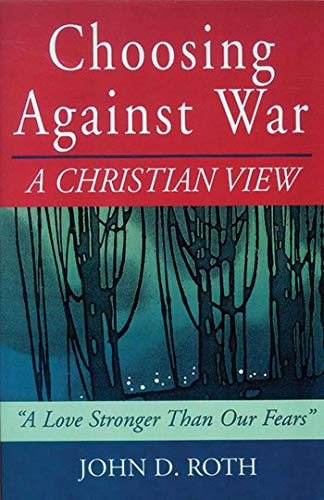
Inhaltsangabe
By a leading writer and thinker. How might Christians look on the world differently if they actually believed that God's love is indeed stronger than our fears? In fresh, confessional language, Roth shares his convictions about Christian pacifism, inviting others to consider this approach, all the while humbly admitting the difficulties. In the face of violence, are there any options open to the Christian believer other than the "default" impulse toward patriotic unity and a steely determination to exact "an eye for an eye"? A must-read for anyone concerned about the endless cycles of wars and violence, and the possibility that God's love is stronger than our society's current answers.
Die Inhaltsangabe kann sich auf eine andere Ausgabe dieses Titels beziehen.
Über die Autorin bzw. den Autor
John D. Roth was born and raised in Holmes County, Ohio. In 1989 he received his Ph.D. in Early Modern European History from the University of Chicago. Since 1988 he has taught in the history department at Goshen College (Goshen, IN). In addition to teaching, Roth also serves as the editor of The Mennonite Quarterly Review, an academic journal focusing on Anabaptists, Hutterites, Mennonites and Amish. His research and publications have concentrated primarily on topics related to the Radical Reformation. He and his wife, Ruth, are the parents of four children and are actively involved in the life of their local congregation.
Auszug. © Genehmigter Nachdruck. Alle Rechte vorbehalten.
Choosing Against War
A Christian View
By John D. RothSkyhorse Publishing
Copyright © 2002 Good Books, Intercourse, PA
All rights reserved.
ISBN: 978-1-56148-359-4All rights reserved.
Contents
Introduction,
1. "What Would Jesus Do?" — On Being a Christian in North America,
2. Realism or Idealism?,
3. The Good News of the Gospel of Peace,
4. A Case for Pacifist Humility,
5. "In God We Trust" — The Dilemmas of Christian Citizenship,
6. The Transformed Politics of Christian Citizenship,
Conclusion,
For Further Reading,
About the Author,
CHAPTER 1
"WHAT WOULD JESUS DO?" — ON BEING A CHRISTIAN IN NORTH AMERICA
* * *
"Most of Christ's teachings disagree with our way of living. But preachers, ... seeing that men will not fit their ways to Christ's pattern, have fitted His teaching to human customs, to get agreement somehow or other."
Thomas More, Utopia (1516)
In 1896 novelist Charles M. Sheldon published a book that captured the enduring attention of Christian readers for generations to come. In His Steps tells the story of a small-town, Protestant congregation somewhere in the Midwest. Early in the book a mysterious stranger, a tramp dressed in rags, disturbs the neatly ordered life of the parishioners of First Church by interrupting their singing one Sunday morning with a request for help. When the well-heeled members reject his plea, the tramp exclaims to the congregation, "It seems to me there's an awful lot of trouble in the world that somehow wouldn't exist if all the people who sing such songs went and lived them out." And then, without warning, he lurches over the communion table and dies on the spot, leaving the stunned congregation to sort through its response.
As it turns out, the disruptive event sparks a revival at First Church. Led by pastor Henry Maxwell, several members of the congregation pledge to structure their lives for an entire year around the simple question: what would Jesus do?
That question, and their determination to respond to it with integrity, ultimately transforms the entire congregation. In seeking to follow Jesus concretely — in deed as well as in word — the congregation finds itself pulled out of the comfort of its traditional piety into the messy and painful realities of urban life in Chicago. Within a year, spiritual revival becomes inextricably linked to social reform, and the book ends with Maxwell and his parishioners deeply involved in the daily lives and local neighborhoods of those they have come to serve.
Nearly a hundred years later, a youth group at Calvary Reformed Church in Holland, Michigan, read Sheldon's novel and was inspired to shape their lives around the same question: what would Jesus do? To remind themselves of this commitment they began to wear homemade bracelets with the letters "WWJD" woven into them. The bracelets quickly aroused the curiosity of their classmates and friends, and before long the WWJD movement had spread throughout the entire nation. Today, an estimated 14 million bracelets have been sold and the WWJD campaign has gone mainstream, appearing on hundreds of products. The official WWJD website calls the phenomenon "a counter-cultural revolution that has reverberated around the world."
What would Jesus do? The question certainly sounds simple and uncontroversial enough. After all, it seems obvious that those who claim the name of Christ would want to pattern their lives around his teaching and example. Obvious, that is, until you leave the safety of a Sunday morning worship service and start to ask what this might actually mean in the routines of daily life during the rest of the week.
The moment you start to get specific about what all is implied in doing what Jesus would do, the question suddenly becomes much more complicated. After all, we are likely to say, Jesus lived in a very different cultural context — the issues he faced in first-century Palestine are not the same as those we encounter in the twenty-first century. Would Jesus run for public office or lobby for political causes? Would Jesus defend his mother if she were attacked? Would Jesus avoid movies rated "R" for violence? The Gospels simply do not address these questions, at least not directly.
The basic sentiment is clear enough: Christians all want to follow Jesus. But the more concretely we try to answer the question, what would Jesus do?, the more uncomfortable we are with the possible implications of the answers. Fearful, perhaps, that taking the WWJD question seriously might challenge comfortable assumptions and habits, we prefer not to linger too long on the question. And so it seems that many contemporary Christians, even those who prominently display the WWJD motto, are more inclined to avoid the question, to evade hard thinking about the concrete teachings and example of Jesus and, instead, to reformulate the essence of Christian faith in terms that are more amendable to our current cultural practices.
Consider, for example, five varieties of Christian faith commonly practiced today. Each offers the world some very important truths about the essence of Christianity. None is a false or heretical form of Christian faith. And almost never do these expressions of faith consciously try to avoid following Christ in daily life. But in their own distinct way, each version of Christianity has found a means of blunting the difficult challenge posed by the WWJD question.
To the extent that each implies that WWJD is not really central to the good news of the gospel, it offers an incomplete perspective on biblical faith.
Not WWJD, But the Cross Is What Really Matters
Perhaps the most common way we can avoid the challenge to live as Jesus did is to shift our focus from his life and teachings to his death and resurrection. Of course Jesus did lots of good things while he was alive, but the real purpose of his life was not what he said or did, but that he died on the cross so that we could enjoy the gift of salvation. In sending Jesus to the world, God's intention was to provide sinful humanity with a means of satisfying the debt of our guilt before God. Thus, Jesus came to earth as a completely sinless and innocent person.
On our behalf he shed his blood and died a painful death, and because he did this, God can grant each of us the gift of grace and eternal life. Therefore, the question is not really "What would Jesus do?" but "What did Jesus do?" Jesus has already accomplished his mission; all we need to do now is to confess our sins and accept the sacrifice he made on our behalf. Of course Christians should strive to be good people, but the real drama of salvation has already happened on the cross. This should be our focus: giving thanks to God for His grace, and then inviting other people to enjoy the free gift of salvation.
Not WWJD, But Doctrine Is What Really Matters
For some contemporary Christians, Christian faith essentially boils down to the life of the mind, that is, to matters of belief. Through the ages, gifted church leaders and theologians have studied the Bible carefully, have debated the nature of salvation from every possible angle, and have formulated a series of specific statements that seem to distill accurately and precisely the essence of Christian theology. To become a Christian usually means that you have given these questions careful thought, and then have answered — often in the form of a public statement or affirmations to questions...
„Über diesen Titel“ kann sich auf eine andere Ausgabe dieses Titels beziehen.
Suchergebnisse für Choosing Against War: A Christian View

Beispielbild für diese ISBN
Choosing Against War: A Christian View
Anbieter: World of Books (was SecondSale), Montgomery, IL, USA
Verkäuferbewertung 5 von 5 Sternen

Zustand: Good. Item in good condition. Textbooks may not include supplemental items i.e. CDs, access codes etc. Bestandsnummer des Verkäufers 00098364535
Gebraucht kaufen
EUR 5,95
Versand gratis
Versand innerhalb von USA
Versand innerhalb von USA
Anzahl: 3 verfügbar
Foto des Verkäufers
Choosing Against War: A Christian View (Paperback or Softback)
Verlag:
Good Books 8/1/2002, 2002
ISBN 10: 1561483591
ISBN 13: 9781561483594
Neu
Paperback or Softback
Anbieter: BargainBookStores, Grand Rapids, MI, USA
Verkäuferbewertung 5 von 5 Sternen
Paperback or Softback. Zustand: New. Choosing Against War: A Christian View. Book. Bestandsnummer des Verkäufers BBS-9781561483594
Beispielbild für diese ISBN
Choosing Against War : A Christian View
Verlag:
Skyhorse Publishing Company, Incorporated, 2002
ISBN 10: 1561483591
ISBN 13: 9781561483594
Gebraucht
Softcover
Anbieter: Better World Books, Mishawaka, IN, USA
Verkäuferbewertung 5 von 5 Sternen
Zustand: Fine. 1 Edition. Used book that is in almost brand-new condition. May contain a remainder mark. Better World Books: Buy Books. Do Good. Bestandsnummer des Verkäufers 14055918-6
Gebraucht kaufen
EUR 6,43
Versand gratis
Versand innerhalb von USA
Versand innerhalb von USA
Anzahl: 1 verfügbar
Beispielbild für diese ISBN
Choosing Against War : A Christian View
Verlag:
Skyhorse Publishing Company, Incorporated, 2002
ISBN 10: 1561483591
ISBN 13: 9781561483594
Gebraucht
Softcover
Anbieter: Better World Books, Mishawaka, IN, USA
Verkäuferbewertung 5 von 5 Sternen
Zustand: Very Good. 1 Edition. Pages intact with possible writing/highlighting. Binding strong with minor wear. Dust jackets/supplements may not be included. Stock photo provided. Product includes identifying sticker. Better World Books: Buy Books. Do Good. Bestandsnummer des Verkäufers 7777527-6
Gebraucht kaufen
EUR 6,43
Versand gratis
Versand innerhalb von USA
Versand innerhalb von USA
Anzahl: 1 verfügbar
Beispielbild für diese ISBN
Choosing Against War: A Christian View
Anbieter: ThriftBooks-Atlanta, AUSTELL, GA, USA
Verkäuferbewertung 5 von 5 Sternen
Paperback. Zustand: Good. No Jacket. Pages can have notes/highlighting. Spine may show signs of wear. ~ ThriftBooks: Read More, Spend Less. Bestandsnummer des Verkäufers G1561483591I3N00
Gebraucht kaufen
EUR 6,50
Versand gratis
Versand innerhalb von USA
Versand innerhalb von USA
Anzahl: 1 verfügbar
Foto des Verkäufers
Choosing Against War: A Christian View
Anbieter: ChristianBookbag / Beans Books, Inc., Westlake, OH, USA
Verkäuferbewertung 5 von 5 Sternen
paperback. Zustand: New. New with remainder mark. Buy multiples from our store to save on shipping. Bestandsnummer des Verkäufers 2602260024
Beispielbild für diese ISBN
Choosing Against War: A Christian View
Anbieter: ChristianBookbag / Beans Books, Inc., Westlake, OH, USA
Verkäuferbewertung 5 von 5 Sternen
paperback. Zustand: As New. New with remainder mark. Buy multiples from our store to save on shipping. Bestandsnummer des Verkäufers 2603110030
Gebraucht kaufen
EUR 3,39
EUR 3,45 Versand
Versand innerhalb von USA
Versand innerhalb von USA
Anzahl: 1 verfügbar
Beispielbild für diese ISBN
Choosing Against War: A Christian View
Anbieter: World of Books Inc, Montgomery, IL, USA
Verkäuferbewertung 4 von 5 Sternen

Paperback. Zustand: Good. From a leading Christian thinker comes a must-read for anyone concerned about issues of violence and justice and the possibility that God's love is stronger than our society's fears. By a leading writer and thinker. How might Christians look on the world differently if they actually believed that God's love is indeed stronger than our fears? In fr. Bestandsnummer des Verkäufers CIN1561483591G
Gebraucht kaufen
EUR 7,66
Versand gratis
Versand innerhalb von USA
Versand innerhalb von USA
Anzahl: 3 verfügbar
Beispielbild für diese ISBN
Choosing Against War: A Christian View "a Love Stronger Than Our Fears
Verlag:
Good Books, Intercourse, Pennsylvania, U.S.A., 2002
ISBN 10: 1561483591
ISBN 13: 9781561483594
Gebraucht
Paperback
Anbieter: Lowry's Books, Three Rivers, MI, USA
Verkäuferbewertung 4 von 5 Sternen
Paperback. Zustand: Good. No Jacket. Good condition. Clean text, tight binding. Very nice copy. Size: 8vo - over 7¾" - 9¾" tall. Bestandsnummer des Verkäufers 075593
Gebraucht kaufen
EUR 3,60
EUR 5,20 Versand
Versand innerhalb von USA
Versand innerhalb von USA
Anzahl: 1 verfügbar
Beispielbild für diese ISBN
Choosing Against War Format: Paperback
Anbieter: INDOO, Avenel, NJ, USA
Verkäuferbewertung 5 von 5 Sternen
Zustand: As New. Unread copy in mint condition. Bestandsnummer des Verkäufers SS9781561483594
Gebraucht kaufen
EUR 11,19
Versand gratis
Versand innerhalb von USA
Versand innerhalb von USA
Anzahl: Mehr als 20 verfügbar