
Verwandte Artikel zu Leche
Inhaltsangabe
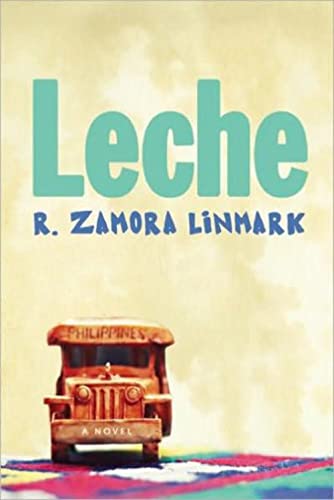
After thirteen years of living in the U.S., Vince returns to his birthplace, the Philippines. As he ventures into the heat and chaos of the city, he encounters a motley cast of characters, including a renegade nun, a political film director, arrogant hustlers, and the country’s spotlight-driven First Daughter. Haunted by his childhood memories and a troubled family history, Vince unravels the turmoil, beauty, and despair of a life caught between a fractured past and a precarious future.
Witty and mesmerizing, this novel explores the complex colonial and cultural history of the Philippines and the paradoxes inherent in the search for both personal and national identities.
R. Zamora Linmark is the author of the novel Rolling the R's (Kaya Press) and two poetry collections, Prime Time Apparitions and The Evolution of a Sigh (Hanging Loose Press). Linmark splits his time between Manila and Honolulu.
Die Inhaltsangabe kann sich auf eine andere Ausgabe dieses Titels beziehen.
Über die Autorin bzw. den Autor
R. Zamora Linmark is the author of the novel Rolling the R’s, which he’s adapted for the stage, and two poetry collections, Prime Time Apparitions and The Evolution of a Sigh. He was listed as one of ?The Men and Women Who Made 2008 a Year to Remember” by OUT Magazine. His work has appeared in anthologies such as Between Men 2: Original Fiction by Today’s Best Gay Writers, The Best Gay American Fiction 1997 and Charlie Chan is Dead. Linmark is completing a one-man show: ?You: A Curse in Progress” and splits his time between Manila and Honolulu.
Auszug. © Genehmigter Nachdruck. Alle Rechte vorbehalten.
Leche
A Novel
By R. Zamora LinmarkCOFFEE HOUSE PRESS
Copyright © 2011 R. Zamora Linmark
All rights reserved.
ISBN: 978-1-56689-254-4All rights reserved.
Contents
BOOK I,
The Sea They Carried,
Tourist Tips,
Headrush,
Sleeping with One Eye Open,
Tourist Tips,
BOOK II,
Shame Dubbed,
Tourist Tips,
Ambushed,
Ode to Fellini,
Postcards,
Son of Brando,
BOOK III,
Postcard,
Tourist Tips,
CCP or Complexion-Conscious Pinoys,
Tourist Tips,
And Introducing Vince De Los Reyes,
BOOK IV,
Who's Afraid of Cat Stevens?,
Postcards,
Tourist Tips,
Paste & Cut,
Tourist Tips,
Postcards,
AnthrApology,
BOOK V,
Are You There God? It's Me, Margaret Mead.,
Tourist Tips,
Ride Me, Baby,
BOOK VI,
Islands in the Stream,
Tourist Tips,
Vince on the Verge,
Postcards,
Tao of Cartography,
Postcards,
BOOK VII,
Sexxxy,
Postcards,
Filipinese,
Postcards,
BOOK VIII,
PM Talking with Yours Truly,
Postcards,
Blow-Up,
Tourist Tips,
My Dinner with Jonas,
Signs of the Times,
Postcard,
Carte Blank,
Postcards,
Coda,
BOOK IX,
Fuseli Revisited,
Tourist Tips,
Full Strings Attached,
We Won't Go Back to Subic Anymore,
The Eleventh Commandment,
Scavenged,
CHAPTER 1
The Sea They Carried
From Bonifacio Dumpit's
Decolonization for Beginners: A Filipino Glossary
balikbayan,noun. 1. coined by the Marcos regime in 1973 for U.S.-based Filipinos returning to visit the motherland and witness its vast improvements, attributed to martial law. 2. unwitting propagator of martial law propaganda. 3. potential savior of the Philippine economy. See alsoOverseas Filipino Workers, brain drain.
TURBAN LEGEND
By the time Vince arrives at the Philippine Airlines departures terminal, it is already bustling with restless souls who, with their balikbayan boxes, have transformed the terminal into a warehouse, as if they're returning to the motherland on a cargo ship rather than Asia's first airline carrier. Comedians use these durable cardboard boxes as materials for their Filipino-flavored jokes. "How is the balikbayan box like American Express to Filipinos? Because they never leave home without it."
Everywhere Vince turns are boxes, boxes, and more boxes. Boxes secured by electrical tape and ropes. Boxes with drawstring covers made from canvas or tarp. Boxes lined up like a fortified wall behind check-in counters or convoying on squeaky conveyor belts of x-ray machines. Boxes blocking the Mabuhay Express lane for first-and business-class passengers. Boxes stacked up on carts right beside coach passengers standing in queues that are straight only at their starting points before branching out to form more — or converge with other — lines, bottle-necking as they near the ticket counter.
Boxes that ought to be the Philippines' exhibit at the next World's Fair, Vince tells himself, as he navigates his cartload of Louis Vuitton bags in and out of the maze. An exhibit that should take place none other than here, at the Honolulu International Airport, he laughs, as he imagines the entire terminal buried in the Filipinos' most popular — and preferred — piece of luggage.
With a balikbayan box, Filipinos can pack cans of Hormel corned beef, Libby's Vienna sausage, Folgers, and SPAM; perfume samples; new or hand-me-down designer jeans; travel-sized bottles of shampoo, conditioner, and body lotion gleaned from Las Vegas hotels; and appliances marked with first-world labels that, as anyone who's been to the Philippines knows, can easily be purchased at Duty Free right outside the airport, or from any of the crypt-like malls that are so gargantuan they're a metropolis unto themselves.
Filipinos will even throw themselves into these boxes, as was the case of an overseas contract worker in Dubai. The man, an engineer, was so homesick that, unable to afford the ticket — most of his earnings went to cover his living expenses and the rest to his wife and children — he talked his roommate, who was homebound for the holidays, into checking him in. He paid for the excess baggage fee, which still came out cheaper than a round-trip airfare. En route to Manila, he died from hypothermia.
Vince, who had heard the story from his older sister Jing, didn't buy it. There were too many loopholes, too many unanswered questions, like wouldn't an x-ray machine in the Middle East detect a Filipino man curled up inside a box? He simply dismissed it as a "turban legend."
"You're missing the point, brother," Jing said. "It's not the mechanics that matter. It's about drama. The extremes a Filipino will go to just to be back home for Christmas with his family."
SAME YELLOW SMELL
When Vince, Jing, and their younger brother Alvin left the Philippines to begin a new life in Hawaii, they arrived with such a box. This was in 1978, when President Ferdinand Marcos and his spotlight-driven sidekick, Imelda, were at the height of their conjugal power, looting the national treasury and depositing their ill-gotten gains in the Alps, or using it to buy prime real estate properties in the U.S. under their cronies' names.
Back then Manila International Airport went by its acronym — MIA. There were no boarding gates for families to huddle at and lengthen their farewells. That ritual took place at the fountain right outside the terminal, where vendors sold soft drinks in plastic bags and photographers offered to capture Polaroid moments for seven pesos, the equivalent of one U.S. dollar back then. Ten-year-old Vince was captured on film wearing a denim suit with a matching cap. Jing, age eleven, had on a faux-fur coat concealing a spaghetti-strap dress. Alvin, who had just turned nine, stood between them, wearing a two-toned polyester suit. And behind them, their grandfather Don Alfonso and their maid Yaya Let, who told them that before Filipinos could touch America, they must first pass through heaven.
No one wanted to be in the picture.
"We didn't come to America," Jing told Vince and Alvin years later, during one of their get-togethers at the Waikiki condo the two brothers rented. "We were sent to a costume ball on Gilligan's Island," she continued. "I was Sissy Spacek in Carrie, Alvin was John Travolta In Saturday Night Fever, and you, Vince, who were you?"
"Denny Terrio from Dance Fever," Vince said.
"Remember those plastic backpacks we carried around?" Alvin said. "What were we thinking?"
"It was a status-symbol thing," Vince said, remembering the see-through backpacks that every kid who belonged to (or wanted to be part of) the upper class had.
"Do you remember the nice mestiza Pan Am stewardess?" Jing asked.
"The one you had a huge crush on?" Vince asked. "The one Alvin wished was his mother?"
"Yeah, her," Jing said, overlapping with Alvin's "No, Vince. That was your wish."
"Mimi," Vince said, recalling that it was Mimi who had given them previews of what to expect in Hawaii: Coke came in cans; boys, as well as girls, danced the hula; "aloha," which is "hello" and "I love you," also meant "goodbye."
"She was so sophisticated," Jing said, "from Forbes Park, Makati, I think."
"And the way she spoke English, just like the six o'clock weather girl," Vince...
„Über diesen Titel“ kann sich auf eine andere Ausgabe dieses Titels beziehen.
Suchergebnisse für Leche

Beispielbild für diese ISBN
Leche
Anbieter: More Than Words, Waltham, MA, USA
Verkäuferbewertung 5 von 5 Sternen

Zustand: Very Good. A bright, square, and overall a nice copy. Bestandsnummer des Verkäufers BOS-E-12f-01893
Gebraucht kaufen
EUR 1,14
EUR 3,49 Versand
Versand innerhalb von USA
Versand innerhalb von USA
Anzahl: 1 verfügbar
Beispielbild für diese ISBN
Leche
Anbieter: World of Books (was SecondSale), Montgomery, IL, USA
Verkäuferbewertung 5 von 5 Sternen
Zustand: Good. Item in good condition. Textbooks may not include supplemental items i.e. CDs, access codes etc. Bestandsnummer des Verkäufers 00080102578
Gebraucht kaufen
EUR 4,93
Versand gratis
Versand innerhalb von USA
Versand innerhalb von USA
Anzahl: 1 verfügbar
Beispielbild für diese ISBN
Leche
Verlag:
Coffee House Press (edition ), 2011
ISBN 10: 1566892546
ISBN 13: 9781566892544
Gebraucht
Paperback
Anbieter: BooksRun, Philadelphia, PA, USA
Verkäuferbewertung 5 von 5 Sternen
Paperback. Zustand: Very Good. It's a well-cared-for item that has seen limited use. The item may show minor signs of wear. All the text is legible, with all pages included. It may have slight markings and/or highlighting. Bestandsnummer des Verkäufers 1566892546-11-1
Gebraucht kaufen
EUR 5,78
Versand gratis
Versand innerhalb von USA
Versand innerhalb von USA
Anzahl: 1 verfügbar
Beispielbild für diese ISBN
Leche
Anbieter: Stories & Sequels, Ashland, OH, USA
Verkäuferbewertung 3 von 5 Sternen

Paperback. Zustand: Good. some wear, Ex-Library: contains identifying library markings but withdrawn from circulation. Bestandsnummer des Verkäufers 181115-8S
Gebraucht kaufen
EUR 6,35
Versand gratis
Versand innerhalb von USA
Versand innerhalb von USA
Anzahl: 1 verfügbar
Beispielbild für diese ISBN
Leche
Verlag:
Coffee House Press, 2011
ISBN 10: 1566892546
ISBN 13: 9781566892544
Gebraucht
Softcover
Erstausgabe
Anbieter: Better World Books, Mishawaka, IN, USA
Verkäuferbewertung 5 von 5 Sternen
Zustand: Good. 1st Edition. Pages intact with minimal writing/highlighting. The binding may be loose and creased. Dust jackets/supplements are not included. Stock photo provided. Product includes identifying sticker. Better World Books: Buy Books. Do Good. Bestandsnummer des Verkäufers 6294049-75
Gebraucht kaufen
EUR 6,60
Versand gratis
Versand innerhalb von USA
Versand innerhalb von USA
Anzahl: 2 verfügbar
Beispielbild für diese ISBN
Leche
Verlag:
Coffee House Press, 2011
ISBN 10: 1566892546
ISBN 13: 9781566892544
Gebraucht
Softcover
Erstausgabe
Anbieter: Better World Books, Mishawaka, IN, USA
Verkäuferbewertung 5 von 5 Sternen
Zustand: Good. 1st Edition. Former library copy. Pages intact with minimal writing/highlighting. The binding may be loose and creased. Dust jackets/supplements are not included. Includes library markings. Stock photo provided. Product includes identifying sticker. Better World Books: Buy Books. Do Good. Bestandsnummer des Verkäufers 2694188-6
Gebraucht kaufen
EUR 6,60
Versand gratis
Versand innerhalb von USA
Versand innerhalb von USA
Anzahl: 1 verfügbar
Beispielbild für diese ISBN
Leche
Anbieter: World of Books Inc, Montgomery, IL, USA
Verkäuferbewertung 4 von 5 Sternen

Paperback. Zustand: Good. A young Filipino American's riotous adventures through the sprawling tragicomic landscape of modern-day Manila. Bestandsnummer des Verkäufers CIN1566892546G
Gebraucht kaufen
EUR 6,73
Versand gratis
Versand innerhalb von USA
Versand innerhalb von USA
Anzahl: 1 verfügbar
Beispielbild für diese ISBN
Leche
Anbieter: ThriftBooks-Atlanta, AUSTELL, GA, USA
Verkäuferbewertung 5 von 5 Sternen
Paperback. Zustand: Very Good. No Jacket. Former library book; May have limited writing in cover pages. Pages are unmarked. ~ ThriftBooks: Read More, Spend Less. Bestandsnummer des Verkäufers G1566892546I4N10
Gebraucht kaufen
EUR 7,01
Versand gratis
Versand innerhalb von USA
Versand innerhalb von USA
Anzahl: 1 verfügbar
Beispielbild für diese ISBN
Leche
Anbieter: ThriftBooks-Dallas, Dallas, TX, USA
Verkäuferbewertung 5 von 5 Sternen
Paperback. Zustand: Fair. No Jacket. Readable copy. Pages may have considerable notes/highlighting. ~ ThriftBooks: Read More, Spend Less. Bestandsnummer des Verkäufers G1566892546I5N00
Gebraucht kaufen
EUR 7,01
Versand gratis
Versand innerhalb von USA
Versand innerhalb von USA
Anzahl: 1 verfügbar
Beispielbild für diese ISBN
Leche
Anbieter: ThriftBooks-Dallas, Dallas, TX, USA
Verkäuferbewertung 5 von 5 Sternen
Paperback. Zustand: Very Good. No Jacket. Former library book; May have limited writing in cover pages. Pages are unmarked. ~ ThriftBooks: Read More, Spend Less. Bestandsnummer des Verkäufers G1566892546I4N10
Gebraucht kaufen
EUR 7,01
Versand gratis
Versand innerhalb von USA
Versand innerhalb von USA
Anzahl: 1 verfügbar