
Verwandte Artikel zu Confessions of an Economic Hit Man
Inhaltsangabe
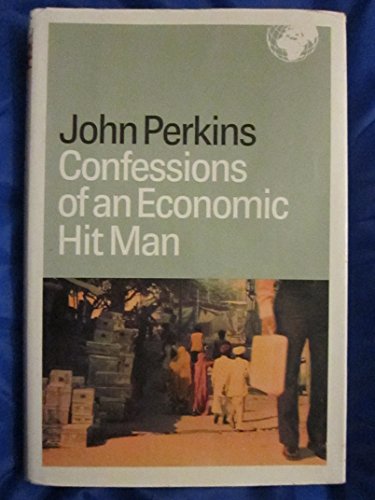
An extraordinary, real-life tale of international intrigue and corruption
Confessions of an Economic Hitman reveals the hidden mechanics of imperial control behind such major international events as the fall of the Shah, the death of Panamanian president Omar Torrijos, and the invasions of Panama and Iraq, as well as providing an inside view of the corrupt U.S.-Saudi Arabian relationship.
This book reveals the story of one man's personal journey from eager servant of empire to impassioned advocate for the rights of oppressed people.
Die Inhaltsangabe kann sich auf eine andere Ausgabe dieses Titels beziehen.
Auszug. © Genehmigter Nachdruck. Alle Rechte vorbehalten.
Confessions of an Economic Hit Man
By John PerkinsBerrett-Koehler Publishers
Copyright © 2006 John PerkinsAll right reserved.
ISBN: 978-1-57675-301-9
Prologue
Quito, Ecuador's capital, stretches across a volcanic valley high in the Andes, at an altitude of nine thousand feet. Residents of this city, which was founded long before Columbus arrived in the Americas, are accustomed to seeing snow on the surrounding peaks, despite the fact that they live just a few miles south of the equator. The city of Shell, a frontier outpost and military base hacked out of Ecuador's Amazon jungle to service the oil company whose name it bears, is nearly eight thousand feet lower than Quito. A steaming city, it is inhabited mostly by soldiers, oil workers, and the indigenous people from the Shuar and Kichwa tribes who work for them as prostitutes and laborers.To journey from one city to the other, you must travel a road that is both tortuous and breathtaking. Local people will tell you that during the trip you experience all four seasons in a single day. Although I have driven this road many times, I never tire of the spectacular scenery. Sheer cliffs, punctuated by cascading waterfalls and brilliant bromeliads, rise up one side. On the other side, the earth drops abruptly into a deep abyss where the Pastaza River, a headwater of the Amazon, snakes its way down the Andes. The Pastaza carries water from the glaciers of Cotopaxi, one of the world's highest active volcanoes and a deity in the time of the Incas, to the Atlantic Ocean over three thousand miles away.
In 2003, I departed Quito in a Subaru Outback and headed for Shell on a mission that was like no other I had ever accepted. I was hoping to end a war I had helped create. As is the case with so many things we EHMs must take responsibility for, it is a war that is virtually unknown anywhere outside the country where it is fought. I was on my way to meet with the Shuars, the Kichwas, and their neighbors the Achuars, the Zaparos, and the Shiwiars-tribes determined to prevent our oil companies from destroying their homes, families, and lands, even if it means they must die in the process. For them, this is a war about the survival of their children and cultures, while for us it is about power, money, and natural resources. It is one part of the struggle for world domination and the dream of a few greedy men, global empire.
That is what we EHMs do best: we build a global empire. We are an elite group of men and women who utilize international financial organizations to foment conditions that make other nations subservient to the corporatocracy running our biggest corporations, our government, and our banks. Like our counterparts in the Mafia, EHMs provide favors. These take the form of loans to develop infrastructure -electric generating plants, highways, ports, airports, or industrial parks. A condition of such loans is that engineering and construction companies from our own country must build all these projects. In essence, most of the money never leaves the United States; it is simply transferred from banking offices in Washington to engineering offices in New York, Houston, or San Francisco.
Despite the fact that the money is returned almost immediately to corporations that are members of the corporatocracy (the creditor), the recipient country is required to pay it all back, principal plus interest. If an EHM is completely successful, the loans are so large that the debtor is forced to default on its payments after a few years. When this happens, then like the Mafia we demand our pound of flesh. This often includes one or more of the following: control over United Nations votes, the installation of military bases, or access to precious resources such as oil or the Panama Canal. Of course, the debtor still owes us the money-and another country is added to our global empire.
Driving from Quito toward Shell on this sunny day in 2003, I thought back thirty-five years to the first time I arrived in this part of the world. I had read that although Ecuador is only about the size of Nevada, it has more than thirty active volcanoes, over 15 percent of the world's bird species, and thousands of as-yet-unclassified plants, and that it is a land of diverse cultures where nearly as many people speak ancient indigenous languages as speak Spanish. I found it fascinating and certainly exotic; yet, the words that kept coming to mind back then were pure, untouched, and innocent. Much has changed in thirty-five years.
At the time of my first visit in 1968, Texaco had only just discovered petroleum in Ecuador's Amazon region. Today, oil accounts for nearly half the country's exports. A trans-Andean pipeline built shortly after my first visit has since leaked over a half million barrels of oil into the fragile rain forest-more than twice the amount spilled by the Exxon Valdez. Today, a new $1.3 billion, three hundred-mile pipeline constructed by an EHM-organized consortium promises to make Ecuador one of the world's top ten suppliers of oil to the United States. Vast areas of rain forest have fallen, macaws and jaguars have all but vanished, three Ecuadorian indigenous cultures have been driven to the verge of collapse, and pristine rivers have been transformed into flaming cesspools.
During this same period, the indigenous cultures began fighting back. For instance, on May 7, 2003, a group of American lawyers representing more than thirty thousand indigenous Ecuadorian people filed a $1 billion lawsuit against ChevronTexaco Corp. The suit asserts that between 1971 and 1992 the oil giant dumped into open holes and rivers over four million gallons per day of toxic wastewater contaminated with oil, heavy metals, and carcinogens, and that the company left behind nearly 350 uncovered waste pits that continue to kill both people and animals.
Outside the window of my Outback, great clouds of mist rolled in from the forests and up the Pastaza's canyons. Sweat soaked my shirt, and my stomach began to churn, but not just from the intense tropical heat and the serpentine twists in the road. Knowing the part I had played in destroying this beautiful country was once again taking its toll. Because of my fellow EHMs and me, Ecuador is in far worse shape today than she was before we introduced her to the miracles of modern economics, banking, and engineering. Since 1970, during this period known euphemistically as the Oil Boom, the official poverty level grew from 50 to 70 percent, under- or unemployment increased from 15 to 70 percent, and public debt increased from $240 million to $16 billion. Meanwhile, the share of national resources allocated to the poorest segments of the population declined from 20 to 6 percent.
Unfortunately, Ecuador is not the exception. Nearly every country we EHMs have brought under the global empire's umbrella has suffered a similar fate. Third world debt has grown to more than $2.5 trillion, and the cost of servicing it-over $375 billion per year as of 2004-is more than all third world spending on health and education, and twenty times what developing countries receive annually in foreign aid. Over half the people in the world survive on less than two dollars per day, which is roughly the same amount they received in the early 1970s. Meanwhile, the top 1 percent of third world households accounts for 70 to 90 percent of all private financial wealth and real estate ownership in their country; the actual percentage depends on the specific country.
The Subaru slowed as it meandered through the streets of the beautiful resort town of Baos, famous for the hot baths created by underground...
„Über diesen Titel“ kann sich auf eine andere Ausgabe dieses Titels beziehen.
Suchergebnisse für Confessions of an Economic Hit Man

Foto des Verkäufers
Confessions of an Economic Hit Man
Verlag:
Berrett-Koehler Publishers, 2004
ISBN 10: 1576753018
ISBN 13: 9781576753019
Gebraucht
Hardcover
Anbieter: Dream Books Co., Denver, CO, USA
Verkäuferbewertung 5 von 5 Sternen

Zustand: good. Gently used with minimal wear on the corners and cover. A few pages may contain light highlighting or writing, but the text remains fully legible. Dust jacket may be missing, and supplemental materials like CDs or codes may not be included. May be ex-library with library markings. Ships promptly! Bestandsnummer des Verkäufers DBV.1576753018.G
Gebraucht kaufen
EUR 3,90
Versand gratis
Versand innerhalb von USA
Versand innerhalb von USA
Anzahl: 2 verfügbar
Beispielbild für diese ISBN
Confessions of an Economic Hit Man
Verlag:
Berrett-Koehler Publishers, 2004
ISBN 10: 1576753018
ISBN 13: 9781576753019
Gebraucht
Hardcover
Anbieter: New Legacy Books, Annandale, NJ, USA
Verkäuferbewertung 5 von 5 Sternen
hardcover. Zustand: Good. There is a signature or handwriting on the inside front cover. Fast shipping and order satisfaction guaranteed. A portion of your purchase benefits Non-Profit Organizations, First Aid and Fire Stations! Bestandsnummer des Verkäufers mon0000134635
Gebraucht kaufen
EUR 2,19
EUR 2,13 Versand
Versand innerhalb von USA
Versand innerhalb von USA
Anzahl: 1 verfügbar
Foto des Verkäufers
Confessions of an Economic Hit Man
Verlag:
Berrett-Koehler Publishers, 2004
ISBN 10: 1576753018
ISBN 13: 9781576753019
Gebraucht
Hardcover
Anbieter: ZBK Books, Carlstadt, NJ, USA
Verkäuferbewertung 5 von 5 Sternen
Zustand: good. Fast & Free Shipping â" Good condition. It may show normal signs of use, such as light writing, highlighting, or library markings, but all pages are intact and the book is fully readable. A solid, complete copy that's ready to enjoy. Bestandsnummer des Verkäufers ZWV.1576753018.G
Gebraucht kaufen
EUR 4,52
Versand gratis
Versand innerhalb von USA
Versand innerhalb von USA
Anzahl: 1 verfügbar
Beispielbild für diese ISBN
Confessions of an Economic Hit Man
Verlag:
Berrett-Koehler Publishers, 2004
ISBN 10: 1576753018
ISBN 13: 9781576753019
Gebraucht
Hardcover
Anbieter: Evergreen Goodwill, Seattle, WA, USA
Verkäuferbewertung 5 von 5 Sternen
hardcover. Zustand: Good. Bestandsnummer des Verkäufers mon0000022072
Gebraucht kaufen
EUR 1,34
EUR 3,42 Versand
Versand innerhalb von USA
Versand innerhalb von USA
Anzahl: 1 verfügbar
Beispielbild für diese ISBN
Confessions of an Economic Hit Man
Verlag:
Berrett-Koehler Publishers, 2004
ISBN 10: 1576753018
ISBN 13: 9781576753019
Gebraucht
Hardcover
Anbieter: SustainableBooks.com, Amherst, NY, USA
Verkäuferbewertung 5 von 5 Sternen
Zustand: Poor. Book is Poor condition. Good for reading, not pretty to look at! The pages and cover are soiled and/or yellowed, worn throughout. Bestandsnummer des Verkäufers 1576753018-2-6
Gebraucht kaufen
EUR 4,78
Versand gratis
Versand innerhalb von USA
Versand innerhalb von USA
Anzahl: 1 verfügbar
Foto des Verkäufers
Confessions of an Economic Hit Man
Verlag:
Berrett-Koehler Publishers, 2004
ISBN 10: 1576753018
ISBN 13: 9781576753019
Gebraucht
Hardcover
Anbieter: Zoom Books Company, Lynden, WA, USA
Verkäuferbewertung 5 von 5 Sternen
Zustand: very_good. Book is in very good condition and may include minimal underlining highlighting. The book can also include "From the library of" labels. May not contain miscellaneous items toys, dvds, etc. . We offer 100% money back guarantee and 24 7 customer service. Bestandsnummer des Verkäufers ZBV.1576753018.VG
Gebraucht kaufen
EUR 4,79
Versand gratis
Versand innerhalb von USA
Versand innerhalb von USA
Anzahl: 2 verfügbar
Beispielbild für diese ISBN
Confessions of an Economic Hit
Verlag:
Berrett-Koehler Publishers, 2004
ISBN 10: 1576753018
ISBN 13: 9781576753019
Gebraucht
Hardcover
Anbieter: World of Books (was SecondSale), Montgomery, IL, USA
Verkäuferbewertung 5 von 5 Sternen
Zustand: Good. Item in good condition. Textbooks may not include supplemental items i.e. CDs, access codes etc. Bestandsnummer des Verkäufers 00061538384
Gebraucht kaufen
EUR 4,82
Versand gratis
Versand innerhalb von USA
Versand innerhalb von USA
Anzahl: 18 verfügbar
Beispielbild für diese ISBN
Confessions of an Economic Hit
Verlag:
Berrett-Koehler Publishers, 2004
ISBN 10: 1576753018
ISBN 13: 9781576753019
Gebraucht
Hardcover
Anbieter: World of Books (was SecondSale), Montgomery, IL, USA
Verkäuferbewertung 5 von 5 Sternen
Zustand: Acceptable. Item in acceptable condition! Textbooks may not include supplemental items i.e. CDs, access codes etc. Bestandsnummer des Verkäufers 00105759492
Gebraucht kaufen
EUR 4,82
Versand gratis
Versand innerhalb von USA
Versand innerhalb von USA
Anzahl: 1 verfügbar
Beispielbild für diese ISBN
Confessions of an Economic Hit
Verlag:
Berrett-Koehler Publishers, 2004
ISBN 10: 1576753018
ISBN 13: 9781576753019
Gebraucht
Hardcover
Anbieter: World of Books (was SecondSale), Montgomery, IL, USA
Verkäuferbewertung 5 von 5 Sternen
Zustand: Good. Item in good condition and has highlighting/writing on text. Used texts may not contain supplemental items such as CDs, info-trac etc. Bestandsnummer des Verkäufers 00101547268
Gebraucht kaufen
EUR 5,28
Versand gratis
Versand innerhalb von USA
Versand innerhalb von USA
Anzahl: 1 verfügbar
Beispielbild für diese ISBN
Confessions of an Economic Hit
Verlag:
Berrett-Koehler Publishers, 2004
ISBN 10: 1576753018
ISBN 13: 9781576753019
Gebraucht
Hardcover
Anbieter: World of Books (was SecondSale), Montgomery, IL, USA
Verkäuferbewertung 5 von 5 Sternen
Zustand: Good. Good condition ex-library book with usual library markings and stickers. Bestandsnummer des Verkäufers 00101376587
Gebraucht kaufen
EUR 5,28
Versand gratis
Versand innerhalb von USA
Versand innerhalb von USA
Anzahl: 1 verfügbar