
Verwandte Artikel zu You're Addicted to You: Why It's So Hard to...
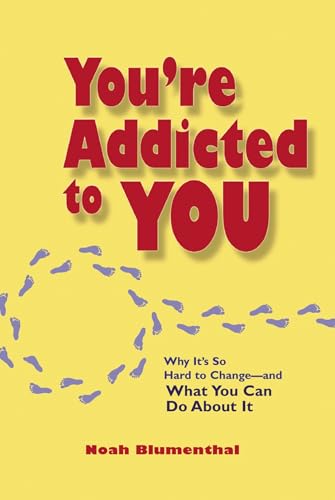
Inhaltsangabe
All of us have things about ourselves we’d like to change. Maybe you want to be more organized, healthier, thinner, or more outspoken. Or perhaps you want to procrastinate less, quit smoking, listen better, or be a better leader. Whatever you want to change, you probably believe that your success depends on your conviction. The fact of the matter is, willpower alone won’t get you to change.
Noah Blumenthal illustrates how each of us becomes so thoroughly conditioned to act in old, counterproductive ways that negative behaviors become part of our very being. In a very real sense we become addicted to ourselves. The problem, he explains, isn’t that you aren’t trying hard enough, but that you’ve never learned the right way to make difficult changes. Here, he details a proven three-stage strategy—illuminated with practical tools, techniques, and exercises—for breaking self-addictions and conquering damaging behaviors like anger, workaholism, risk aversion, procrastination, overeating, under-exercising—just about anything. We all want to change our counterproductive behaviors. Here, Blumenthal offers a step-by-step guide for how to do it successfully.
Die Inhaltsangabe kann sich auf eine andere Ausgabe dieses Titels beziehen.
Über die Autorin bzw. den Autor
Noah Blumenthal is the founder and president of Leading Principles, Inc., a consulting company specializing in executive coaching, leadership, and team development. As a consultant and coach, he has worked with corporations, not-for-profit, and educational institutions including MetLife, Bank of America, Pfizer, Johnson & John- son, Accenture, Leo Burnett, First Energy Corp, New School University, and Fairfield University. Noah has coached hundreds of executives on making difficult changes and has trained new and seasoned
coaches, HR leaders, executives, and managers in the art of coaching. He studied psychology as an undergraduate student at Brandeis University and organizational psychology as a graduate student at Columbia University. Noah is a renowned speaker and workshop leader delivering talks on changing ingrained behaviors, building executive teams, and developing effective interpersonal relationships.
Auszug. © Genehmigter Nachdruck. Alle Rechte vorbehalten.
Introduction
Understanding Self-Addiction
Questions to get you started:
What is self-addiction?
What are your self-addictions?
Renee calls herself a New Year’s Health Nut. In early January she is a regular at the gym, but knows that by February she will have forgotten her New Year’s resolution to stay in shape, given up on her exercise crusade, and disappeared from the gym until next year.
Denise is a self-proclaimed “control freak” whose behavior hurts her personal and professional relationships.
Jonathan is an engineer-turned-manager who constantly points out the errors and problems in other people’s work. His inability to provide positive feedback is turning his team against him.
What challenge do Renee, Denise, and Jonathan face? They are each addicted to themselves.
2
What does it mean to be addicted to yourself?
People use the word addiction to describe a variety of behaviors and conditions. There are alcoholics and shopaholics. There are drug addicts and sex addicts. There are compulsive gamblers and compulsive shoplifters. People say they are addicted to food or fitness, chocolate or basketball. But what does it really mean to be addicted to yourself?
There are many different addictions, some of which (alcohol, drugs, gambling, etc.) can destroy people’s lives. This book is not meant to be a substitute for treatment of clinical addictions. The addictions I discuss in these pages are behaviors you exhibit on a daily basis. They are your habits and routines. They are the actions you take with your coworkers, your spouse, and your children. They are the behaviors that come out when you are angry or hurt or nervous or unsure of yourself.
These behaviors come out in all areas of life. Someone criticizes you and you turn silent. Perhaps you know that you should try to understand and work to improve, but you are addicted to your silent, cold response. Another time your spouse leaves the kitchen a mess for what seems like the tenth time this week. You may know that yelling about it won’t help the situation or your relationship, but you do it anyway. When you go into work you find several co-workers congregated in an office complaining about the new marketing strategy. Maybe you realize that you’re only making the situation worse by joining in, but it feels so natural you can hardly help yourself.
Whatever the behaviors are that you wish to change, you may not feel like an addict. You are certainly very talented in many ways and may be an exemplary parent, spouse, leader, and friend. Perhaps you are on the verge of being a perfect ten, if only you quit being so accommodating, paid more attention to your kids, or did a better job of delegating. We all have ways that we can improve ourselves.
Have you ever wondered why self-help is one of the fastest growing industries? Why are there so many books to help people change themselves? Is it that people have so many things that they 3 want to change, or is it that we are simply not very good at changing? At the time of this writing Amazon.com had over 170,000 listings for “diet.” Yet, we certainly are not a particularly thin nation. There were over 120,000 items under “leadership.” Walk into any corporate executive’s office, and you are bound to find a handful, if not dozens, of leadership books. Imagine what work would be like if all of the corporate executives in the country actually practiced half of the leadership skills described in the books they read.
Why don’t these leadership and diet books work? Because they provide new behaviors and supply wonderful ideas, but they don’t help us address our addictions to our behaviors. We have had our behaviors shaped, molded, and reinforced thousands of times over the course of our lifetimes. We have been conditioned to act in a certain way when faced with certain types of situations. We can’t simply come up with something better and turn off the old behavior. It takes time to unlearn the old behavior and to learn to replace it with a new one.
Steven is a learning and development professional who works for a Fortune 500 company. He is also a recovering alcoholic. When I asked him how long it had been since his last drink, he replied, “Every day is a new challenge.” He wasn’t being vague; he was telling me that it didn’t matter how long it had been. The power of the addictive behavior is so strong that if he isn’t vigilant every day, it could come back to overwhelm him. Later he shared with me that it had been 17 years since his last drink. Your behavioral addictions may not take a lifetime to overcome. However, the example of alcoholism presents a valuable lesson that a deeply ingrained behavior doesn’t change overnight.
The fact remains that you can change. Whether you are trying to change something for the first time or you are struggling with something that you have tried to change many times in the past, you can make the change you desire. People have difficulty with change because they don’t know how to change. They know what they want to do, but they don’t know how to adjust when they get into situations that bring out their bad habits. The truth is that you can change if 4 you have an effective plan for how to do so. This book is dedicated to helping you lay out that plan and break your self-addiction.
What are some common self-addictions?
Self-addictions appear in every area of life. You may wish to be a better parent, a better spouse, a better leader, or you may wish to make changes for your own sake, so you can be a better person. In some cases, you may wish to eliminate a behavior that you feel harms you (e.g., controlling behavior). In another situation you may want to begin a new behavior (e.g., regular exercise). Unwanted behaviors may occur in your interactions with others (e.g., yelling at people), or they may occur when you are alone (e.g., criticizing yourself).
Maybe you already have an idea of an area in your life that you wish were different. If not, the checklist on page 5 might help you identify some areas where you’d benefit from change. This exercise is not meant as an opportunity for you to catalogue all the things that you wish to change. Do not get down on yourself if you share many of the behaviors on the list. Instead, focus on those areas you most wish to change now. Also, do not feel restricted by the items listed. Feel free to add your own.
This exercise should start to give you a sense of where some of your self-addictions may lie. Step 1, Identifying Your Self-Addictions, is dedicated to exploring more fully what your self-addictions are and what you most wish to change.
For now, it is important to simply understand that a self-addiction can be any behavior that is used inappropriately. You may even notice that some addictive behaviors are flip sides of the same coin. For example, telling others what to do and doing what you are told can both be self-addictions and illustrate that self-addiction isn’t so much about the behavior itself as it is about the inappropriate use of the behavior.
For every addictive behavior listed, you can construct situations in which that behavior makes sense. You can create circumstances in which the behavior is a good and maybe even the best course of action. 5 Of course, you can also invent situations where the behaviors would have negative, or even disastrous effects.
See Table
Throughout the book we will follow the stories of four individuals who have worked to overcome their self-addictions. Karen, the first individual we will follow, works in customer service for a travel services company. She describes how...
„Über diesen Titel“ kann sich auf eine andere Ausgabe dieses Titels beziehen.
Suchergebnisse für You're Addicted to You: Why It's So Hard to...

Beispielbild für diese ISBN
You're Addicted to You: Why It's So Hard to Change -- and What You Can Do About It
Verlag:
Berrett-Koehler Publishers (edition First Edition), 2007
ISBN 10: 1576754278
ISBN 13: 9781576754276
Gebraucht
Paperback
Erstausgabe
Anbieter: BooksRun, Philadelphia, PA, USA
Verkäuferbewertung 5 von 5 Sternen

Paperback. Zustand: Very Good. First Edition. It's a well-cared-for item that has seen limited use. The item may show minor signs of wear. All the text is legible, with all pages included. It may have slight markings and/or highlighting. Bestandsnummer des Verkäufers 1576754278-8-1
Gebraucht kaufen
EUR 4,79
Versand gratis
Versand innerhalb von USA
Versand innerhalb von USA
Anzahl: 1 verfügbar
Beispielbild für diese ISBN
You're Addicted to You: Why It's So Hard to Change -- and What You Can Do About It
Verlag:
Berrett-Koehler Publishers, 2007
ISBN 10: 1576754278
ISBN 13: 9781576754276
Gebraucht
Softcover
Anbieter: More Than Words, Waltham, MA, USA
Verkäuferbewertung 5 von 5 Sternen
Zustand: Good. A sound copy with only light wear. Overall a solid copy at a great price! Bestandsnummer des Verkäufers BOS-U-09j-01343
Gebraucht kaufen
EUR 1,89
EUR 3,51 Versand
Versand innerhalb von USA
Versand innerhalb von USA
Anzahl: 1 verfügbar
Beispielbild für diese ISBN
You're Addicted to You: Why It's So Hard to Change - and What You Can Do About It
Verlag:
Berrett-Koehler Publishers, Inc., 2007
ISBN 10: 1576754278
ISBN 13: 9781576754276
Gebraucht
paperback
Anbieter: The Book Cellar, LLC, Nashua, NH, USA
Verkäuferbewertung 4 von 5 Sternen

paperback. Zustand: Very Good. Great used condition. A portion of your purchase of this book will be donated to non-profit organizations.Over 1,000,000 satisfied customers since 1997! Choose expedited shipping (if available) for much faster delivery. Delivery confirmation on all US orders. Bestandsnummer des Verkäufers 10855757
Gebraucht kaufen
EUR 3,61
EUR 3,51 Versand
Versand innerhalb von USA
Versand innerhalb von USA
Anzahl: 1 verfügbar
Beispielbild für diese ISBN
You're Addicted to You: Why It's So Hard to Change - and What You Can Do About It
Verlag:
Berrett-Koehler Publishers, Inc., 2007
ISBN 10: 1576754278
ISBN 13: 9781576754276
Gebraucht
paperback
Anbieter: The Book Cellar, LLC, Nashua, NH, USA
Verkäuferbewertung 4 von 5 Sternen
paperback. Zustand: Very Good. Great used condition. A portion of your purchase of this book will be donated to non-profit organizations.Over 1,000,000 satisfied customers since 1997! Choose expedited shipping (if available) for much faster delivery. Delivery confirmation on all US orders. Bestandsnummer des Verkäufers 10855749
Gebraucht kaufen
EUR 3,61
EUR 3,51 Versand
Versand innerhalb von USA
Versand innerhalb von USA
Anzahl: 3 verfügbar
Beispielbild für diese ISBN
You're Addicted to You: Why It's So Hard to Change -- and What You Can Do About It
Verlag:
Berrett-Koehler Publishers, 2007
ISBN 10: 1576754278
ISBN 13: 9781576754276
Gebraucht
paperback
Anbieter: Half Price Books Inc., Dallas, TX, USA
Verkäuferbewertung 5 von 5 Sternen
paperback. Zustand: Very Good. Connecting readers with great books since 1972! Used books may not include companion materials, and may have some shelf wear or limited writing. We ship orders daily and Customer Service is our top priority! Bestandsnummer des Verkäufers S_485388851
Gebraucht kaufen
EUR 7,24
EUR 3,30 Versand
Versand innerhalb von USA
Versand innerhalb von USA
Anzahl: 1 verfügbar
Beispielbild für diese ISBN
You're Addicted to You: Why It's So Hard to Change -- and What You Can Do About It
Verlag:
Berrett-Koehler Publishers, 2007
ISBN 10: 1576754278
ISBN 13: 9781576754276
Gebraucht
Softcover
Anbieter: Ammareal, Morangis, Frankreich
Verkäuferbewertung 5 von 5 Sternen
Softcover. Zustand: Bon. Ammareal reverse jusqu'à 15% du prix net de cet article à des organisations caritatives. ENGLISH DESCRIPTION Book Condition: Used, Good. Ammareal gives back up to 15% of this item's net price to charity organizations. Bestandsnummer des Verkäufers G-660-063
Gebraucht kaufen
EUR 5,55
EUR 16,50 Versand
Versand von Frankreich nach USA
Versand von Frankreich nach USA
Anzahl: 1 verfügbar
Beispielbild für diese ISBN
You're Addicted to You: Why It's So Hard to Change -- and What You Can Do About It
Anbieter: BennettBooksLtd, Los Angeles, CA, USA
Verkäuferbewertung 5 von 5 Sternen
paperback. Zustand: New. In shrink wrap. Looks like an interesting title! Bestandsnummer des Verkäufers Q-1576754278
Neu kaufen
EUR 71,19
EUR 6,11 Versand
Versand innerhalb von USA
Versand innerhalb von USA
Anzahl: 1 verfügbar
Foto des Verkäufers
You're Addicted to You: Why It's So Hard to Change- and What You Can Do About It
Anbieter: Rarewaves.com UK, London, Vereinigtes Königreich
Verkäuferbewertung 5 von 5 Sternen
Paperback. Zustand: New. Bestandsnummer des Verkäufers LU-9781576754276
Neu kaufen
EUR 32,49
EUR 75,77 Versand
Versand von Vereinigtes Königreich nach USA
Versand von Vereinigtes Königreich nach USA
Anzahl: Mehr als 20 verfügbar
Beispielbild für diese ISBN
You're Addicted to You: Why It's So Hard to Change -- And What You Can Do about It
Verlag:
BERRETT KOEHLER PUBL INC, 2007
ISBN 10: 1576754278
ISBN 13: 9781576754276
Gebraucht
Softcover
Anbieter: Buchpark, Trebbin, Deutschland
Verkäuferbewertung 5 von 5 Sternen
Zustand: Sehr gut. Zustand: Sehr gut | Sprache: Englisch | Produktart: Bücher | Keine Beschreibung verfügbar. Bestandsnummer des Verkäufers 3313838/2
Gebraucht kaufen
EUR 15,00
EUR 105,00 Versand
Versand von Deutschland nach USA
Versand von Deutschland nach USA
Anzahl: 1 verfügbar