
Verwandte Artikel zu The First-Aid Companion for Dogs & Cats (Prevention...
Inhaltsangabe
Is there an animal doctor in the house?
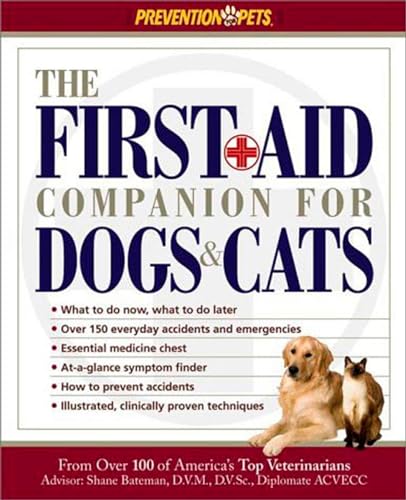
Most likely, the answer is no. And when an accident or other emergency threatens your pet, every minute counts. Don't be unprepared! Open The First-Aid Companion for Dogs and Cats by Amy D. Shojai and learn:
* Basic first-aid techniques, such as cleaning a wound, making a splint, and performing CPR-- step-by-step!
* Which over-the-counter human medications can help-- or harm-- your dog or cat
* What to keep in your pet's medicine chest (many essential items are probably in your house already!)
* How to quickly pinpoint what's wrong with your pet, using the First-Aid Symptom Finder
Plus, you'll discover a comprehensive A-to-Z guide to more than 150 common-- and not-so-common-- injuries and conditions, including:
* Abscesses (page 60)
* Bites from Animals (page 90)
* Car Accidents (page 117)
* Choking (page 131)
* Gunshot Wounds (page 224)
* Heatstroke (page 237)
* Hot Spots (page 245)
* Jellyfish Stings (page 269)
* Poisoning (page 311)
* Snakebites (page 350)
Each at-a-glance entry tells you when to call the vet, which supplies or medications you'll need, what immediate action you should take, and what you should do as follow-up care.
By knowing what to do in an emergency and then acting quickly and confidently to take the proper steps, you could save your pet's life. The next time medical help is not quickly available, reach for The First-Aid Companion for Dogs and Cats. It's a pet owner's second best friend.
Die Inhaltsangabe kann sich auf eine andere Ausgabe dieses Titels beziehen.
Über die Autorin bzw. den Autor
Amy D. Shojai is the author of 12 books about dogs and cats. She lectures around the United States on pet-related topics and is frequently interviewed on national radio and TV. She lives with her husband and pets in Sherman, Texas.
Von der hinteren Coverseite
The First Aid Companion for Dogs & Cats
Is there an animal doctor in the house?
Most likely, the answer is no. And when an accident or other emergency threatens your pet, every minute counts. Don't be unprepared! Open The First-Aid Companion for Dogs and Cats and learn:
* Basic first-aid techniques, such as cleaning a wound, making a splint, and performing CPR-- step-by-step!
* Which over-the-counter human medications can help-- or harm-- your dog or cat
* What to keep in your pet's medicine chest (many essential items are probably in your house already!)
* How to quickly pinpoint what's wrong with your pet, using the First-Aid Symptom Finder
Plus, you'll discover a comprehensive A-to-Z guide to more than 150 common-- and not-so-common-- injuries and conditions, including:
* Abscesses (page 60)
* Bites from Animals (page 90)
* Car Accidents (page 117)
* Choking (page 131)
* Gunshot Wounds (page 224)
* Heatstroke (page 237)
* Hot Spots (page 245)
* Jellyfish Stings (page 269)
* Poisoning (page 311)
* Snakebites (page 350)
Each at-a-glance entry tells you when to call the vet, which supplies or medications you'll need, what immediate action you should take, and what you should do as follow-up care.
By knowing what to do in an emergency and then acting quickly and confidently to take the proper steps, you could save your pet's life. The next time medical help is not quickly available, reach for The First-Aid Companion for Dogs and Cats. It's a pet owner's second best friend.
About the Author
Amy D. Shojai is the author of 12 books about dogs and cats. She lectures around the United States on pet-related topics and is frequently interviewed on national radio and TV. She lives with her husband and pets in Sherman, Texas.
Auszug. © Genehmigter Nachdruck. Alle Rechte vorbehalten.
The First Aid Companion for Dogs & Cats
By Amy D. ShojaiRodale Press
Copyright © 2001 Amy D. ShojaiAll right reserved.
ISBN: 9781579543655
Excerpt
Basic Techniquesand How to Do Them
When we think of pet first aid, it'susually limited to emergencies, likebeing hit by a car or being electrocutedwhen a puppy chews through a light cord,for example. Luckily, most pet owners will neverneed to deal with such dramatic problems.
But all pet owners are faced with everydayproblems like ear infections, cut paws, or upsetstomachs. Time and again, you'll find first-aidtechniques useful. These basic techniques applyto hundreds of dog and cat conditions,whether your pet suffers from a fractured leg,a bleeding wound, or just the sniffles or asplinter.
What's more, in really dramatic situations,they can save your pet's life.
SAFE RESTRAINTS
A humane restraint serves three major purposes.First, it protects you from being bitten orclawed by your injured pet while you're administeringfirst aid. Second, restricting your pet'smovements keeps him from making the injuryworse. Finally, the restraint keeps him in oneplace so that the wound can be examined andtreated. Here are some examples.
Muzzles
Even the most gentle and loving dog or cat willbite in reflex when he's hurt. Commercial muzzlesare available from pet-supply stores and catalogsfor all sizes and shapes of dog and catfaces. But when you don't have a commercialmuzzle handy, you can make one.
Cats and short-nosed dogs like pugs are achallenge because there's not enough nose foryou to tie shut. One of the best muzzles forthese pets is a pillowcase. Fit the cloth bag overyour pet's head and gently hold it around theneck. The fabric keeps the teeth engaged, andoften, pets stop struggling once they can nolonger see what's happening. You can pull thepillowcase down as low over your pet's body asnecessary to contain his front paws and clawsas well—allow just the affected body part tostick out of the pillowcase for easy access sothat you can treat it. Some treatments, like acool-water soak, can be done right through thepillowcase.
Dogs with long noses are much easier tomuzzle. You can use any long piece of material,from a necktie or length of gauze bandage to aleg from a pair of panty hose, or even an extraleash. Loop the material around your pet's jawand tie it in a single knot (half hitch) on top ofhis nose. Then bring both ends of the tie backdown under his jaw and tie another singleknot. Finally, pull the ends behind the base ofhis neck and tie them in a bow or knot. Themuzzle will hold his jaws closed so he can'tbite.
Restraint Techniques
Each form of restraint works best for a specifictype of injury. Choose a technique that leavesthe injured area accessible for treatment. Inmost instances, one person restrains the petwhile a second person performs first aid. In allcases, it's best to place small pets on a counter ortabletop so that they are at waist level. Medium-sizeto large dogs are best treated on the floor,with you kneeling beside them.
Reclining restraint: Place your pet on hisside, with the injured area facing up. With onehand, grasp the ankle of the foreleg that'sagainst the ground while gently pressing yourforearm across his shoulders. With the otherhand, grasp the ankle of the hind leg that'sagainst the ground while pressing that forearmacross his hips. This technique works particularlywell with medium-size to large dogs and isalso recommended for dog breeds with prominenteyes, like Pekingese. (Holding these typesof dogs around the neck produces pressure thatmay pop out their eyeballs.)
Stretch restraint: With cats and small dogs,grasp your pet by the loose skin at the back ofthe neck—the scruff—with one hand. Captureboth hind feet with the other hand. Gentlystretch out your pet and hold him against atabletop.
Hugging restraint: Bring one arm underneathand around your dog's neck in a kind ofhalf-nelson to hug him to your chest. With theother arm, reach under and around his chestand pull him closer against you. This techniqueworks best for dogs over 20 pounds and ismost useful when trying to immobilize the abdomen,legs, chest, and back. (For women, abetter alternative may be to reach over andaround the dog's chest, as shown on page 272.)
Kneeling restraint: Pressure around the necksof dogs with prominent eyes, like Pekingese,may pop out their eyeballs. So with thesebreeds, instead of restraining with a neck grip orby the scruff, put your dog on the floor betweenyour knees and facing away from you as youkneel. Then put one hand on top of your dog'shead and the other around or beneath his jawsto steady his head while another person treatsthe area. This form of restraint also works wellfor giving pills to cats.
ARTIFICIAL RESPIRATIONAND CPR
Your pet's cardiopulmonary system works likea superefficient cargo train that circles thebody and never stops. The lungs dump thecargo—oxygen—into the bloodstream, whilethe heart serves as the engine that moves theblood. By the time blood completes a full circuitaround the body and returns to the lungs,the oxygen has been off-loaded where it'sneeded so that the train can take on a freshoxygen supply and repeat the process. Anythingthat interrupts your pet's breathing orheartbeat stops him dead in his tracks. He'lllose consciousness, and failure to receiveoxygen for even a few minutes causes irreversiblebrain damage.
Artificial Respiration
Pets usually go into respiratory arrest first; theheart may continue to beat for a short whileeven after a pet's breathing stops. You mustbegin artificial respiration within minutes tosave your pet's life. Start rescue breathing immediately,but be prepared to continue in the caron the way to the hospital. Have somebody elsedrive while you work on your pet—it's not unusualfor a cat or dog to be saved after an ownerbreathes for them for 1/2 hour or more.
A pet who is very cold may breathe muchmore slowly than normal, so be sure that he hasstopped breathing. Watch for the rise and fall ofhis chest or feel for his breath on your palm. Ifhe is not breathing, his gums will turn blue fromlack of oxygen.
Before beginning artificial respiration, checkto see if the airway is clear. Open your pet'smouth and look inside for a foreign object. Ifthe airway is blocked, grab his tongue and pullit outward to dislodge the object, or reach inwith your fingers or small pliers or tongs to grabit. If you can't reach it, use the Heimlich maneuver(see page 22). Once the airway is open,begin rescue breathing.
* Lay a large pet on his side (you can cradle asmall pet in your lap) and straighten his neckby lifting the chin so that his throat offers astraight shot into his lungs.
* Mouth-to-mouth breathing won't work becauseyou can't seal your pet's lips with yourmouth, and too much air escapes. Instead,close your pet's mouth with one or bothhands to seal it.
* Put your mouth completely over his nose(with a small pet, your mouth will cover bothhis nose and mouth) and blow with twoquick breaths, watching to see if his lungs expand.Air will go directly through the noseand into the lungs when the mouth is sealedcorrectly.
* Blow just hard enough to move his sides. Fora very large dog, you'll need to blow prettyhard, but blow gently...
„Über diesen Titel“ kann sich auf eine andere Ausgabe dieses Titels beziehen.
Suchergebnisse für The First-Aid Companion for Dogs & Cats (Prevention...

Beispielbild für diese ISBN
First-Aid Companion for Dogs and Cats
Anbieter: World of Books (was SecondSale), Montgomery, IL, USA
Verkäuferbewertung 5 von 5 Sternen

Paperback. Zustand: Fair. Is there an animal doctor in the house? Most likely, the answer is no. And when an accident or other emergency threatens your pet, every minute counts. Don't be unprepared! Open The First-Aid Companion for Dogs and Cats by Amy D. Shojai and learn: * Basic first-aid techniques, such as cleaning a wound, making a splint, and performing CPR-- step-by-step! * Which over-the-counter human medications can help-- or harm-- your dog or cat * What to keep in your pet's medicine chest (many essential items are probably in your house already!) * How to quickly pinpoint what's wrong with your pet, using the First-Aid Symptom Finder Plus, you'll discover a comprehensive A-to-Z guide to more than 150 common-- and not-so-common-- injuries and conditions, including: * Abscesses (page 60) * Bites from Animals (page 90) * Car Accidents (page 117) * Choking (page 131) * Gunshot Wounds (page 224) * Heatstroke (page 237) * Hot Spots (page 245) * Jellyfish Stings (page 269) * Poisoning (page 311) * Snakebites (page 350) Each at-a-glance entry tells you when to call the vet, which supplies or medications you'll need, what immediate action you should take, and what you should do as follow-up care. By knowing what to do in an emergency and then acting quickly and confidently to take the proper steps, you could save your pet's life. The next time medical help is not quickly available, reach for The First-Aid Companion for Dogs and Cats. It's a pet owner's second best friend. Bestandsnummer des Verkäufers 00110232518
Gebraucht kaufen
EUR 4,00
Versand gratis
Versand innerhalb von USA
Versand innerhalb von USA
Anzahl: 1 verfügbar
Beispielbild für diese ISBN
First-Aid Companion for Dogs and Cats
Anbieter: World of Books (was SecondSale), Montgomery, IL, USA
Verkäuferbewertung 5 von 5 Sternen
Paperback. Zustand: Very Good. Is there an animal doctor in the house? Most likely, the answer is no. And when an accident or other emergency threatens your pet, every minute counts. Don't be unprepared! Open The First-Aid Companion for Dogs and Cats by Amy D. Shojai and learn: * Basic first-aid techniques, such as cleaning a wound, making a splint, and performing CPR-- step-by-step! * Which over-the-counter human medications can help-- or harm-- your dog or cat * What to keep in your pet's medicine chest (many essential items are probably in your house already!) * How to quickly pinpoint what's wrong with your pet, using the First-Aid Symptom Finder Plus, you'll discover a comprehensive A-to-Z guide to more than 150 common-- and not-so-common-- injuries and conditions, including: * Abscesses (page 60) * Bites from Animals (page 90) * Car Accidents (page 117) * Choking (page 131) * Gunshot Wounds (page 224) * Heatstroke (page 237) * Hot Spots (page 245) * Jellyfish Stings (page 269) * Poisoning (page 311) * Snakebites (page 350) Each at-a-glance entry tells you when to call the vet, which supplies or medications you'll need, what immediate action you should take, and what you should do as follow-up care. By knowing what to do in an emergency and then acting quickly and confidently to take the proper steps, you could save your pet's life. The next time medical help is not quickly available, reach for The First-Aid Companion for Dogs and Cats. It's a pet owner's second best friend. Bestandsnummer des Verkäufers 00108860030
Gebraucht kaufen
EUR 4,00
Versand gratis
Versand innerhalb von USA
Versand innerhalb von USA
Anzahl: 1 verfügbar
Beispielbild für diese ISBN
First-Aid Companion for Dogs and Cats
Anbieter: World of Books (was SecondSale), Montgomery, IL, USA
Verkäuferbewertung 5 von 5 Sternen
Paperback. Zustand: Good. Is there an animal doctor in the house? Most likely, the answer is no. And when an accident or other emergency threatens your pet, every minute counts. Don't be unprepared! Open The First-Aid Companion for Dogs and Cats by Amy D. Shojai and learn: * Basic first-aid techniques, such as cleaning a wound, making a splint, and performing CPR-- step-by-step! * Which over-the-counter human medications can help-- or harm-- your dog or cat * What to keep in your pet's medicine chest (many essential items are probably in your house already!) * How to quickly pinpoint what's wrong with your pet, using the First-Aid Symptom Finder Plus, you'll discover a comprehensive A-to-Z guide to more than 150 common-- and not-so-common-- injuries and conditions, including: * Abscesses (page 60) * Bites from Animals (page 90) * Car Accidents (page 117) * Choking (page 131) * Gunshot Wounds (page 224) * Heatstroke (page 237) * Hot Spots (page 245) * Jellyfish Stings (page 269) * Poisoning (page 311) * Snakebites (page 350) Each at-a-glance entry tells you when to call the vet, which supplies or medications you'll need, what immediate action you should take, and what you should do as follow-up care. By knowing what to do in an emergency and then acting quickly and confidently to take the proper steps, you could save your pet's life. The next time medical help is not quickly available, reach for The First-Aid Companion for Dogs and Cats. It's a pet owner's second best friend. Bestandsnummer des Verkäufers 00104258125
Gebraucht kaufen
EUR 4,00
Versand gratis
Versand innerhalb von USA
Versand innerhalb von USA
Anzahl: 17 verfügbar
Foto des Verkäufers
The First-Aid Companion for Dogs & Cats (Prevention Pets)
Anbieter: Dream Books Co., Denver, CO, USA
Verkäuferbewertung 5 von 5 Sternen
Zustand: acceptable. This copy has clearly been enjoyedâ"expect noticeable shelf wear and some minor creases to the cover. Binding is strong, and all pages are legible. May contain previous library markings or stamps. Bestandsnummer des Verkäufers DBV.1579543650.A
Gebraucht kaufen
EUR 4,01
Versand gratis
Versand innerhalb von USA
Versand innerhalb von USA
Anzahl: 2 verfügbar
Foto des Verkäufers
The First-Aid Companion for Dogs & Cats (Prevention Pets)
Anbieter: 3Brothers Bookstore, Egg harbor township, NJ, USA
Verkäuferbewertung 5 von 5 Sternen
Zustand: good. Books may contain some notes and highlighting. Supplements such as Access Codes, Cd's Dust Jackets, etc. are not guaranteed with used book purchases. Bestandsnummer des Verkäufers EVV.1579543650.G
Gebraucht kaufen
EUR 4,02
Versand gratis
Versand innerhalb von USA
Versand innerhalb von USA
Anzahl: 2 verfügbar
Foto des Verkäufers
The First-Aid Companion for Dogs & Cats (Prevention Pets)
Anbieter: Zoom Books East, Glendale Heights, IL, USA
Verkäuferbewertung 5 von 5 Sternen
Zustand: acceptable. Book is in acceptable condition and shows signs of wear. Book may also include underlining highlighting. The book can also include "From the library of" labels. May not contain miscellaneous items toys, dvds, etc. . We offer 100% money back guarantee and 24 7 customer service. Bestandsnummer des Verkäufers ZEV.1579543650.A
Gebraucht kaufen
EUR 4,06
Versand gratis
Versand innerhalb von USA
Versand innerhalb von USA
Anzahl: 1 verfügbar
Foto des Verkäufers
The First-Aid Companion for Dogs & Cats (Prevention Pets)
Anbieter: Zoom Books East, Glendale Heights, IL, USA
Verkäuferbewertung 5 von 5 Sternen
Zustand: good. Book is in good condition and may include underlining highlighting and minimal wear. The book can also include "From the library of" labels. May not contain miscellaneous items toys, dvds, etc. . We offer 100% money back guarantee and 24 7 customer service. Bestandsnummer des Verkäufers ZEV.1579543650.G
Gebraucht kaufen
EUR 4,06
Versand gratis
Versand innerhalb von USA
Versand innerhalb von USA
Anzahl: 6 verfügbar
Foto des Verkäufers
The First-Aid Companion for Dogs & Cats (Prevention Pets)
Anbieter: Greenworld Books, Arlington, TX, USA
Verkäuferbewertung 5 von 5 Sternen
Zustand: very_good. Fast Free Shipping â" Very Good condition book with a firm cover and clean pages. Shows normal use and some light wear or limited notes markings. A solid, nice copy to enjoy. Bestandsnummer des Verkäufers GWV.1579543650.VG
Gebraucht kaufen
EUR 4,92
Versand gratis
Versand innerhalb von USA
Versand innerhalb von USA
Anzahl: 2 verfügbar
Foto des Verkäufers
The First-Aid Companion for Dogs & Cats (Prevention Pets)
Anbieter: Greenworld Books, Arlington, TX, USA
Verkäuferbewertung 5 von 5 Sternen
Zustand: good. Fast Free Shipping â" Good condition. It may show normal signs of use, such as light writing, highlighting, or library markings, but all pages are intact and the book is fully readable. A solid, complete copy that's ready to enjoy. Bestandsnummer des Verkäufers GWV.1579543650.G
Gebraucht kaufen
EUR 4,92
Versand gratis
Versand innerhalb von USA
Versand innerhalb von USA
Anzahl: 2 verfügbar
Beispielbild für diese ISBN
First-Aid Companion for Dogs and Cats
Anbieter: World of Books Inc, Montgomery, IL, USA
Verkäuferbewertung 4 von 5 Sternen

Paperback. Zustand: Good. Is there an animal doctor in the house? Most likely, the answer is no. And when an accident or other emergency threatens your pet, every minute counts. Don't be unprepared! Open The First-Aid Companion for Dogs and Cats by Amy D. Shojai and learn: * Basic first-aid techniques, such as cleaning a wound, making a splint, and performing CPR-- step-by-step! * Which over-the-counter human medications can help-- or harm-- your dog or cat * What to keep in your pet's medicine chest (many essential items are probably in your house already!) * How to quickly pinpoint what's wrong with your pet, using the First-Aid Symptom Finder Plus, you'll discover a comprehensive A-to-Z guide to more than 150 common-- and not-so-common-- injuries and conditions, including: * Abscesses (page 60) * Bites from Animals (page 90) * Car Accidents (page 117) * Choking (page 131) * Gunshot Wounds (page 224) * Heatstroke (page 237) * Hot Spots (page 245) * Jellyfish Stings (page 269) * Poisoning (page 311) * Snakebites (page 350) Each at-a-glance entry tells you when to call the vet, which supplies or medications you'll need, what immediate action you should take, and what you should do as follow-up care. By knowing what to do in an emergency and then acting quickly and confidently to take the proper steps, you could save your pet's life. The next time medical help is not quickly available, reach for The First-Aid Companion for Dogs and Cats. It's a pet owner's second best friend. Bestandsnummer des Verkäufers CIN1579543650G
Gebraucht kaufen
EUR 5,84
Versand gratis
Versand innerhalb von USA
Versand innerhalb von USA
Anzahl: 17 verfügbar