
Verwandte Artikel zu The Home Winemaker's Companion: Secrets, Recipes,...
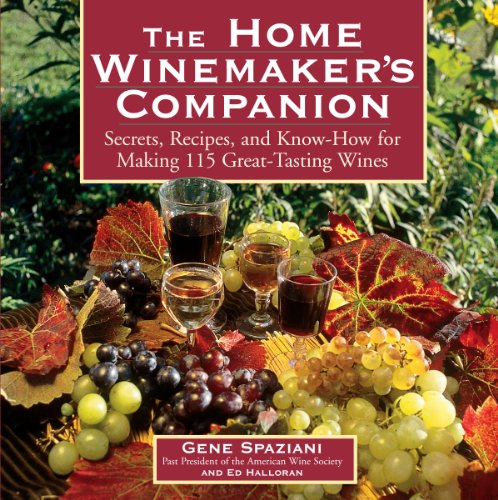
The Home Winemaker's Companion: Secrets, Recipes, and Know-How for Making 115 Great-Tasting Wines - Softcover
Inhaltsangabe
Raise a glass of homemade burgundy and enjoy the fruits of your labor. This informative guide provides an overview of the entire home winemaking process, from the vine (or the boxed kit) to your glass. With more than 100 recipes for a wide range of delicious wines, ports, and champagnes, you’re sure to find a wine to suit your taste. Clear diagrams for setting up your equipment and fail-safe instructions ensure that your home winemaking will be a success.
Die Inhaltsangabe kann sich auf eine andere Ausgabe dieses Titels beziehen.
Über die Autorin bzw. den Autor
Author Ed Halloran is a freelance writer, a radio and television commentator, and a college marketing professor.
Author Gene Spaziani has been a home winemaker for over 40 years. He shares his knowledge by teaching wine courses in New Haven and Bridgeport, Connecticut. He is a charter member of the Society of Wine Educators, president of Amenti del Vino-The Wine Society, and a past president of the American Wine Society. Together with Ed Halloran, Gene has co-written the Storey book, The Home Winemaker's Companion. Their book is a complete guide for the beginning or advanced winemaker, with instructions for using concentrates, kits, juices, fruits and herbs to create a wide variety of homemade wines. In addition, Gene is a writer for New England Wine Gazette, WineMaker Magazine, and the American Wine Society Journal. At the sixth annual Connecticut Amateur Home Winemakers Competition, Gene took home the show's highest award. He won Best of Show for his 1996 Cabernet Franc, as well as gold, silver, and bronze medals for other entries. He has also won gold medals for his entries in the American Wine Society Amateur Competition, the Indiana State Fair Amateur Wine Competition, the Connecticut Amateur Wine Competition, and the Pittsburgh Amateur Wine Competition.
Gene lives in Connecticut with his wife, Isabel. He has four children and five grandchildren.
Von der hinteren Coverseite
Few pleasures are more gratifying than pouring a glass of fine wine, admiring its clarity and color, savoring its rich bouquet, raising it to your lips, and knowing that you made it yourself. With this complete guide to home winemaking, such pleasures can be yours with little fuss and lots of fun. The Home Winemaker's Companion will guide you as you progress from making your very first batch of kit wine to mastering advanced techniques for making wine from fresh grapes. Included are Gene Spaziani's tried-and-true recipes for 115 delectable wines -- even port and champagne!
Making consistently great wine at home is easy; the hardest part is being patient while your wine ages!
Auszug. © Genehmigter Nachdruck. Alle Rechte vorbehalten.
1 Getting Started
Our goal is to assist you in the process of making wine. We will present a simple method for attaining quality results with easy-to-understand recipes. Although experienced winemakers rarely use recipes, people who are just starting out find that if they follow instructions carefully, they will make good wines from the outset.
Modern technology makes it easy to make high-quality wines, as new methods for preserving freshly crushed grape juices, either by blast-freezing or through various pasteurization processes, enable them to remain stable and usable for a long period.
Wine, by the way, can be made from any number of things besides grapes, including a variety of other fruits and vegetables. Depending on where you live, many of the raw materials for winemaking may be available locally from vineyards, farms, wholesalers, and retailers.
Whether you make your wine from scratch or a kit, from juices or concentrates, you'll find that making your own wine is easy and fun!
Novices have produced excellent wines by using kits. These provide the necessary ingredients and instructions, and make it a simple matter for first-timers to create delightful wines. We'll explore this approach in chapter 3.
Using juices or concentrates also will enable you to produce wonderful wines. Thanks to the preservation techniques we mentioned earlier, it is possible for home winemakers to make wines from all of the world's great grape regions. There are separate chapters devoted to these methods.
Of course, the ultimate experience comes when you make wine from scratch. This requires more work, but the satisfaction you'll get makes it worth the effort.
Don't Be Afraid!
The process of making wine is simple, and we'll walk you through it one step at a time. This book is designed to meet the needs of many people - from novices to experienced winemakers eager to learn a few new techniques.
Some people will discover that they already know a great deal about the process, because they've learned how to brew their own beers and ales. Winemaking is the logical next step for home brewers, because they already have a lot of the equipment they will need and have learned the importance of cleanliness and patience.
Cleanliness is critical when you're making wine, and you'll find that if you follow our suggestions for keeping your work area, equipment, and bottles squeaky clean, you'll avoid many of the problems caused by unwanted bacteria and foreign matter.
Patience is also important. It's quite natural to want to taste your wine as soon as possible, but Mother Nature needs to be allowed time to work - alone! Often, the best thing to do is simply to stay away from your wine and let it develop on its own. In fact, oftentimes all you have to do is step back and let nature take its course.
Eight Steps to Winemaking
Winemaking is a fairly simple process and can be accomplished in eight steps:
1. Choose grapes.
2. Crush grapes.
3. Strain juice into fermentor.
4. Inoculate juice with yeast.
5. Allow wine to ferment. Be patient!
6. Rack wine (that is, move the wine to new containers as needed). Be patient!
7. Bottle wine.
8. Age wine. Be patient!
As you can see, during fermentation, between rackings, and after bottling, all you have to do is let the wine "work" by itself.
Using kits, juices, or concentrates lets you skip the pressing and crushing steps, which is why many beginners feel more comfortable with these winemaking methods. Some winemakers never get beyond these methods, because they enjoy producing their wines with relative ease. There's nothing wrong with this: Regardless of the method, every winemaker puts his or her own stamp on the finished product, and it's this variation that makes making and tasting wines such a delightful experience.
Equipment
Earlier, we used the term kit when we talked about ingredients for making wine. Now it's time to look at another type of kit: the equipment you'll need to turn your ingredients into wine.
Becoming a home winemaker requires a small financial commitment for basic equipment. Over time, you may decide to experiment with different varieties of wine (including champagnes) and in greater quantities. In that case, you'll need to purchase additional equipment. If, however, you opt to continue making wine from juices and concentrates, the basic kit will serve you well for many years.
Pay a visit to your local wine supply store. Staff there are likely to have put together one or more basic winemaking kits, or they can create one to meet your specific needs. They're also a good source of information concerning equipment that you may not want to purchase at this point in your winemaking career, but that may be available for a small rental charge or even on loan from other winemakers.
For example, stemmer-crushers, which are used by people who make grape wine from scratch, are relatively expensive. Generally speaking, winemakers use these devices for only a few hours a year, so they're usually willing to share.
In any event, when you're starting out, it's best to purchase just the items you'll actually need for your first winemaking project. Therefore, we urge you to talk it over with a knowledgeable person at the wine supply store so you can put together a basic list.
The great thing about the equipment you acquire is that you can use it again and again. And if you've been brewing your own beer, you already have most of what you need!
The Essentials: Basic Equipment
Let's take a closer look at what you'll need to get started. You may already have some of these items on hand. We've included alternative equipment where possible.
Primary Fermentor. You'll probably use either a 6- to 7.5-gallon (23-28 L) glass carboy or a food-grade plastic pail in sizes ranging from 6 to 32 gallons (23-121 L). You'll need a container that's larger than the amount of wine you plan to make in order to allow for foaming and expansion. Stainless-steel and enamel containers with no cracks are also acceptable.
Glass or Plastic Carboys. You'll need at least one 5- to 7-gallon (19-27 L) carboy for aging and racking your wine. Two containers would be better because you're going to have to lift and handle them when they're filled with wine, and this can be cumbersome and awkward. You may even want to consider 3-gallon (11 L) glass carboys for greater ease in handling.
Siphon. A 6-foot (1.8 m) piece of K-inch (0.95 cm) or H-inch (1.3 cm) polyvinyl tubing will do nicely. A J-tube is another type of siphon. There are also bottling siphons that can do the job - these are inexpensive and efficient, as they will pick up virtually every drop of wine.
Stirring Spoon or Paddle. These are particularly helpful when you are making a red wine (more on this later). Spoons or paddles should be of food-grade plastic, stainless steel, or wood. If you have a lathe, you can turn out your own paddles at minimal cost.
Bottle Brushes. You'll need two, one for carboys and the other for bottles. They should have nylon bristles and heavy-gauge wire handles. You can then bend them to reach into tight corners and realign them as necessary.
Fermentation Lock. This device may also be called an air lock, bubbler, water seal, or fermentation trap. Whatever the name, it serves a dual purpose - to allow gas to escape during fermentation and to keep air from getting to the wine. This lock fits into the carboy bung.
Carboy Bung (Rubber Stopper). This is a rubber stopper with a hole drilled through it to allow for the insertion of the fermentation lock. The bung is made of sulfur-free, pure gum rubber, and is usually sold in combination with a fermentation lock. You'll need several of these units.
Funnels. Buy several plastic or polypropylene funnels. A large one, 12 inches (30 cm) across, used with a strainer, will help you to fill carboys or barrels. You should...
„Über diesen Titel“ kann sich auf eine andere Ausgabe dieses Titels beziehen.
Suchergebnisse für The Home Winemaker's Companion: Secrets, Recipes,...

Beispielbild für diese ISBN
The Home Winemaker's Companion: Secrets, Recipes, and Know-How for Making 115 Great-Tasting Wines
Anbieter: World of Books (was SecondSale), Montgomery, IL, USA
Verkäuferbewertung 5 von 5 Sternen

Paperback. Zustand: Good. Raise a glass of homemade burgundy and enjoy the fruits of your labor. This informative guide provides an overview of the entire home winemaking process, from the vine (or the boxed kit) to your glass. With more than 100 recipes for a wide range of delicious wines, ports, and champagnes, you?re sure to find a wine to suit your taste. Clear diagrams for setting up your equipment and fail-safe instructions ensure that your home winemaking will be a success. Bestandsnummer des Verkäufers 00098259959
Gebraucht kaufen
EUR 3,99
Versand gratis
Versand innerhalb von USA
Versand innerhalb von USA
Anzahl: 19 verfügbar
Foto des Verkäufers
The Home Winemaker's Companion: Secrets, Recipes, and Know-How for Making 115 Great-Tasting Wines
Anbieter: Dream Books Co., Denver, CO, USA
Verkäuferbewertung 5 von 5 Sternen
Zustand: acceptable. This copy has clearly been enjoyedâ"expect noticeable shelf wear and some minor creases to the cover. Binding is strong, and all pages are legible. May contain previous library markings or stamps. Bestandsnummer des Verkäufers DBV.1580172091.A
Gebraucht kaufen
EUR 4,61
Versand gratis
Versand innerhalb von USA
Versand innerhalb von USA
Anzahl: 1 verfügbar
Beispielbild für diese ISBN
The Home Winemaker's Companion: Secrets, Recipes, and Know-How for Making 115 Great-Tasting Wines
Verlag:
Storey Publishing, LLC (edition Illustrated), 2000
ISBN 10: 1580172091
ISBN 13: 9781580172097
Gebraucht
Paperback
Anbieter: BooksRun, Philadelphia, PA, USA
Verkäuferbewertung 5 von 5 Sternen
Paperback. Zustand: Very Good. Illustrated. It's a well-cared-for item that has seen limited use. The item may show minor signs of wear. All the text is legible, with all pages included. It may have slight markings and/or highlighting. Bestandsnummer des Verkäufers 1580172091-11-1
Gebraucht kaufen
EUR 4,83
Versand gratis
Versand innerhalb von USA
Versand innerhalb von USA
Anzahl: 1 verfügbar
Foto des Verkäufers
The Home Winemaker's Companion: Secrets, Recipes, and Know-How for Making 115 Great-Tasting Wines
Anbieter: Greenworld Books, Arlington, TX, USA
Verkäuferbewertung 5 von 5 Sternen
Zustand: good. Fast Free Shipping â" Good condition. It may show normal signs of use, such as light writing, highlighting, or library markings, but all pages are intact and the book is fully readable. A solid, complete copy that's ready to enjoy. Bestandsnummer des Verkäufers GWV.1580172091.G
Gebraucht kaufen
EUR 5,29
Versand gratis
Versand innerhalb von USA
Versand innerhalb von USA
Anzahl: 3 verfügbar
Beispielbild für diese ISBN
The Home Winemaker's Companion: Secrets, Recipes, and Know-How for Making 115 Great-Tasting Wines
Anbieter: World of Books Inc, Montgomery, IL, USA
Verkäuferbewertung 4 von 5 Sternen

Paperback. Zustand: Good. Raise a glass of homemade burgundy and enjoy the fruits of your labor. This informative guide provides an overview of the entire home winemaking process, from the vine (or the boxed kit) to your glass. With more than 100 recipes for a wide range of delicious wines, ports, and champagnes, you?re sure to find a wine to suit your taste. Clear diagrams for setting up your equipment and fail-safe instructions ensure that your home winemaking will be a success. Bestandsnummer des Verkäufers CIN1580172091G
Gebraucht kaufen
EUR 5,82
Versand gratis
Versand innerhalb von USA
Versand innerhalb von USA
Anzahl: 19 verfügbar
Beispielbild für diese ISBN
The Home Winemaker's Companion: Secrets, Recipes, and Know-How for Making 115 Great-Tasting Wines
Anbieter: ThriftBooks-Dallas, Dallas, TX, USA
Verkäuferbewertung 5 von 5 Sternen
Paperback. Zustand: Good. No Jacket. Pages can have notes/highlighting. Spine may show signs of wear. ~ ThriftBooks: Read More, Spend Less. Bestandsnummer des Verkäufers G1580172091I3N00
Gebraucht kaufen
EUR 5,99
Versand gratis
Versand innerhalb von USA
Versand innerhalb von USA
Anzahl: 1 verfügbar
Beispielbild für diese ISBN
The Home Winemaker's Companion: Secrets, Recipes, and Know-How for Making 115 Great-Tasting Wines
Anbieter: ThriftBooks-Dallas, Dallas, TX, USA
Verkäuferbewertung 5 von 5 Sternen
Paperback. Zustand: Fair. No Jacket. Former library book; Readable copy. Pages may have considerable notes/highlighting. ~ ThriftBooks: Read More, Spend Less. Bestandsnummer des Verkäufers G1580172091I5N10
Gebraucht kaufen
EUR 5,99
Versand gratis
Versand innerhalb von USA
Versand innerhalb von USA
Anzahl: 1 verfügbar
Beispielbild für diese ISBN
The Home Winemaker's Companion: Secrets, Recipes, and Know-How for Making 115 Great-Tasting Wines
Anbieter: ThriftBooks-Reno, Reno, NV, USA
Verkäuferbewertung 5 von 5 Sternen
Paperback. Zustand: Good. No Jacket. Pages can have notes/highlighting. Spine may show signs of wear. ~ ThriftBooks: Read More, Spend Less. Bestandsnummer des Verkäufers G1580172091I3N00
Gebraucht kaufen
EUR 5,99
Versand gratis
Versand innerhalb von USA
Versand innerhalb von USA
Anzahl: 1 verfügbar
Beispielbild für diese ISBN
The Home Winemaker's Companion: Secrets, Recipes, and Know-How for Making 115 Great-Tasting Wines
Anbieter: ThriftBooks-Phoenix, Phoenix, AZ, USA
Verkäuferbewertung 5 von 5 Sternen
Paperback. Zustand: Good. No Jacket. Pages can have notes/highlighting. Spine may show signs of wear. ~ ThriftBooks: Read More, Spend Less. Bestandsnummer des Verkäufers G1580172091I3N00
Gebraucht kaufen
EUR 5,99
Versand gratis
Versand innerhalb von USA
Versand innerhalb von USA
Anzahl: 1 verfügbar
Beispielbild für diese ISBN
The Home Winemaker's Companion: Secrets, Recipes, and Know-How for Making 115 Great-Tasting Wines
Anbieter: ThriftBooks-Atlanta, AUSTELL, GA, USA
Verkäuferbewertung 5 von 5 Sternen
Paperback. Zustand: Good. No Jacket. Pages can have notes/highlighting. Spine may show signs of wear. ~ ThriftBooks: Read More, Spend Less. Bestandsnummer des Verkäufers G1580172091I3N00
Gebraucht kaufen
EUR 5,99
Versand gratis
Versand innerhalb von USA
Versand innerhalb von USA
Anzahl: 1 verfügbar