
Verwandte Artikel zu In Parenthesis: Seinnyessit E Gledyf Ym Penn Mameu...
In Parenthesis: Seinnyessit E Gledyf Ym Penn Mameu (New York Review Books (Paperback)) - Softcover
Buch 3 von 5: Poets of the Great War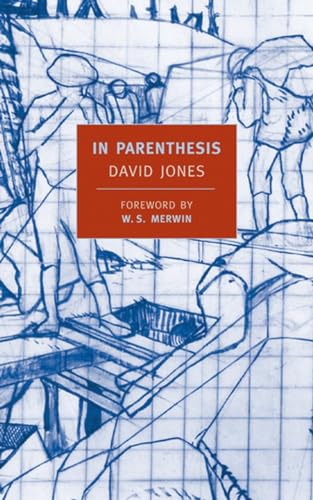
Inhaltsangabe
"This writing has to do with some things I saw, felt, and was part of": with quiet modesty, David Jones begins a work that is among the most powerful imaginative efforts to grapple with the carnage of the First World War, a book celebrated by W.B. Yeats and T.S. Eliot as one of the masterpieces of modern literature. Fusing poetry and prose, gutter talk and high music, wartime terror and ancient myth, Jones, who served as an infantryman on the Western Front, presents a picture at once panoramic and intimate of a world of interminable waiting and unforeseen death. And yet throughout he remains alert to the flashes of humanity that light up the wasteland of war.
Die Inhaltsangabe kann sich auf eine andere Ausgabe dieses Titels beziehen.
Über die Autorin bzw. den Autor
David Jones (1895-1974) was born in Kent. His mother was a Londoner, his father, who worked as a printer’s overseer, came from an old Welsh family, and Jones was to say that “from about the age of six, I felt I belonged to my father’s people and their land, though brought up entirely in an English atmosphere.” At six, too, Jones discovered his passion for drawing, which he knew was the “one thing he could do.” He attended art school for some years, but in 1915 he was sent with the Royal Welsh Fusiliers to fight in France, where he was in the battles of the Somme and Ypres. Jones converted to Roman Catholicism in 1921, and in 1922 began a long association with the artist, designer, and writer Eric Gill. In Parenthesis, based on Jones’s experiences in World War I, was published in 1937, followed in 1952 by another, even more unclassifiable but indubitably major work, The Anathémata. The Sleeping Lord, fragments from an unfinished larger composition about the crucifixion, appeared in the last year of his life. David Jones’s drawings and paintings can be found in the collections of the Tate Museum, the Whitworth Gallery, Manchester, and the National Museum of Wales.
W.S. Merwin was born in New York City in 1927 and grew up in Union City, New Jersey, and in Scranton, Pennsylvania. From 1949 to 1951 he worked as a tutor in France, Portugal, and Majorca. He has since lived in many parts of the world, most recently on Maui in the Hawaiian Islands. He is the author of many books of poems, prose, and translations and has received both the Pulitzer and the Bollingen Prizes for poetry, among numerous other awards. His new poetry collection is Garden Time.
T.S Eliot was a British essayist, publisher, playwright, literary and social critic, and one of the twentieth century's major poets.
„Über diesen Titel“ kann sich auf eine andere Ausgabe dieses Titels beziehen.
Suchergebnisse für In Parenthesis: Seinnyessit E Gledyf Ym Penn Mameu...

Foto des Verkäufers
In Parenthesis
Anbieter: eCampus, Lexington, KY, USA
Verkäuferbewertung 4 von 5 Sternen

Zustand: Very Good. Bestandsnummer des Verkäufers U:9781590170366:ONHAND
Gebraucht kaufen
EUR 6,31
EUR 3,48 Versand
Versand innerhalb von USA
Versand innerhalb von USA
Anzahl: 1 verfügbar
Beispielbild für diese ISBN
In Parenthesis: Seinnyessit E
Anbieter: World of Books (was SecondSale), Montgomery, IL, USA
Verkäuferbewertung 5 von 5 Sternen

Zustand: Good. Item in good condition. Textbooks may not include supplemental items i.e. CDs, access codes etc. Bestandsnummer des Verkäufers 00109273736
Gebraucht kaufen
EUR 9,89
Versand gratis
Versand innerhalb von USA
Versand innerhalb von USA
Anzahl: 2 verfügbar
Beispielbild für diese ISBN
In Parenthesis (New York Review Books)
Anbieter: HPB Inc., Dallas, TX, USA
Verkäuferbewertung 5 von 5 Sternen
Paperback. Zustand: Very Good. Connecting readers with great books since 1972! Used books may not include companion materials, and may have some shelf wear or limited writing. We ship orders daily and Customer Service is our top priority! Bestandsnummer des Verkäufers S_482666247
Gebraucht kaufen
EUR 7,81
EUR 3,27 Versand
Versand innerhalb von USA
Versand innerhalb von USA
Anzahl: 1 verfügbar
Beispielbild für diese ISBN
In Parenthesis Format: Paperback
Anbieter: INDOO, Avenel, NJ, USA
Verkäuferbewertung 5 von 5 Sternen
Zustand: As New. Unread copy in mint condition. Bestandsnummer des Verkäufers RH9781590170366
Gebraucht kaufen
EUR 15,37
Versand gratis
Versand innerhalb von USA
Versand innerhalb von USA
Anzahl: Mehr als 20 verfügbar
Foto des Verkäufers
In Parenthesis (Paperback)
Verlag:
New York Review Books, New York, 2003
ISBN 10: 1590170369
ISBN 13: 9781590170366
Neu
Paperback
Anbieter: Grand Eagle Retail, Bensenville, IL, USA
Verkäuferbewertung 5 von 5 Sternen
Paperback. Zustand: new. Paperback. "This writing has to do with some things I saw, felt, and was part of": with quiet modesty, David Jones begins a work that is among the most powerful imaginative efforts to grapple with the carnage of the First World War, a book celebrated by W.B. Yeats and T.S. Eliot as one of the masterpieces of modern literature. Fusing poetry and prose, gutter talk and high music, wartime terror and ancient myth, Jones, who served as an infantryman on the Western Front, presents a picture at once panoramic and intimate of a world of interminable waiting and unforeseen death. And yet throughout he remains alert to the flashes of humanity that light up the wasteland of war. "This writing has to do with some things I saw, felt, and was part of": with quiet modesty, David Jones begins a work that is among the most powerful imaginative efforts to grapple with the carnage of the First World War, a book celebrated by W.B. Yeats and T.S. Eliot as one of the masterpieces of modern literature. Fusing poetry and prose, gutter talk and high music, wartime terror and ancient myth, Jones, who served as an infantryman on the Western Front, presents a picture at once panoramic and intimate of a world of interminable waiting and unforeseen death. And yet throughout he remains alert to the flashes of humanity that light up the wasteland of war. Shipping may be from multiple locations in the US or from the UK, depending on stock availability. Bestandsnummer des Verkäufers 9781590170366
Beispielbild für diese ISBN
In Parenthesis Format: Paperback
Anbieter: INDOO, Avenel, NJ, USA
Verkäuferbewertung 5 von 5 Sternen
Zustand: New. Bestandsnummer des Verkäufers 9781590170366
Neu kaufen
EUR 15,39
Versand gratis
Versand innerhalb von USA
Versand innerhalb von USA
Anzahl: Mehr als 20 verfügbar
Foto des Verkäufers
In Parenthesis
Anbieter: Rarewaves USA, HEBRON, KY, USA
Verkäuferbewertung 5 von 5 Sternen
Paperback. Zustand: New. Bestandsnummer des Verkäufers LU-9781590170366
Beispielbild für diese ISBN
In Parenthesis
Anbieter: Strand Book Store, ABAA, New York, NY, USA
Verkäuferbewertung 4 von 5 Sternen
Paperback. Zustand: Very Good. Bestandsnummer des Verkäufers 2699641
Gebraucht kaufen
EUR 8,04
EUR 7,83 Versand
Versand innerhalb von USA
Versand innerhalb von USA
Anzahl: 1 verfügbar
Beispielbild für diese ISBN
In Parenthesis (New York Review Books)
Anbieter: California Books, Miami, FL, USA
Verkäuferbewertung 4 von 5 Sternen
Zustand: New. Bestandsnummer des Verkäufers I-9781590170366
Beispielbild für diese ISBN
In Parenthesis
Anbieter: Massive Bookshop, Erving, MA, USA
Verkäuferbewertung 4 von 5 Sternen
Paperback. Zustand: New. Bestandsnummer des Verkäufers 9781590170366
Neu kaufen
EUR 16,12
EUR 4,14 Versand
Versand innerhalb von USA
Versand innerhalb von USA
Anzahl: 10 verfügbar