
Verwandte Artikel zu The Mindful Path to Addiction Recovery: A Practical...
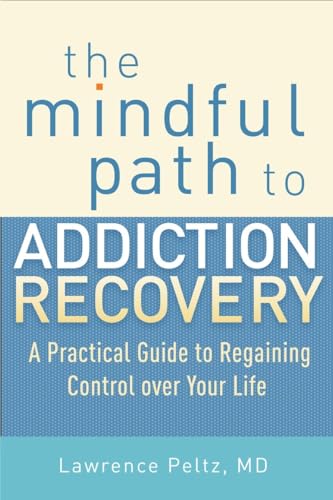
The Mindful Path to Addiction Recovery: A Practical Guide to Regaining Control over Your Life - Softcover
Inhaltsangabe
Mindfulness, the quality of attention that combines full awareness with acceptance of each moment, just as it is, is gaining broad acceptance among mental health professionals as an adjunct to treatment. Because at the heart of addiction is the fear of painful emotional states, addicts compulsively seek drugs and alcohol to avoid or escape emotional pain. Mindfulness, on the other hand, helps us develop greater acceptance and ease with life’s challenges, as well as greater self-compassion.
Here, Dr. Lawrence Peltz, who has worked as an addiction psychiatrist for nearly three decades, draws from his clinical experience and on the techniques of mindfulness-based stress reduction (MBSR) to explain the fundamental dynamics of addiction and the stages of the recovery process, and also gives us specific mindfulness exercises to support recovery.
Die Inhaltsangabe kann sich auf eine andere Ausgabe dieses Titels beziehen.
Über die Autorin bzw. den Autor
Lawrence Peltz, MD, has worked as an addiction psychiatrist for more than two decades. He is the medical director of the Bournewood Caulfield Center, a drug and alcohol treatment facility in Woburn, Mass, and has been on the clinical faculty at both Harvard and Boston University Schools of Medicine. He is also a trained teacher of mindfulness-based stress reduction (MBSR), and he speaks regularly to mental health professionals about mindfulness and recovery.
Auszug. © Genehmigter Nachdruck. Alle Rechte vorbehalten.
1
Addiction
I don’t like you, but I love you.
Seems that I’m always thinking of you.
You treat me badly, I love you madly.
—Smokey Robinson
The essence of addiction is an attempt to manage an intolerable experience that we cannot avoid any other way. As we will see, people use drugs to change consciousness, which does work. However, once this mode of operating becomes a habit and then a way of life, changing consciousness transforms into avoiding suffering. This happens outside of awareness. Before long, addiction is causing suffering and eventually is suffering. It is also, ironically, an attempt to heal, to seek relief via getting high, medicating feelings, escaping how things are right now. It is a process that attempts to change reality and control experience so that it is more acceptable, palatable, bearable.
Addiction can be a container for fear, disappointment, confusion, grief, or anger. It allows us to move forward in life with some hope that we might actually feel pleasure, even happiness. Of course, the happiness never materializes and the pleasure is more anticipated than realized. The addict becomes increasingly discouraged, unable to stand his experience as he digs a deeper hole. Abstinence, if considered, is quickly rejected. “I’m a total loser,” he tells himself. “Fuck it. My life is going nowhere anyway.”
Roger completed day treatment after an alcohol detox and many years of drinking. He was committed to recovery and was able to stay sober until he became involved with a much younger woman he had met in the program. He relapsed with her, they ended badly, and he was back for another round of treatment, during which he learned something about his vulnerability in romantic relationships.
When Roger came back for a third time, it was not about drinking but gambling. He had been playing the slot machines regularly and, as a retiree on a fixed income, was courting financial ruin. Driving to the casino, Roger experienced the excitement and anticipation of winning, the fear of losing even more, the dread of facing his creditors, and a wish to escape what he eventually was able to identify as loneliness and desperation. His foray into gambling had begun much like his relationship with the young woman, his drinking, or any addictive process. Initially, he had a sense of power, a rigged game in which he felt in love, one up on everyone, no limits, totally in control of the situation.
Let’s focus on the experience of falling in love. At the outset the lover is perfect in looks, reactions, speech—a missing piece to complete us and fill us with the miracle of life and of our amazing fortune to have found this person. In fact, we often do fall in love with our opposite, or what Hal and Sidra Stone have called our “disowned part.”
Think of the attraction between the hard-driving, successful, somewhat obsessional man and the free-flowing, flirtatious woman. He loves her openness, creativity, ease with her sexuality, and she is drawn to his confidence, power, and organization. All is well until the honeymoon is over and it is necessary to engage in the business of life with the other person. Then, she or he is less perfect, annoying, and even impossible to communicate with at times. If mutual judgment proceeds unchecked, the couple will get further apart—not an uncommon outcome. But with time, patience, and maturity, differences can be accepted and love deepens. It is no longer fantasy driven and is far more enduring and workable.
When we fall in love with a substance like cocaine or alcohol, there is also a sense of feeling complete and perfected. Addicts have repeatedly described an experience of infinite power and of being “unstoppable.” Once the glow is gone, however, there is no negotiation and, suddenly, significant constraints. The drug, in a true bait and switch, now demands enormous attention and time. As the addiction proceeds, it brings diminishing returns in terms of pleasure and costs increasingly more in money, relationships, health, and safety.
Of course we know there is no hope of discussing or bargaining with a drug, but there is more here than meets the eye. A disease process has begun that is progressive and takes over our ability to think clearly. Much as HIV infection attacks the immune system that is needed to defeat it, addiction compromises our brain and emotional capacities. As the addictive process evolves, there is a progressive atrophy of maturity and clarity.
Responsibility
Roger is an intelligent man. He was in serious debt and understood the futility of his actions. However, once he entered a relationship with a woman who was not committed to recovery, began driving to the casino, or took the first drink, he no longer had the capacity to make a reasoned judgment or a choice.
This is the flaw in Nancy Reagan’s famous call to “just say no.” As the disease advances, the part of the mind that might be able to abstain is less functional and there are so many conflicting agendas that a reasoned judgment is nearly impossible. The heart closes, and the addict is living with blinders or in a tunnel. The capacity for responsibility, the ability to respond intelligently and decisively toward well-being, has been seriously impaired.
The process is insidious, almost imperceptible at first. Getting high on opiates for manageable money becomes getting high for a lot of money, then just getting straight for even more. An obese person does not come to weigh four hundred pounds in a few weeks. It occurs over a long period and depends on much denial and rationalizing. The pursuit of pleasure or relief becomes an end in itself, and other consequences are pushed away until it is no longer possible to do so.
Even then help is often not sought. Addicts wind up broke, alone, in prison, mentally ill, physically sick, or dead. I often tell our patients in the Bournewood-Caulfield Partial Hospitalization Program (who come for the day while living at home, a sober house, or residence) that they are a select group. These people either choose to come to day treatment following hospitalization or come because their outpatient therapy has not adequately stabilized them. Clearly, there are patients who are coerced to come by the legal system, their spouse, their boss, or financial circumstances, but they still have to be willing to be there. There is no locked door. Many addicts would never come to treatment, preferring to withdraw, hide, escape as long as possible.
Why is that? Why not seek help as an alternative to prison, illness, or death? I will give five possibilities, with considerable overlap among them:
• The person has lost the mental or emotional capacity to think clearly about his or her circumstances.
• He or she has become insulated from health-promoting information from the body or relationships.
• It is too painful to face the physical discomfort, fear, shame, or grief.
• There is a history of unreliable health providers or caregivers in general.
• There is a deep sense of unworthiness to accept or receive help....
„Über diesen Titel“ kann sich auf eine andere Ausgabe dieses Titels beziehen.
Suchergebnisse für The Mindful Path to Addiction Recovery: A Practical...

Beispielbild für diese ISBN
The Mindful Path to Addiction Recovery: A Practical Guide to Regaining Control over Your Life
Verlag:
Shambhala Publications Inc, 2013
ISBN 10: 1590309189
ISBN 13: 9781590309186
Gebraucht
Paperback
Anbieter: World of Books (was SecondSale), Montgomery, IL, USA
Verkäuferbewertung 5 von 5 Sternen

Paperback. Zustand: Good. Mindfulness is a quality of attention that combines full awareness with acceptance of each moment, just as it is. Mindfulness is tremendously useful in the addiction recovery process, Dr. Lawrence Peltz explains, because at the heart of addiction is the fear of painful emotional states-addicts compulsively seek drugs and alcohol to avoid or escape emotional pain. Mindfulness, on the other hand, helps us develop greater acceptance and ease with life's challenges, as well as greater self-compassion. Drawing on his experience as an addiction psychiatrist and on the techniques of mindfulness-based stress reduction, Dr. Peltz, who is the medical director of the Bournewood Caulfield Center, a drug and alcohol treatment facility in Woburn, Massachusetts, has written an informative and inspiring book about how mindfulness can be a critical component in recovery from drug and alcohol addiction. This book is for recovering addicts, their families, and the professionals who treat them. It explores the fundamental dynamics of addiction and the stages of the recovery process, including patient stories. Dr. Peltz also explains what mindfulness is and how to use it to support recovery, including practical exercises and techniques. He reviews the recent scientific research on the benefits of mindfulness for mental health in general and for addiction recovery specifically. Bestandsnummer des Verkäufers 00107655304
Gebraucht kaufen
EUR 5,23
Versand gratis
Versand innerhalb von USA
Versand innerhalb von USA
Anzahl: 2 verfügbar
Foto des Verkäufers
The Mindful Path to Addiction Recovery: A Practical Guide to Regaining Control over Your Life
Anbieter: Zoom Books East, Glendale Heights, IL, USA
Verkäuferbewertung 5 von 5 Sternen
Zustand: good. Book is in good condition and may include underlining highlighting and minimal wear. The book can also include "From the library of" labels. May not contain miscellaneous items toys, dvds, etc. . We offer 100% money back guarantee and 24 7 customer service. Bestandsnummer des Verkäufers ZEV.1590309189.G
Gebraucht kaufen
EUR 5,24
Versand gratis
Versand innerhalb von USA
Versand innerhalb von USA
Anzahl: 1 verfügbar
Beispielbild für diese ISBN
The Mindful Path to Addiction Recovery: A Practical Guide to Regaining Control over Your Life
Anbieter: BooksRun, Philadelphia, PA, USA
Verkäuferbewertung 5 von 5 Sternen
Paperback. Zustand: Very Good. 1. It's a well-cared-for item that has seen limited use. The item may show minor signs of wear. All the text is legible, with all pages included. It may have slight markings and/or highlighting. Bestandsnummer des Verkäufers 1590309189-8-6
Gebraucht kaufen
EUR 5,56
Versand gratis
Versand innerhalb von USA
Versand innerhalb von USA
Anzahl: 1 verfügbar
Foto des Verkäufers
The Mindful Path to Addiction Recovery: A Practical Guide to Regaining Control over Your Life
Anbieter: Zoom Books East, Glendale Heights, IL, USA
Verkäuferbewertung 5 von 5 Sternen
Zustand: like_new. Book is in like new condition with minimal signs of wear. Pages are clean and free from notes or highlighting. Dust cover is intact. May not contain miscellaneous items toys, dvds, etc. . We offer 100% money back guarantee and 24 7 customer service. Bestandsnummer des Verkäufers ZEV.1590309189.LN
Gebraucht kaufen
EUR 5,61
Versand gratis
Versand innerhalb von USA
Versand innerhalb von USA
Anzahl: 1 verfügbar
Foto des Verkäufers
The Mindful Path to Addiction Recovery: A Practical Guide to Regaining Control over Your Life
Anbieter: Dream Books Co., Denver, CO, USA
Verkäuferbewertung 5 von 5 Sternen
Zustand: good. Gently used with minimal wear on the corners and cover. A few pages may contain light highlighting or writing, but the text remains fully legible. Dust jacket may be missing, and supplemental materials like CDs or codes may not be included. May be ex-library with library markings. Ships promptly! Bestandsnummer des Verkäufers DBV.1590309189.G
Gebraucht kaufen
EUR 5,62
Versand gratis
Versand innerhalb von USA
Versand innerhalb von USA
Anzahl: 1 verfügbar
Beispielbild für diese ISBN
The Mindful Path to Addiction Recovery : A Practical Guide to Regaining Control over Your Life
Verlag:
Shambhala Publications, Incorporated, 2013
ISBN 10: 1590309189
ISBN 13: 9781590309186
Gebraucht
Softcover
Erstausgabe
Anbieter: Better World Books: West, Reno, NV, USA
Verkäuferbewertung 5 von 5 Sternen
Zustand: Good. 1st Edition. Former library copy. Pages intact with minimal writing/highlighting. The binding may be loose and creased. Dust jackets/supplements are not included. Includes library markings. Stock photo provided. Product includes identifying sticker. Better World Books: Buy Books. Do Good. Bestandsnummer des Verkäufers 8053251-75
Gebraucht kaufen
EUR 6,17
Versand gratis
Versand innerhalb von USA
Versand innerhalb von USA
Anzahl: 1 verfügbar
Beispielbild für diese ISBN
The Mindful Path to Addiction Recovery : A Practical Guide to Regaining Control over Your Life
Verlag:
Shambhala Publications, Incorporated, 2013
ISBN 10: 1590309189
ISBN 13: 9781590309186
Gebraucht
Softcover
Erstausgabe
Anbieter: Better World Books, Mishawaka, IN, USA
Verkäuferbewertung 5 von 5 Sternen
Zustand: Good. 1st Edition. Former library copy. Pages intact with minimal writing/highlighting. The binding may be loose and creased. Dust jackets/supplements are not included. Includes library markings. Stock photo provided. Product includes identifying sticker. Better World Books: Buy Books. Do Good. Bestandsnummer des Verkäufers 8053251-75
Gebraucht kaufen
EUR 6,17
Versand gratis
Versand innerhalb von USA
Versand innerhalb von USA
Anzahl: 2 verfügbar
Beispielbild für diese ISBN
The Mindful Path to Addiction Recovery : A Practical Guide to Regaining Control over Your Life
Verlag:
Shambhala Publications, Incorporated, 2013
ISBN 10: 1590309189
ISBN 13: 9781590309186
Gebraucht
Softcover
Erstausgabe
Anbieter: Better World Books, Mishawaka, IN, USA
Verkäuferbewertung 5 von 5 Sternen
Zustand: Good. 1st Edition. Pages intact with minimal writing/highlighting. The binding may be loose and creased. Dust jackets/supplements are not included. Stock photo provided. Product includes identifying sticker. Better World Books: Buy Books. Do Good. Bestandsnummer des Verkäufers 9099845-6
Gebraucht kaufen
EUR 6,17
Versand gratis
Versand innerhalb von USA
Versand innerhalb von USA
Anzahl: 1 verfügbar
Beispielbild für diese ISBN
The Mindful Path to Addiction Recovery: A Practical Guide to Regaining Control over Your Life
Anbieter: HPB-Ruby, Dallas, TX, USA
Verkäuferbewertung 5 von 5 Sternen
Paperback. Zustand: Very Good. Connecting readers with great books since 1972! Used books may not include companion materials, and may have some shelf wear or limited writing. We ship orders daily and Customer Service is our top priority! Bestandsnummer des Verkäufers S_467969016
Gebraucht kaufen
EUR 3,52
EUR 3,34 Versand
Versand innerhalb von USA
Versand innerhalb von USA
Anzahl: 1 verfügbar
Beispielbild für diese ISBN
The Mindful Path to Addiction Recovery: A Practical Guide to Regaining Control over Your Life
Anbieter: HPB-Emerald, Dallas, TX, USA
Verkäuferbewertung 5 von 5 Sternen
paperback. Zustand: Very Good. Connecting readers with great books since 1972! Used books may not include companion materials, and may have some shelf wear or limited writing. We ship orders daily and Customer Service is our top priority! Bestandsnummer des Verkäufers S_474864564
Gebraucht kaufen
EUR 3,52
EUR 3,34 Versand
Versand innerhalb von USA
Versand innerhalb von USA
Anzahl: 1 verfügbar