
Verwandte Artikel zu The Republic: A Novel
Inhaltsangabe
Vondel Translation Prize Shortlist
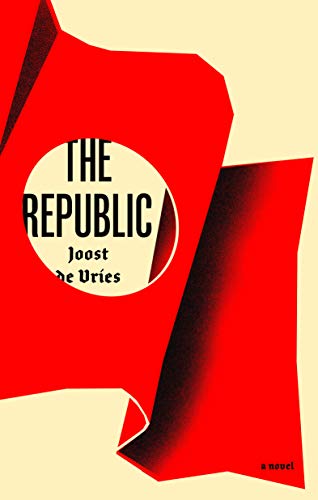
A gripping academic novel about deception and self-deception, ambition, the love of history as entertainment, and the hunt for the perfect enemy.
Josip Brik, larger-than-life pop philosopher, Hitler studies expert, and TV historian, has always found himself more attracted to the fictional representation of history than to history itself. When Brik falls from a hotel window in Amsterdam, the number one mourner is Friso de Vos, a young academic who has been Brik’s right-hand man. However, Friso is forced to watch from the sidelines as his countryman Philip de Vries, whom he has never heard of, is interviewed again and again in the newspapers, and even on TV, about “his mentor,” Josip Brik. When a large symposium for historians is organized in Vienna, Friso sees his opportunity to set the record straight and begins to impersonate Philip, with dangerous and hilarious results.
With a playful mix of literary and pop culture references, this novel immerses us in the world of the global intelligentsia, where the truth counts for less than what is said about it. Joost de Vries has written a biting academic satire, an absurd and exceptionally intelligent tale.
Die Inhaltsangabe kann sich auf eine andere Ausgabe dieses Titels beziehen.
Über die Autorin bzw. den Autor
Joost de Vries, born in 1983, studied journalism and history in Utrecht. Since 2007 he has been an editor and literary critic at De Groene Amsterdammer. He burst onto the Dutch literary scene with Clausewitz, a biblio-thriller inspired by the work of one of his great heroes, Harry Mulisch. In 2013 he was awarded the Charlotte Köhler Stipendium, and his second novel, The Republic, won the Golden Book-Owl prize in 2014.
Jane Hedley-Prôle studied German and Dutch at the University of Liverpool, after which she settled in the Netherlands. Alongside her job at the Ministry of Foreign Affairs she works as a freelance translator. She has translated Diaghilev: A Life by Sjeng Scheijen (together with S. J. Leinbach), The Fetish Room by Rudi Rotthier and Redmond O’Hanlon, We Are Our Brains by D. F. Swaab, and many short stories.
Von der hinteren Coverseite
A gripping academic novel about deception and self-deception, ambition, the love of history as entertainment, and the hunt for the perfect enemy.
Auszug. © Genehmigter Nachdruck. Alle Rechte vorbehalten.
There’s not a whole lot you can hold against a man like Josip Brik. With fluctuating regularity he would attend a few lectures, get his hair cut, eat a sandwich at the campus bistro so everyone could see he was there, and at the end of the day he would always saunter into the offices of The Sleepwalker, Journal of Hitler Studies, Since 1991, set up by, among others, Josip Brik. – Tell me honestly, Friso, are you my Dauphin or my Robespierre?
His presence required that you immediately drop everything you were doing and focus your full attention on him like a stadium floodlight. For me, as editor in chief of The Sleepwalker, he was an inexhaustible gold mine, unfailingly submitting a five-thousand-word essay every two months on any topic you cared to name. My office was on the ground floor, and its doors gave onto a courtyard. Whenever he dropped in I would throw them open and improvise a sidewalk café in the form of two wrought-iron chairs and an occasional table. He would always start the conversation himself, talking about his sandwich, about the Yankees, who’d had an amazing summer, about the Obamas, of whom the same could not, alas, be said. I would twiddle the knobs of my magnificent espresso machine, with its built-in grinder and foamer, while he did terrifyingly good imitations—he nailed the gestures as well as the voices—ranging from Hugo Chávez fulminating about the U.S. to the fluty Oxbridge indignation of Emma Watson, whom he’d just seen in the latest Harry Potter franchise. “We could all have been killed, Harry—or worse, expelled!” He’d ask after Pip, inquire about my health, want to know what he could contribute to The Sleepwalker, whether I’d seen any interesting films, and then the conversation would gradually start moving inexorably toward something that needed to happen, a small request, varying from looking after two schnauzers for a weekend to, in this case, going to Chile for a month.
– I’ve been to Chile and while I was there I met a man called Hitler, and you know, Friso, I think there might be a nice article in it for you.
He always reserved places for Pippa and me in the front row of his evening lectures, which he gave once or twice a month to packed auditoria. Whether he was talking about Freud or about Hitlerian Revenge Plays (a genre I suspected him of making up), however often he stood in front of an audience, he always seemed nervous, with patches of sweat blooming under his armpits like gunshot wounds. Physically he resembled Jabba the Hutt, 250 pounds of condemned meat, his head, his eyes, his arms, his hands were large, his belly and shoulders colossal, there was enough cotton in his shirt for a duvet cover. I exaggerate. The minuscule microphone on the lectern only reached up to his nipple, making him bend over, which interfered with his breathing, so that he talked even more wheezily than usual.
(His speech, or speech defects, were the subject of speculation: he spoke rapidly, shlishing inconsistently, in some Czech-Polish-Yiddish accent you just couldn’t pin down—he’d been born in Belgrade, Yugoslavia, but since the age of eight had lived in Brooklyn, Chicago, Groningen, and Paris respectively; in theory the accent had no right to exist.)
Josip Legilimens Brik. April 2, 1955. Middle child, two brothers, two sisters. His surname was actually written with an acute accent: Brík, but somewhere in the mid-nineties he’d dropped that to make it easier for publishers, journalists, and Americans in general. Professors mostly couldn’t stand him; their PhD students, by contrast, were crazy about him. Together with the late Jack Gladney, he was one of the founders of Hitler studies, but he had many more strings to his bow: qualified psychoanalyst, Lacanian, secretary of the Anti-Derridian League, late Marxist, slightly-more-than-occasional TV host. His most popular and hated work was a comparative study of Robespierre and Hitler entitled The Red Machine, or Why Things Cost Money (2005), whose underlying theme was that the West has been lulled into such a torpor it can’t carry out the social and cultural changes it knows to be necessary. We want revolutions without revolutions. Wars without victims, racing cars without accidents, beer without alcohol, Coca-Cola without sugar, coffee without caffeine—the degeneration of the free market on all psychological levels. We want to have as much as possible for the lowest possible price and will therefore be helpless when new Robespierres or Hitlers arise.
Technically he’d been exempted from teaching duties, he could do whatever he wanted, but his lectures were faithfully attended by a hard-core group of students, youngsters who hung on his every word, something the university bragged about in its brochures—that its flourishing intellectual climate transcended “mere contact hours,” an impressive spin on the fact that their most famous teacher did not teach. He himself had an unshakable confidence in his influence and liked to tell how the father of a student had once come up to him and said: “If you turn my kid Commie, I’ll sue you!” He roared with laughter at that kind of thing in his own delightful way, his head thrown back as if he was gargling with mouthwash. His whole body shook in sympathy.
My girlfriend, Pip (God bless her), had given rise to one of the most popular Brik anecdotes on the campus. One day, when he was holding forth on Oedipus and sex in the films of Hitchcock, she’d stood up and asked the legendary question of whether he himself still had sex, whereupon he’d fired back the even more legendary reply:
– Sex? No. Never. It’s far too cognitive a pursuit.
So there we were, sitting on the wrought-iron chairs outside my office. There was something sharp and heavy in the September air, a harbinger of the first chill since spring. Brik, absorbed in spooning out the last remnants of foam, was trying not to look me in the eye. Anyway. Chile.
– This Mr. Hitler makes murals. Great big paintings with a socialist theme.
I didn’t say anything.
– Lots of workers, farmers, children, Indians. Bright colors, red and yellow. Terrible art, in my view, very unaesthetic, but no less interesting for that.
I still didn’t say anything. He fidgeted, looking at his hands, his nails, his feet, shoe size 41 at a guess, so small that the toes scarcely peeped out of his trouser legs and I sometimes wondered how he kept that huge upper body in balance.
– I’ve spoken to this Mr. Hitler and he’s willing to cooperate on an article. There are a lot more Hitlers in Chile, he said. You could stay at the local university, I know some people there and . . .
Here I interrupted him, calmly:
– But, and this is something we’ve talked about before, won’t it end up being the kind of article whose only amusement value consists of using the name “Hitler” in trivial, day-to-day situations? “Hitler awaited us in the doorway of his home, with its stylish Scandinavian interior.” “ ‘Would you like tea or coffee?’ asked Hitler.”—The joke’s getting tired. The joke is tired.
He shook his head:
– It would be about living with history. Friso, your name is the most direct, most personal history you have—will ever have.
– Hitler’s father changed his name.
– Herr Alois Schicklgruber.
– Stalin wasn’t really called Stalin, Trotsky wasn’t really called Trotsky.
...
„Über diesen Titel“ kann sich auf eine andere Ausgabe dieses Titels beziehen.
Suchergebnisse für The Republic: A Novel

Beispielbild für diese ISBN
The Republic: A Novel
Anbieter: Bookmonger.Ltd, HILLSIDE, NJ, USA
Verkäuferbewertung 5 von 5 Sternen

Paperback. Zustand: Very Good. Bestandsnummer des Verkäufers mon0000575735
Gebraucht kaufen
EUR 1,50
EUR 3,57 Versand
Versand innerhalb von USA
Versand innerhalb von USA
Anzahl: 1 verfügbar
Beispielbild für diese ISBN
The Republic: A Novel
Anbieter: Bellwetherbooks, McKeesport, PA, USA
Verkäuferbewertung 4 von 5 Sternen

paperback. Zustand: Good. Good Condition and Unread! Text is clean and unmarked! Bruise/tear to cover. Has a small black line or red dot on bottom/exterior edge of pages. Bestandsnummer des Verkäufers RH-PBD-G-1590518535
Gebraucht kaufen
EUR 1,56
EUR 3,52 Versand
Versand innerhalb von USA
Versand innerhalb von USA
Anzahl: 13 verfügbar
Beispielbild für diese ISBN
The Republic: A Novel
Anbieter: Wonder Book, Frederick, MD, USA
Verkäuferbewertung 5 von 5 Sternen
Zustand: Good. Good condition. A copy that has been read but remains intact. May contain markings such as bookplates, stamps, limited notes and highlighting, or a few light stains. Bestandsnummer des Verkäufers Q13P-00525
Gebraucht kaufen
EUR 6,42
Versand gratis
Versand innerhalb von USA
Versand innerhalb von USA
Anzahl: 1 verfügbar
Beispielbild für diese ISBN
The Republic
Anbieter: ThriftBooks-Dallas, Dallas, TX, USA
Verkäuferbewertung 5 von 5 Sternen
Paperback. Zustand: Good. No Jacket. Former library book; Pages can have notes/highlighting. Spine may show signs of wear. ~ ThriftBooks: Read More, Spend Less. Bestandsnummer des Verkäufers G1590518535I3N10
Gebraucht kaufen
EUR 6,87
Versand gratis
Versand innerhalb von USA
Versand innerhalb von USA
Anzahl: 1 verfügbar
Beispielbild für diese ISBN
The Republic: A Novel
Anbieter: Bellwetherbooks, McKeesport, PA, USA
Verkäuferbewertung 4 von 5 Sternen
paperback. Zustand: Fine. LIKE NEW!!! Has a red or black remainder mark on bottom/exterior edge of pages. Bestandsnummer des Verkäufers mon0000045321
Gebraucht kaufen
EUR 7,45
EUR 3,52 Versand
Versand innerhalb von USA
Versand innerhalb von USA
Anzahl: 1 verfügbar
Beispielbild für diese ISBN
The Republic (Paperback)
Anbieter: Grand Eagle Retail, Bensenville, IL, USA
Verkäuferbewertung 5 von 5 Sternen
Paperback. Zustand: new. Paperback. Vondel Translation Prize ShortlistA gripping academic novel about deception and self-deception, ambition, the love of history as entertainment, and the hunt for the perfect enemy. Josip Brik, larger-than-life pop philosopher, Hitler studies expert, and TV historian, has always found himself more attracted to the fictional representation of history than to history itself. When Brik falls from a hotel window in Amsterdam, the number one mourner is Friso de Vos, a young academic who has been Briks right-hand man. However, Friso is forced to watch from the sidelines as his countryman Philip de Vries, whom he has never heard of, is interviewed again and again in the newspapers, and even on TV, about his mentor, Josip Brik. When a large symposium for historians is organized in Vienna, Friso sees his opportunity to set the record straight and begins to impersonate Philip, with dangerous and hilarious results. With a playful mix of literary and pop culture references, this novel immerses us in the world of the global intelligentsia, where the truth counts for less than what is said about it. Joost de Vries has written a biting academic satire, an absurd and exceptionally intelligent tale. "Originally published in 2013 as De republiek by Uitgeverij Prometheus, Amsterdam"--T.p. verso. Shipping may be from multiple locations in the US or from the UK, depending on stock availability. Bestandsnummer des Verkäufers 9781590518533
Beispielbild für diese ISBN
The Republic Format: Trade Paper
Anbieter: INDOO, Avenel, NJ, USA
Verkäuferbewertung 5 von 5 Sternen
Zustand: As New. Unread copy in mint condition. Bestandsnummer des Verkäufers RH9781590518533
Gebraucht kaufen
EUR 15,21
Versand gratis
Versand innerhalb von USA
Versand innerhalb von USA
Anzahl: Mehr als 20 verfügbar
Beispielbild für diese ISBN
The Republic Format: Trade Paper
Anbieter: INDOO, Avenel, NJ, USA
Verkäuferbewertung 5 von 5 Sternen
Zustand: New. Brand New. Bestandsnummer des Verkäufers 9781590518533
Neu kaufen
EUR 15,30
Versand gratis
Versand innerhalb von USA
Versand innerhalb von USA
Anzahl: Mehr als 20 verfügbar
Foto des Verkäufers
The Republic
Anbieter: Rarewaves USA, HEBRON, KY, USA
Verkäuferbewertung 5 von 5 Sternen
Paperback. Zustand: New. Bestandsnummer des Verkäufers LU-9781590518533
Beispielbild für diese ISBN
The Republic
Anbieter: Strand Book Store, ABAA, New York, NY, USA
Verkäuferbewertung 4 von 5 Sternen
Paperback. Zustand: Very Good. Bestandsnummer des Verkäufers 3553422
Gebraucht kaufen
EUR 8,22
EUR 8,01 Versand
Versand innerhalb von USA
Versand innerhalb von USA
Anzahl: 1 verfügbar