
Verwandte Artikel zu Green Belt Movement: Sharing the Approach and the Experience
Inhaltsangabe
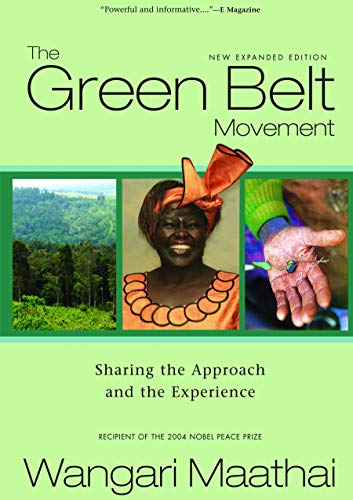
Wangari Muta Maathai was born in Nyeri, Kenya in 1940. In 1960, she won a Kennedy scholarship to study in America and earned a master's degree in biology from the University of Pittsburgh and became the first woman in East Africa to earn a PhD Returning to Kenya in 1966, Wangari Maathai was shocked at the degradation of the forests and the farmland caused by deforestation. Heavy rains had washed away much of the topsoil, silt was clogging the rivers, and fertilizers were depriving the soil of nutrients. Wangari decided to solve the problem by planting trees. Under the auspices of the National Council of Women of Kenya, of which she was chairwoman from 1981 to 1987, she introduced the idea of planting trees through citizen foresters in 1976, and called this new organization the Green Belt Movement (GBM). She continued to develop GBM into broad-based, grassroots organization whose focus was women's groups planting of trees in order to conserve the environment and improve their quality of life. Through the Green Belt Movement, Wangari Maathai has assisted women in planting more than 20 million trees on their farms and on schools and church compounds in Kenya and all over East Africa. In Africa, as in many parts of the world, women are responsible for meals and collecting firewood. Increasing deforestation has not only meant increasing desertification, but it has also meant that women have had to travel further and further afield in order to collect the firewood. This in turn has led to women spending less time around the home, tending to crops, and looking after their children. By staying closer to home, earning income from sustainably harvesting the fruit and timber from trees, women not only can be more productive, they can provide stability in the home. They can also create time for education opportunities—whether for themselves or their children. This virtuous circle of empowerment through conservation is serving as a model throughout the world, where women both individually and collectively are entrusted with money and material to invest it in ways that make a difference to their daily lives. Wangari Maathai's Green Belt Movement is a great example of how one person can turn around the lives of thousands, if not millions of others, by empowering others to change their situation. Wangari's road to success was by no means easy. During the 1970s and 1980s, she came under increasing scrutiny from the government of Daniel arap Moi. She was frequently the target of vilification from the government, as well as subject to outright attacks and imprisonment. She refused to compromise her belief that the people were best trusted to look after their natural resources, as opposed to the corrupt cronies of the government, who were given whole swathes of public land, which they then despoiled. In December 2002, Wangari Maathai was elected by an overwhelming margin to Parliament, where she is the Assistant Secretary for Environnment, Wildlife, and Natural Resources in the democratically elected Kibaki government. Even though she is now being protected by the very same soldiers who once arrested her, her voice on behalf of the environment is still strong and determined. In October 2004, she capped a lifetime of incredible achievements when she was awarded the 2004 Nobel Peace Prize. In The Green Belt Movement, founder Wangari Maathai tells its story: why it started, how it operates, and where it is going. She includes the philosophy behind it, its challenges and objectives, and the specific steps involved in starting a similar grassroots environmental and social justice organization. The Green Belt Movement is the inspiring story of people working at the grassroots level to improve their environment and their country. Their story offers ideas about a new and hopeful future for Africa and the rest of the world.
Die Inhaltsangabe kann sich auf eine andere Ausgabe dieses Titels beziehen.
Suchergebnisse für Green Belt Movement: Sharing the Approach and the Experience

Foto des Verkäufers
The Green Belt Movement: Sharing the Approach and the Experience
Verlag:
Lantern Publishing & Media, 2003
ISBN 10: 159056040X
ISBN 13: 9781590560402
Gebraucht
Softcover
Anbieter: Dream Books Co., Denver, CO, USA
Verkäuferbewertung 5 von 5 Sternen

Zustand: good. Gently used with minimal wear on the corners and cover. A few pages may contain light highlighting or writing, but the text remains fully legible. Dust jacket may be missing, and supplemental materials like CDs or codes may not be included. May be ex-library with library markings. Ships promptly! Bestandsnummer des Verkäufers DBV.159056040X.G
Gebraucht kaufen
EUR 4,09
Versand gratis
Versand innerhalb von USA
Versand innerhalb von USA
Anzahl: 1 verfügbar
Beispielbild für diese ISBN
Green Belt Movement: Sharing the Approach and the Experience
Anbieter: World of Books (was SecondSale), Montgomery, IL, USA
Verkäuferbewertung 5 von 5 Sternen
Paperback. Zustand: Good. Wangari Muta Maathai was born in Nyeri, Kenya in 1940. In 1960, she won a Kennedy scholarship to study in America and earned a master's degree in biology from the University of Pittsburgh and became the first woman in East Africa to earn a Ph.D. Returning to Kenya in 1966, Wangari Maathai was shocked at the degradation of the forests and the farmland caused by deforestation. Heavy rains had washed away much of the topsoil, silt was clogging the rivers, and fertilizers were depriving the soil of nutrients. Wangari decided to solve the problem by planting trees. Under the auspices of the National Council of Women of Kenya, of which she was chairwoman from 1981 to 1987, she introduced the idea of planting trees through citizen foresters in 1976, and called this new organization the Green Belt Movement (GBM). She continued to develop GBM into broad-based, grassroots organization whose focus was women's groups planting of trees in order to conserve the environment and improve their quality of life. Through the Green Belt Movement, Wangari Maathai has assisted women in planting more than 20 million trees on their farms and on schools and church compounds in Kenya and all over East Africa. In Africa, as in many parts of the world, women are responsible for meals and collecting firewood. Increasing deforestation has not only meant increasing desertification, but it has also meant that women have had to travel further and further afield in order to collect the firewood. This in turn has led to women spending less time around the home, tending to crops, and looking after their children. By staying closer to home, earning income from sustainably harvesting the fruit and timber from trees, women not only can be more productive, they can provide stability in the home. They can also create time for education opportunities--whether for themselves or their children. This virtuous circle of empowerment through conservation is serving as a model throughout the world, where women both individually and collectively are entrusted with money and material to invest it in ways that make a difference to their daily lives. Wangari Maathai's Green Belt Movement is a great example of how one person can turn around the lives of thousands, if not millions of others, by empowering others to change their situation. Wangari's road to success was by no means easy. During the 1970s and 1980s, she came under increasing scrutiny from the government of Daniel arap Moi. She was frequently the target of vilification from the government, as well as subject to outright attacks and imprisonment. She refused to compromise her belief that the people were best trusted to look after their natural resources, as opposed to the corrupt cronies of the government, who were given whole swathes of public land, which they then despoiled. In December 2002, Wangari Maathai was elected by an overwhelming margin to Parliament, where she is the Assistant Secretary for Environnment, Wildlife, and Natural Resources in the democratically elected Kibaki government. Even though she is now being protected by the very same soldiers who once arrested her, her voice on behalf of the environment is still strong and determined. In October 2004, she capped a lifetime of incredible achievements when she was awarded the 2004 Nobel Peace Prize. In The Green Belt Movement, founder Wangari Maathai tells its story: why it started, how it operates, and where it is going. She includes the philosophy behind it, its challenges and objectives, and the specific steps involved in starting a similar grassroots environmental and social justice organization. The Green Belt Movement is the inspiring story of people working at the grassroots level to improve their environment and their country. Their story offers ideas about a new and hopeful future for Africa and the rest of the world. Bestandsnummer des Verkäufers 00105260895
Gebraucht kaufen
EUR 4,10
Versand gratis
Versand innerhalb von USA
Versand innerhalb von USA
Anzahl: 6 verfügbar
Beispielbild für diese ISBN
Green Belt Movement: Sharing the Approach and the Experience
Anbieter: World of Books (was SecondSale), Montgomery, IL, USA
Verkäuferbewertung 5 von 5 Sternen
Paperback. Zustand: Fair. Wangari Muta Maathai was born in Nyeri, Kenya in 1940. In 1960, she won a Kennedy scholarship to study in America and earned a master's degree in biology from the University of Pittsburgh and became the first woman in East Africa to earn a Ph.D. Returning to Kenya in 1966, Wangari Maathai was shocked at the degradation of the forests and the farmland caused by deforestation. Heavy rains had washed away much of the topsoil, silt was clogging the rivers, and fertilizers were depriving the soil of nutrients. Wangari decided to solve the problem by planting trees. Under the auspices of the National Council of Women of Kenya, of which she was chairwoman from 1981 to 1987, she introduced the idea of planting trees through citizen foresters in 1976, and called this new organization the Green Belt Movement (GBM). She continued to develop GBM into broad-based, grassroots organization whose focus was women's groups planting of trees in order to conserve the environment and improve their quality of life. Through the Green Belt Movement, Wangari Maathai has assisted women in planting more than 20 million trees on their farms and on schools and church compounds in Kenya and all over East Africa. In Africa, as in many parts of the world, women are responsible for meals and collecting firewood. Increasing deforestation has not only meant increasing desertification, but it has also meant that women have had to travel further and further afield in order to collect the firewood. This in turn has led to women spending less time around the home, tending to crops, and looking after their children. By staying closer to home, earning income from sustainably harvesting the fruit and timber from trees, women not only can be more productive, they can provide stability in the home. They can also create time for education opportunities--whether for themselves or their children. This virtuous circle of empowerment through conservation is serving as a model throughout the world, where women both individually and collectively are entrusted with money and material to invest it in ways that make a difference to their daily lives. Wangari Maathai's Green Belt Movement is a great example of how one person can turn around the lives of thousands, if not millions of others, by empowering others to change their situation. Wangari's road to success was by no means easy. During the 1970s and 1980s, she came under increasing scrutiny from the government of Daniel arap Moi. She was frequently the target of vilification from the government, as well as subject to outright attacks and imprisonment. She refused to compromise her belief that the people were best trusted to look after their natural resources, as opposed to the corrupt cronies of the government, who were given whole swathes of public land, which they then despoiled. In December 2002, Wangari Maathai was elected by an overwhelming margin to Parliament, where she is the Assistant Secretary for Environnment, Wildlife, and Natural Resources in the democratically elected Kibaki government. Even though she is now being protected by the very same soldiers who once arrested her, her voice on behalf of the environment is still strong and determined. In October 2004, she capped a lifetime of incredible achievements when she was awarded the 2004 Nobel Peace Prize. In The Green Belt Movement, founder Wangari Maathai tells its story: why it started, how it operates, and where it is going. She includes the philosophy behind it, its challenges and objectives, and the specific steps involved in starting a similar grassroots environmental and social justice organization. The Green Belt Movement is the inspiring story of people working at the grassroots level to improve their environment and their country. Their story offers ideas about a new and hopeful future for Africa and the rest of the world. Bestandsnummer des Verkäufers 00106057527
Gebraucht kaufen
EUR 4,10
Versand gratis
Versand innerhalb von USA
Versand innerhalb von USA
Anzahl: 1 verfügbar
Beispielbild für diese ISBN
The Green Belt Movement: Sharing the Approach and the Experience
Verlag:
Lantern Publishing & Media (edition Revised), 2003
ISBN 10: 159056040X
ISBN 13: 9781590560402
Gebraucht
Paperback
Anbieter: BooksRun, Philadelphia, PA, USA
Verkäuferbewertung 5 von 5 Sternen
Paperback. Zustand: Fair. Revised. The item might be beaten up but readable. May contain markings or highlighting, as well as stains, bent corners, or any other major defect, but the text is not obscured in any way. Bestandsnummer des Verkäufers 159056040X-7-1
Gebraucht kaufen
EUR 4,58
Versand gratis
Versand innerhalb von USA
Versand innerhalb von USA
Anzahl: 1 verfügbar
Beispielbild für diese ISBN
The Green Belt Movement: Sharing the Approach and the Experience
Verlag:
Lantern Publishing & Media (edition Revised), 2003
ISBN 10: 159056040X
ISBN 13: 9781590560402
Gebraucht
Paperback
Anbieter: BooksRun, Philadelphia, PA, USA
Verkäuferbewertung 5 von 5 Sternen
Paperback. Zustand: Very Good. Revised. It's a well-cared-for item that has seen limited use. The item may show minor signs of wear. All the text is legible, with all pages included. It may have slight markings and/or highlighting. Bestandsnummer des Verkäufers 159056040X-11-1
Gebraucht kaufen
EUR 4,80
Versand gratis
Versand innerhalb von USA
Versand innerhalb von USA
Anzahl: 1 verfügbar
Foto des Verkäufers
The Green Belt Movement: Sharing the Approach and the Experience
Verlag:
Lantern Publishing & Media, 2003
ISBN 10: 159056040X
ISBN 13: 9781590560402
Gebraucht
Softcover
Anbieter: Greenworld Books, Arlington, TX, USA
Verkäuferbewertung 5 von 5 Sternen
Zustand: good. Fast Free Shipping â" Good condition. It may show normal signs of use, such as light writing, highlighting, or library markings, but all pages are intact and the book is fully readable. A solid, complete copy that's ready to enjoy. Bestandsnummer des Verkäufers GWV.159056040X.G
Gebraucht kaufen
EUR 5,46
Versand gratis
Versand innerhalb von USA
Versand innerhalb von USA
Anzahl: 1 verfügbar
Beispielbild für diese ISBN
Green Belt Movement: Sharing the Approach and the Experience
Anbieter: World of Books Inc, Montgomery, IL, USA
Verkäuferbewertung 4 von 5 Sternen

Paperback. Zustand: Good. Wangari Muta Maathai was born in Nyeri, Kenya in 1940. In 1960, she won a Kennedy scholarship to study in America and earned a master's degree in biology from the University of Pittsburgh and became the first woman in East Africa to earn a Ph.D. Returning to Kenya in 1966, Wangari Maathai was shocked at the degradation of the forests and the farmland caused by deforestation. Heavy rains had washed away much of the topsoil, silt was clogging the rivers, and fertilizers were depriving the soil of nutrients. Wangari decided to solve the problem by planting trees. Under the auspices of the National Council of Women of Kenya, of which she was chairwoman from 1981 to 1987, she introduced the idea of planting trees through citizen foresters in 1976, and called this new organization the Green Belt Movement (GBM). She continued to develop GBM into broad-based, grassroots organization whose focus was women's groups planting of trees in order to conserve the environment and improve their quality of life. Through the Green Belt Movement, Wangari Maathai has assisted women in planting more than 20 million trees on their farms and on schools and church compounds in Kenya and all over East Africa. In Africa, as in many parts of the world, women are responsible for meals and collecting firewood. Increasing deforestation has not only meant increasing desertification, but it has also meant that women have had to travel further and further afield in order to collect the firewood. This in turn has led to women spending less time around the home, tending to crops, and looking after their children. By staying closer to home, earning income from sustainably harvesting the fruit and timber from trees, women not only can be more productive, they can provide stability in the home. They can also create time for education opportunities--whether for themselves or their children. This virtuous circle of empowerment through conservation is serving as a model throughout the world, where women both individually and collectively are entrusted with money and material to invest it in ways that make a difference to their daily lives. Wangari Maathai's Green Belt Movement is a great example of how one person can turn around the lives of thousands, if not millions of others, by empowering others to change their situation. Wangari's road to success was by no means easy. During the 1970s and 1980s, she came under increasing scrutiny from the government of Daniel arap Moi. She was frequently the target of vilification from the government, as well as subject to outright attacks and imprisonment. She refused to compromise her belief that the people were best trusted to look after their natural resources, as opposed to the corrupt cronies of the government, who were given whole swathes of public land, which they then despoiled. In December 2002, Wangari Maathai was elected by an overwhelming margin to Parliament, where she is the Assistant Secretary for Environnment, Wildlife, and Natural Resources in the democratically elected Kibaki government. Even though she is now being protected by the very same soldiers who once arrested her, her voice on behalf of the environment is still strong and determined. In October 2004, she capped a lifetime of incredible achievements when she was awarded the 2004 Nobel Peace Prize. In The Green Belt Movement, founder Wangari Maathai tells its story: why it started, how it operates, and where it is going. She includes the philosophy behind it, its challenges and objectives, and the specific steps involved in starting a similar grassroots environmental and social justice organization. The Green Belt Movement is the inspiring story of people working at the grassroots level to improve their environment and their country. Their story offers ideas about a new and hopeful future for Africa and the rest of the world. Bestandsnummer des Verkäufers CIN159056040XG
Gebraucht kaufen
EUR 5,94
Versand gratis
Versand innerhalb von USA
Versand innerhalb von USA
Anzahl: 6 verfügbar
Beispielbild für diese ISBN
Green Belt Movement: Sharing the Approach and the Experience
Anbieter: World of Books Inc, Montgomery, IL, USA
Verkäuferbewertung 4 von 5 Sternen
Paperback. Zustand: Fair. Wangari Muta Maathai was born in Nyeri, Kenya in 1940. In 1960, she won a Kennedy scholarship to study in America and earned a master's degree in biology from the University of Pittsburgh and became the first woman in East Africa to earn a Ph.D. Returning to Kenya in 1966, Wangari Maathai was shocked at the degradation of the forests and the farmland caused by deforestation. Heavy rains had washed away much of the topsoil, silt was clogging the rivers, and fertilizers were depriving the soil of nutrients. Wangari decided to solve the problem by planting trees. Under the auspices of the National Council of Women of Kenya, of which she was chairwoman from 1981 to 1987, she introduced the idea of planting trees through citizen foresters in 1976, and called this new organization the Green Belt Movement (GBM). She continued to develop GBM into broad-based, grassroots organization whose focus was women's groups planting of trees in order to conserve the environment and improve their quality of life. Through the Green Belt Movement, Wangari Maathai has assisted women in planting more than 20 million trees on their farms and on schools and church compounds in Kenya and all over East Africa. In Africa, as in many parts of the world, women are responsible for meals and collecting firewood. Increasing deforestation has not only meant increasing desertification, but it has also meant that women have had to travel further and further afield in order to collect the firewood. This in turn has led to women spending less time around the home, tending to crops, and looking after their children. By staying closer to home, earning income from sustainably harvesting the fruit and timber from trees, women not only can be more productive, they can provide stability in the home. They can also create time for education opportunities--whether for themselves or their children. This virtuous circle of empowerment through conservation is serving as a model throughout the world, where women both individually and collectively are entrusted with money and material to invest it in ways that make a difference to their daily lives. Wangari Maathai's Green Belt Movement is a great example of how one person can turn around the lives of thousands, if not millions of others, by empowering others to change their situation. Wangari's road to success was by no means easy. During the 1970s and 1980s, she came under increasing scrutiny from the government of Daniel arap Moi. She was frequently the target of vilification from the government, as well as subject to outright attacks and imprisonment. She refused to compromise her belief that the people were best trusted to look after their natural resources, as opposed to the corrupt cronies of the government, who were given whole swathes of public land, which they then despoiled. In December 2002, Wangari Maathai was elected by an overwhelming margin to Parliament, where she is the Assistant Secretary for Environnment, Wildlife, and Natural Resources in the democratically elected Kibaki government. Even though she is now being protected by the very same soldiers who once arrested her, her voice on behalf of the environment is still strong and determined. In October 2004, she capped a lifetime of incredible achievements when she was awarded the 2004 Nobel Peace Prize. In The Green Belt Movement, founder Wangari Maathai tells its story: why it started, how it operates, and where it is going. She includes the philosophy behind it, its challenges and objectives, and the specific steps involved in starting a similar grassroots environmental and social justice organization. The Green Belt Movement is the inspiring story of people working at the grassroots level to improve their environment and their country. Their story offers ideas about a new and hopeful future for Africa and the rest of the world. Bestandsnummer des Verkäufers CIN159056040XA
Gebraucht kaufen
EUR 5,94
Versand gratis
Versand innerhalb von USA
Versand innerhalb von USA
Anzahl: 1 verfügbar
Beispielbild für diese ISBN
The Green Belt Movement: Sharing the Approach and the Experience
Anbieter: ThriftBooks-Atlanta, AUSTELL, GA, USA
Verkäuferbewertung 5 von 5 Sternen
Paperback. Zustand: Good. No Jacket. Former library book; Pages can have notes/highlighting. Spine may show signs of wear. ~ ThriftBooks: Read More, Spend Less. Bestandsnummer des Verkäufers G159056040XI3N10
Gebraucht kaufen
EUR 6,10
Versand gratis
Versand innerhalb von USA
Versand innerhalb von USA
Anzahl: 1 verfügbar
Beispielbild für diese ISBN
The Green Belt Movement : Sharing the Approach and the Experience
Verlag:
Lantern Publishing & Media, 2003
ISBN 10: 159056040X
ISBN 13: 9781590560402
Gebraucht
Softcover
Anbieter: Better World Books, Mishawaka, IN, USA
Verkäuferbewertung 5 von 5 Sternen
Zustand: Good. (rev)04 Edition. Former library copy. Pages intact with minimal writing/highlighting. The binding may be loose and creased. Dust jackets/supplements are not included. Includes library markings. Stock photo provided. Product includes identifying sticker. Better World Books: Buy Books. Do Good. Bestandsnummer des Verkäufers GRP83231059
Gebraucht kaufen
EUR 6,18
Versand gratis
Versand innerhalb von USA
Versand innerhalb von USA
Anzahl: 3 verfügbar