
Verwandte Artikel zu Toast: The Story of a Boy's Hunger
Inhaltsangabe
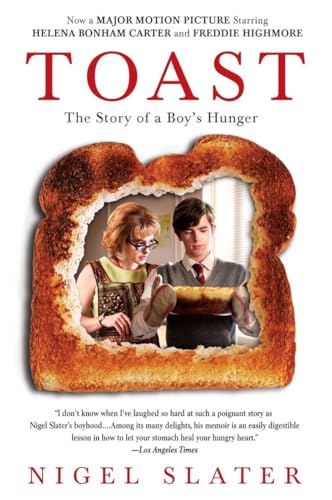
Toast is Nigel Slater’s truly extraordinary story of a childhood remembered through food. In each chapter, as he takes readers on a tour of the contents of his family’s pantry—rice pudding, tinned ham, cream soda, mince pies, lemon drops, bourbon biscuits—we are transported....
His mother was a chops-and-peas sort of cook, exasperated by the highs and lows of a temperamental stove, a finicky little son, and the asthma that was to prove fatal. His father was a honey-and-crumpets man with an unpredictable temper. When Nigel’s widowed father takes on a housekeeper with social aspirations and a talent in the kitchen, the following years become a heartbreaking cooking contest for his father’s affections. But as he slowly loses the battle, Nigel finds a new outlet for his culinary talents, and we witness the birth of what was to become a lifelong passion for food. Nigel’s likes and dislikes, aversions and sweet-toothed weaknesses, form a fascinating backdrop to this exceptionally moving memoir of childhood, adolescence, and sexual awakening.
A bestseller (more than 300,000 copies sold) and award-winner in the UK, Toast is sure to delight both foodies and memoir readers on this side of the pond—especially those who made such enormous successes of Ruth Reichl’s Tender at the Bone and Anthony Bourdain’s Kitchen Confidential.
Die Inhaltsangabe kann sich auf eine andere Ausgabe dieses Titels beziehen.
Über die Autorin bzw. den Autor
Nigel Slater is the author of several classic cookbooks, including Real Fast Food and the award-winning Appetite. He has written a much-loved column for The Observer (London) for more than a decade and has been described by the media as a national treasure. He lives in London.
Auszug. © Genehmigter Nachdruck. Alle Rechte vorbehalten.
Preface
“Write a piece about the food of your childhood, will you?” asked the (then) editor of my weekly food column in London’s Observer newspaper. I liked the idea and went out and bought the candies and puddings that, some thirty years ago, had been such an important part of my diet. Some I still ate as an occasional treat; others I had not had my tongue around for twenty years or more. As I unwrapped each sticky chocolate bar or sucked each brightly colored candy, the memories—surprisingly clear and loud—flooded back. This would be easy, I thought. A painless column to write after several years of penning weekly recipe-led pieces.
At first it was all straightforward enough. Oat cookies reminded me of coming home from school; green beans brought back the smell of the farm were I was sent to pick them; Turkish Delight reminded me of Christmas. In that respect it was not dissimilar from other foodie memoirs. But the more I ate the more I realized that not every mouthful produced a memory so sweet. A dish of canned raspberries revisited a violent thrashing from my father that brought me to a point of near collapse (I had spilt them and their scarlet juice on the new gray carpet, and he was distraught from being newly widowed); cream-filled Walnut Whips hit back with an embarrassingly vivid recall of early sexual voyeurism; and the soft pink marshmallows I had not eaten since I was nine I found to be inseparably linked with my late mom’s goodnight kisses.
I decided to take a chance and made the piece uninhibitedly personal. I linked the food not just with events but with feelings, warts and all, and even chucked in a fair helping of sex. I handed the column in.
A half hour later the phone rang. I knew it was my editor even before I picked it up. “It’s about the story,” she said. Immediately I gabbled at her, saying that I was sorry, I knew it was too intimate and was out of style. I offered to rewrite it, taking out all the memoir and sticking strictly to the food. “No,” she insisted, “I love it. I’m going to publish it exactly as it is.”
The morning after the piece, now called “My Life on a Plate,” came out, Louise Haines, my literary editor who had worked on all of my cookbooks, called to say that she had read the story and thought I should write it as a book. We were in the depths of finishing Real Food, my fifth cookbook and one that tied into my television cooking series at the time. Overloaded with work, we put the idea of the memoir on the back burner.
Forget salt and pepper, garlic and lemon. The most successful seasoning for what we eat is a good pinch of nostalgia. Ask anyone about the foods they grew up with and you will unleash a torrent of (mostly) happy memories. I must admit that I knew this when I finally set out to write Toast. To punctuate the story of a childhood memoir with brand names of the chocolate and candy and recipes that were household names at the time would be sure to ring a few bells.
I suppose it is perfectly appropriate that I should have chosen food as the blood in my memoir’s veins. I have always worked with the stuff; first in restaurant kitchens, and then as a food writer. I have had a weekly newspaper cooking column for over a decade, written for glossy magazines, and have published several cookbooks, the first of which, Real Fast Food, is now in its twenty-eighth printing. Food has been my career, my hobby, and, it must be said, my escape.
Yet most people were more than a little surprised that I should write such a personal book at all. Despite my work being well known in the UK, I had never taken (and never will take) the celebrity route. I had devoutly refused to play the game, to attend food symposiums, join writers’ guilds, present cooking demonstrations, or do the cooking circuit. I would go to any length to avoid a photo shoot or a seminar and would rather eat feathers than attend an awards ceremony. Even when I was up for a medal.
There were times, especially toward the end of writing, when I questioned the appropriateness of such a project. When a cooking writer pens his autobiography it is invariably written with a freshly baked, rosy glow. Tales of baking at their mother’s knee is what is expected. Then there is the obligatory early morning trip to the market with your wicker basket complete with vignettes of the woman at the charming little cheese stall and going home with a laden basket and a crusty French loaf. Yet I had not written about any of that. I had waxed lyrical not about the vast cups of steaming café au lait and light-as-a-feather croissants, but of the canned meat pies my father unsuccessfully attempted to bake; the fried eggs with which I was force-fed until I vomited; and the cookbooks that, as an adolescent, I used in lieu of pornography. At one point in the book, more food seemed to come up rather than go down. In addition to that, the manuscript was tinged with sadness. Both my editor and my agent, the only two people to see the then-unfinished manuscript, admitted they had both been brought to tears.
Perhaps I should take the “chocolate-chip-cookie memoir” route instead? And there was another salient point. Why would anyone who worked so hard at keeping a low profile and preserving their privacy choose to write a book that could, at the very least, be described as “intimate”? Revelations, indiscretions, and recollections that even my most devout supporters might file under “too much information.” I don’t know what made me finish it. All I know is that I did.
True to plan, when the book finally came out I was not entirely surprised that so much of the food involved in my upbringing brought back memories for others. What I had not expected was the level of recognition of the backbone of my story. The tale behind the food. What I thought was a singularly personal account of a childhood scarred by the death of a parent, the imposition of a seemingly cruel step-mother, the feelings of frustration, exclusion, loneliness, and even sexual confusion, turned out to be anything but. Letters dropped through my mailbox, newspapers pressed for interviews (though rarely got them), people regularly stopped me apologetically in the street. “I’m sorry, but you have written about my childhood!” . . . “It is as if you were there at my side.” . . . “I had thought I was the only one.” . . . they all said. It quickly dawned on me that Toast had set a thousand bells ringing.
The book was neat and small, like a slice of toast itself. The critics were kind and generous, more so than I could ever have dreamed of, and unlike the cookbooks that had come before, the reviews of Toast appeared on the literary pages. It made the bestseller lists and stayed there for several weeks; then there was a flurry of inquiries about the film rights and they were eventually sold. I was amazed, delighted, and more than a little embarrassed.
When my agent told me that my little book was to be published in the United States I asked simply, “Will it work there?” I was convinced the brand names, the food references, and, in some way, the lifestyle of middle-class England may seem unfamiliar and distant. After all, few American readers had heard of me. I was hardly Julia Child. And then I remembered the first letter that popped through my door after Toast hit the stores in England. The one that said, “I am a lot younger than you, and we obviously come from different backgrounds. Yet in so many ways we appear to have the same childhood. It is like you have written my story.”
-Nigel Slater
London, 2004
Toast 1
My mother is scraping a piece of burned toast out of the kitchen window, a crease of annoyance across her...
„Über diesen Titel“ kann sich auf eine andere Ausgabe dieses Titels beziehen.
Suchergebnisse für Toast: The Story of a Boy's Hunger

Beispielbild für diese ISBN
Toast : The Story of a Boy's Hunger
Anbieter: Robinson Street Books, IOBA, Binghamton, NY, USA
Verkäuferbewertung 4 von 5 Sternen

Mass Market Pa. Zustand: Used: Very good. Prompt Shipment, shipped in Boxes, Tracking PROVIDEDBiography: General: VERY good or Better trade paperback. Bestandsnummer des Verkäufers bing807jlw021
Gebraucht kaufen
EUR 12,39
EUR 8,46 Versand
Versand innerhalb von USA
Versand innerhalb von USA
Anzahl: 1 verfügbar
Beispielbild für diese ISBN
Toast: The Story of a Boy's Hunger
Anbieter: Lakeside Books, Benton Harbor, MI, USA
Verkäuferbewertung 5 von 5 Sternen

Zustand: New. Brand New! Not Overstocks or Low Quality Book Club Editions! Direct From the Publisher! We're not a giant, faceless warehouse organization! We're a small town bookstore that loves books and loves it's customers! Buy from Lakeside Books! Bestandsnummer des Verkäufers OTF-S-9781592407064
Neu kaufen
EUR 18,85
EUR 3,55 Versand
Versand innerhalb von USA
Versand innerhalb von USA
Anzahl: Mehr als 20 verfügbar
Foto des Verkäufers
Toast : The Story of a Boy's Hunger
Anbieter: GreatBookPrices, Columbia, MD, USA
Verkäuferbewertung 5 von 5 Sternen
Zustand: New. Bestandsnummer des Verkäufers 13531886-n
Neu kaufen
EUR 20,08
EUR 2,35 Versand
Versand innerhalb von USA
Versand innerhalb von USA
Anzahl: Mehr als 20 verfügbar
Foto des Verkäufers
Toast
Anbieter: Rarewaves.com USA, London, LONDO, Vereinigtes Königreich
Verkäuferbewertung 5 von 5 Sternen
Paperback. Zustand: New. Bestandsnummer des Verkäufers LU-9781592407064
Neu kaufen
EUR 22,77
Versand gratis
Versand von Vereinigtes Königreich nach USA
Versand von Vereinigtes Königreich nach USA
Anzahl: Mehr als 20 verfügbar
Foto des Verkäufers
Toast: The Story of a Boy's Hunger (Paperback or Softback)
Verlag:
Gotham Books 9/21/2011, 2011
ISBN 10: 1592407064
ISBN 13: 9781592407064
Neu
Paperback or Softback
Anbieter: BargainBookStores, Grand Rapids, MI, USA
Verkäuferbewertung 5 von 5 Sternen
Paperback or Softback. Zustand: New. Toast: The Story of a Boy's Hunger. Book. Bestandsnummer des Verkäufers BBS-9781592407064
Foto des Verkäufers
Toast : The Story of a Boy's Hunger
Verlag:
Penguin Publishing Group, 2011
ISBN 10: 1592407064
ISBN 13: 9781592407064
Gebraucht
Softcover
Anbieter: GreatBookPrices, Columbia, MD, USA
Verkäuferbewertung 5 von 5 Sternen
Zustand: As New. Unread book in perfect condition. Bestandsnummer des Verkäufers 13531886
Gebraucht kaufen
EUR 21,29
EUR 2,35 Versand
Versand innerhalb von USA
Versand innerhalb von USA
Anzahl: Mehr als 20 verfügbar
Beispielbild für diese ISBN
Toast: The Story of a Boy's Hunger
Anbieter: California Books, Miami, FL, USA
Verkäuferbewertung 5 von 5 Sternen
Zustand: New. Bestandsnummer des Verkäufers I-9781592407064
Neu kaufen
EUR 25,69
EUR 2,67 Versand
Versand innerhalb von USA
Versand innerhalb von USA
Anzahl: Mehr als 20 verfügbar
Beispielbild für diese ISBN
Toast: The Story of a Boy's Hunger
Verlag:
Gotham Books, United States, New York, 2011
ISBN 10: 1592407064
ISBN 13: 9781592407064
Gebraucht
Paperback
Anbieter: WorldofBooks, Goring-By-Sea, WS, Vereinigtes Königreich
Verkäuferbewertung 5 von 5 Sternen
Paperback. Zustand: Very Good. The book has been read, but is in excellent condition. Pages are intact and not marred by notes or highlighting. The spine remains undamaged. Bestandsnummer des Verkäufers GOR003728958
Gebraucht kaufen
EUR 24,69
EUR 6,71 Versand
Versand von Vereinigtes Königreich nach USA
Versand von Vereinigtes Königreich nach USA
Anzahl: 2 verfügbar
Beispielbild für diese ISBN
Toast: The Story of a Boy's Hunger
Anbieter: Revaluation Books, Exeter, Vereinigtes Königreich
Verkäuferbewertung 5 von 5 Sternen
Paperback. Zustand: Brand New. reprint edition. 256 pages. 8.00x5.25x1.00 inches. In Stock. Bestandsnummer des Verkäufers x-1592407064
Neu kaufen
EUR 29,19
EUR 11,98 Versand
Versand von Vereinigtes Königreich nach USA
Versand von Vereinigtes Königreich nach USA
Anzahl: 2 verfügbar
Beispielbild für diese ISBN
Toast: The Story of a Boy's Hunger
Print-on-DemandAnbieter: THE SAINT BOOKSTORE, Southport, Vereinigtes Königreich
Verkäuferbewertung 5 von 5 Sternen
Paperback / softback. Zustand: New. This item is printed on demand. New copy - Usually dispatched within 5-9 working days. Bestandsnummer des Verkäufers C9781592407064
Neu kaufen
EUR 30,85
EUR 15,85 Versand
Versand von Vereinigtes Königreich nach USA
Versand von Vereinigtes Königreich nach USA
Anzahl: Mehr als 20 verfügbar