
Verwandte Artikel zu Dancing with the Devil: The Perils of Engaging Rogue...
Inhaltsangabe
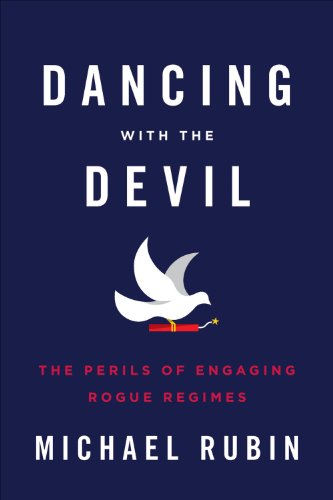
The world has seldom been as dangerous as it is now. Rogue regimes—governments and groups that eschew diplomatic normality, sponsor terrorism, and proliferate nuclear weapons—threaten the United States around the globe. Because sanctions and military action are so costly, the American strategy of first resort is dialogue, on the theory that “it never hurts to talk to enemies.” Seldom is conventional wisdom so wrong.
Engagement with rogue regimes is not cost-free, as Michael Rubin demonstrates by tracing the history of American diplomacy with North Korea, Iran, Iraq, Libya, the Taliban’s Afghanistan, and Pakistan. Further challenges to traditional diplomacy have come from terrorist groups, such as the PLO in the 1970s and 1980s, or Hamas and Hezbollah in the last two decades. The argument in favor of negotiation with terrorists is suffused with moral equivalence, the idea that one man’s terrorist is another man’s freedom fighter. Rarely does the actual record of talking to terrorists come under serious examination.
While soldiers spend weeks developing lessons learned after every exercise, diplomats generally do not reflect on why their strategy toward rogues has failed, or consider whether their basic assumptions have been faulty. Rubin’s analysis finds that rogue regimes all have one thing in common: they pretend to be aggrieved in order to put Western diplomats on the defensive. Whether in Pyongyang, Tehran, or Islamabad, rogue leaders understand that the West rewards bluster with incentives and that the U.S. State Department too often values process more than results.
Engagement with rogue regimes is not cost-free, as Michael Rubin demonstrates by tracing the history of American diplomacy with North Korea, Iran, Iraq, Libya, the Taliban’s Afghanistan, and Pakistan. Further challenges to traditional diplomacy have come from terrorist groups, such as the PLO in the 1970s and 1980s, or Hamas and Hezbollah in the last two decades. The argument in favor of negotiation with terrorists is suffused with moral equivalence, the idea that one man’s terrorist is another man’s freedom fighter. Rarely does the actual record of talking to terrorists come under serious examination.
While soldiers spend weeks developing lessons learned after every exercise, diplomats generally do not reflect on why their strategy toward rogues has failed, or consider whether their basic assumptions have been faulty. Rubin’s analysis finds that rogue regimes all have one thing in common: they pretend to be aggrieved in order to put Western diplomats on the defensive. Whether in Pyongyang, Tehran, or Islamabad, rogue leaders understand that the West rewards bluster with incentives and that the U.S. State Department too often values process more than results.
Die Inhaltsangabe kann sich auf eine andere Ausgabe dieses Titels beziehen.
Über die Autorin bzw. den Autor
Michael Rubin, a former Pentagon official, is a resident scholar at the American Enterprise Institute and a senior lecturer at the Naval Postgraduate School.
„Über diesen Titel“ kann sich auf eine andere Ausgabe dieses Titels beziehen.
Suchergebnisse für Dancing with the Devil: The Perils of Engaging Rogue...

Beispielbild für diese ISBN
Dancing with the Devil: The Perils of Engaging Rogue Regimes
Anbieter: World of Books (was SecondSale), Montgomery, IL, USA
Verkäuferbewertung 5 von 5 Sternen

Hardback. Zustand: Good. The world has seldom been as dangerous as it is now. Rogue regimes--governments and groups that eschew diplomatic normality, sponsor terrorism, and proliferate nuclear weapons--threaten the United States around the globe. Because sanctions and military action are so costly, the American strategy of first resort is dialogue, on the theory that "it never hurts to talk to enemies." Seldom is conventional wisdom so wrong. Engagement with rogue regimes is not cost-free, as Michael Rubin demonstrates by tracing the history of American diplomacy with North Korea, Iran, Iraq, Libya, the Taliban's Afghanistan, and Pakistan. Further challenges to traditional diplomacy have come from terrorist groups, such as the PLO in the 1970s and 1980s, or Hamas and Hezbollah in the last two decades. The argument in favor of negotiation with terrorists is suffused with moral equivalence, the idea that one man's terrorist is another man's freedom fighter. Rarely does the actual record of talking to terrorists come under serious examination. While soldiers spend weeks developing lessons learned after every exercise, diplomats generally do not reflect on why their strategy toward rogues has failed, or consider whether their basic assumptions have been faulty. Rubin's analysis finds that rogue regimes all have one thing in common: they pretend to be aggrieved in order to put Western diplomats on the defensive. Whether in Pyongyang, Tehran, or Islamabad, rogue leaders understand that the West rewards bluster with incentives and that the U.S. State Department too often values process more than results. Bestandsnummer des Verkäufers 00104889611
Gebraucht kaufen
EUR 6,53
Versand gratis
Versand innerhalb von USA
Versand innerhalb von USA
Anzahl: 1 verfügbar
Beispielbild für diese ISBN
Dancing with the Devil: The Perils of Engaging Rogue Regimes
Anbieter: World of Books (was SecondSale), Montgomery, IL, USA
Verkäuferbewertung 5 von 5 Sternen
Hardback. Zustand: Very Good. The world has seldom been as dangerous as it is now. Rogue regimes--governments and groups that eschew diplomatic normality, sponsor terrorism, and proliferate nuclear weapons--threaten the United States around the globe. Because sanctions and military action are so costly, the American strategy of first resort is dialogue, on the theory that "it never hurts to talk to enemies." Seldom is conventional wisdom so wrong. Engagement with rogue regimes is not cost-free, as Michael Rubin demonstrates by tracing the history of American diplomacy with North Korea, Iran, Iraq, Libya, the Taliban's Afghanistan, and Pakistan. Further challenges to traditional diplomacy have come from terrorist groups, such as the PLO in the 1970s and 1980s, or Hamas and Hezbollah in the last two decades. The argument in favor of negotiation with terrorists is suffused with moral equivalence, the idea that one man's terrorist is another man's freedom fighter. Rarely does the actual record of talking to terrorists come under serious examination. While soldiers spend weeks developing lessons learned after every exercise, diplomats generally do not reflect on why their strategy toward rogues has failed, or consider whether their basic assumptions have been faulty. Rubin's analysis finds that rogue regimes all have one thing in common: they pretend to be aggrieved in order to put Western diplomats on the defensive. Whether in Pyongyang, Tehran, or Islamabad, rogue leaders understand that the West rewards bluster with incentives and that the U.S. State Department too often values process more than results. Bestandsnummer des Verkäufers 00104112091
Gebraucht kaufen
EUR 6,53
Versand gratis
Versand innerhalb von USA
Versand innerhalb von USA
Anzahl: 1 verfügbar
Beispielbild für diese ISBN
Dancing with the Devil: The Perils of Engaging Rogue Regimes
Anbieter: ThriftBooks-Dallas, Dallas, TX, USA
Verkäuferbewertung 5 von 5 Sternen
Hardcover. Zustand: Very Good. No Jacket. Former library book; May have limited writing in cover pages. Pages are unmarked. ~ ThriftBooks: Read More, Spend Less. Bestandsnummer des Verkäufers G159403723XI4N10
Gebraucht kaufen
EUR 6,54
Versand gratis
Versand innerhalb von USA
Versand innerhalb von USA
Anzahl: 1 verfügbar
Beispielbild für diese ISBN
Dancing with the Devil: The Perils of Engaging Rogue Regimes
Anbieter: HPB-Emerald, Dallas, TX, USA
Verkäuferbewertung 5 von 5 Sternen
hardcover. Zustand: Very Good. Connecting readers with great books since 1972! Used books may not include companion materials, and may have some shelf wear or limited writing. We ship orders daily and Customer Service is our top priority! Bestandsnummer des Verkäufers S_474470362
Gebraucht kaufen
EUR 3,52
EUR 3,29 Versand
Versand innerhalb von USA
Versand innerhalb von USA
Anzahl: 1 verfügbar
Beispielbild für diese ISBN
Dancing with the Devil: The Perils of Engaging Rogue Regimes
Anbieter: The Maryland Book Bank, Baltimore, MD, USA
Verkäuferbewertung 5 von 5 Sternen
hardcover. Zustand: Very Good. Used - Very Good. Bestandsnummer des Verkäufers 10-K-4-0154
Gebraucht kaufen
EUR 2,94
EUR 4,12 Versand
Versand innerhalb von USA
Versand innerhalb von USA
Anzahl: 1 verfügbar
Foto des Verkäufers
Dancing with the Devil: The Perils of Engaging Rogue Regimes
Anbieter: Blue Vase Books, Interlochen, MI, USA
Verkäuferbewertung 5 von 5 Sternen
Zustand: good. The item shows wear from consistent use, but it remains in good condition and works perfectly. All pages and cover are intact including the dust cover, if applicable . Spine may show signs of wear. Pages may include limited notes and highlighting. May NOT include discs, access code or other supplemental materials. Bestandsnummer des Verkäufers BVV.159403723X.G
Gebraucht kaufen
EUR 7,26
Versand gratis
Versand innerhalb von USA
Versand innerhalb von USA
Anzahl: 1 verfügbar
Beispielbild für diese ISBN
Dancing with the Devil: The Perils of Engaging Rogue Regimes
Anbieter: Book Outpost, Blawnox, PA, USA
Verkäuferbewertung 5 von 5 Sternen
Zustand: Very Good. Moderate wear to corners/edges from shelving. Bestandsnummer des Verkäufers S-6-0026572
Gebraucht kaufen
EUR 7,27
Versand gratis
Versand innerhalb von USA
Versand innerhalb von USA
Anzahl: 1 verfügbar
Beispielbild für diese ISBN
Dancing with the Devil: The Perils of Engaging Rogue Regimes
Anbieter: Book Outpost, Blawnox, PA, USA
Verkäuferbewertung 5 von 5 Sternen
Zustand: Good. Cover has a crease/tear, book is in good condition. Bestandsnummer des Verkäufers S-6-0026575
Gebraucht kaufen
EUR 7,27
Versand gratis
Versand innerhalb von USA
Versand innerhalb von USA
Anzahl: 1 verfügbar
Beispielbild für diese ISBN
Dancing with the Devil: The Perils of Engaging Rogue Regimes
Anbieter: World of Books Inc, Montgomery, IL, USA
Verkäuferbewertung 4 von 5 Sternen

Hardback. Zustand: Good. The world has seldom been as dangerous as it is now. Rogue regimes--governments and groups that eschew diplomatic normality, sponsor terrorism, and proliferate nuclear weapons--threaten the United States around the globe. Because sanctions and military action are so costly, the American strategy of first resort is dialogue, on the theory that "it never hurts to talk to enemies." Seldom is conventional wisdom so wrong. Engagement with rogue regimes is not cost-free, as Michael Rubin demonstrates by tracing the history of American diplomacy with North Korea, Iran, Iraq, Libya, the Taliban's Afghanistan, and Pakistan. Further challenges to traditional diplomacy have come from terrorist groups, such as the PLO in the 1970s and 1980s, or Hamas and Hezbollah in the last two decades. The argument in favor of negotiation with terrorists is suffused with moral equivalence, the idea that one man's terrorist is another man's freedom fighter. Rarely does the actual record of talking to terrorists come under serious examination. While soldiers spend weeks developing lessons learned after every exercise, diplomats generally do not reflect on why their strategy toward rogues has failed, or consider whether their basic assumptions have been faulty. Rubin's analysis finds that rogue regimes all have one thing in common: they pretend to be aggrieved in order to put Western diplomats on the defensive. Whether in Pyongyang, Tehran, or Islamabad, rogue leaders understand that the West rewards bluster with incentives and that the U.S. State Department too often values process more than results. Bestandsnummer des Verkäufers CIN159403723XG
Gebraucht kaufen
EUR 8,34
Versand gratis
Versand innerhalb von USA
Versand innerhalb von USA
Anzahl: 1 verfügbar
Beispielbild für diese ISBN
Dancing with the Devil: The Perils of Engaging Rogue Regimes
Anbieter: World of Books Inc, Montgomery, IL, USA
Verkäuferbewertung 4 von 5 Sternen
Hardback. Zustand: Very Good. The world has seldom been as dangerous as it is now. Rogue regimes--governments and groups that eschew diplomatic normality, sponsor terrorism, and proliferate nuclear weapons--threaten the United States around the globe. Because sanctions and military action are so costly, the American strategy of first resort is dialogue, on the theory that "it never hurts to talk to enemies." Seldom is conventional wisdom so wrong. Engagement with rogue regimes is not cost-free, as Michael Rubin demonstrates by tracing the history of American diplomacy with North Korea, Iran, Iraq, Libya, the Taliban's Afghanistan, and Pakistan. Further challenges to traditional diplomacy have come from terrorist groups, such as the PLO in the 1970s and 1980s, or Hamas and Hezbollah in the last two decades. The argument in favor of negotiation with terrorists is suffused with moral equivalence, the idea that one man's terrorist is another man's freedom fighter. Rarely does the actual record of talking to terrorists come under serious examination. While soldiers spend weeks developing lessons learned after every exercise, diplomats generally do not reflect on why their strategy toward rogues has failed, or consider whether their basic assumptions have been faulty. Rubin's analysis finds that rogue regimes all have one thing in common: they pretend to be aggrieved in order to put Western diplomats on the defensive. Whether in Pyongyang, Tehran, or Islamabad, rogue leaders understand that the West rewards bluster with incentives and that the U.S. State Department too often values process more than results. Bestandsnummer des Verkäufers CIN159403723XVG
Gebraucht kaufen
EUR 8,34
Versand gratis
Versand innerhalb von USA
Versand innerhalb von USA
Anzahl: 1 verfügbar