
Verwandte Artikel zu Smarter: The New Science of Building Brain Power
Inhaltsangabe
Can you make yourself, your kids, and your parents smarter?
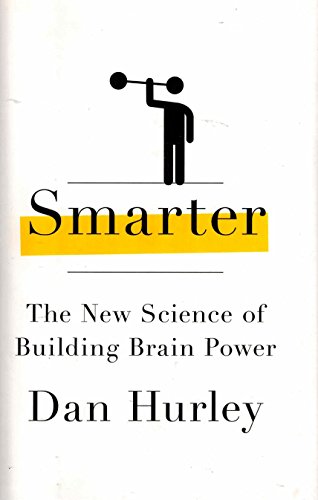
Expanding upon one of the most-read New York Times Magazine features of 2012, Smarter penetrates the hot new field of intelligence research to reveal what researchers call a revolution in human intellectual abilities. Shattering decades of dogma, scientists began publishing studies in 2008 showing that ?fluid intelligence”?the ability to learn, solve novel problems, and get to the heart of things?can be increased through training.
But is it all just hype? With vivid stories of lives transformed, science journalist Dan Hurley delivers practical findings for people of every age and ability. Along the way, he narrates with acidtongued wit his experiences as a human guinea pig, road-testing commercial brain-training programs, learning to play the Renaissance lute, getting physically fit, even undergoing transcranial directcurrent stimulation.
Smarter speaks to the audience that made bestsellers out of Train Your Mind, Change Your Brain and Moonwalking with Einstein.
Expanding upon one of the most-read New York Times Magazine features of 2012, Smarter penetrates the hot new field of intelligence research to reveal what researchers call a revolution in human intellectual abilities. Shattering decades of dogma, scientists began publishing studies in 2008 showing that ?fluid intelligence”?the ability to learn, solve novel problems, and get to the heart of things?can be increased through training.
But is it all just hype? With vivid stories of lives transformed, science journalist Dan Hurley delivers practical findings for people of every age and ability. Along the way, he narrates with acidtongued wit his experiences as a human guinea pig, road-testing commercial brain-training programs, learning to play the Renaissance lute, getting physically fit, even undergoing transcranial directcurrent stimulation.
Smarter speaks to the audience that made bestsellers out of Train Your Mind, Change Your Brain and Moonwalking with Einstein.
Die Inhaltsangabe kann sich auf eine andere Ausgabe dieses Titels beziehen.
Über die Autorinnen und Autoren
DAN HURLEY is an award-winning science journalist whose 2012 feature in the New York Times Magazine, "Can You Make Yourself Smarter?" was one of the magazine's most-read articles of the year. In 2013 he published another article for the magazine, "Jumper Cables for the Mind," describing his experience with transcranial direct-current stimulation. He has written on the science of increasing fluid intelligence for the Washington Post and Neurology, and is featured in the 2013 PBS documentary, "Smarter Brains." His books have been excerpted in Wired and Discover magazine. Hurley has written nearly two dozen science articles for the New York Times since 2005.
DAN HURLEY is an award-winning science journalist whose 2012 feature in the New York Times Magazine, "Can You Make Yourself Smarter?" was one of the magazine's most-read articles of the year. In 2013 he published another article for the magazine, "Jumper Cables for the Mind," describing his experience with transcranial direct-current stimulation. He has written on the science of increasing fluid intelligence for theWashington Post and Neurology, and is featured in the 2013 PBS documentary, "Smarter Brains." His books have been excerpted inWired and Discover magazine. Hurley has written nearly two dozen science articles for theNew York Times since 2005.
Auszug. © Genehmigter Nachdruck. Alle Rechte vorbehalten.
***This excerpt is from an advance uncorrected proof.***
Copyright © 2013 by Dan Hurley
INTRODUCTION
Danny and Julie Vizcaino, brother and sister, were born and raised in a poor neighborhood of Modesto, California, she in 1981, he in 1983. Their parents, immigrants from Mexico without high school diplomas, were typical of the local population: their mother worked in a canning factory, and their father worked in construction until he died in an accident when the kids were young. With an older brother who had dropped out of high school and gotten into trouble with the law, Julie was left back in second grade and took it for granted that she was, in a word, stupid.
“I was never really good at reading and writing,” she told me. “Or at anything.”
Then, in 1991, Julie entered fourth grade and found herself in the class of a new teacher, Kevin Cripe, who had the outlandish idea that his students were capable of great things.
“When I talked to older teachers,” Cripe told me, “they said that Julie was just not very smart. One of her older brothers was in and out of jail. She had been left back. Her younger brother, Danny, had also been left back. And she was not a great reader.”
But Cripe had been a lifelong chess player, and when he decided to start a chess club, he invited Julie to participate.
“I had no idea what it was,” she said. “I called it ‘chest.’ I had never heard of it, but I said sure.”
Cripe kept their training fun, but challenging, and Julie picked it up with a speed that surprised even Cripe. She began spending hours leaning over a chessboard, lost in thought, thinking not just two or three moves ahead, but ten or more. After two years of practice, when Julie was in sixth grade, Cripe decided that she and two other kids were good enough to enter a local tournament in Bakersfield.
“Here’s what I felt as we were going to that first tournament,” Cripe said. “There was this other kid named Jordy. A great kid. Both his parents were psychologists. Jordy was a prodigy. He had gone to private elementary schools and played the piano in concerts. His parents had done all the right things. I thought, here’s Jordy, he has all this stuff, he speaks French, and here’s Julie. Cognitively, I have to think that her brain has never been fully activated or whatever you want to call it. Sort of like a kid who’s never really run, never been pushed to do something athletic. I thought, what would happen if we just treat her brain as if it’s going to be like his at some point? So I just decided to treat all the kids in the chess club like they’re going to be as smart as all the other kids in these tournaments, the ones from the elite private schools. If I didn’t believe that, then it’s all hopelessness, right? You might as well burn up all the books.”
After the students did well at the Bakersfield tournament and at a number of others in California, Cripe decided he would take Julie and the rest of his team to a national chess championship held in Charlotte, North Carolina.
“Don’t do this,” a fellow teacher begged him. “You will only embarrass these children.”
But Cripe took them, and out of eighty teams, his scored in the top fifteen. Among the hundreds of students participating, Julie ended up among the tournament’s top ten.
“I didn’t start winning till I was thirteen or fourteen,” she said. “When I was fourteen, I won a lot of money playing in the tournaments. That’s how I bought my first car.” Eventually, in her age group, Julie was ranked among the top fifty female players in the United States.
Then her younger brother, Danny, joined the team and soon became its best player. At a national championship held in Tucson, Danny reached the last round, his team clinging to the hope of scoring in the top ten, when the stress got to him.
“He throws up before the last round because he’s nervous,” Cripe said. “He was the leader. I said, ‘Okay, Danny, if you are truly sick, I’ll call your mom; we’ll withdraw you from the tournament. But if you’re nervous, here’s what I want you to think about. You have earned this. Everybody else is as nervous as you are. And I want you to enjoy this moment, because there are seven hundred other people here today who have no chance to win a trophy. So what do you want me to do?’ And he said, ‘I want to try to play.’ Then I gave him one last piece of advice: ‘If you throw up again, aim for the floor, because if you hit the board, it’s going to be hard to play with the chess pieces.’
“He won his game fairly quickly. Every single other student on our team who came out after him also won. They watched Danny win after he threw up. It almost makes me cry every time I talk about it. He was one of the ‘dumb ones,’ and he finished in the top ten of the national chess championship that year. And our team finished in fifth place. We were ahead of Hunter College Elementary School that year. That’s the school in New York City that’s always among the best. They were in sixth or seventh place.”
Danny went on to graduate from the University of the Pacific with a degree in mechanical engineering. He now works as an engineer for an international manufacturing firm. Julie graduated from the University of Mississippi and is now a homemaker living with her husband, Calbemar, and a young daughter, Isabel.
“I definitely think chess improved my thinking abilities,” Julie told me. “And it definitely improved the thinking abilities of other kids in the chess club. We all got better in our grades and everything else. It just had to do with how hard you worked. You get pretty good at it. You sit there for so long. You’ve got to picture the moves in your head. At the beginning, you can’t really think that far into it. When I was really practicing, I could think fifteen, even twenty moves ahead. You have to sit there for hours and try to think through all these different scenarios. And you’re just thinking of different consequences. You take that and put it into your own life. If I do this, then this can happen. If I do that, then that can happen. And then you just make the best decision from there.”
What, really, is the meaning of intelligence anyway?
“There are some really ignorant people out there,” Julie told me, “the people who are prejudiced and think that just because some kids are from a poor area, and their parents didn’t have an education, they automatically have to be stupid. And we’re not stupid. I’m not stupid. There are lots of smart kids out there. There’s lots of things we could get into. It just has to do with the choices you make. That’s why I said chess definitely helped me make the right choices.”
On the other side of the country, among the most affluent of New York City’s parents, another approach to increasing intelligence is being pursued by those able to pay a couple hundred dollars per hour. Founded in 2009, Bright Kids NYC now has as many as five hundred children enrolled at any time, most of them four-year-olds seeking to gain admission to the public schools’ gifted and talented program. Although admission was once decided by each individual school district in the city, leading some to question its fairness, in 2008 a uniform, citywide standard was created, based on standardized test scores. (Yes, there are standardized tests for preschoolers.) To...
„Über diesen Titel“ kann sich auf eine andere Ausgabe dieses Titels beziehen.
Suchergebnisse für Smarter: The New Science of Building Brain Power

Beispielbild für diese ISBN
Smarter: The New Science of Building Brain Power
Anbieter: Your Online Bookstore, Houston, TX, USA
Verkäuferbewertung 5 von 5 Sternen

Hardcover. Zustand: Fair. Bestandsnummer des Verkäufers 1594631271-4-24983374
Gebraucht kaufen
EUR 5,37
Versand gratis
Versand innerhalb von USA
Versand innerhalb von USA
Anzahl: 1 verfügbar
Beispielbild für diese ISBN
Smarter: The New Science of Building Brain Power
Anbieter: World of Books (was SecondSale), Montgomery, IL, USA
Verkäuferbewertung 5 von 5 Sternen
Hardback. Zustand: Very Good. A riveting look at the birth of a new science. --Daniel H. Pink, author of Drive When he was eight years old, Dan Hurley was labeled a slow learner because he still couldn't read. Three years later, he had become a straight A student. Until the publication of a major study in 2008, psychologists believed that intelligence is fixed at birth, that IQ is like a number tattooed on the soul. The new study showed that people can increase their fluid intelligence through training. Hurley, who grew up to become an award-winning science journalist, first explored the topic in The New York Times Magazine. In Smarter, he digs deeper by meeting with the field's leading researchers--and becoming a human guinea pig. After just three months of playing computer brain-training games, joining a boot-camp exercise program, learning to play the Renaissance lute, practicing mindfulness meditation and and even getting his brain zapped in the name of science, Hurley improved his fluid intelligence by sixteen percent. With humor and heart, Smarter chronicles the roiling field of intelligence research and delivers practical findings to sharpen the minds of children, young adults, seniors, and those with cognitive challenges. Bestandsnummer des Verkäufers 00084624524
Gebraucht kaufen
EUR 5,38
Versand gratis
Versand innerhalb von USA
Versand innerhalb von USA
Anzahl: 1 verfügbar
Beispielbild für diese ISBN
Smarter: The New Science of Building Brain Power
Anbieter: BooksRun, Philadelphia, PA, USA
Verkäuferbewertung 5 von 5 Sternen
Hardcover. Zustand: Very Good. With dust jacket. It's a well-cared-for item that has seen limited use. The item may show minor signs of wear. All the text is legible, with all pages included. It may have slight markings and/or highlighting. Bestandsnummer des Verkäufers 1594631271-11-1-29
Gebraucht kaufen
EUR 5,59
Versand gratis
Versand innerhalb von USA
Versand innerhalb von USA
Anzahl: 1 verfügbar
Beispielbild für diese ISBN
Smarter: The New Science of Building Brain Power
Anbieter: ThriftBooks-Phoenix, Phoenix, AZ, USA
Verkäuferbewertung 5 von 5 Sternen
Hardcover. Zustand: Very Good. No Jacket. May have limited writing in cover pages. Pages are unmarked. ~ ThriftBooks: Read More, Spend Less. Bestandsnummer des Verkäufers G1594631271I4N00
Gebraucht kaufen
EUR 6,08
Versand gratis
Versand innerhalb von USA
Versand innerhalb von USA
Anzahl: 1 verfügbar
Beispielbild für diese ISBN
Smarter: The New Science of Building Brain Power
Anbieter: ThriftBooks-Dallas, Dallas, TX, USA
Verkäuferbewertung 5 von 5 Sternen
Hardcover. Zustand: Very Good. No Jacket. May have limited writing in cover pages. Pages are unmarked. ~ ThriftBooks: Read More, Spend Less. Bestandsnummer des Verkäufers G1594631271I4N00
Gebraucht kaufen
EUR 6,30
Versand gratis
Versand innerhalb von USA
Versand innerhalb von USA
Anzahl: 1 verfügbar
Beispielbild für diese ISBN
Smarter: The New Science of Building Brain Power
Anbieter: ThriftBooks-Dallas, Dallas, TX, USA
Verkäuferbewertung 5 von 5 Sternen
Hardcover. Zustand: Very Good. No Jacket. Missing dust jacket; May have limited writing in cover pages. Pages are unmarked. ~ ThriftBooks: Read More, Spend Less. Bestandsnummer des Verkäufers G1594631271I4N01
Gebraucht kaufen
EUR 6,30
Versand gratis
Versand innerhalb von USA
Versand innerhalb von USA
Anzahl: 1 verfügbar
Beispielbild für diese ISBN
Smarter : The New Science of Building Brain Power
Verlag:
Penguin Publishing Group, 2013
ISBN 10: 1594631271
ISBN 13: 9781594631276
Gebraucht
Hardcover
Anbieter: Better World Books, Mishawaka, IN, USA
Verkäuferbewertung 5 von 5 Sternen
Zustand: Good. Pages intact with minimal writing/highlighting. The binding may be loose and creased. Dust jackets/supplements are not included. Stock photo provided. Product includes identifying sticker. Better World Books: Buy Books. Do Good. Bestandsnummer des Verkäufers 6088658-75
Gebraucht kaufen
EUR 6,73
Versand gratis
Versand innerhalb von USA
Versand innerhalb von USA
Anzahl: 1 verfügbar
Beispielbild für diese ISBN
Smarter : The New Science of Building Brain Power
Verlag:
Penguin Publishing Group, 2013
ISBN 10: 1594631271
ISBN 13: 9781594631276
Gebraucht
Hardcover
Anbieter: Better World Books: West, Reno, NV, USA
Verkäuferbewertung 5 von 5 Sternen
Zustand: Good. Former library copy. Pages intact with minimal writing/highlighting. The binding may be loose and creased. Dust jackets/supplements are not included. Includes library markings. Stock photo provided. Product includes identifying sticker. Better World Books: Buy Books. Do Good. Bestandsnummer des Verkäufers 6271923-6
Gebraucht kaufen
EUR 6,73
Versand gratis
Versand innerhalb von USA
Versand innerhalb von USA
Anzahl: 1 verfügbar
Beispielbild für diese ISBN
Smarter: The New Science of Building Brain Power
Anbieter: HPB-Ruby, Dallas, TX, USA
Verkäuferbewertung 5 von 5 Sternen
hardcover. Zustand: Very Good. Connecting readers with great books since 1972! Used books may not include companion materials, and may have some shelf wear or limited writing. We ship orders daily and Customer Service is our top priority! Bestandsnummer des Verkäufers S_442595929
Gebraucht kaufen
EUR 3,67
EUR 3,34 Versand
Versand innerhalb von USA
Versand innerhalb von USA
Anzahl: 1 verfügbar
Beispielbild für diese ISBN
Smarter: The New Science of Building Brain Power
Anbieter: World of Books Inc, Montgomery, IL, USA
Verkäuferbewertung 4 von 5 Sternen

Hardback. Zustand: Very Good. A riveting look at the birth of a new science. --Daniel H. Pink, author of Drive When he was eight years old, Dan Hurley was labeled a slow learner because he still couldn't read. Three years later, he had become a straight A student. Until the publication of a major study in 2008, psychologists believed that intelligence is fixed at birth, that IQ is like a number tattooed on the soul. The new study showed that people can increase their fluid intelligence through training. Hurley, who grew up to become an award-winning science journalist, first explored the topic in The New York Times Magazine. In Smarter, he digs deeper by meeting with the field's leading researchers--and becoming a human guinea pig. After just three months of playing computer brain-training games, joining a boot-camp exercise program, learning to play the Renaissance lute, practicing mindfulness meditation and and even getting his brain zapped in the name of science, Hurley improved his fluid intelligence by sixteen percent. With humor and heart, Smarter chronicles the roiling field of intelligence research and delivers practical findings to sharpen the minds of children, young adults, seniors, and those with cognitive challenges. Bestandsnummer des Verkäufers CIN1594631271VG
Gebraucht kaufen
EUR 7,22
Versand gratis
Versand innerhalb von USA
Versand innerhalb von USA
Anzahl: 1 verfügbar