
Verwandte Artikel zu Making Healthy Places: Designing and Building for Health,...
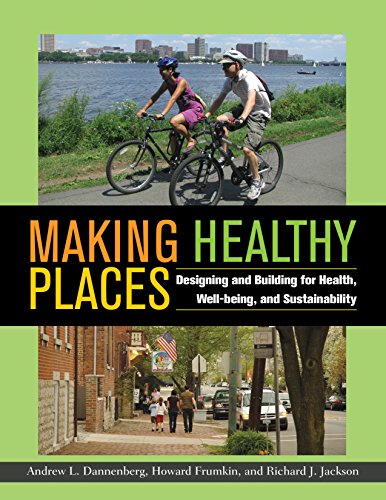
Making Healthy Places: Designing and Building for Health, Well-being, and Sustainability - Softcover
Inhaltsangabe
The environment that we construct affects both humans and our natural world in myriad ways. There is a pressing need to create healthy places and to reduce the health threats inherent in places already built. However, there has been little awareness of the adverse effects of what we have constructed-or the positive benefits of well designed built environments.
This book provides a far-reaching follow-up to the pathbreaking Urban Sprawl and Public Health, published in 2004. That book sparked a range of inquiries into the connections between constructed environments, particularly cities and suburbs, and the health of residents, especially humans. Since then, numerous studies have extended and refined the book's research and reporting. Making Healthy Places offers a fresh and comprehensive look at this vital subject today.
There is no other book with the depth, breadth, vision, and accessibility that this book offers. In addition to being of particular interest to undergraduate and graduate students in public health and urban planning, it will be essential reading for public health officials, planners, architects, landscape architects, environmentalists, and all those who care about the design of their communities.
Like a well-trained doctor, Making Healthy Places presents a diagnosis of--and offers treatment for--problems related to the built environment. Drawing on the latest scientific evidence, with contributions from experts in a range of fields, it imparts a wealth of practical information, with an emphasis on demonstrated and promising solutions to commonly occurring problems.
This book provides a far-reaching follow-up to the pathbreaking Urban Sprawl and Public Health, published in 2004. That book sparked a range of inquiries into the connections between constructed environments, particularly cities and suburbs, and the health of residents, especially humans. Since then, numerous studies have extended and refined the book's research and reporting. Making Healthy Places offers a fresh and comprehensive look at this vital subject today.
There is no other book with the depth, breadth, vision, and accessibility that this book offers. In addition to being of particular interest to undergraduate and graduate students in public health and urban planning, it will be essential reading for public health officials, planners, architects, landscape architects, environmentalists, and all those who care about the design of their communities.
Like a well-trained doctor, Making Healthy Places presents a diagnosis of--and offers treatment for--problems related to the built environment. Drawing on the latest scientific evidence, with contributions from experts in a range of fields, it imparts a wealth of practical information, with an emphasis on demonstrated and promising solutions to commonly occurring problems.
Die Inhaltsangabe kann sich auf eine andere Ausgabe dieses Titels beziehen.
Über die Autorin bzw. den Autor
Andrew L. Dannenberg, MD, MPH, is an affiliate professor in the Department of Environmental and Occupational Health Sciences and in the Department of Urban Design and Planning at the University of Washington in Seattle. He previously served as the team leader of the Healthy Community Design Initiative at the Centers for Disease Control and Prevention's (CDC) National Center for Environmental Health in Atlanta.
Howard Frumkin, M.D., Dr.P.H., is Dean of the School of Public Health at the University of Washington. He previously served as Director of the National Center for Environmental Health/Agency for Toxic Substances and Disease Registry at CDC, where he established programs in climate change and in the built environment. He is co-author of Urban Sprawl and Public Health (Island Press, 2004).
Richard Jackson, M.D., M.P.H., is Professor and Chair of the Department of Environmental Health Sciences at the University of California, Los Angeles. He is a pediatrician, and previously served as director of the National Center for Environmental Health at CDC and as the State Public Health Officer for California. He is co-author of Urban Sprawl and Public Health (Island Press, 2004).
Auszug. © Genehmigter Nachdruck. Alle Rechte vorbehalten.
Making Healthy Places
Designing and Building for Health, Well-being, and Sustainability
By Andrew L. Dannenberg, Howard Frumkin, Richard J. JacksonISLAND PRESS
Copyright © 2011 Andrew L. Dannenberg, Howard Frumkin, and Richard J. Jackson
All rights reserved.
ISBN: 978-1-59726-727-4All rights reserved.
Contents
Preface Richard J. Jackson,
Part I. Introduction,
Chapter 1 An Introduction to Healthy Places Howard Frumkin, Arthur M. Wendel, Robin FranAbrams, and Emil Malizia,
Part II. The Impact of Community Design on Health,
Chapter 2 Community Design for Physical Activity James F. Sallis, Rachel A. Millstein, and Jordan A. Carlson,
Chapter 3 Food Environments Carolyn Cannuscio and Karen Glanz,
Chapter 4 Community Design and Air Quality Jonathan M. Samet,
Chapter 5 Injuries and the Built Environment David A. Sleet, Rebecca B. Naumann, and Rose Anne Rudd,
Chapter 6 Community Design for Water Quantity and Quality Lorraine C. Backer,
Chapter 7 Mental Health and the Built Environment William C. Sullivan and Chun-Yen Chang,
Chapter 8 Social Capital and Community Design Caitlin Eicher and Ichiro Kawachi,
Chapter 9 Vulnerable Populations and the Built Environment Chris S. Kochtitzky,
Part III. Diagnosing and Healing Our Built Environments,
Chapter 10 Transportation and Land Use Reid Ewing, Gail Meakins, Grace Bjarnson, and Holly Hilton,
Chapter 11 Healthy Homes James Krieger and David E. Jacobs,
Chapter 12 Healthy Workplaces Donna S. Heidel, L. Casey Chosewood, Matthew Gillen, Paul Schulte, Gregory Wagner, Kenneth M. Wallingford, and Liz York,
Chapter 13 Healthy Health Care Settings Craig Zimring and Jennifer DuBose,
Chapter 14 Healthy Schools Howard Frumkin and Jared Fox,
Chapter 15 Contact with Nature Howard Frumkin and Jared Fox,
Chapter 16 Resiliency to Disasters Timothy Beatley,
Part IV. Strategies for Healthy Places: A Toolbox,
Chapter 17 Behavioral Choices and the Built Environment Margaret Schneider,
Chapter 18 Policy and Legislation for Healthy Places Lisa M. Feldstein,
Chapter 19 Community Engagement in Design and Planning Manal J. Aboelata, Leah Ersoylu, and Larry Cohen,
Chapter 20 Measuring, Assessing, and Certifying Healthy Places Andrew L. Dannenberg and Arthur M. Wendel,
Part V. Looking Outward, Looking Ahead,
Chapter 21 Training the Next Generation to Promote Healthy Places Nisha D. Botchwey and Matthew J. Trowbridge,
Chapter 22 Healthy Places Research: Emerging Opportunities Richard J. Jackson, Arthur M. Wendel, and Andrew L. Dannenberg,
Chapter 23 Urban Health in Low- and Middle-Income Countries Jennifer C. Johnson and Sandro Galea,
Chapter 24 Built Environments of the Future Anthony G. Capon and Susan M. Thompson,
Glossary,
About the Editors,
Contributors,
Acknowledgments,
Index,
CHAPTER 1
An Introduction to Healthy Places
Howard Frumkin, Arthur M. Wendel, Robin Fran Abrams, and Emil Malizia
Key Points
• The environment consists of the external (or nongenetic) factors—physical, nutritional, social, behavioral, and others—that act on humans, and the built environment is made up of the many aspects of their surroundings created by humans, such as buildings, neighborhoods, and cities.
• Health can be defined as complete physical, mental, and social well-being. This definition extends beyond the absence of disease to include many dimensions of comfort and well-being. While clinicians care for individual patients, public health professionals aim to improve health at the level of populations.
• The design professions include urban planning, architecture, landscape architecture, and transportation planning. Each of these focuses on an aspect of the built environment.
• Both the public health profession and the design professions took modern form during the nineteenth century, in response to rapid population growth, industrialization and urbanization, and the resulting problems of the urban environment.
• Public health practice is evidence-based, relying heavily on surveillance and data collection.
• Leading causes of morbidity and mortality include heart disease, cancer, diabetes, stroke, injuries, and mental illness. Many of these are related to community design choices.
• Even though public health has evolved as a distinct field from planning and architecture, these domains have numerous opportunities to collaborate, and this collaboration can lead to improved health, well-being, and sustainability in many ways.
Introduction
The citizens of Bay City were fed up. Getting across town to go to work or shopping had become an ordeal; the streets seemed perpetually clogged, and it was impossible to find parking. For people who had bought homes in the suburbs, life seemed to take place more and more in their cars—chauffeuring children to school and soccer games, driving long distances to stores, and worst of all, commuting to work. Meanwhile, the Bay City Courier reported a steady drumbeat of bad news: air quality was worsening, the health department reported a growing epidemic of obesity, and nearly every day there was a tragic car crash that killed or injured somebody.
The mayor, the city council, and the transportation department teamed up to address some of the quality of life problems. They envisioned an ambitious program of road building. Key components included a six-lane arterial highway along the bay shore, two new arterials crossing the city, and thousands of new parking spaces. Although this plan would destroy historic and beautiful bay views, sever a few older neighborhoods, and remove half of a prized city park, it would move traffic more effectively.
But the roads were never built. The local health department, urban planners, architects, physicians and nurses, park officials, historic preservationists, environmentalists, and neighborhood associations all came together in a remarkable display of unity. The coalition they formed proposed an alternative plan, one that centered on extensive pedestrian and bicycle infrastructure, investments in bus and light-rail transit, mixed-use development along the bay shore, and investments in parks throughout the city. The plan emphasized equity and included policies to avoid displacing established communities and to ensure a mix of housing types. The cost of this alternative plan would be slightly less than that of the combined road projects, and it would create a similar number of construction jobs.
The alternative plan won the day. It took more than twenty years to implement, and it required considerable political leadership to stick with it during the inevitable cost overruns and budget crises. But after twenty years, a remarkable series of changes had ensued.
The proportion of people walking or biking to work had risen from 3 percent to 14 percent, and the proportion of students walking or biking to school had risen from 5 percent to 21 percent. Transit ridership had increased more than fourfold. Traffic volume had actually decreased, air quality had improved marginally, and the epidemic of obesity had stabilized and was showing signs of reversing. Because many young families had moved into the city, the public schools had improved considerably and were now among the best in the state. And Bay City had become a destination city, attracting several prized high-tech and biotech firms because of its...
„Über diesen Titel“ kann sich auf eine andere Ausgabe dieses Titels beziehen.
Suchergebnisse für Making Healthy Places: Designing and Building for Health,...

Beispielbild für diese ISBN
Making Healthy Places: Designing and Building for Health, Well-Being, and Sustainability
Anbieter: ThriftBooks-Phoenix, Phoenix, AZ, USA
Verkäuferbewertung 5 von 5 Sternen

Paperback. Zustand: Fair. No Jacket. Readable copy. Pages may have considerable notes/highlighting. ~ ThriftBooks: Read More, Spend Less. Bestandsnummer des Verkäufers G1597267279I5N00
Gebraucht kaufen
EUR 6,50
Versand gratis
Versand innerhalb von USA
Versand innerhalb von USA
Anzahl: 1 verfügbar
Beispielbild für diese ISBN
Making Healthy Places: Designing and Building for Health, Well-Being, and Sustainability
Anbieter: ThriftBooks-Reno, Reno, NV, USA
Verkäuferbewertung 5 von 5 Sternen
Paperback. Zustand: Fair. No Jacket. Readable copy. Pages may have considerable notes/highlighting. ~ ThriftBooks: Read More, Spend Less. Bestandsnummer des Verkäufers G1597267279I5N00
Gebraucht kaufen
EUR 6,50
Versand gratis
Versand innerhalb von USA
Versand innerhalb von USA
Anzahl: 1 verfügbar
Beispielbild für diese ISBN
Making Healthy Places: Designing and Building for Health, Well-Being, and Sustainability
Anbieter: ThriftBooks-Reno, Reno, NV, USA
Verkäuferbewertung 5 von 5 Sternen
Paperback. Zustand: Good. No Jacket. Pages can have notes/highlighting. Spine may show signs of wear. ~ ThriftBooks: Read More, Spend Less. Bestandsnummer des Verkäufers G1597267279I3N00
Gebraucht kaufen
EUR 6,50
Versand gratis
Versand innerhalb von USA
Versand innerhalb von USA
Anzahl: 1 verfügbar
Beispielbild für diese ISBN
Making Healthy Places: Designing and Building for Health, Well-being, and Sustainability
Verlag:
Princeton University Press, 2011
ISBN 10: 1597267279
ISBN 13: 9781597267274
Gebraucht
Paperback
Anbieter: World of Books (was SecondSale), Montgomery, IL, USA
Verkäuferbewertung 5 von 5 Sternen
Paperback. Zustand: Very Good. The environment that we construct affects both humans and our natural world in myriad ways. This title presents a diagnosis of - and offers treatment for - problems related to the built environment. Drawing on the scientific evidence, it imparts practical information, with an emphasis on demonstrated and promising solutions to the problems. Bestandsnummer des Verkäufers 00099995015
Gebraucht kaufen
EUR 6,52
Versand gratis
Versand innerhalb von USA
Versand innerhalb von USA
Anzahl: 3 verfügbar
Beispielbild für diese ISBN
Making Healthy Places: Designing and Building for Health, Well-Being, and Sustainability
Anbieter: ThriftBooks-Atlanta, AUSTELL, GA, USA
Verkäuferbewertung 5 von 5 Sternen
Paperback. Zustand: Good. No Jacket. Pages can have notes/highlighting. Spine may show signs of wear. ~ ThriftBooks: Read More, Spend Less. Bestandsnummer des Verkäufers G1597267279I3N00
Gebraucht kaufen
EUR 6,53
Versand gratis
Versand innerhalb von USA
Versand innerhalb von USA
Anzahl: 1 verfügbar
Beispielbild für diese ISBN
Making Healthy Places: Designing and Building for Health, Well-Being, and Sustainability
Anbieter: ThriftBooks-Dallas, Dallas, TX, USA
Verkäuferbewertung 5 von 5 Sternen
Paperback. Zustand: Good. No Jacket. Pages can have notes/highlighting. Spine may show signs of wear. ~ ThriftBooks: Read More, Spend Less. Bestandsnummer des Verkäufers G1597267279I3N00
Gebraucht kaufen
EUR 6,53
Versand gratis
Versand innerhalb von USA
Versand innerhalb von USA
Anzahl: 1 verfügbar
Beispielbild für diese ISBN
Making Healthy Places: Designing and Building for Health, Well-being, and Sustainability
Anbieter: HPB-Red, Dallas, TX, USA
Verkäuferbewertung 5 von 5 Sternen
Paperback. Zustand: Good. Connecting readers with great books since 1972! Used textbooks may not include companion materials such as access codes, etc. May have some wear or writing/highlighting. We ship orders daily and Customer Service is our top priority! Bestandsnummer des Verkäufers S_365621691
Gebraucht kaufen
EUR 4,58
EUR 3,34 Versand
Versand innerhalb von USA
Versand innerhalb von USA
Anzahl: 1 verfügbar
Beispielbild für diese ISBN
Making Healthy Places: Designing and Building for Health, Well-being, and Sustainability
Verlag:
Princeton University Press, 2011
ISBN 10: 1597267279
ISBN 13: 9781597267274
Gebraucht
Paperback
Anbieter: World of Books Inc, Montgomery, IL, USA
Verkäuferbewertung 4 von 5 Sternen

Paperback. Zustand: Very Good. The environment that we construct affects both humans and our natural world in myriad ways. This title presents a diagnosis of - and offers treatment for - problems related to the built environment. Drawing on the scientific evidence, it imparts practical information, with an emphasis on demonstrated and promising solutions to the problems. Bestandsnummer des Verkäufers CIN1597267279VG
Gebraucht kaufen
EUR 8,36
Versand gratis
Versand innerhalb von USA
Versand innerhalb von USA
Anzahl: 3 verfügbar
Beispielbild für diese ISBN
Making Healthy Places: Designing and Building for Health, Well-being, and Sustainability
Anbieter: Midtown Scholar Bookstore, Harrisburg, PA, USA
Verkäuferbewertung 5 von 5 Sternen
Paperback. Zustand: Good. Good - Bumped and creased book with tears to the extremities, but not affecting the text block, may have remainder mark or previous owner's name - GOOD Oversized. PAPERBACK. Bestandsnummer des Verkäufers M01597267279Z3
Gebraucht kaufen
EUR 3,41
EUR 5,34 Versand
Versand innerhalb von USA
Versand innerhalb von USA
Anzahl: 6 verfügbar
Beispielbild für diese ISBN
Making Healthy Places : Designing and Building for Health, Well-Being, and Sustainability
Anbieter: Better World Books: West, Reno, NV, USA
Verkäuferbewertung 5 von 5 Sternen
Zustand: Very Good. Pages intact with possible writing/highlighting. Binding strong with minor wear. Dust jackets/supplements may not be included. Stock photo provided. Product includes identifying sticker. Better World Books: Buy Books. Do Good. Bestandsnummer des Verkäufers 14249714-6
Gebraucht kaufen
EUR 8,76
Versand gratis
Versand innerhalb von USA
Versand innerhalb von USA
Anzahl: 1 verfügbar