
Verwandte Artikel zu Helping Groups Heal: Leading Groups in the Process...
Helping Groups Heal: Leading Groups in the Process of Transformation: Leading Small Groups in the Process of Transformation (Spirituality and Mental Health) - Softcover
Buch 3 von 12: Spirituality and Mental Health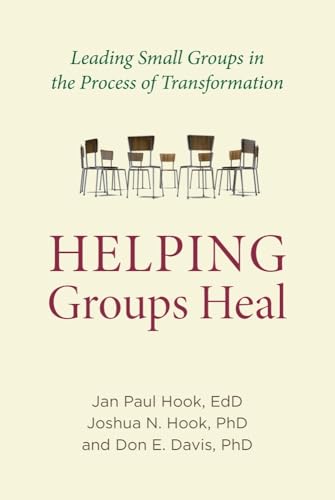
Inhaltsangabe
Life with others is messy. The bonds we form are often the source that drives us to helping professionals like therapists and pastors in the first place. And yet, it is from these relationships that our greatest moments of healing spring. Recognizing the value of relationships, pastors and therapists have been leading small therapeutic groups for years. Yet few leaders have a specific, easy-to-follow, and researched framework to structure their groups.
Helping Groups Heal presents “The Healing Cycle,” a grace-based model that facilitates healing and growth in groups. It has been tested with a variety of settings, and can be adapted to nearly any small group, from sex addiction therapy to marriage therapy to Bible studies.
The basic components of “The Healing Cycle” are grace, safety, vulnerability, truth, ownership, and confession. Helping Groups Heal guides the reader through these elements, offering case studies and practical advice from the voices of researchers and practitioners. Each chapter shows how “The Healing Cycle” moves its members to share their truth, own it, and make positive change in their lives. Each step of the process allows participants to move past surface issues and find depth in their understanding of their pain.
Whether you have been leading small groups for years or are about to lead your first session, Helping Groups Heal is an accessible, easy-to-follow guide through “The Healing Cycle” that will give each group member what’s needed to grow, relate, and heal.
Helping Groups Heal presents “The Healing Cycle,” a grace-based model that facilitates healing and growth in groups. It has been tested with a variety of settings, and can be adapted to nearly any small group, from sex addiction therapy to marriage therapy to Bible studies.
The basic components of “The Healing Cycle” are grace, safety, vulnerability, truth, ownership, and confession. Helping Groups Heal guides the reader through these elements, offering case studies and practical advice from the voices of researchers and practitioners. Each chapter shows how “The Healing Cycle” moves its members to share their truth, own it, and make positive change in their lives. Each step of the process allows participants to move past surface issues and find depth in their understanding of their pain.
Whether you have been leading small groups for years or are about to lead your first session, Helping Groups Heal is an accessible, easy-to-follow guide through “The Healing Cycle” that will give each group member what’s needed to grow, relate, and heal.
Die Inhaltsangabe kann sich auf eine andere Ausgabe dieses Titels beziehen.
Über die Autorin bzw. den Autor
Jan Paul Hook, EdD is a licensed clinical professional counselor (LCPC) in the state of Illinois. He does individual, marital, and group psychotherapy. He is in private practice in Arlington Heights, Illinois.
Joshua N. Hook, PhD is an associate professor of psychology at the University of North Texas and is a licensed clinical psychologist in the state of Texas. His research focuses on humility, religion/spirituality, and multicultural counseling. Josh also blogs regularly at www.JoshuaNHook.com.
Don E. Davis, PhD is an associate professor of psychology at Georgia State University. His research and writing focus on humility, forgiveness, and religion/spirituality.
Joshua N. Hook, PhD is an associate professor of psychology at the University of North Texas and is a licensed clinical psychologist in the state of Texas. His research focuses on humility, religion/spirituality, and multicultural counseling. Josh also blogs regularly at www.JoshuaNHook.com.
Don E. Davis, PhD is an associate professor of psychology at Georgia State University. His research and writing focus on humility, forgiveness, and religion/spirituality.
Auszug. © Genehmigter Nachdruck. Alle Rechte vorbehalten.
Helping Groups Heal
Leading Small Groups in the Process of Transformation
By Jan Paul Hook, Joshua N. Hook, Don E. DavisTempleton Press
Copyright © 2017 Jan Paul Hook, EdD, Joshua N. Hook, PhD, and Don E. Davis, PhD
All rights reserved.
ISBN: 978-1-59947-485-4All rights reserved.
Contents
Acknowledgments,
Preface,
Chapter 1: Introduction,
Chapter 2: Grace,
Chapter 3: Safety,
Chapter 4: Vulnerability,
Chapter 5: Truth,
Chapter 6: Ownership,
Chapter 7: Repentance,
Chapter 8: Back to Grace,
References,
About the Authors,
Index,
CHAPTER 1
Introduction
LEADING SMALL GROUPS is difficult work. There is great potential for small groups to be a context for group members to experience healing and growth, but leading a small group isn't easy. To make matters worse, sometimes group leaders step into their role without much knowledge or training for how to be an effective leader. Without a baseline set of skills and tools, small group leaders often struggle.
This book is designed to help small group leaders develop basic and advanced skills to create a group context in which members can experience healing and growth. The fact that you are reading this book probably means you are already involved in running small groups. Maybe you volunteer at your church and lead a Bible study or discipleship group. Perhaps you are involved in leading support groups, such as helping people grow in their marriages, recover from a divorce, or gain freedom from an addiction. Maybe you are a mental health counselor or psychologist, leading therapy groups as part of your work. Perhaps you even are a graduate student, just beginning your training in leading groups. Whatever type of group you lead, and whatever amount of experience you have, I hope this book helps you to improve your skills in creating and maintaining a group culture that provides authentic, compassionate, and gracious relationships that bring life and growth.
This book walks through a model for group work called The Healing Cycle (Hook & Hook, 2010), which describes how small groups can promote healing and growth in six steps: grace, safety, vulnerability, truth, ownership, and repentance. First and foremost, a healing small group involves a culture of grace. In the chapter on grace, you will reflect on your own stories of brokenness, grace, and healing in order to promote a heart of grace as a leader. Out of this stance, you will learn how to offer a heart of grace to your group members.
Grace leads to the second step, safety. A culture of grace in a group allows members to feel safe with you and each other. In the chapter on safety, you will learn how to create and maintain safety in your small group. You will learn to set boundaries (e.g., setting up ground rules such as confidentiality and consistent attendance) and address boundary violations (e.g., what to do when one group member harshly criticizes another member).
Grace and safety allow for vulnerable sharing, the focus of chapter 4. Healing and growth occur in proportion to members' willingness to open up and share vulnerably. Sometimes group members stay on the surface and shrink back, because they are afraid to expose their true selves. In this chapter, you will learn techniques to promote greater vulnerability, including self-disclosure, listening, validating, and linking.
Vulnerable sharing leads to truth: group members can see themselves and their situation more clearly and honestly. In the chapter on truth, you will learn techniques to balance honesty with love so that people can see and accept the truth about themselves: their strengths and limitations. I like to call these areas for growth and change "growth edges," because it normalizes the idea that none of us is perfect — each group member has areas in their life in which they can experience healing and growth. You will also learn to teach group members similar skills in how they interact with each other and in their relationships.
Seeing themselves honestly provides group members with an opportunity for ownership, the focus of chapter 6. Ownership involves taking the right amount of responsibility for causing and maintaining one's problems. This step may involve owning that one has taken too little responsibility for a problem, or it may involve admitting that one's contribution to a problem may have been taking too much responsibility. In this way, we almost always have room to own our problems more accurately and effectively, on a strong foundation of grace, safety, vulnerability, and truth. Change rarely occurs until people own that they are in some way involved in maintaining their problems. This is not blaming the victim; this is empowering group members to accurately see what they can and cannot do, sometimes in seemingly impossible situations. This step is called "owning your truth," which includes understanding one's stories and ways these stories can be transformed. You will learn specific skills for helping group members own their truth, including teaching group members to own the stories they make up, laddering to access core stories and beliefs, working with group members' projections, confronting unhealthy patterns, and dealing with conflict.
Accurate ownership naturally leads to repentance, which is the next step in The Healing Cycle. In this chapter, you will learn how to help members repent, which involves turning away from one's problematic behaviors and walking a new path. This step is crucial to The Healing Cycle. Christians believe that they are healed from broken relational patterns through honestly acknowledging sin and brokenness and asking for forgiveness and healing. Group members carry shame from relationships and want to experience a greater sense of integrity. You will develop skills to help group members work toward healing through confession, receiving forgiveness, and commitment to behavior change and accountability.
In the final chapter, you will be introduced to the cyclical nature of The Healing Cycle. Repentance allows members to have a deep experience of grace. Instead of just head knowledge about grace, grace becomes real, as members pair ownership of their truth and awareness of personal brokenness into the grace culture of the group. Group members learn they can be fully known and loved. They do not have to hide their brokenness but can bring it into relationship with others, confess, and make lasting changes. True repentance leads to joy, as group members celebrate each other's victories and accomplishments and continue to encourage and support each other in their struggles and failures. This process repeats until people experience a growing degree of wholeness and integrity.
Let me tell you a bit about myself and my background writing this book. My name is Jan Paul Hook. The Healing Cycle is a small group model I helped develop and refine over the past twenty years. I was trained as a professional counselor at Trinity International University. After graduating, I directed the counseling center at Trinity. Running groups and supervising other counselors-in-training were central parts of my role. Next, I worked at Willow Creek Community Church, one of the first large churches to popularize small groups as an avenue for doing ministry. As a leader in their community care ministries, I trained and supervised many lay small group leaders who facilitated groups on a variety of themes, including marital restoration and divorce recovery. Currently, I am a partner in a private practice, where I lead two weekly small groups for...
„Über diesen Titel“ kann sich auf eine andere Ausgabe dieses Titels beziehen.
Suchergebnisse für Helping Groups Heal: Leading Groups in the Process...

Beispielbild für diese ISBN
Helping Groups Heal: Leading Groups in the Process of Transformation (Spirituality and Mental Health)
Anbieter: HPB Inc., Dallas, TX, USA
Verkäuferbewertung 5 von 5 Sternen

Paperback. Zustand: Very Good. Connecting readers with great books since 1972! Used books may not include companion materials, and may have some shelf wear or limited writing. We ship orders daily and Customer Service is our top priority! Bestandsnummer des Verkäufers S_482880103
Gebraucht kaufen
EUR 15,81
EUR 3,23 Versand
Versand innerhalb von USA
Versand innerhalb von USA
Anzahl: 1 verfügbar
Beispielbild für diese ISBN
Helping Groups Heal: Leading Groups in the Process of Transformation (Spirituality and Mental Health)
Anbieter: HPB-Emerald, Dallas, TX, USA
Verkäuferbewertung 5 von 5 Sternen
Paperback. Zustand: Very Good. Connecting readers with great books since 1972! Used books may not include companion materials, and may have some shelf wear or limited writing. We ship orders daily and Customer Service is our top priority! Bestandsnummer des Verkäufers S_485198148
Gebraucht kaufen
EUR 15,81
EUR 3,23 Versand
Versand innerhalb von USA
Versand innerhalb von USA
Anzahl: 1 verfügbar
Foto des Verkäufers
Helping Groups Heal : Leading Small Groups in the Process of Transformation
Anbieter: GreatBookPrices, Columbia, MD, USA
Verkäuferbewertung 5 von 5 Sternen
Zustand: New. Bestandsnummer des Verkäufers 28761736-n
Neu kaufen
EUR 21,62
EUR 2,28 Versand
Versand innerhalb von USA
Versand innerhalb von USA
Anzahl: 6 verfügbar
Beispielbild für diese ISBN
Helping Groups Heal Format: Paperback
Anbieter: INDOO, Avenel, NJ, USA
Verkäuferbewertung 5 von 5 Sternen
Zustand: New. Brand New. Bestandsnummer des Verkäufers 9781599474854
Neu kaufen
EUR 23,97
Versand gratis
Versand innerhalb von USA
Versand innerhalb von USA
Anzahl: Mehr als 20 verfügbar
Foto des Verkäufers
Helping Groups Heal
Verlag:
Templeton Foundation Press,U.S., US, 2017
ISBN 10: 1599474859
ISBN 13: 9781599474854
Neu
Paperback
Anbieter: Rarewaves.com USA, London, LONDO, Vereinigtes Königreich
Verkäuferbewertung 5 von 5 Sternen
Paperback. Zustand: New. First Edition, 1. Life with others is messy. The bonds we form are often the source that drives us to helping professionals like therapists and pastors in the first place. And yet, it is from these relationships that our greatest moments of healing spring. Recognizing the value of relationships, pastors and therapists have been leading small therapeutic groups for years. Yet few leaders have a specific, easy-to-follow, and researched framework to structure their groups.Helping Groups Heal presents "The Healing Cycle," a grace-based model that facilitates healing and growth in groups. It has been tested with a variety of settings, and can be adapted to nearly any small group, from sex addiction therapy to marriage therapy to Bible studies. The basic components of "The Healing Cycle" are grace, safety, vulnerability, truth, ownership, and confession. Helping Groups Heal guides the reader through these elements, offering case studies and practical advice from the voices of researchers and practitioners. Each chapter shows how "The Healing Cycle" moves its members to share their truth, own it, and make positive change in their lives. Each step of the process allows participants to move past surface issues and find depth in their understanding of their pain. Whether you have been leading small groups for years or are about to lead your first session, Helping Groups Heal is an accessible, easy-to-follow guide through "The Healing Cycle" that will give each group member what's needed to grow, relate, and heal. Bestandsnummer des Verkäufers LU-9781599474854
Neu kaufen
EUR 24,89
Versand gratis
Versand von Vereinigtes Königreich nach USA
Versand von Vereinigtes Königreich nach USA
Anzahl: 5 verfügbar
Foto des Verkäufers
Helping Groups Heal : Leading Small Groups in the Process of Transformation
Anbieter: GreatBookPrices, Columbia, MD, USA
Verkäuferbewertung 5 von 5 Sternen
Zustand: As New. Unread book in perfect condition. Bestandsnummer des Verkäufers 28761736
Gebraucht kaufen
EUR 23,22
EUR 2,28 Versand
Versand innerhalb von USA
Versand innerhalb von USA
Anzahl: 6 verfügbar
Beispielbild für diese ISBN
Helping Groups Heal
Anbieter: PBShop.store UK, Fairford, GLOS, Vereinigtes Königreich
Verkäuferbewertung 5 von 5 Sternen
PAP. Zustand: New. New Book. Shipped from UK. Established seller since 2000. Bestandsnummer des Verkäufers FW-9781599474854
Neu kaufen
EUR 20,98
EUR 4,85 Versand
Versand von Vereinigtes Königreich nach USA
Versand von Vereinigtes Königreich nach USA
Anzahl: 9 verfügbar
Beispielbild für diese ISBN
Helping Groups Heal: Leading Groups in the Process of Transformation (eng)
Anbieter: Brook Bookstore On Demand, Napoli, NA, Italien
Verkäuferbewertung 5 von 5 Sternen
Zustand: new. Bestandsnummer des Verkäufers VXKFGU90U4
Neu kaufen
EUR 24,72
EUR 5,50 Versand
Versand von Italien nach USA
Versand von Italien nach USA
Anzahl: 9 verfügbar
Beispielbild für diese ISBN
Helping Groups Heal (Paperback)
Verlag:
Templeton Foundation Press,U.S., Radnor, 2017
ISBN 10: 1599474859
ISBN 13: 9781599474854
Neu
Paperback
Anbieter: Grand Eagle Retail, Bensenville, IL, USA
Verkäuferbewertung 5 von 5 Sternen
Paperback. Zustand: new. Paperback. Life with others is messy. The bonds we form are often the source that drives us to helping professionals like therapists and pastors in the first place. And yet, it is from these relationships that our greatest moments of healing spring. Recognizing the value of relationships, pastors and therapists have been leading small therapeutic groups for years. Yet few leaders have a specific, easy-to-follow, and researched framework to structure their groups.Helping Groups Heal presents The Healing Cycle, a grace-based model that facilitates healing and growth in groups. It has been tested with a variety of settings, and can be adapted to nearly any small group, from sex addiction therapy to marriage therapy to Bible studies. The basic components of The Healing Cycle are grace, safety, vulnerability, truth, ownership, and confession. Helping Groups Heal guides the reader through these elements, offering case studies and practical advice from the voices of researchers and practitioners. Each chapter shows how The Healing Cycle moves its members to share their truth, own it, and make positive change in their lives. Each step of the process allows participants to move past surface issues and find depth in their understanding of their pain. Whether you have been leading small groups for years or are about to lead your first session, Helping Groups Heal is an accessible, easy-to-follow guide through The Healing Cycle that will give each group member whats needed to grow, relate, and heal. Shipping may be from multiple locations in the US or from the UK, depending on stock availability. Bestandsnummer des Verkäufers 9781599474854
Beispielbild für diese ISBN
Helping Groups Heal: Leading Small Groups in the Process of Transformation
Anbieter: Revaluation Books, Exeter, Vereinigtes Königreich
Verkäuferbewertung 5 von 5 Sternen
Paperback. Zustand: Brand New. 280 pages. 9.00x6.00x1.00 inches. In Stock. Bestandsnummer des Verkäufers __1599474859
Neu kaufen
EUR 21,75
EUR 11,67 Versand
Versand von Vereinigtes Königreich nach USA
Versand von Vereinigtes Königreich nach USA
Anzahl: 2 verfügbar